
Annapurna Base Camp (ABC) trekking cost in 2026 usually comes down to three things: how many days you’re on the trail, how much help you hire (guide/porter), and how much comfort you want in teahouses and transport. Most trekkers land in one of three tiers: budget (USD 600–900), mid-range (USD 900–1,500), or comfort (USD 1,500–2,500+), with the biggest swings coming from private jeep transfers, a guide-porter setup, and optional upgrades like a helicopter return from Jhinu Danda. Season also changes the math: October–November and March–May tend to cost more due to higher demand, while shoulder and off-season months can reduce totals if you’re prepared for colder mornings, rain, or more variable trail conditions.
This guide breaks the Annapurna Base Camp (ABC) trek budget into the categories that actually drain your wallet: permits are ACAP (Annapurna Conservation Area Project) and TIMS (Trekkers’ Information Management System), guide vs porter rates, transport to/from the trailhead, daily teahouse food and rooms, and the “hidden extras” like hot showers, Wi-Fi, charging, toilets, snacks, and drinking water. You’ll get a quick 60-second calculator (days × style × staff × comfort × transport), realistic per-day numbers by altitude, and sample line-by-line budgets so you can compare agency quotes without getting surprised by what’s excluded. By the end, you’ll know how much cash to carry, where costs spike near Machhapuchhre Base Camp (MBC)/ Annapurna Bae Camp (ABC), and how to build a buffer that protects you from delays and expensive last-minute decisions.
Annapurna Base Camp (ABC) Trek Cost
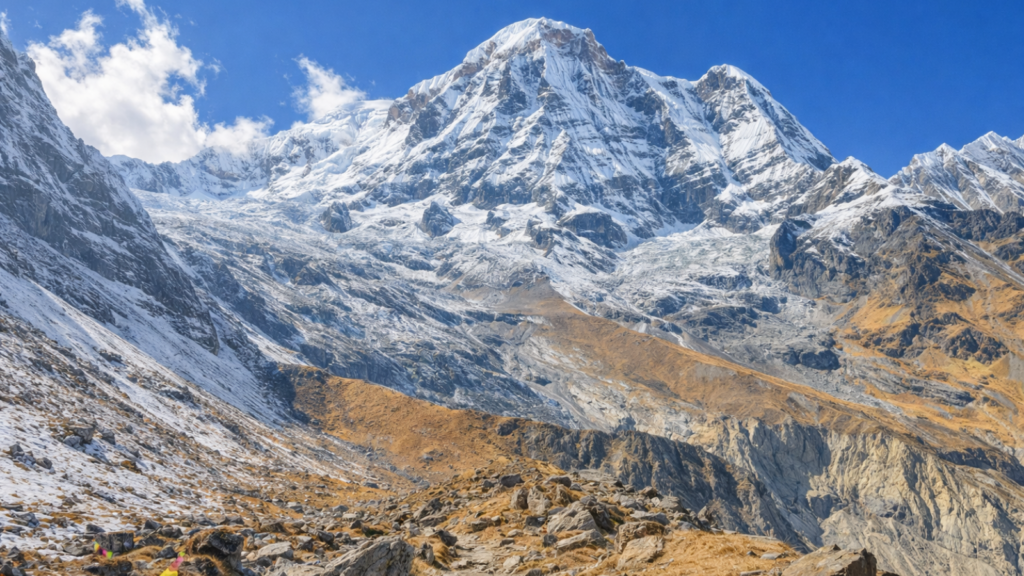
Most trekkers can plan ABC using three clear buckets: budget, mid-range, and comfort, each shaped by trek length and service level. A fast calculator (days × guide/porter × comfort × transport) gets you a realistic total in under a minute and prevents under-budgeting. Season matters too; peak months usually cost more because demand and transport prices rise, while shoulder season can reduce costs if you accept colder mornings or variable trail conditions.
Typical Total Cost Ranges (Budget / Mid-Range / Comfort)
The total cost of the Annapurna Base Camp trek ranges from USD 600 to USD 2,500 or more, depending on your travel style.
There are 3 core budget tiers to understand before diving into specifics.
- The budget tier runs USD 600 to USD 900. This tier covers a solo trekker traveling independently, staying in basic teahouses, eating set meals, and using public transport throughout.
- The mid-range tier runs USD 900 to USD 1,500. This tier reflects guided trekking with a licensed guide, comfortable teahouses, and a mix of public and private transport.
- The comfort tier runs USD 1,500 to USD 2,500 or more. This tier applies to trekkers hiring a guide-porter combo from a reputable agency, choosing twin-bed rooms with attached bathrooms, enjoying private jeep transfers, and booking a helicopter return from Jhinu Danda.
These ranges cover 10 to 14 days total, including your time in Kathmandu and Pokhara. Permit fees, guide costs, food, accommodation, and transport are factored in at each level.
What “ABC Trek Cost” Usually Includes vs. Excludes
Most trek cost quotes you find online or receive from agencies are not all-inclusive, and this is where confusion starts.
A standard ABC trek cost quote from a trekking agency typically includes these items: guide salary, permit fees, teahouse accommodation, breakfast and dinner during the trek, and agency service charges. It typically excludes these items: your international flights, Kathmandu-Pokhara transport, travel insurance, personal gear, alcoholic beverages, hot showers, charging fees, and tips for your guide and porter.
The gap between a quoted price and your real total spending is often USD 200 to USD 500. Knowing what falls outside the quote helps you plan without unpleasant surprises on the trail.
60-Second Cost Calculator: Days × Style × Guide/Porter × Comfort
Use this fast framework to estimate your personal budget.
Start with the number of trekking days. Most trekkers complete ABC in 10 to 14 days from Nayapul or Kande. Multiply your trekking days by your daily on-trail spend:
- Budget style: USD 25 to USD 35 per day (teahouse bed, 3 meals, basic extras)
- Mid-range style: USD 45 to USD 65 per day (better rooms, more food variety, extras)
- Comfort style: USD 70 to USD 100 or more per day (attached bathrooms, import meals)
Add guide costs at USD 25 to USD 35 per day and porter costs at USD 18 to USD 22 per day. Add permits at approximately USD 35 total. Add Kathmandu and Pokhara city spending at USD 30 to USD 70 per day. Add gear, insurance, and international transport on top.
A 12-day trek at mid-range with a guide and porter, plus 4 city nights, lands most trekkers at USD 1,100 to USD 1,400 before flights.
Best Time Impact on Cost (Peak vs. Shoulder vs. Monsoon/Winter Trade-offs)
The time of year you choose has a direct and measurable effect on the total cost of your ABC trek.
Peak season runs from October to November and March to May. Teahouses fill quickly. Popular lodges on the Sinuwa to Machapuchare Base Camp (MBC) stretch charge premium rates. Permits and guide rates remain fixed, but accommodation rates rise by 20 to 40 percent compared to off-season. Booking flights early is essential.
Shoulder season runs from June and September. Costs drop slightly. Trekkers encounter fewer crowds, and teahouse owners negotiate more openly. The trade-off is occasional rain in September.
Monsoon and winter seasons run from July to August and December to February. Budget trekkers find the lowest teahouse prices here. The risk is real: monsoon trails are slippery and leechy, and winter cold above 3,500 meters (11,483 feet) demands better gear. A sleeping bag rental and down jacket hire add USD 30 to USD 60 to your budget. However, total trip costs in these seasons are typically 15 to 25 percent lower than peak.
Full Cost Breakdown by Category
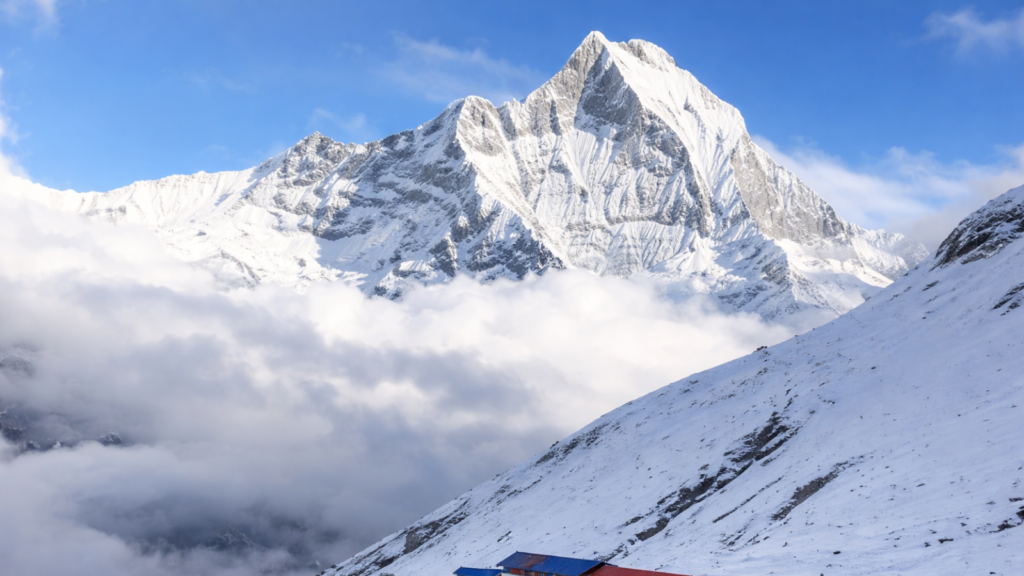
A solid ABC budget separates costs into permits, guide/porter, transport, and on-trail spending so nothing “surprises” you mid-trek. Permits and documentation are predictable, while guide/porter costs vary by service type and group size. Transport is the wildcard because your route choice and comfort level (bus vs jeep) can shift the total more than people expect.
Permits and Entry Fees (ACAP) and Where You Pay Them
Every trekker entering the Annapurna Conservation Area (ACA) requires 2 permits.
The first is the Annapurna Conservation Area Permit (ACAP), which costs NPR 3,000 (approximately USD 22 to USD 25). The current NTB TIMS page states fees as NPR 2,000 for non-SAARC and NPR 1,000 for SAARC, payable online, and frames the “revised TIMS provision” alongside the guide requirement.
The total permit cost sits at approximately USD 30 to USD 40. Both permits are issued at the Nepal Tourism Board (NTB) office in Kathmandu or at the TIMS counter in Pokhara. Trekkers who purchase permits in Pokhara save a day of transit and can get everything done at Bhrikuti Mandap or the Himalayan Rescue Association (HRA) center near the Pokhara lakeside.
Checkpoint officers check both permits multiple times on the trail, particularly at Birethanti and again near Chhomrong. Carry them in an accessible pocket, not buried in your bag.
Guide vs. Porter vs. Guide-Plus-Porter Costs (Daily Rates, Sharing, Value for Beginners)
Guide costs, porter costs, and combination roles each serve different trekking needs and sit at different price points.
A licensed trekking guide earns USD 25 to USD 35 per day. This rate covers navigation, translation, emergency decision-making, and cultural context. For first-time Nepal trekkers, a guide is one of the highest-value investments on the trek.
A porter earns USD 18 to USD 22 per day and carries up to 25 kilograms (55 pounds) of gear. Porters do not guide but dramatically reduce physical fatigue on steep ascents like the climb from Bamboo to Deurali.
A guide-porter is a single person performing both roles. This option costs USD 22 to USD 28 per day. The guide-porter works well for solo trekkers on a budget, but the dual responsibility limits the depth of guidance you receive.
Groups of 2 to 4 trekkers split guide and porter costs, which reduces the per-person daily rate significantly. A group of 4 sharing 1 guide and 2 porters pays roughly USD 18 to USD 22 per person per day for all staff.
What most people overlook is that agencies charge a 10 to 20 percent service fee on top of guide and porter rates when booking through them. Hiring locally in Pokhara costs less but requires more independent vetting of qualifications and licenses.
Transport Costs to the Trailhead (Bus/Jeep Options and Why Route Matters)
Transport to the ABC trailhead has 3 main options, and the one you choose affects both your budget and the start of your trek.
- The first option is a tourist bus from Pokhara to Nayapul. This costs USD 4 to USD 6 and takes 1.5 to 2 hours. The route starts at Nayapul, which adds 1 to 2 extra days of walking compared to Kande.
- The second option is a local bus or micro from Pokhara to Phedi or Kande. This costs USD 1 to USD 2 and takes 45 minutes to 1 hour. The Kande starting point reduces your overall trekking days and is the preferred route for shorter itineraries.
- The third option is a private jeep from Pokhara to Kande or Tikhedhunga. This costs USD 40 to USD 80 for the vehicle and takes 1 to 1.5 hours. Private jeeps offer flexibility in departure time and are worth the split cost for groups of 4 or more.
The route choice matters beyond transport cost. Starting from Nayapul at 1,070 meters (3,510 feet) gives more acclimatization days. Starting from Kande at 1,770 meters (5,807 feet) suits trekkers with less time and a tighter budget.
“Do I Need a Guide Right Now?” Budgeting for Current Rules (TIMS)
As of 2026, solo trekking on the ABC route remains permitted, but carrying a valid TIMS card is mandatory for all trekkers.
A proposed regulation requiring all trekkers to hire a licensed guide was under active government review as of early 2026. The rule has not been fully enforced uniformly across all checkpoints, but enforcement is increasing. Trekkers entering without a guide at some checkpoints have been turned back.
The safest budget approach is to allocate guide costs in your plan and treat any solo saving as a bonus if confirmed at your entry point. Attempting to avoid guide fees by bypassing checkpoints carries serious safety and legal risks.
Independent trekkers choosing to go without a guide save USD 250 to USD 420 on a 10 to 12-day trek. That saving disappears quickly the moment a trail emergency occurs without experienced local support.
On-Trail Daily Budget (Teahouses, Food, and Hidden Extras)
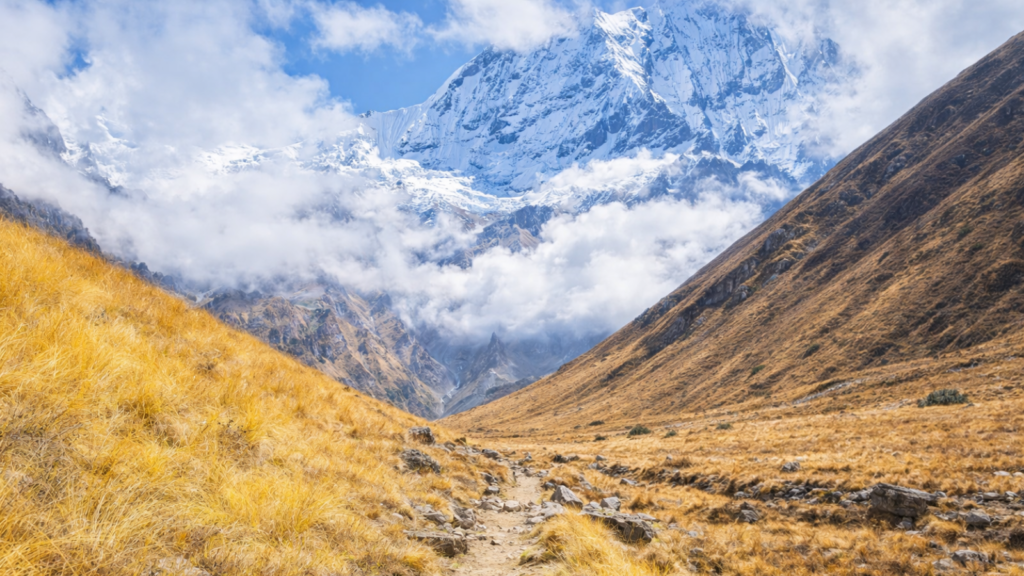
Your daily spend on ABC is mostly food and drinks, with rooms often cheap or bundled when you eat at the same teahouse. Hidden extras, hot showers, charging, Wi-Fi, toilets, and snacks, are the reason many budgets fail even when the trek looks “cheap.” A smart drinking-water plan (refill/boiled water vs purifier vs bottles) saves money every single day while keeping hydration safe.
Teahouse Rooms and Meals: What a Realistic “Per Day” Budget Looks Like
A realistic on-trail daily budget for the Annapurna Base Camp trek is USD 25 to USD 65 per person, depending on altitude and your comfort level.
At lower elevations like Ghandruk (1,940 meters / 6,365 feet) and Chhomrong (2,170 meters / 7,120 feet), teahouse rooms cost NPR 200 to NPR 500 (USD 1.50 to USD 4) per night. Meals range from NPR 300 to NPR 600 (USD 2.25 to USD 4.50) each.
At higher elevations like Deurali (3,230 meters / 10,597 feet) and Annapurna Base Camp (4,130 meters / 13,550 feet), the same room costs NPR 500 to NPR 1,000 (USD 4 to USD 8) and the same meal costs NPR 500 to NPR 900 (USD 4 to USD 7). Altitude pricing is real. Teahouse owners carry or helicopter supplies to these elevations, and prices reflect that logistical cost.
Budget daily estimate (lower trail): USD 12 to USD 18 per person. Mid-range daily estimate (full trail average): USD 25 to USD 40 per person. Comfort daily estimate: USD 45 to USD 65 per person.
The most common mistake trekkers make is budgeting only for the higher trail prices and being caught off guard by how much they spend in the charming lower villages where they linger longer than planned.
Hidden Costs Checklist: Hot Showers, Wi-Fi, Charging, Toilets, Snacks
The trail has a well-established fee structure for extras, and these costs add up faster than most trekkers expect.
Hot showers cost NPR 200 to NPR 500 (USD 1.50 to USD 4) per shower. The price increases with altitude. Many trekkers skip showers above Chhomrong due to cost and cold. Device charging costs NPR 200 to NPR 500 (USD 1.50 to USD 4) per device per charge. Solar charging is occasionally free at well-equipped lodges. Wi-Fi access costs NPR 100 to NPR 300 (USD 0.75 to USD 2.50) per hour at lodges that have it. Connection quality is unreliable above Bamboo. Toilet use at tea shops costs NPR 20 to NPR 50 (USD 0.15 to USD 0.40) at public stops. Snacks such as chocolate bars, packaged cookies, and energy drinks cost 2 to 3 times the Pokhara price at higher elevations.
The smart move is budgeting NPR 500 to NPR 1,000 (USD 4 to USD 8) per day for incidentals. Add a buffer of USD 50 to USD 80 for the full trek for extras you did not anticipate.
Drinking Water Plan: Refill/Boiled Water vs. Purifier vs. Bottles (Cost and Safety)
Your water strategy on the ABC trek is both a cost and a safety decision.
Buying bottled water at higher elevations costs NPR 200 to NPR 500 (USD 1.50 to USD 4) per 1 liter (0.26 gallons) bottle. On a 12-day trek drinking 2 to 3 liters per day, the total spend on bottled water reaches USD 50 to USD 100. Plastic waste is a serious environmental issue in the Annapurna Conservation Area.
Boiled water from teahouses costs NPR 50 to NPR 100 (USD 0.40 to USD 0.75) per liter and is the most widely used strategy. The water is safe when freshly boiled and poured hot.
A personal water purifier (such as a SteriPen UV device or Sawyer Squeeze) costs USD 30 to USD 80 upfront and reduces per-liter water cost to near zero on the trail. This is the most cost-effective and environmentally responsible approach for trekkers who plan multiple trips to Nepal.
Iodine or chlorine tablets cost USD 5 to USD 8 per pack and treat approximately 25 to 50 liters per pack. The taste is acceptable after neutralization drops.
The recommended strategy for most trekkers is to carry a filter or purifier, use boiled water at meals, and avoid single-use plastic bottles entirely. This cuts water costs by 60 to 80 percent compared to buying bottles.
Where Costs Spike with Altitude and Bad Weather (How to Plan Buffer Days)
Costs spike at 2 specific points on the ABC route: the section from Deurali to Machapuchare Base Camp (MBC), and any unplanned rest day caused by weather.
At MBC (3,700 meters / 12,140 feet) and ABC (4,130 meters / 13,550 feet), food prices are highest on the entire route. A single meal at ABC teahouses costs NPR 600 to NPR 1,200 (USD 5 to USD 9). A night at ABC costs NPR 800 to NPR 1,500 (USD 6 to USD 12). This seems modest in isolation, but the cumulative cost of 2 to 3 days at this elevation adds USD 30 to USD 70 per person beyond lower trail spending.
Bad weather events such as snowfall at altitude, fog banks, or trail closures force additional nights at teahouses. Plan a buffer of 2 days in your itinerary and budget an additional USD 50 to USD 100 per person for unexpected stays. Trekkers who arrive with no time or money buffer are forced to descend in dangerous conditions or pay helicopter evacuation costs, which reach USD 3,000 to USD 5,000 per person uninsured.
Travel insurance that covers high-altitude helicopter evacuation is not optional. This point cannot be overstated.
City and Money Logistics (Before/After Trek Costs That People Miss)
Kathmandu and Pokhara costs add up through hotel nights, meals, gear shopping, and transport connections, so they should be budgeted like part of the trek. Cash planning is essential because ATMs and card payments become unreliable once you’re on the trail. Many beginners also need to rent or buy key gear (sleeping bag/down jacket, poles), which should be included upfront to avoid overpaying last minute.
Kathmandu and Pokhara: Hotel Nights, Meals, and “In-Between” Spending
City spending before and after the ABC trek is consistently underestimated in most trekking budgets.
Most trekkers spend 2 to 3 nights in Kathmandu on arrival and 1 to 2 nights in Pokhara before the trek begins. After the trek, another 1 to 2 Pokhara nights and possibly 1 Kathmandu night are common before departure.
Budget accommodation in Thamel (Kathmandu) or Lakeside (Pokhara) costs USD 8 to USD 20 per night. Mid-range hotel rates run USD 30 to USD 70 per night. Meals in Thamel cost USD 3 to USD 10 per person. Meals in Lakeside run similar rates with a slightly relaxed atmosphere.
The overlooked expenses are gear purchases and equipment rentals, SIM card costs (NPR 100 to NPR 500), sightseeing in Kathmandu at USD 10 to USD 20 per site entry, and the post-trek celebration meal that nearly every group indulges in. Budget USD 100 to USD 200 per person for Kathmandu and Pokhara combined, exclusive of accommodation.
Getting to the Trailhead and Back (Nayapul/Kande Options and Budget Impact)
The route you take from Pokhara to the trailhead and back changes both your itinerary length and your transport costs.
Pokhara to Nayapul by tourist bus costs USD 4 to USD 6 one-way. Pokhara to Kande by local micro costs USD 1 to USD 2 one-way. Return from Jhinu Danda hot springs to Nayapul by foot then bus costs USD 4 to USD 6 total. Return from Jhinu Danda by direct jeep to Pokhara costs USD 50 to USD 80 for the vehicle.
Many trekkers take the bus up and a private jeep back after tired legs meet the appeal of a 2-hour comfortable ride. Splitting jeep costs in a group of 4 reduces the per-person cost to USD 13 to USD 20, which is a reasonable comfort upgrade.
Trekkers who start from Kande skip the 3 to 4-hour walk to Ulleri and begin trekking at a higher elevation. This saves 1 to 2 trekking days and reduces total accommodation and meal costs by USD 50 to USD 100 for the trip.
Cash Planning: Where ATMs Stop, How Much Cash to Carry, and Safe Storage
Cash management is a logistical skill on the ABC trek, not an afterthought.
ATMs are available in Pokhara up to Lakeside and Mahendra Pul areas. No ATMs operate reliably on the trail after Nayapul. The last reliable ATM withdrawal point before the trek is Pokhara city center.
Most trekkers carry NPR 50,000 to NPR 80,000 (approximately USD 375 to USD 600) in cash for a 12-day mid-range trek. This covers teahouse bills, extras, guide and porter tips, and emergency spending.
Cash safety on the trail is simpler than many trekkers expect. A money belt worn under a base layer works best. Distributing cash across a daypack and a larger bag reduces single-loss risk. Lodges do not accept credit cards except in Ghandruk village on rare occasions.
Currency exchange rates in Pokhara are competitive. Withdraw Nepali rupees (NPR) from an ATM rather than exchanging USD at hotels, where rates are typically 3 to 5 percent less favorable.
Gear You May Need to Buy or Rent (Sleeping Bag/Down Jacket, Poles, Microspikes)
Gear rental in Pokhara is affordable, high-quality, and the right choice for most first-time trekkers who do not plan a return trip.
A sleeping bag rated to minus 10 degrees Celsius (14 degrees Fahrenheit) rents for NPR 100 to NPR 200 (USD 0.75 to USD 1.50) per day. Renting for 14 days costs USD 11 to USD 21 total.
A down jacket rents for NPR 100 to NPR 200 (USD 0.75 to USD 1.50) per day. Trekking poles rent for NPR 50 to NPR 100 (USD 0.40 to USD 0.75) per day per pair. Microspikes or crampons rent for NPR 150 to NPR 250 (USD 1.15 to USD 1.90) per day and are essential for winter trekking above 3,500 meters.
Renting the 4 core items for 14 days costs USD 30 to USD 60 total. Buying the same gear in Thamel runs USD 100 to USD 250 for mid-grade versions.
The practical guidance here is straightforward: rent if this is your first or second Nepal trek. Buy quality gear outright if you plan to return or use it for other alpine activities.
Smart Budgeting (Save Money, Compare Quotes, Avoid Costly Mistakes)
The easiest way to stay on budget is to compare quotes using a consistent checklist: what’s included, what’s excluded, and what you’ll still pay daily on the trail. Sample budgets help you sanity-check totals and choose the right style before you commit. Saving money works best when it targets transport choices, sharing guide/porter costs, and controlling daily extras, without reducing safety or comfort below your ability level.
Sample Budgets (Budget / Mid / Comfort) with a Simple Line-by-Line Breakdown
Here is a clear, line-by-line breakdown of 3 sample budgets for a 12-day ABC trek plus 4 city nights.
Budget: Total USD 680 to USD 850
Permits (ACAP and TIMS): USD 35. Transport Pokhara to trailhead and back: USD 10. Guide (not hired, solo): USD 0. On-trail daily spend (USD 25 × 12 days): USD 300. City accommodation and meals (4 nights × USD 30): USD 120. Gear rental: USD 35. Insurance (basic, 14 days): USD 40 to USD 60. Tips and miscellaneous: USD 60. Emergency buffer: USD 80.
Mid-Range: Total USD 1,150 to USD 1,450
Permits: USD 35. Transport (bus and partial jeep): USD 60. Guide (12 days × USD 30): USD 360. On-trail daily spend (USD 40 × 12 days): USD 480. City accommodation and meals (4 nights × USD 50): USD 200. Gear rental: USD 45. Insurance (mid-level, high-altitude coverage): USD 80 to USD 120. Tips (guide and porter): USD 80. Emergency buffer: USD 100.
Comfort: Total USD 1,900 to USD 2,500
Permits: USD 35. Private jeep transfers (both ways): USD 120. Guide plus porter (12 days × USD 60): USD 720. On-trail daily spend (USD 70 × 12 days): USD 840. City accommodation and meals (4 nights × USD 80): USD 320. Gear purchase: USD 200. Insurance (full coverage, helicopter evacuation): USD 150 to USD 200. Tips: USD 120. Optional helicopter return from Jhinu Danda: USD 250 to USD 350 per person.
Money-Saving Tactics That Don’t Reduce Safety (Timing, Sharing, Pacing, Water Strategy)
Saving money on the ABC trek requires strategy, not sacrifice of the elements that keep you safe.
The 5 highest-impact money-saving moves are these:
- Trek in shoulder season. April, May, September, and early October bring lower teahouse prices, fewer crowds, and good weather windows. October and November peak prices often run 20 to 30 percent higher than shoulder months.
- Share a guide and porter across a group of 2 to 4 people. A group of 4 splitting 1 guide and 2 porters reduces guide-porter costs from USD 55 per person (solo) to USD 22 to USD 28 per person per day.
- Use the Kande start instead of Nayapul. This cuts 1 to 2 trail days without removing any key scenic sections.
- Use a water purifier from day 1. This eliminates USD 50 to USD 100 in bottled water spending across the full trek.
- Book teahouses directly on arrival rather than pre-booking through agencies during off-peak months. This works well in shoulder and low seasons when teahouses are rarely full and owners offer competitive meal deals.
What most people overlook is the teahouse meal deal system. Many lodges offer free or discounted accommodation when you eat all your meals at their kitchen. This reduces your nightly cost to NPR 0 to NPR 200 (USD 0 to USD 1.50) at lower elevations. The meal prices are slightly higher than competitors, but the net cost is lower when calculated together.
Tipping Guide and Porter Etiquette
Tipping your guide and porter is expected, culturally important, and straightforward when you follow a simple structure.
The Trekking Agencies’ Association of Nepal (TAAN) recommends these tipping amounts:
For a licensed guide on a 10 to 14-day trek: NPR 2,000 to NPR 3,000 (USD 15 to USD 22) per day of guiding, paid as a total lump sum at the end. A 12-day trek tip for a guide lands at USD 180 to USD 265.
For a porter on a 10 to 14-day trek: NPR 1,500 to NPR 2,000 (USD 11 to USD 15) per day, paid as a lump sum. A 12-day porter tip lands at USD 132 to USD 180.
For a guide-porter in a combined role: NPR 2,000 to NPR 2,500 (USD 15 to USD 19) per day.
Tips go to the individual, not to the agency. Hand them directly to your guide and porter in a sealed envelope on the final day. Adjust upward for extraordinary effort such as carrying extra gear during emergencies or navigating dangerous trail conditions.
Budget USD 200 to USD 450 in tips for a 12-day trek with 1 guide and 1 porter. Include this in your cash withdrawal before leaving Pokhara.
Optional Upgrades That Change the Total Fast (Private Jeep, Better Hotels, Helicopter Return) and Agency Quote Checklist
A small number of optional upgrades shift the total ABC trek cost significantly.
The 4 most impactful optional upgrades are these:
- Firstly, a private jeep from Pokhara to Kande and back costs USD 100 to USD 160 for the vehicle. Shared across 4 people, the per-person cost drops to USD 25 to USD 40, which is excellent value.
- Secondly, hotel upgrades in Pokhara before and after the trek add USD 20 to USD 60 per night. Upgrading 4 nights from budget to mid-range adds USD 80 to USD 240 total.
- Thirdly, a helicopter return from Jhinu Danda hot springs to Pokhara costs USD 250 to USD 400 per person on a shared basis. This upgrade saves 2 to 3 days of return walking and is popular among trekkers with tight flights or tired knees.
- Fourthly, upgrading from teahouse buffet meals to à la carte options at higher elevations adds USD 3 to USD 8 per meal and provides meaningful variety on a long trek.
How much does the Annapurna Base Camp trek cost in total?
The total cost of the Annapurna Base Camp trek ranges from $500 to $1,500 per person for a 7–12 day trek. A budget trek with local transport and no porter costs $500–$700. A mid-range trek with a guide costs $800–$1,100. A comfort package with private transfers and full support costs $1,200–$1,500. Prices increase with extra nights, add-ons, and peak season demand.
What is the average daily budget for Annapurna Base Camp?
The average daily budget for Annapurna Base Camp ranges from $25 to $40 per day for independent trekkers. This amount covers meals, tea, basic lodging, and small extras. Hiring a guide increases daily costs to $40–$70. Adding showers, Wi-Fi, and charging daily pushes totals higher, especially above 3,000 meters.
Is a guide required for the ABC trek?
A licensed guide is officially required in many areas of Nepal for foreign trekkers, including parts of the Annapurna region. Regulations can change, so confirm current rules before departure. Even when not strictly enforced, beginners benefit from a guide for navigation, safety, and altitude management.”
How much does a porter cost on the Annapurna Base Camp trek?
A porter for the Annapurna Base Camp trek costs $20 to $30 per day. A 10-day trek typically results in $200 to $300 in porter wages. Sharing one porter between two trekkers reduces individual cost. Budget an additional 10% to 15% for tips based on service and conditions.”
What permits do I need for Annapurna Base Camp and how much do they cost?
Annapurna Base Camp requires the Annapurna Conservation Area Permit (ACAP), which costs approximately $30 for foreign nationals. Trekkers also need a TIMS card in some cases, which costs about $10 to $20 depending on trekking style. Carry permits at checkpoints to avoid fines or delays.
Is it cheaper to do ABC independently or with a trekking agency?
Independent trekking to Annapurna Base Camp costs 20% to 40% less than agency packages. Independent trekkers typically spend $500 to $900, while agency packages range from $900 to $1,500 depending on inclusions. Agencies bundle permits, transport, guides, and logistics, which reduces planning errors but increases upfront cost.
How much cash should I carry for the ABC trek?
Carry $30 to $50 per day in cash for the Annapurna Base Camp trek, plus a 20% emergency buffer. A 10-day trek requires $300 to $500 in accessible cash. Most villages above 2,000 meters lack reliable ATMs or card facilities, so depend on Nepalese rupees for all expenses.
How much do teahouse rooms and meals cost on the ABC route?
Teahouse rooms on the ABC route cost $5 to $10 per night when you purchase meals at the same lodge. Meals cost $5 to $12 depending on altitude and menu choice. Prices increase above 3,000 meters due to transport difficulty and seasonal demand.
What are the hidden costs on the ABC trek?
Hidden costs on the Annapurna Base Camp trek include hot showers ($2–$5), Wi-Fi ($2–$5), device charging ($1–$3), and bottled water ($1–$4 per liter). Extra rest days due to weather can add $25–$40 per day. Small daily extras often increase total spending by 15% to 25%.
Do I need trekking insurance for Annapurna Base Camp?
Trekking insurance is strongly recommended for Annapurna Base Camp because emergency helicopter evacuation can cost $3,000 to $6,000. Policies must cover trekking above 4,000 meters and include emergency medical evacuation. Basic travel insurance often excludes high-altitude trekking, so verify altitude limits before departure.