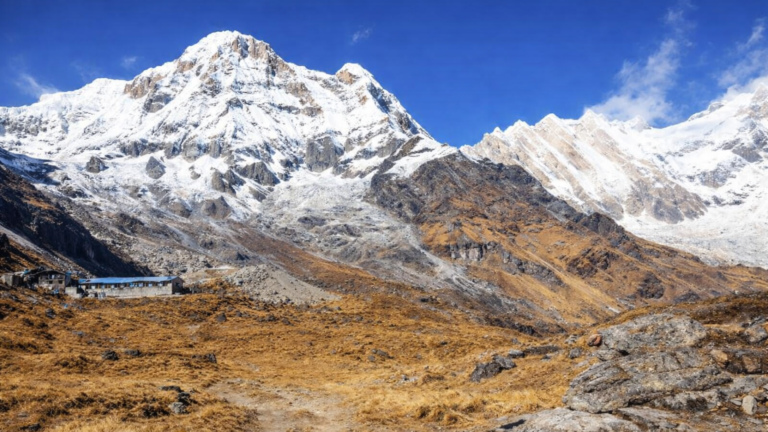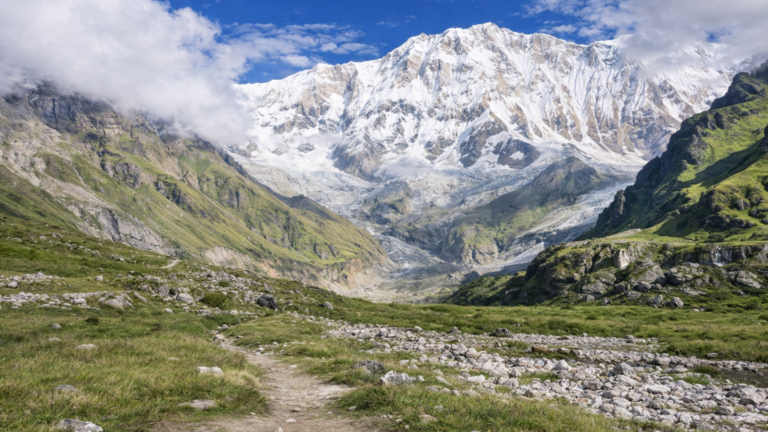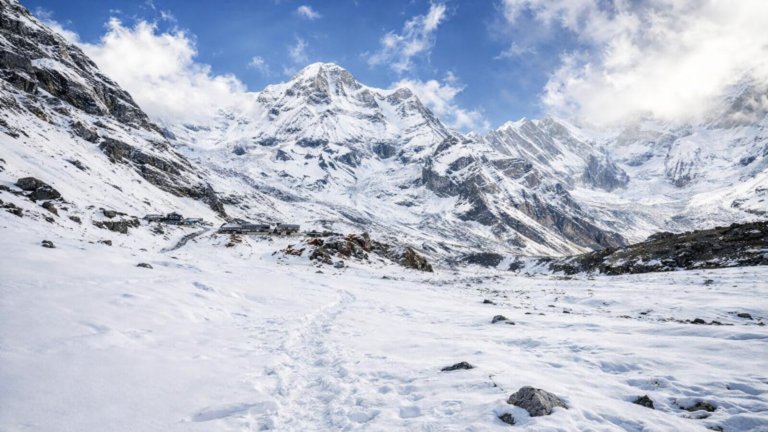
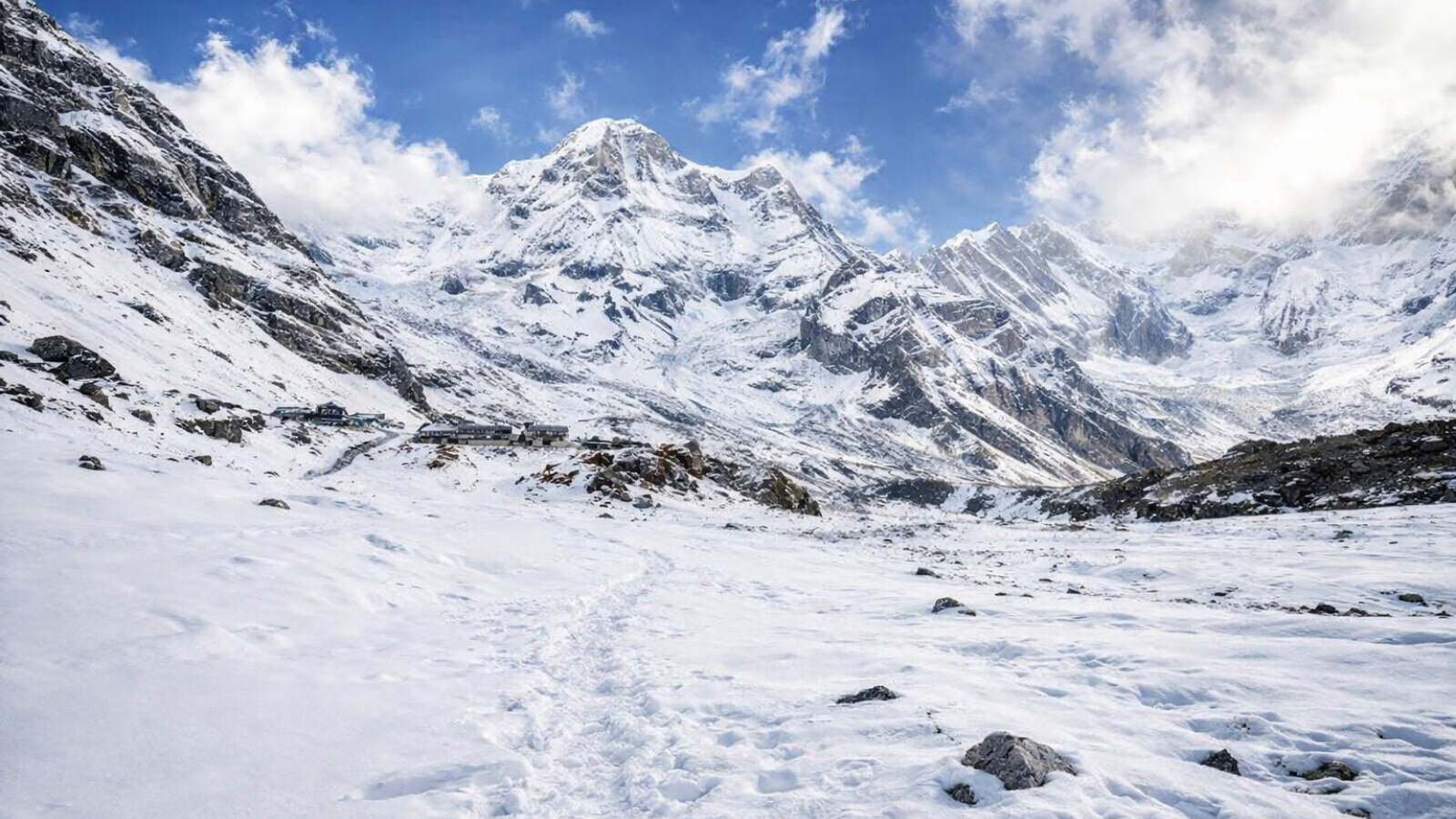

Annapurna Base Camp (ABC) Trek altitude tops out at 4,130 meters (13,550 feet), and unlike many classic treks, most people also sleep at that highest point. That single detail (highest point vs highest sleeping altitude) is what makes Annapurna Base Camp (ABC) feel surprisingly demanding for first-time trekkers, even though it’s lower than Everest Base Camp. Altitude stress is driven by how high you sleep, how quickly your sleeping altitude increases, and how well you manage hydration, fueling, and pace, because fitness improves endurance, but it doesn’t “immunize” anyone against Acute Mountain Sickness (AMS).
This guide breaks the Annapurna Base Camp (ABC) altitude profile into clear, beginner-friendly checkpoints: where altitude risk meaningfully starts (around 2,500–3,000 m), which sections create the biggest jumps (especially Deurali → Machhapuchhre Base Camp (MBC) → Annapurna Base Camp (ABC)), and how to choose an itinerary that respects safe sleeping-gain guidelines. You’ll get a simple day-by-day altitude view, practical acclimatization rules (including where a buffer night at Machhapuchhre Base Camp (MBC) helps most), a real-world teahouse strategy for cold nights and disrupted sleep, and an unambiguous symptom action plan, continue vs rest vs descend, so altitude stays a manageable variable, not the reason you turn back.
ABC Trek Altitude
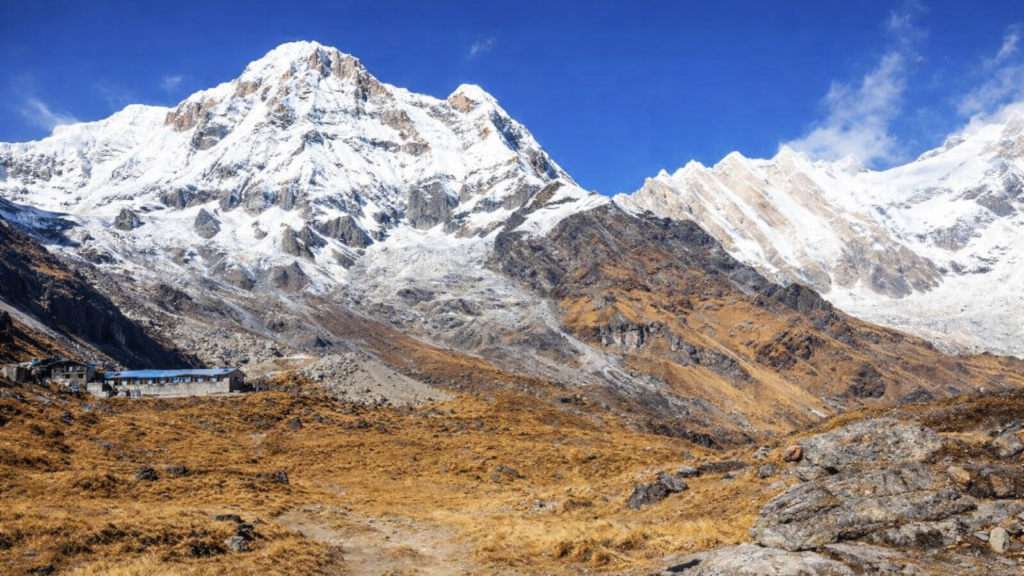
The key Annapurna Base Camp (ABC) altitude concept is highest point vs highest sleeping altitude, because sleeping high is what drives acclimatization stress. A quick altitude facts box (meters/feet) helps beginners instantly understand what’s “normal” to feel at each stage. You’ll also want clear myth-busting: fitness helps endurance, but it doesn’t “immunize” you against altitude symptoms.
What are the Highest Altitude and Highest Sleeping Altitude?
The highest altitude on the ABC trek is 4,130 meters (13,550 feet) at Annapurna Base Camp itself, which is also where most trekkers sleep.
This creates a unique acclimatization challenge. Unlike trekking routes where you ascend to a viewpoint and descend to sleep lower, on the ABC route you sleep at your highest point. The human body adapts to altitude based on sleeping altitude, not daytime maximum altitude. Sleeping at 4,130 meters (13,550 feet) means your cardiovascular system, oxygen absorption, and sleep quality are all under sustained high-altitude stress for an extended period.
This is the distinction that separates prepared trekkers from those who turn back at Machhapuchhre Base Camp (MBC). Knowing this ahead of time shapes your pace, your rest days, and your emergency plan.
What are the key Stops in Annapurna Sanctuary with Meters/Feet
The key altitude checkpoints on the standard ABC trek are listed below.
| Location | Altitude (Meters) | Altitude (Feet) |
| Pokhara | 822 m | 2,697 ft |
| Nayapul / Phedi | 1,070 m | 3,510 ft |
| Tikhedhunga | 1,540 m | 5,052 ft |
| Ghorepani | 2,874 m | 9,429 ft |
| Tadapani | 2,630 m | 8,629 ft |
| Chhomrong | 2,170 m | 7,119 ft |
| Bamboo | 2,310 m | 7,579 ft |
| Dovan | 2,600 m | 8,530 ft |
| Himalaya Hotel | 2,920 m | 9,580 ft |
| Deurali | 3,230 m | 10,597 ft |
| Machhapuchhre Base Camp (MBC) | 3,700 m | 12,139 ft |
| Annapurna Base Camp (ABC) | 4,130 m | 13,550 ft |
The section between Deurali and Machhapuchhre Base Camp (MBC), a gain of 470 meters (1,542 feet) in a single day, is where the majority of altitude-related complaints begin. This table gives you a data-driven view of where the steepest jumps occur and which nights carry the highest risk.
When Altitude Becomes Risky on ABC
Altitude-related risk increases meaningfully above 2,500 meters (8,202 feet), and the ABC route crosses that threshold at Himalaya Hotel, roughly 2 to 3 days before reaching base camp.
The widely accepted guideline in high-altitude medicine, referenced by organizations like the Wilderness Medical Society, is to avoid sleeping more than 300 to 500 meters (984 to 1,640 feet) higher than your previous night’s altitude once you are above 3,000 meters (9,843 feet). On the standard ABC itinerary, the jump from Himalaya Hotel at 2,920 meters (9,580 feet) to Deurali at 3,230 meters (10,597 feet) is manageable. The jump from Deurali to MBC at 3,700 meters (12,139 feet) and then continuing to ABC at 4,130 meters (13,550 feet) the following day is where most beginner trekkers exceed the safe ascent rate.
Many agencies compress the final 2 days of the itinerary. Splitting the Deurali-to-ABC section over 2 nights, sleeping at MBC before continuing, is the single most effective structural adjustment any first-time trekker on the ABC route can make.
Myth about Fitness, Age, and “Pushing Through”
Being physically fit does not protect you from Acute Mountain Sickness (AMS).
This is the most dangerous misconception on the ABC trek. AMS is not a fitness problem, it is a physiological response to reduced oxygen partial pressure at altitude. Marathon runners, military personnel, and experienced hikers develop AMS at the same statistical rate as sedentary individuals ascending too quickly. Fitness improves endurance on steep sections. Fitness does not accelerate oxygen acclimatization.
Age, in the opposite direction of what most people expect, is not a reliable predictor either. Younger trekkers often report higher rates of AMS because they push faster and are more likely to ignore early symptoms. Trekkers in their 50s and 60s who ascend slowly and listen to their bodies frequently outperform and outsafely complete the route compared to competitive 25-year-olds racing to the base camp.
“Pushing through” a headache or nausea at altitude is medically contraindicated. The only physiologically sound response to AMS symptoms above 3,000 meters (9,843 feet) is rest, hydration, and if symptoms worsen, descent.
ABC Altitude Profile by Day
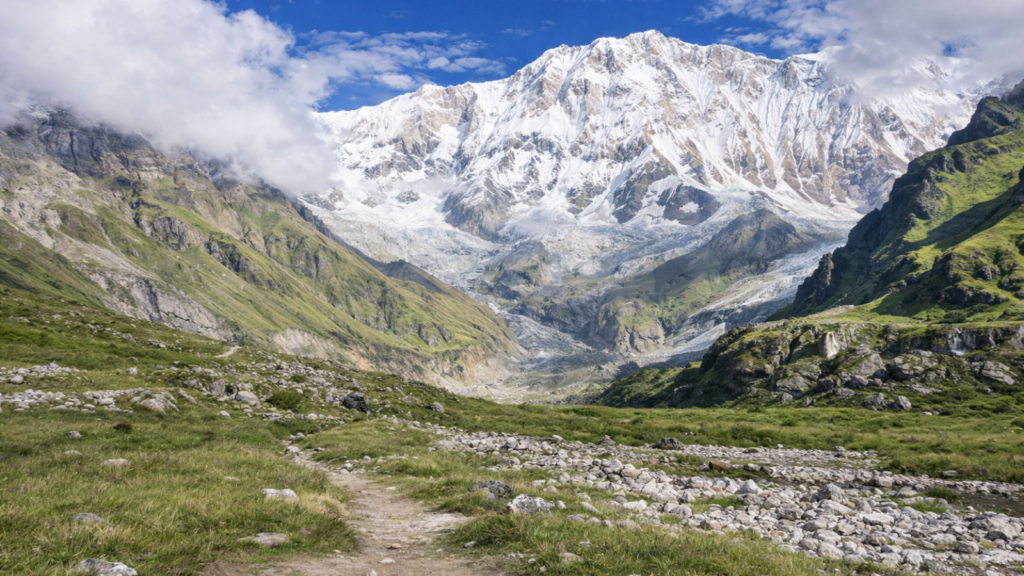
A simple day-by-day altitude table (start/end/sleep + gain/loss) is the fastest way to satisfy search intent and reduce planning confusion. This section should flag the stretch where people commonly struggle and explain that constant stair climbing + daily gain can feel harder than the summit number suggests. Include the key route variation via Poon Hill / Ghorepani and show how it changes the “altitude shape.”
Day-by-Day Altitude Table
The table below reflects the standard 10-day ABC itinerary via Chhomrong.
| Day | Route | Start Alt. | End/Sleep Alt. | Net Gain | Hard Day? |
| Day 1 | Pokhara → Nayapul → Tikhedhunga | 822 m | 1,540 m | +718 m | No |
| Day 2 | Tikhedhunga → Ghorepani | 1,540 m | 2,874 m | +1,334 m | Moderate |
| Day 3 | Ghorepani → Tadapani | 2,874 m | 2,630 m | -244 m | Easy |
| Day 4 | Tadapani → Chhomrong | 2,630 m | 2,170 m | -460 m | Moderate (descent) |
| Day 5 | Chhomrong → Bamboo | 2,170 m | 2,310 m | +140 m | Easy |
| Day 6 | Bamboo → Himalaya Hotel | 2,310 m | 2,920 m | +610 m | Moderate |
| Day 7 | Himalaya Hotel → Deurali | 2,920 m | 3,230 m | +310 m | Easy-Moderate |
| Day 8 | Deurali → MBC → ABC | 3,230 m | 4,130 m | +900 m | Hard Flag |
| Day 9 | ABC → Bamboo (descent) | 4,130 m | 2,310 m | -1,820 m | Moderate |
| Day 10 | Bamboo → Nayapul → Pokhara | 2,310 m | 822 m | -1,488 m | Easy |
Day 8 carries the hard flag not because the terrain is technically difficult, but because trekkers are sleeping at their highest point after a cumulative fatigue of 7 days. Many agencies now recommend splitting Day 8 into 2 stages, sleeping at MBC on Day 8 and continuing to ABC on Day 9.
Why ABC Feels Tough Even If the Max Altitude Isn’t Extreme
4,130 meters (13,550 feet) is significantly lower than Everest Base Camp at 5,364 meters (17,598 feet), yet the ABC trek still produces a high rate of AMS complaints.
There are 3 primary reasons for this. Firstly, the cumulative elevation gain across the approach is steep and relentless, totaling over 4,000 meters (13,123 feet) of ascent from Pokhara. Secondly, the terrain inside the Annapurna Sanctuary offers no escape route other than straight back down, psychological pressure accelerates poor decision-making. Thirdly, many trekkers underestimate the impact of sleeping at the same elevation as the high point, as explained in Section 1.1.
The experience at altitude is not just about meters on a map. It is about how quickly you gained those meters and how little your body has recovered before sleeping at that height.
What are the Route Variations That Change the Altitude Profile
The route you choose meaningfully changes your altitude exposure in the first 4 days of the trek.
The Ghorepani–Poon Hill approach, which most international trekkers take, reaches 2,874 meters (9,429 feet) at Ghorepani relatively early, usually Day 2, and then descends before re-ascending into the Sanctuary. This creates a natural pre-acclimatization benefit. Your body begins adapting at elevation before you commit to the higher sanctuary section.
The direct route via Jhinu Danda bypasses Ghorepani entirely and enters the Sanctuary from Chhomrong without early altitude exposure. Trekkers on this route arrive at altitude above 3,000 meters (9,843 feet) without the same early-stage preparation. The direct route is shorter in distance but carries slightly higher AMS risk for first-time trekkers. The Poon Hill variation is the better option for beginners, not for the scenery alone, but for the physiological head start.
ABC Elevation Chart
The altitude profile of the ABC trek follows an undulating wave rather than a straight incline, and the final committed ascent inside the Sanctuary is where the body’s adaptation is most challenged.
Visualizing the route as 3 distinct altitude bands helps.
- The first band, from Pokhara to Chhomrong (822 meters to 2,170 meters / 2,697 to 7,119 feet), is a warm-up zone.
- The second band, from Chhomrong to Deurali (2,170 meters to 3,230 meters / 7,119 to 10,597 feet), is the onset zone where mild AMS symptoms, headache, reduced appetite, disrupted sleep, first appear in susceptible trekkers.
- The third band, from Deurali to ABC (3,230 meters to 4,130 meters / 10,597 to 13,550 feet), is the high-risk zone where unresolved symptoms from the second band accelerate into serious concern.
Most reported AMS cases on the ABC route begin in the second band and become decision points in the third. Catching symptoms early in the second band, and responding correctly, is what separates successful summits from forced turnarounds.
Acclimatization Plan Made for Beginners
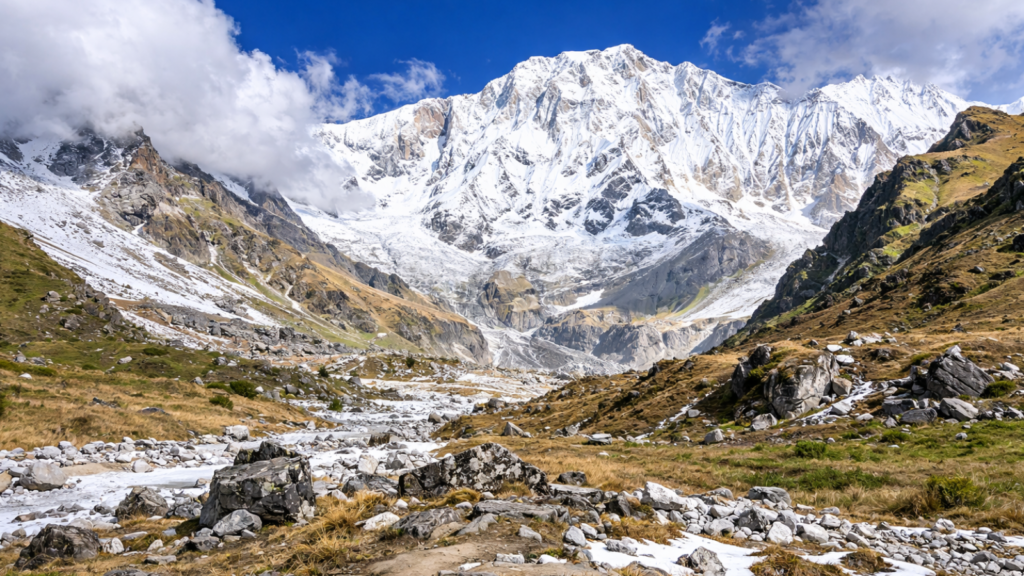
Your acclimatization section should give simple numeric pacing rules, plus where to add a buffer night without guessing. It should also include an altitude-ready food and hydration strategy that works in teahouses (warm fluids, steady carbs, and smart timing around alcohol). Medication notes should stay agency-safe: “talk to a clinician,” who should avoid it, and why it never replaces a sensible ascent.
Simple Ascent-Rate Rules for ABC
The standard rule in high-altitude medicine is to sleep no more than 300 to 500 meters (984 to 1,640 feet) higher than the previous night once above 3,000 meters (9,843 feet).
On the ABC trek, the practical application of this rule means adding an extra night at Machhapuchhre Base Camp (MBC) at 3,700 meters (12,139 feet) before continuing to ABC at 4,130 meters (13,550 feet). Without this buffer, trekkers gain 900 meters (2,953 feet) of sleeping altitude in a single day, nearly double the recommended maximum.
A secondary rule that gets less attention is the pace within a single day. Ascending slowly and reaching the next teahouse by early afternoon gives the body several additional hours at altitude before sleep. Trekkers who arrive at teahouses at 2:00 PM have 5 to 6 hours of passive acclimatization before bed. Trekkers who rush and arrive at 4:30 PM lose that window entirely. Start early, walk slowly, and arrive with daylight to spare.
Best Places to Add a Buffer Night
The 2 most valuable buffer night locations on the ABC route are Chhomrong at 2,170 meters (7,119 feet) and Machhapuchhre Base Camp (MBC) at 3,700 meters (12,139 feet).
- An extra night at Chhomrong benefits trekkers who felt any breathlessness or headache during the Ghorepani-to-Tadapani section, or those who notice their sleep quality deteriorating. Chhomrong is the last point before committing to the inner Sanctuary, and it has the best facilities, mobile signal, and warm meals of any stop before ABC. Using it as a deliberate rest day is a wise investment.
- An extra night at MBC is universally recommended for first-time trekkers at altitude. MBC benefits most those in 4 categories: firstly, trekkers over the age of 60; secondly, trekkers who experienced any AMS symptoms below 3,500 meters (11,483 feet); thirdly, trekkers on a compressed itinerary of fewer than 9 days; fourthly, trekkers who did not do any altitude preparation above 2,500 meters (8,202 feet) in the 3 months prior to the trek.
What MBC prevents is arrival at ABC in an already-compromised state. Trekkers who sleep at MBC before ABC consistently report better summit-day energy, clearer cognition, and fewer headaches compared to those who push straight through from Deurali.
Hydration and Food Strategy at Altitude
Dehydration at altitude accelerates AMS symptoms and impairs the body’s ability to acclimatize, and most trekkers arrive at each teahouse at least mildly dehydrated.
The target fluid intake above 3,000 meters (9,843 feet) is 3 to 4 liters (101 to 135 fluid ounces) of water per day, significantly more than most people drink at sea level. Carry a 1-liter (34 fluid ounce) bottle and refill consistently throughout the day rather than drinking large volumes at mealtimes.
Carbohydrate-rich foods, dal bhat, rice, noodle soup, porridge, are the practical high-altitude diet for good reason. The body processes carbohydrates more efficiently at altitude compared to fats and proteins, and the electrolyte content in traditional Nepali food supports fluid retention. Eat even when appetite is low. Loss of appetite is an early AMS signal, and forcing caloric intake helps the body maintain function.
Alcohol consumption above 3,000 meters (9,843 feet) is a direct acclimatization sabotage. Alcohol suppresses respiratory function during sleep, reducing the oxygen saturation recovery that occurs naturally during rest. One beer at altitude produces a disproportionate dehydration and ventilation effect compared to the same drink at sea level. Delay alcohol celebrations until you are back below 2,000 meters (6,562 feet), Pokhara is the right venue for that.
Diamox and Other Meds: What to Discuss Before the Trek
Acetazolamide (Diamox) is a prescription medication that reduces AMS risk by stimulating faster, deeper breathing, but it is not a substitute for proper acclimatization pacing.
Diamox works by mildly acidifying the blood, which increases respiratory drive and improves oxygen absorption during sleep. The standard preventative dose is 125 milligrams (mg) to 250 mg twice daily, started 24 hours before ascending above 2,500 meters (8,202 feet). The most common side effect is increased urination and a tingling sensation in the fingers and lips, both normal and harmless.
Trekkers who avoid Diamox include those with sulfa drug allergies, kidney conditions, or those who are pregnant. Every trekker considering Diamox needs a conversation with a qualified physician before departure, not a recommendation from a guesthouse owner or a forum post.
Reputable agencies brief clients on Diamox during pre-trek orientations in Pokhara, alongside pulse oximeter readings and emergency descent protocols. A pulse oximeter reading below 80% SpO2 at rest, combined with AMS symptoms, is the medical trigger point most trained guides use as the threshold for initiating descent.
Altitude Sickness on ABC
Altitude sickness content should be practical: a quick AMS checklist, clear HACE/HAPE red flags, and a simple decision tool (continue vs rest vs descend). The action plan needs to be unambiguous: stop, reduce exertion, monitor, and descend if symptoms worsen or don’t improve. Add realistic notes on oxygen and evacuation so readers don’t rely on “quick fixes” instead of the correct response.
AMS Symptom Checklist and Self-Check
AMS symptoms typically appear within 6 to 12 hours of arriving at a new altitude and include headache, nausea, fatigue, dizziness, and loss of appetite.
Use the Lake Louise AMS Score as a quick self-check tool. Rate headache severity, gastrointestinal distress, fatigue, and dizziness each on a scale of 0 to 3. A combined score of 3 or above, with headache as a mandatory component, indicates AMS.
The decision framework is straightforward. Rest and hydrate at the current altitude if symptoms are mild (score 3 to 5) and not worsening. Descend 300 to 500 meters (984 to 1,640 feet) immediately if symptoms score above 6 or if any single symptom deteriorates over 12 to 24 hours of rest. Never ascend if any AMS symptoms are present, this is the cardinal rule of high-altitude trekking.
HACE/HAPE Danger Signs
High Altitude Cerebral Edema (HACE) and High Altitude Pulmonary Edema (HAPE) are life-threatening conditions that require immediate descent and emergency medical attention.
HACE symptoms include severe, unrelenting headache unresponsive to ibuprofen, loss of coordination (the inability to walk heel-to-toe in a straight line is a rapid field test), confusion, disorientation, and in advanced cases, loss of consciousness. HAPE symptoms include breathlessness at rest (not just during exertion), a persistent dry or productive cough, especially one producing pink or frothy sputum, extreme fatigue, and cyanosis (blue lips or fingertips).
The critical distinction from standard AMS is the severity and the combination. AMS is uncomfortable but manageable with rest. HACE and HAPE are emergencies where every hour of delayed descent increases mortality risk. A trekker who cannot walk a straight line at MBC needs to descend immediately, not after one more night of sleep.
When Symptoms Start: The Clear Action Plan
The immediate response to any AMS symptoms above 3,000 meters (9,843 feet) follows 4 steps: stop ascending, rest at the current altitude, monitor symptoms every 4 hours, and descend if no improvement within 12 to 24 hours.
The “small descent” rule is a practical concept that most trekking guides on the ABC route apply: even a descent of 200 to 300 meters (656 to 984 feet) produces a measurable improvement in SpO2 and symptom relief. A trekker struggling at ABC at 4,130 meters (13,550 feet) who descends to MBC at 3,700 meters (12,139 feet) drops 430 meters (1,411 feet) and frequently reports significant symptom reduction within 2 to 4 hours.
The mistake many trekkers make is waiting too long to apply this rule, either due to summit pressure, financial investment, or group dynamics. Guides trained in high-altitude protocols have the authority to mandate descent regardless of a client’s reluctance. Trekkers who argue with a guide over descent decisions are putting themselves at serious risk.
Oxygen and Evacuation Reality
Supplemental oxygen cylinders at ABC and MBC are carried by some teahouses and agencies for emergency use, but availability is not guaranteed and cylinders are not a treatment for HACE or HAPE, they are a stabilization tool during descent.
The small pocket-sized “oxygen cans” sold at outdoor retailers and pharmacies provide 1 to 3 minutes of oxygen per canister and are largely ineffective for serious altitude emergencies. They provide a brief psychological comfort but do not meaningfully raise blood oxygen saturation for long enough to substitute for descent or cylinder oxygen.
Mobile phone signal inside the Annapurna Sanctuary is unreliable above Chhomrong. Most agencies equip their guides with satellite communicators or maintain radio contact with Chhomrong-based support teams. Helicopter evacuation from the Sanctuary is weather-dependent and requires either pre-arranged helicopter insurance or immediate cash payment, minimum USD 3,000 to USD 5,000 (NPR 400,000 to NPR 665,000). Every trekker on the ABC route needs travel insurance that explicitly covers high-altitude helicopter evacuation before departing Kathmandu. Attempting an ABC trek without this coverage is a financial and medical risk no budget justifies
Planning about Altitude, Weather, Routes, and Comparisons
Planning for altitude is mostly planning for cold nights, sleep disruption, and pace, not just packing “warm stuff.” A dedicated sleep-at-altitude paragraph improves relevance because it’s one of the most searched (and complained-about) issues on ABC. Finish with comparisons and an agency checklist that proves competence and helps users choose between ABC and other treks like Everest Base Camp, Annapurna Circuit, and Mardi Himal Trek.
How Altitude Changes Weather and Packing
Temperatures at ABC drop to -10°C (14°F) and below at night during the winter season (December to February), with significant wind chill inside the Annapurna Sanctuary.
Even during the peak trekking seasons, spring (March to May) and autumn (September to November), nighttime temperatures at ABC regularly fall to -5°C (23°F). Daytime temperatures inside the Sanctuary are heavily affected by cloud cover and wind funneling through the amphitheater walls.
The layering system for ABC requires 3 functional layers: firstly, a moisture-wicking base layer; secondly, an insulating mid-layer (down jacket minimum 600 fill power); thirdly, a wind and waterproof outer shell. Sleeping bags rated to -10°C (14°F) are appropriate for ABC, teahouse blankets are available but inconsistent in warmth and cleanliness.
Teahouse dining rooms are heated intermittently with wood or kerosene stoves. Trekkers who pack an extra insulating layer for evenings in the dining room stay significantly warmer and sleep better. The temperature in sleeping quarters is generally 2°C to 5°C (36°F to 41°F) in the Sanctuary during autumn, budget for it in your gear selection.
Sleep at Altitude in Teahouses
Disrupted sleep is one of the most consistent complaints at altitude above 3,000 meters (9,843 feet), and it is a normal physiological response, not a sign of serious illness.
Periodic breathing, a pattern of alternating deep and shallow breaths triggered by reduced oxygen levels, causes frequent nighttime waking at altitude. It is uncomfortable but medically harmless in the absence of other AMS symptoms. SpO2 readings drop naturally during sleep at altitude, often 5 to 10 percentage points below daytime levels.
Practical improvements to altitude sleep quality include: sleeping with a slightly elevated upper body (two stacked pillows reduce the sensation of breathlessness), avoiding heavy meals within 2 hours of sleep, staying hydrated through the evening without drinking excessively in the final hour before bed, and avoiding all alcohol and sedative medications including antihistamines. Diamox, if prescribed, demonstrably reduces periodic breathing and improves sleep quality at altitude, this is a secondary benefit that trekkers on the medication often appreciate.
Altitude Comparison of ABC vs Annapurna Circuit vs Mardi Himal Trek vs Everest Base Camp
The ABC trek sits in the middle of the difficulty spectrum among major Nepal treks, higher than Mardi Himal, comparable in its critical altitude to parts of the Annapurna Circuit, but significantly lower than Everest Base Camp.
| Trek | Max Altitude | Highest Sleep | AMS Risk for Beginners |
| Mardi Himal Trek | 4,500 m (14,764 ft) | 4,200 m (13,780 ft) | Moderate-High |
| Annapurna Base Camp | 4,130 m (13,550 ft) | 4,130 m (13,550 ft) | Moderate |
| Annapurna Circuit | 5,416 m (17,769 ft) | 4,925 m (16,158 ft) | High |
| Everest Base Camp | 5,364 m (17,598 ft) | 5,364 m (17,598 ft) | High |
The Mardi Himal Trek comparison surprises many trekkers, Mardi reaches a higher absolute altitude than ABC but is a less popular altitude preparation option because the route has fewer teahouses and less emergency infrastructure. ABC has better-established teahouse networks, more experienced guides, and clearer descent routes.
For first-time Nepal trekkers without prior altitude experience above 3,000 meters (9,843 feet), ABC is the most appropriate starting point before considering the Annapurna Circuit or Everest Base Camp.
Altitude Safety Checklist
Every reputable trekking agency operating on the ABC route applies a structured altitude safety protocol, and trekkers who book independently bypass these safeguards entirely.
A well-run ABC operation includes 6 core safety practices:
- Firstly, pre-trek health screening in Pokhara that identifies cardiovascular conditions, respiratory issues, or prior AMS history.
- Secondly, route briefing that sets realistic expectations for daily altitude gain and buffer day placement.
- Thirdly, guide certification in Wilderness First Aid (WFA) or equivalent, with practical AMS assessment training.
- Fourthly, pulse oximeter use at every significant altitude stop, MBC and ABC readings are mandatory on responsible operations.
- Fifthly, a clearly communicated descent protocol that guides act on without requiring client approval.
- Sixthly, verified helicopter evacuation insurance confirmation before departure from Pokhara.
Trekkers who solo trek or join low-cost group packages that skip these protocols carry materially higher risk. Questions to ask any agency before booking include whether they carry a pulse oximeter, what their descent threshold SpO2 level is, whether their guides hold current WFA certification, and whether their emergency communication protocol is radio or satellite-based.
The altitude of Annapurna Base Camp at 4,130 meters (13,550 feet) is entirely within reach for healthy, well-prepared beginners. The preparation, pacing, and emergency planning decisions you make before arriving in Nepal determine whether altitude becomes the defining challenge of the trek, or simply the backdrop to one of the most spectacular mountain environments on earth.
What is the maximum altitude on the Annapurna Base Camp trek?
The maximum altitude on the Annapurna Base Camp trek is about 4,130 meters (13,550 feet) at Annapurna Base Camp. Many itineraries also include Machapuchare Base Camp at 3,700 meters (12,140 feet). Most trekkers spend the highest night at 4,130 meters if they sleep at ABC.
Is ABC higher than Everest Base Camp?
No, ABC is not higher than Everest Base Camp. Everest Base Camp sits at about 5,364 meters, while Annapurna Base Camp sits at about 4,130 meters. Everest Base Camp is roughly 1,234 meters higher. ABC can still cause altitude symptoms if you ascend too quickly.
At what altitude do people usually start feeling symptoms on ABC?
Many trekkers start feeling mild altitude symptoms once they sleep above 2,500 to 3,000 meters. On the Annapurna Base Camp trek, this often occurs near Deurali and the upper valley. Common early symptoms include persistent headache, reduced appetite, and poor sleep.
How many days should beginners choose for safer acclimatization?
Beginners should choose 9 to 12 trekking days for safer acclimatization on the Annapurna Base Camp trek. A 9–12 day itinerary reduces large sleeping-altitude gains and allows gradual adaptation. Extra days provide a safety buffer if symptoms such as headache or fatigue develop.
Where should I add an extra night on the ABC route?
Add an extra night before the largest jump to higher sleeping altitudes on the ABC route. Many trekkers add a buffer night in the mid-route or in the upper valley before moving above 3,000 meters. Use that night to rest, hydrate, and limit exertion.
Does taking Diamox guarantee I won’t get altitude sickness?
No, taking Diamox does not guarantee you will avoid altitude sickness. Diamox can reduce risk, but gradual ascent and proper acclimatization remain the primary prevention methods. Consult a qualified clinician before use. Worsening symptoms require stopping ascent and considering descent.
How can I prevent headaches at altitude on ABC?
Prevent headaches at altitude on ABC by ascending slowly, limiting daily sleeping-altitude gains, and staying hydrated. Eat regular carbohydrate-rich meals and avoid alcohol above 2,500 meters. Reduce pace on steep sections and avoid pushing higher if a headache begins.
Is oxygen available on the ABC route?
Supplemental oxygen is sometimes available on the ABC route through guides or certain lodges, but availability is not guaranteed. Oxygen can stabilize symptoms temporarily, but descent remains the definitive treatment for worsening altitude illness. Plan communication and evacuation support in advance.
How does the Poon Hill route change the altitude profile?
The Poon Hill route adds an early climb to about 3,210 meters before joining the main ABC trail. This approach increases total trekking days and cumulative elevation gain. It provides moderate early altitude exposure but also adds extra ascents and descents.
Who should be extra cautious about altitude on ABC?
Trekkers with a history of altitude illness, heart disease, or lung disease should be extra cautious on ABC. Children and adults over 60 years benefit from slower itineraries of 9–12 days. Anyone taking medications that affect breathing or fluid balance should obtain medical clearance before trekking.