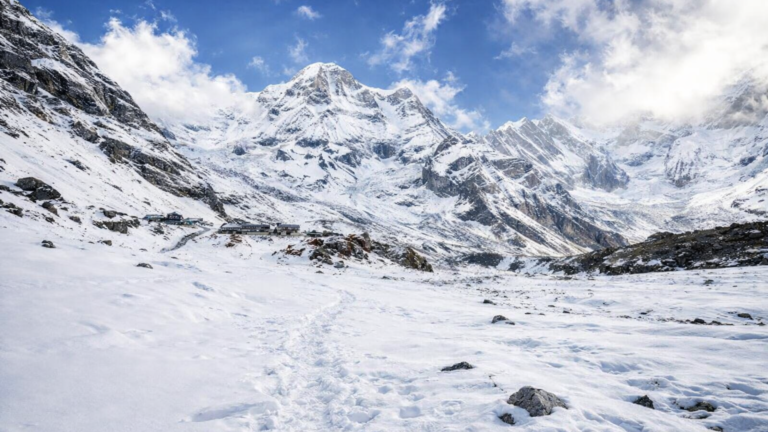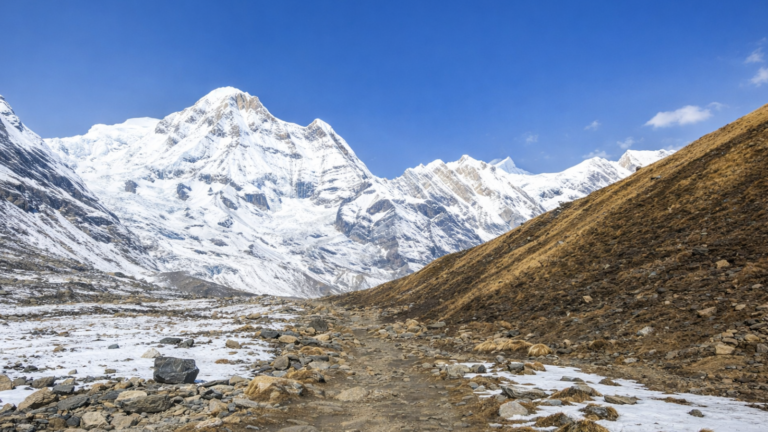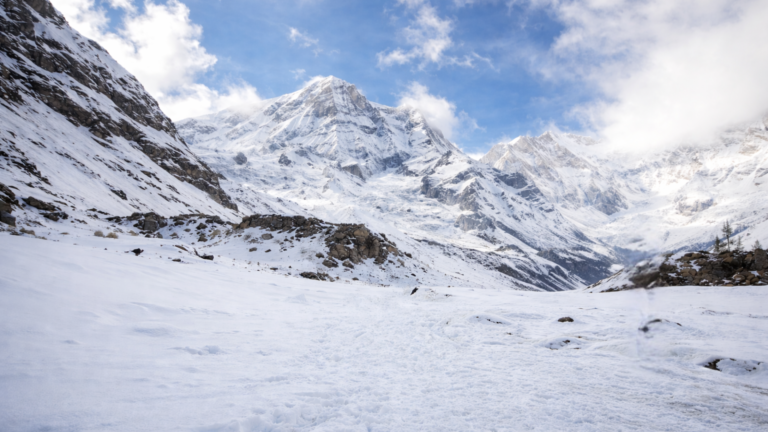
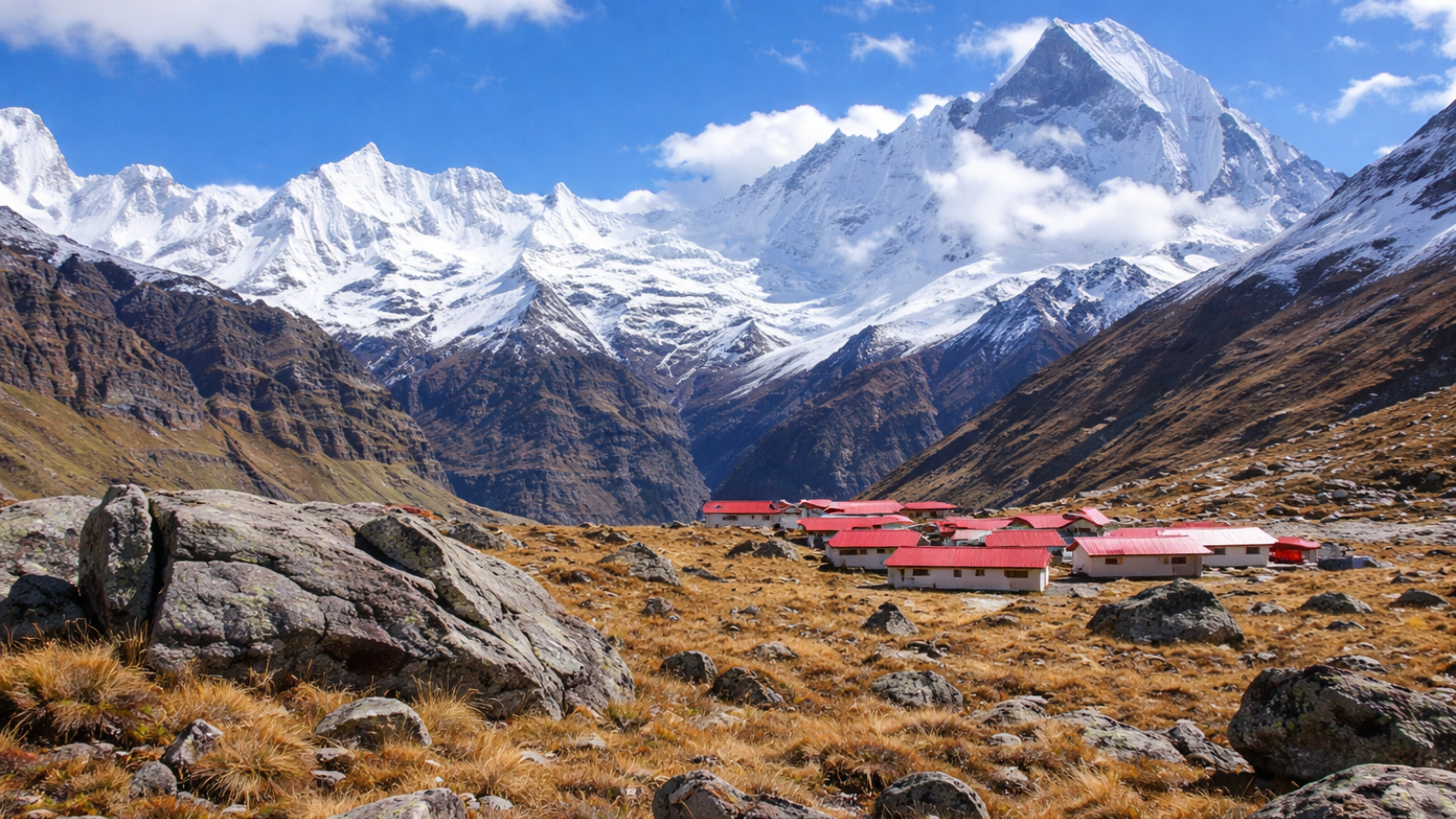

Annapurna Base Camp Trek difficulty sits in that tricky “moderate, but…” category, especially for beginners. Annapurna Base Camp (ABC) isn’t technical climbing and you don’t need ropes or mountaineering skills, but the trail can feel hard because it’s relentless: long stair sections, constant up-and-down terrain, and 10–14 consecutive days of walking. The trek tops out at 4,130 m (13,549 ft), where altitude turns even a gentle incline into real work, and fatigue builds fast if you rush the pace or carry a heavy pack.
This guide breaks down the Annapurna Base Camp (ABC) experience the way first-timers actually feel it on the trail. You’ll see the difficulty by the numbers (distance, elevation gain, daily hours), the hardest sections like the Ulleri stairs and the Chhomrong up/down grind, and the most common struggle points, especially knee pain on descents and altitude symptoms near the sanctuary. You’ll also get practical ways to make Annapurna Base Camp (ABC) easier: a simple 6–8 week training plan, realistic pack-weight targets, pacing and trekking-pole technique, acclimatization rules that keep you safe, and season/route choices that can quietly make the trek far harder, or far more enjoyable.
Is Annapurna Base Camp Trek Difficult for Beginners?
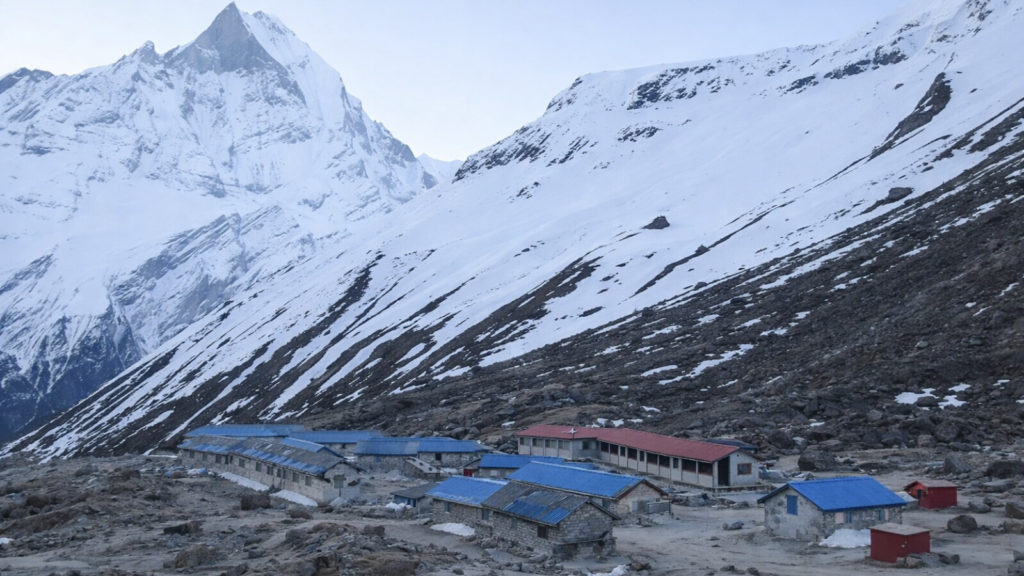
Annapurna Base Camp (ABC) is usually best described as a moderate trek that can feel hard because the trail has long stair sections, repeated ups-and-downs, and several consecutive walking days. Most beginners can complete it if they train a little, keep their pack light, and follow a slow, steady pace, especially as altitude increases near the sanctuary. The key is to judge difficulty realistically: ABC isn’t technical climbing, but it is physically demanding and mentally tiring if you rush.
What is the Difficulty Rating of ABC Trek?
The Annapurna Base Camp (ABC) trek is rated moderate, but moderate in the Himalayas is not what moderate means on a weekend hike back home.
Most guidebooks stamp “moderate” on the ABC trek and leave it there. That single word carries a heavy responsibility, and it often sets first-timers up for a shock on Day 2. Here is the honest version: moderate means you will face multi-hour climbs on uneven stone steps, cross suspension bridges over deep gorges, and sleep at altitudes that genuinely thin your oxygen. You will feel breathless doing things that felt effortless at sea level. Your legs will ache in ways you did not expect. Your appetite will disappear the moment you need calories most.
None of this is meant to scare you off. Thousands of beginners complete the ABC trek every year and call it the most rewarding experience of their lives. The point is to close the gap between expectation and reality, because that gap is where most people struggle or quit.
“Moderate” at 4,130 metres (13,549 feet) demands respect, preparation, and a willingness to move slowly. Trekkers who accept this finish strong. Trekkers who underestimate it often turn back.
Difficulty by the Numbers: Max Altitude, Total Distance, Elevation Gain, Daily Hours
The numbers behind the ABC trek reveal why preparation matters more than fitness alone.
The trek reaches a maximum altitude of 4,130 metres (13,549 feet) at Annapurna Base Camp. The total trekking distance ranges from 110 kilometres (68 miles) to 130 kilometres (80 miles), depending on the entry point and route variation chosen. The total elevation gain from the most common starting point at Nayapul sits at approximately 3,000 metres (9,842 feet).
Daily trekking hours average 5 to 7 hours of active walking, with some demanding days stretching to 8 hours. The vertical gain on hard days peaks between 800 metres (2,624 feet) and 1,000 metres (3,280 feet). Most itineraries run 10 to 14 days, with the 12-day version offering the most comfortable pacing for beginners.
The 4 numbers that matter most are these: 4,130 metres of altitude, 3,000 metres of total climb, 7 hours of average daily walking time, and 10 to 14 days on the trail. No single number tells the full story, the combination of all 4 is what makes the ABC trek genuinely challenging.
Who Should (and Shouldn’t) Do ABC: Beginners, Intermediate Hikers, and Common Deal-Breakers
The ABC trek suits beginners who are physically active and mentally committed, but it is the wrong choice for trekkers who expect a casual walk.
Beginners make strong candidates for the ABC trek when they walk or exercise regularly (at least 3 to 4 times per week), have experience hiking for 4 to 5 hours on hilly terrain, and hold realistic expectations about discomfort and pace.
Intermediate hikers with multi-day trekking experience find the ABC trek very manageable. The route is non-technical, meaning no ropes, crampons, or climbing skills are required. This distinction matters: difficulty here is about endurance and altitude, not mountaineering skill.
The common deal-breakers that put people at genuine risk are these: active heart or lung conditions, recent surgery within 3 months of the trek, a history of severe Acute Mountain Sickness (AMS), and a refusal to follow descent rules when symptoms appear. Trekkers who ignore fatigue signals, push too fast for altitude gain, or travel without insurance covering high-altitude evacuation place themselves in serious danger.
The ABC trek is not suited for trekkers who cannot commit to at least 6 weeks of preparation training, those with untreated hypertension, or anyone expecting luxury amenities above Chhomrong.
Age & Ability Check: Seniors, Teens, First-Timers, and When to Get Medical Clearance
Age alone does not disqualify anyone from the ABC trek, physical baseline and medical history are the real deciding factors.
- Seniors in their 60s and 70s complete the ABC trek regularly. The trail demands cardiovascular endurance more than raw strength, which means a fit 65-year-old often outperforms an unfit 30-year-old. The key adjustments for seniors are an extended itinerary of 14 days minimum, mandatory medical clearance from a physician, and a porter to manage pack weight.
- Teens aged 14 and above handle the ABC trek well when physically active. The challenge for younger trekkers is patience, the slow-and-steady pace required for altitude acclimatization feels counterintuitive to high-energy teenagers.
- First-timers should seek medical clearance in 3 situations: a known heart or lung condition, any prior history of altitude sickness, and planned travel above 3,500 metres (11,482 feet) without prior high-altitude exposure. Visiting a travel medicine clinic at least 4 weeks before departure gives physicians time to assess risk and, in some cases, prescribe Acetazolamide (Diamox) as a preventive measure. The decision to use Diamox rests with the physician, not the trekker.
What Makes ABC Feel Hard Day-to-Day
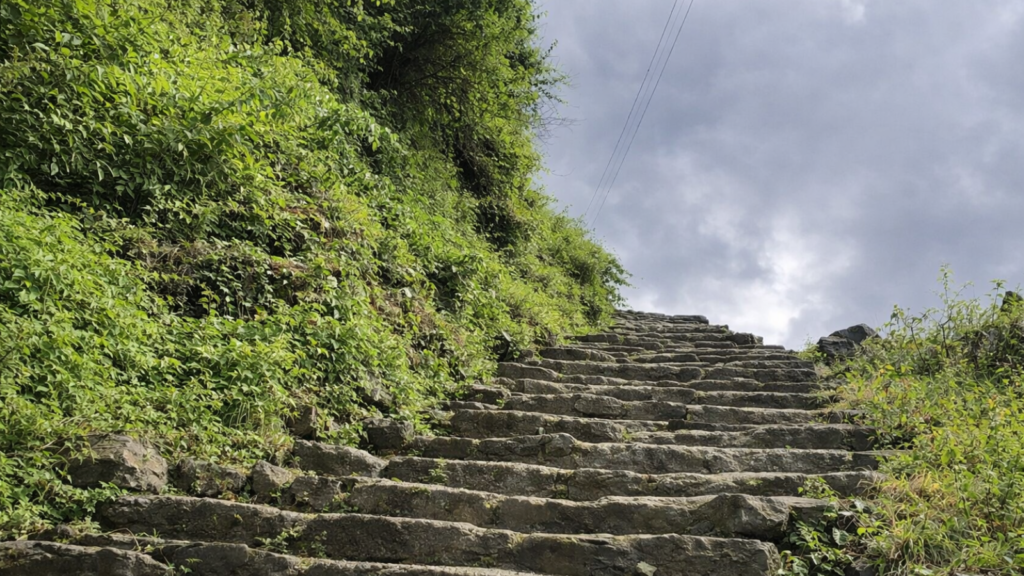
ABC feels difficult mainly because of endless stone steps, uneven terrain, and long descents that punish knees and feet more than people expect. Many trekkers are surprised that “non-technical” doesn’t mean “easy,” especially on days with big elevation gain followed by steep downhill. If you manage pacing, use trekking poles, and protect recovery (sleep, food, hydration), the day-to-day strain becomes predictable instead of overwhelming.
Terrain Truth: Stone Steps, Uneven Paths, and Why “Non-Technical” Can Still Be Tough
Non-technical does not mean easy, it means no ropes, but the terrain itself tests every muscle in your lower body.
The ABC trail is dominated by 3 terrain types: hand-laid stone staircases, narrow rhododendron forest paths with exposed roots, and rocky riverbeds near the Modi Khola valley. The stone staircases are the defining feature of the lower sections. They are steep, irregular in height, and slippery in rain or morning frost. Unlike a paved staircase where each step is identical, trail steps on the ABC route vary in height from 10 centimetres (3.9 inches) to 40 centimetres (15.7 inches), which means your stabilizing muscles never get a rest.
The terrain demands constant micro-adjustments from your ankles, knees, and hips. This is what experienced trekkers mean when they say “the trail is relentless.” It is not one big climb. It is thousands of small decisions about foot placement across 10 to 14 days.
Above Deurali and into the Annapurna Sanctuary, the trail opens into moraines and glacial rock. This section is physically easier in gradient but harder in terms of altitude effect. The same pace that felt comfortable at 2,000 metres (6,561 feet) feels laboured at 3,800 metres (12,467 feet).
The Hardest Sections: Ulleri Stairs and Chhomrong Up/Down Grind
The 2 sections that most trekkers remember as genuinely brutal are the Ulleri staircase and the Chhomrong descent-and-climb combination.
- The Ulleri staircase is the first serious test of the trek. The climb from Tikhedhunga (1,540 metres / 5,052 feet) to Ulleri (2,073 metres / 6,800 feet) covers approximately 1,800 stone steps in a near-continuous vertical push. On a humid morning, this section takes 1.5 to 2 hours of sustained uphill effort. First-timers often hit their first serious mental wall here on Day 2, before their bodies have had time to adapt to daily trekking load.
- The Chhomrong grind is the section most underestimated in planning. Chhomrong sits at 2,170 metres (7,120 feet) and acts as a gateway to the Sanctuary. On the outbound journey, trekkers descend sharply from Chhomrong to the Chhomrong Khola river crossing, then immediately climb back up the other side to Sinuwa. The descent covers approximately 300 metres (984 feet) in vertical drop, followed immediately by a 200-metre (656-foot) climb. On the return leg, the same sequence repeats in reverse. Trekkers returning from 4,130 metres with fatigued legs and depleted energy reserves find this section disproportionately hard relative to its modest altitude.
The strategy that saves most trekkers in both sections: start before 7:00 AM, move in a controlled rhythm, and refuse to speed up just because others pass you.
Hardest Days Explained: Longest Climbs, Longest Descents, and Where Legs Usually Blow Up
The 3 days that consistently challenge trekkers the most are the Tikhedhunga-to-Ghorepani push, the Bamboo-to-Deurali altitude stretch, and the Annapurna Base Camp descent back to Bamboo.
The Tikhedhunga-to-Ghorepani day is the longest by total elevation gain, climbing approximately 1,600 metres (5,249 feet) across 7 to 8 hours. The inclusion of Poon Hill at 3,210 metres (10,530 feet) makes this the hardest Day 3 or Day 4 experience on the classic route. Legs blow up here because this is still early in the trek, before fitness adaptations have fully kicked in.
The Bamboo-to-Deurali section is where altitude begins compounding fatigue. Trekkers cover moderate distance, but the combination of increasing elevation and decreasing oxygen makes the same physical effort feel 20 to 30 percent harder than at lower altitudes.
The descent from ABC back to Bamboo (or Sinuwa) in a single day covers over 2,000 metres (6,561 feet) of descent across 8 to 9 hours. This is where knees, ankles, and hip flexors absorb the highest cumulative impact of the entire trek. Many trekkers who felt strong going up discover that descending is where real injury risk concentrates.
Downhill Pain & Injury Risk: Knees, Blisters, Slips and the Fastest Prevention Wins
The majority of trek-ending injuries on the ABC route happen on the descent, not the ascent, and most are preventable.
- Knee pain from descent is the single most common complaint among ABC trekkers. The impact force on the knee joint during downhill walking reaches 3 to 4 times body weight per step (according to biomechanics research published in the Journal of Biomechanics, 2009). Over thousands of steps across a multi-day descent, this accumulation damages cartilage and inflames tendons in people who have not trained specifically for downhill load.
- Blisters form from friction and moisture. Stone steps generate a distinct downward-sliding pressure on the toes that uphill walking does not produce, accelerating blister formation on the front half of the foot.
- Slips on wet stone steps are the leading cause of acute injuries on the trail. Morning frost on steps above 2,500 metres (8,202 feet) creates invisible ice patches before 8:00 AM.
The fastest prevention wins are these: use 2 trekking poles on all descents (not just one), tape hot spots on toes and heels before blisters form (not after), descend in a controlled zigzag pattern on steep sections rather than straight down, and wear boots with at least 4 to 6 millimetres of sole padding and solid ankle support.
Altitude Difficulty at 4,130 m (How to Stay Safe and Strong)
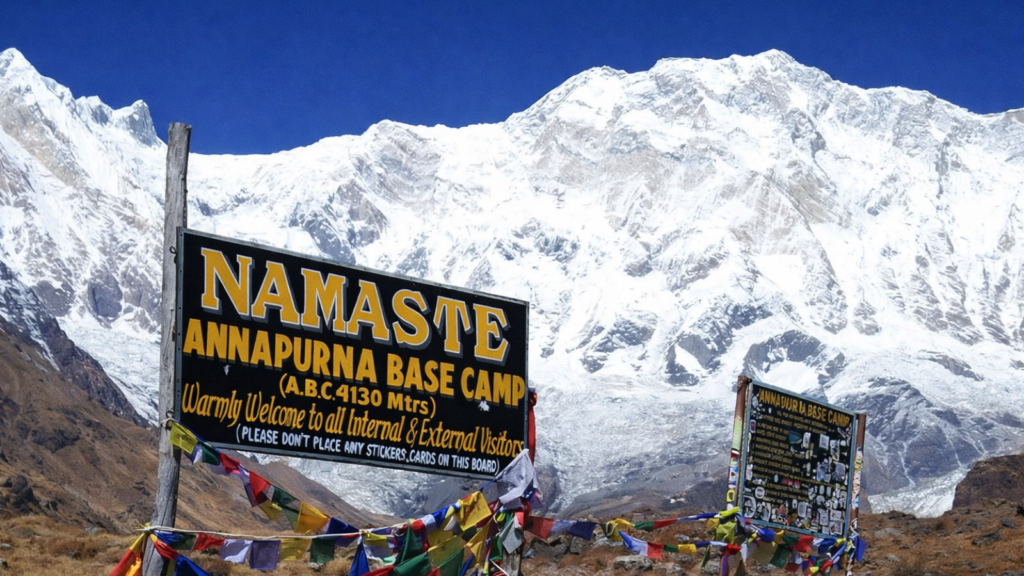
Altitude is the invisible difficulty multiplier on ABC because even a gentle incline can feel exhausting when oxygen is lower at higher villages. The safest approach is to ascend gradually, watch symptoms closely, and treat headaches, nausea, or unusual fatigue as early warning signals, not something to “push through.” When you pace well, hydrate consistently, and keep eating even when appetite drops, ABC becomes far more comfortable and safer.
Why Altitude Makes Everything Harder: Breathing, Sleep, Appetite, and Recovery at Height
At 4,130 metres (13,549 feet), the air contains approximately 40 percent less oxygen than at sea level, and your body works significantly harder to compensate.
The physiological shift begins around 2,500 metres (8,202 feet). At ABC, your breathing rate increases even at rest. Your heart beats faster to circulate oxygen-depleted blood. Sleep quality degrades because periodic breathing (known as Cheyne-Stokes respiration) interrupts normal sleep cycles, causing trekkers to wake repeatedly through the night feeling breathless.
Appetite suppression at altitude is well-documented. The hormone leptin, which regulates hunger, rises with altitude exposure, reducing the urge to eat at precisely the moment caloric needs are highest. Most trekkers consume 3,000 to 4,500 calories per day on the trail but struggle to eat even 2,000 above 3,500 metres (11,482 feet).
Recovery at altitude is slower. Muscle soreness persists longer. Mental fatigue compounds physical exhaustion. Trekkers who felt emotionally resilient at low altitude sometimes experience irritability, low mood, or anxiety above 3,500 metres, all recognized effects of hypoxia on the central nervous system.
Understanding these effects in advance prevents panic. Most trekkers interpret normal altitude symptoms as signs they are failing. They are not. They are acclimatizing.
Normal Fatigue vs AMS: Symptoms, Red Flags, and the “Don’t Push Through This” Rule
Distinguishing normal altitude fatigue from Acute Mountain Sickness (AMS) is the most important skill any ABC trekker carries.
Normal altitude fatigue includes mild headache that resolves with rest, reduced energy and slower pace, occasional dizziness when standing quickly, and slightly disturbed sleep. These symptoms are expected. They do not require descent.
AMS symptoms that demand immediate attention are these: persistent headache unrelieved by ibuprofen or paracetamol after 4 hours, vomiting (not just nausea), loss of balance or coordination (ataxia), confusion or disorientation, and extreme fatigue that makes movement feel impossible. The presence of any 2 of these symptoms simultaneously is a medical emergency.
The “don’t push through this” rule is the most violated principle in Himalayan trekking. The Lake Louise AMS Consensus (Wilderness & Environmental Medicine, 2019) establishes clearly: ascend with symptoms of moderate-to-severe AMS and you risk progression to High Altitude Cerebral Edema (HACE) or High Altitude Pulmonary Edema (HAPE), both of which are life-threatening. Descent by even 300 to 500 metres (984 to 1,640 feet) typically produces rapid symptom relief.
No summit view, no personal milestone, and no sunk-cost reasoning justifies ascending with AMS red flags present.
Simple Acclimatization Plan: Pacing and Smart Sleep-Altitude Strategy in Annapurna Sanctuary
The most effective acclimatization strategy for the ABC trek follows one core principle: climb high, sleep low, and never gain more than 300 to 500 metres (984 to 1,640 feet) of sleeping altitude per day above 3,000 metres (9,842 feet).
The Annapurna Sanctuary has a natural acclimatization advantage built into its geography. Trekkers who follow the classic route sleep at progressively higher teahouses, Sinuwa (2,360 metres / 7,742 feet), Deurali (3,230 metres / 10,597 feet), Machhapuchhre Base Camp (MBC) at 3,700 metres (12,139 feet), and then ABC at 4,130 metres (13,549 feet). This stepwise progression, with no day exceeding 500 metres of sleeping altitude gain, aligns well with acclimatization physiology.
The strategy enhancement that most itineraries miss: spend 2 nights at Chhomrong (2,170 metres / 7,120 feet) rather than 1. This extra rest day costs nothing financially and dramatically improves altitude tolerance for the days above 3,000 metres.
Hydration is directly linked to acclimatization speed. Drink 3 to 4 litres of water per day above 3,000 metres, even without thirst cues. Avoid alcohol above 3,000 metres entirely, it suppresses the respiratory drive your body uses to compensate for thin air.
Fuel and Hydration Strategy: How to Eat and Drink to Reduce Headaches and Boost Energy
Eating enough at altitude is a discipline, not an appetite, and getting it right reduces headaches, improves sleep, and extends your daily energy reserves.
At altitude, prioritize carbohydrates over fats and proteins. Carbohydrates require less oxygen to metabolize, making them the most efficient fuel source above 3,500 metres (11,482 feet). Dal bhat, the traditional Nepali meal of lentils, rice, and vegetables, is genuinely one of the best high-altitude performance foods available on the planet. Most teahouses offer unlimited dal bhat refills, and experienced trekkers use this strategically.
Eat smaller portions 4 to 5 times per day rather than 3 large meals. Altitude-induced appetite suppression makes large meals difficult to stomach, while smaller frequent eating keeps blood glucose stable and energy consistent.
The headache link to dehydration at altitude is direct and well-established. The most common cause of altitude headache is not altitude itself but dehydration accelerated by dry mountain air and increased respiratory rate. Carry a 2-litre (68 fluid ounces) water bottle and refill it actively every 2 to 3 hours on the trail. Water purification tablets or a filtered water bottle reduce dependence on bottled water, cutting costs and plastic waste.
Avoid caffeine above 3,500 metres unless you are a habitual daily user. Caffeine withdrawal headaches compound altitude headaches into a genuinely miserable experience.
How to Make ABC Easier (Training, Packing, and Support)
You can make ABC significantly easier by training for stairs and long walking days, keeping your pack weight low, and mastering a slow uphill rhythm that you can maintain for hours. Small decisions, like using trekking poles, wearing broken-in footwear, and taking short breaks before you’re exhausted, reduce soreness and help you recover overnight. If you’re nervous about route choices, altitude decisions, or daily logistics, a guide (or porter) can lower stress and improve safety.
A Beginner 6–8 Week Training Plan: Stairs, Legs, Cardio, and Recovery (No Gym Needed)
The most effective ABC training plan for beginners targets 4 specific physical demands: stair endurance, leg strength under load, cardiovascular base, and active recovery.
A 6 to 8-week plan structured across 3 phases prepares most beginners adequately for the trail.
- Phase 1 (Weeks 1 to 2): Build the Base Train 4 days per week. Walk 45 to 60 minutes on hilly terrain with a 5-kilogram (11-pound) daypack. Add 10 minutes of stair climbing daily using a building staircase or step platform. Focus on consistency over intensity.
- Phase 2 (Weeks 3 to 5): Build Endurance and Strength Train 5 days per week. Increase weekend walks to 3 to 4 hours with a 7-kilogram (15-pound) pack on varied terrain. Add bodyweight squats (3 sets of 20), lunges (3 sets of 15 per leg), and calf raises (3 sets of 25) on 3 days. Stair sessions extend to 20 to 25 minutes.
- Phase 3 (Weeks 6 to 8): Simulate Trek Conditions Complete 2 back-to-back training days per week, one day of 4 to 5 hours uphill, followed the next day by a 3-hour walk on tired legs. This “second-day” training is the most underused preparation tool, because the ABC trail demands performance on consecutive tired days, not just one strong effort.
No gym is required for any phase. Stairs, hills, and a loaded pack replicate the trail stimulus more accurately than a treadmill at 0-percent incline.
Pack-Weight Targets: What to Carry vs Rent, and When a Porter Makes ABC Feel Easier
Carrying more than 8 to 10 kilograms (17 to 22 pounds) in a daypack on the ABC trek adds disproportionate difficulty, and most trekkers carry too much.
The target daypack weight for comfortable ABC trekking is 6 to 8 kilograms (13 to 17 pounds). This covers a 2-litre water bottle, rain gear, extra layers, first aid basics, snacks, and camera equipment. Everything beyond this threshold is a decision that costs energy every step of the day.
Items worth renting in Pokhara or on the trail: sleeping bags (high-quality -10°C or 14°F rated bags rent for USD 2 to 4 per day), down jackets (USD 2 to 3 per day), and trekking poles (USD 1 to 2 per day). Renting saves 3 to 5 kilograms (6 to 11 pounds) from your bag before you take a single step.
A porter transforms the ABC trek for many beginners. A porter carries up to 25 kilograms (55 pounds) for USD 20 to 30 per day and allows trekkers to walk with a daypack under 5 kilograms (11 pounds). The financial cost of a porter across a 12-day trek sits around USD 240 to 360, a sum that many trekkers spend on coffee and snacks across the same period. Porters are not a luxury. They are a practical tool that increases summit success rates and reduces injury risk, particularly for beginners and older trekkers.
Technique That Saves Your Body: Pacing, Trekking Poles, Breathing Rhythm, Downhill Form
The trekkers who finish the ABC trek strongest are rarely the fittest, they are the ones who understand and apply smart movement technique from Day 1.
- Pacing is the foundational skill. The correct pace on uphill sections is slower than feels natural. A useful test: maintain a pace at which you finish each sentence without pausing for breath. This is the aerobic zone that builds endurance without generating the lactic acid that causes premature exhaustion. Speed up, and you pay the price within 30 minutes. Slow down, and you cover the same ground with significantly less fatigue.
- Trekking poles reduce the load on knees during descent by 25 to 30 percent, according to research published in Medicine & Science in Sports & Exercise (2001). Use 2 poles, not 1. Set the pole length so your elbow forms a 90-degree angle when the pole tip touches the ground beside your foot.
- Breathing rhythm on steep ascents follows a pattern most trekkers discover by accident: exhale fully and forcefully, allowing the inhale to happen passively. This technique, used by high-altitude mountaineers, prevents the shallow breathing pattern that leads to rapid fatigue and mild hypoxia.
- Downhill form centers on 3 adjustments: bend the knees slightly on every step rather than landing with a locked leg, lead with the heel and roll through the foot, and use poles to reduce forward momentum. Looking 3 to 4 metres ahead rather than directly at your feet dramatically improves both safety and efficiency on steep descents.
Solo vs Guided Difficulty: Navigation Stress, Safety Margin, and Who Benefits From Support Most
The ABC trail is well-marked and heavily trafficked, solo trekking is possible, but the safety and experience calculus changes significantly above 3,500 metres (11,482 feet).
Solo trekkers on the ABC route do not face significant navigation challenges below Chhomrong. The trail is clear, teahouses are frequent, and other trekkers provide a de facto social safety net. Most intermediate trekkers with trail experience manage the lower sections without a guide.
The difficulty calculation shifts above Deurali. The Annapurna Sanctuary sits in a high-altitude bowl surrounded by avalanche terrain. Weather windows close rapidly. A solo trekker who develops AMS above MBC faces a situation in which evacuation logistics become genuinely dangerous without local knowledge and communication support. Guides and experienced porters recognize AMS symptoms earlier than most trekkers recognize them in themselves, a critical safety advantage at 3,700 to 4,130 metres.
The trekkers who benefit most from guided support are these: first-timers with no prior high-altitude experience, trekkers traveling outside the main season (October to November or March to April), those with any existing medical considerations, and solo female travelers who prioritize safety networks in remote sections. A licensed guide from a Trekking Agencies Association of Nepal (TAAN) registered operator costs USD 25 to 40 per day and provides logistical, medical, and cultural value that extends far beyond navigation.
Difficulty by Season, Route Options, and Comparisons
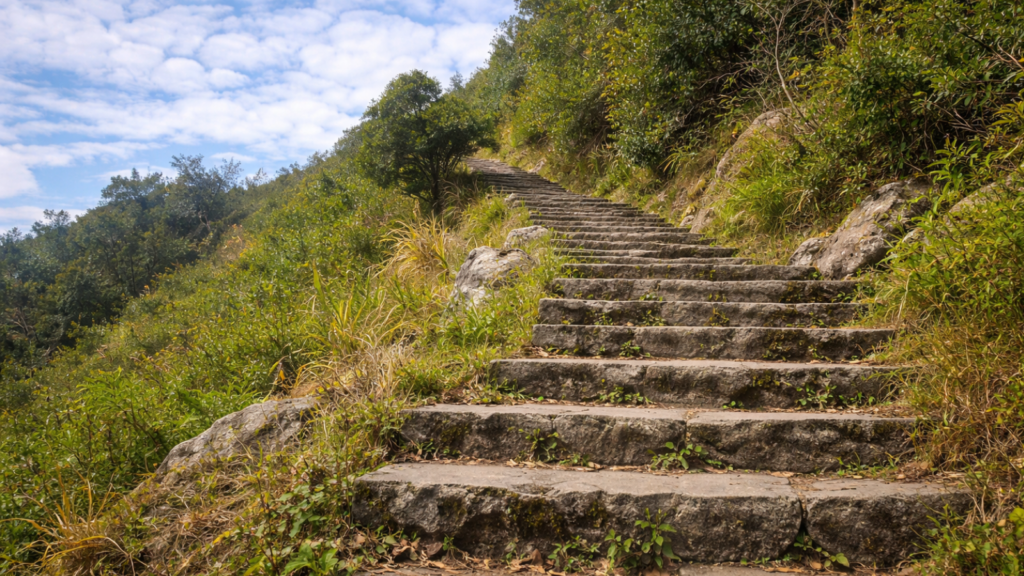
ABC’s difficulty changes with season: clear peak-season days can still feel hard due to crowds and higher prices, while winter and monsoon can add cold, snow, rain, and slippery trail conditions. Route choices matter too, short itineraries increase difficulty because they compress effort and reduce acclimatization comfort, while adding a buffer day often makes the trek feel dramatically easier. Comparing treks helps set expectations: ABC is stair-heavy and relentless, while other routes may feel tougher due to higher altitude, longer distance, or more remote logistics.
Best Time vs Hardest Time: How Weather, Crowds, and Trail Conditions Change Difficulty
The season chosen for the ABC trek changes its difficulty more than almost any other variable a trekker controls.
The 2 peak seasons, October to November and March to April, offer the most stable weather, clear mountain views, and the most reliable teahouse availability. Trails are busy, which some trekkers find reassuring from a safety perspective and others find crowded. Daytime temperatures at ABC range from -5°C to 5°C (23°F to 41°F) in October and 0°C to 8°C (32°F to 46°F) in April. Night temperatures drop to -10°C to -15°C (14°F to 5°F) at base camp in both seasons.
December and January represent the hardest conditions on the ABC trail. Temperatures at base camp drop below -20°C (-4°F) at night. Ice on stone steps above 2,500 metres (8,202 feet) makes the descent sections genuinely dangerous without microspikes. Teahouses reduce operating hours and some close entirely. The views, however, are exceptional for those who prepare properly.
The monsoon season (June to September) is widely considered the most difficult for independent trekkers. Rainfall is heavy, leeches populate the lower trail sections, and landslides regularly close sections of trail with no advance warning. Visibility is poor, removing much of the mountain reward. Some trekkers find the lush green landscape beautiful and crowds nonexistent, but the objective difficulty and risk profile increase substantially.
Bad-Weather Disruption Risk: Snow, Heavy Rain, Landslides, How to Plan Buffers Realistically
Every ABC itinerary needs a minimum 2-day buffer built in, and trekkers who skip this buffer routinely miss Annapurna Base Camp entirely.
Snowfall above 3,500 metres (11,482 feet) can close the Sanctuary approach with minimal warning even in peak season. The narrow gorge between Deurali and MBC funnels avalanche debris across the trail after heavy snowfall, requiring 24 to 48 hours for conditions to stabilize. Guides with local contacts receive real-time updates through teahouse networks, another practical advantage of guided trekking in this specific terrain.
Heavy monsoon rain triggers landslides along the Chhomrong-to-Sinuwa trail and the Jhinu Danda section. These closures are unpredictable and rarely appear on trail maps or apps before they happen.
Buffer planning for a 12-day itinerary means booking return flights for Day 14 at minimum. Trekkers with Day 12 flights and 12-day itineraries leave no margin for weather delays, rest days for mild AMS, or the inevitable afternoon thunderstorm that pins everyone inside a teahouse from 2:00 PM onward. The buffer days cost almost nothing relative to a missed base camp or a rebooking fee at Kathmandu airport.
Route Add-Ons That Change Difficulty: Hot-Spring Recovery at Jhinu Danda and Shortcut Trade-Offs
The Jhinu Danda hot springs are one of the most strategically underused recovery tools on the ABC trail, and a 2-hour detour that pays back physically within hours.
Jhinu Danda sits at 1,760 metres (5,774 feet) and requires a 45-minute descent from Chhomrong on the return leg. The natural hot springs, which sit beside the Modi Khola river, reach temperatures of 40°C to 45°C (104°F to 113°F). Soaking for 45 to 60 minutes reduces muscle inflammation, relieves joint stiffness from the long Sanctuary descent, and produces a measurable improvement in energy and mood for the following day. For trekkers carrying knee or ankle soreness from the descent, Jhinu Danda is not a detour, it is active recovery.
The shortcut trade-offs worth knowing: the Ghorepani route extension (adding Poon Hill sunrise) adds 1 to 2 days and 1,600 metres (5,249 feet) of elevation gain to a base itinerary, significantly increasing total difficulty for beginners. The Ghandruk loop shortcut eliminates the Ghorepani section and reduces distance by 2 days, but misses the most photographed mountain viewpoint on the route. The shortcut works well for trekkers who prioritize the Sanctuary over the panoramic loop.
ABC vs Everest Base Camp vs Langtang Valley: Which Trek Feels Harder and Why
Comparing the 3 most popular Nepal treks reveals that the Everest Base Camp (EBC) trek is objectively harder, ABC is the moderate middle ground, and the Langtang Valley is the most accessible for true beginners.
The Everest Base Camp trek reaches 5,364 metres (17,598 feet), 1,234 metres (4,048 feet) higher than ABC. The approach from Lukla involves more days at sustained altitude, harder cold, and a significantly higher AMS risk. EBC demands more preparation, more acclimatization time, and carries a higher evacuation rate. For first-timers, attempting EBC without prior high-altitude trekking experience is a significant risk. ABC serves as the ideal EBC preparation trek, which is precisely why many trekkers do ABC first.
Langtang Valley, topping out around 3,800 metres (12,467 feet) at Kyanjin Gompa, is shorter (7 to 10 days), lower, and physically gentler than ABC. The terrain is less relentlessly stepped. The daily elevation gains are smaller. Langtang makes a strong choice for the genuine beginner who wants Himalayan experience before committing to ABC.
The difficulty ranking from easiest to hardest across the 3 treks is this: Langtang Valley first, Annapurna Base Camp second, and Everest Base Camp third. ABC sits at exactly the right challenge level for motivated beginners who are willing to train, pace themselves intelligently, and respect altitude, and it delivers arguably the most intimate high-altitude mountain amphitheater view in all of Nepal.
Is Annapurna Base Camp trek difficult for beginners?
The Annapurna Base Camp trek is moderately difficult for beginners. Trekkers walk 5–7 hours per day for 7–12 days and climb thousands of stone steps. Long stair sections and consecutive hiking days create fatigue. Beginners who train with hill walking and stair sessions for 4–8 weeks usually complete the trek successfully.
How fit do you need to be for ABC?
You need moderate cardiovascular endurance for Annapurna Base Camp. Trekkers must walk 5–7 hours per day, manage steep ascents, and recover overnight for 7–12 days. Train with 8–12 km hikes and 300–600 meters of elevation gain weekly for at least 4–6 weeks. Basic endurance is sufficient.
Is Annapurna Base Camp harder than Everest Base Camp?
Annapurna Base Camp feels harder on the legs, while Everest Base Camp feels harder on altitude. ABC includes steep stair climbs and repeated ascents and descents over 7–12 days. EBC reaches 5,364 meters and involves longer exposure above 4,000 meters, which increases breathlessness and recovery time.
What is the hardest part of the ABC trek?
The hardest part of the ABC trek is the repeated steep stair climbs and long descents. Trekkers gain and lose hundreds of meters in a single day, which strains quads and knees. Fatigue accumulates after 5–7 consecutive hiking days. Consistency over multiple days creates the main challenge.
How bad is altitude on ABC (4,130 m)?
Altitude at Annapurna Base Camp reaches 4,130 meters and can cause mild to moderate symptoms. Trekkers often experience breathlessness, reduced appetite, and slower recovery above 3,500 meters. Ascending gradually over 7–10 days significantly reduces acute mountain sickness risk.
Can you do ABC without a guide?
You can complete Annapurna Base Camp without a guide if you have trekking experience and route knowledge. The trail is well-marked and popular. However, guides improve pacing, acclimatization decisions, and safety during bad weather. Beginners benefit significantly from guided support.
How many days are best to reduce difficulty?
Plan 9–12 days for Annapurna Base Camp to reduce difficulty. A longer itinerary spreads elevation gain, improves recovery, and lowers fatigue. Short 6–7 day schedules compress climbs and increase exhaustion. Adding one extra acclimatization or buffer day significantly improves comfort and safety.
Is ABC dangerous?
Annapurna Base Camp is generally safe when trekkers follow proper pacing and preparation. The main risks include altitude illness above 3,500 meters, slips on wet or icy trails, and knee injuries during descents. Most incidents occur due to rushing, poor acclimatization, or ignoring symptoms.”
What time of year makes ABC easiest?
October to November and March to April make Annapurna Base Camp easiest. These months offer stable weather, moderate temperatures between 5°C and 20°C, and clear mountain views. Winter adds snow and sub-zero nights, while monsoon brings heavy rain and slippery trails.
How can I make ABC feel easier during the trek?
Make Annapurna Base Camp feel easier by pacing slowly, taking short breaks every 60–90 minutes, and drinking 2–3 liters of water daily. Use trekking poles to reduce knee strain on descents. Sleep at least 7–8 hours per night and stop ascending if altitude symptoms worsen.