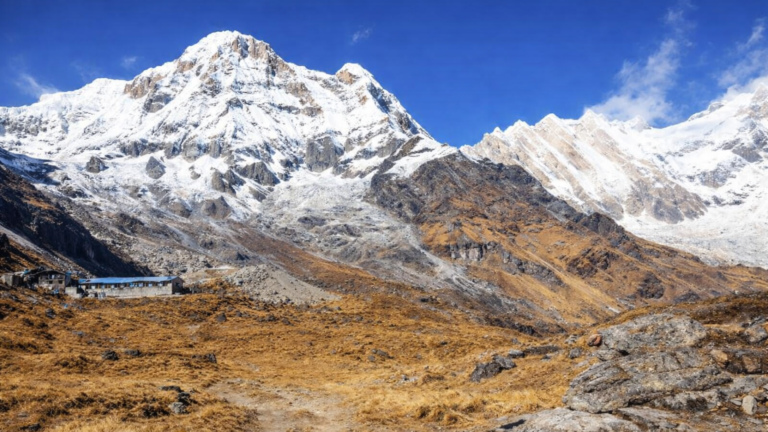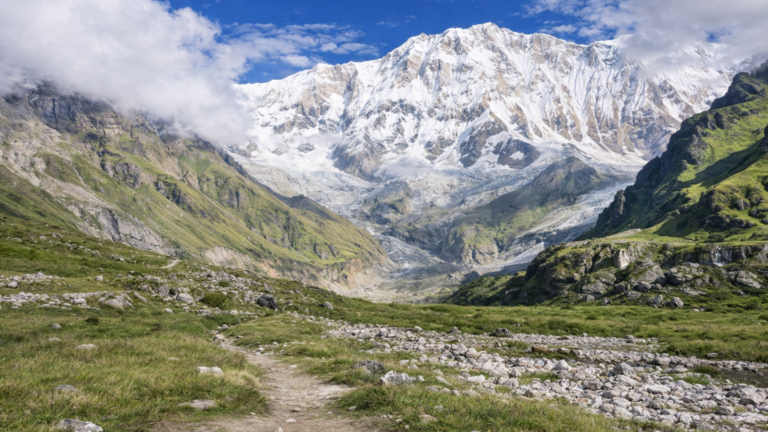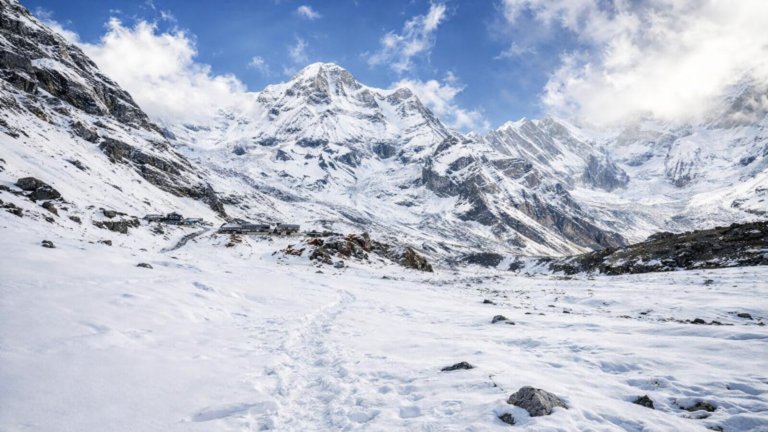
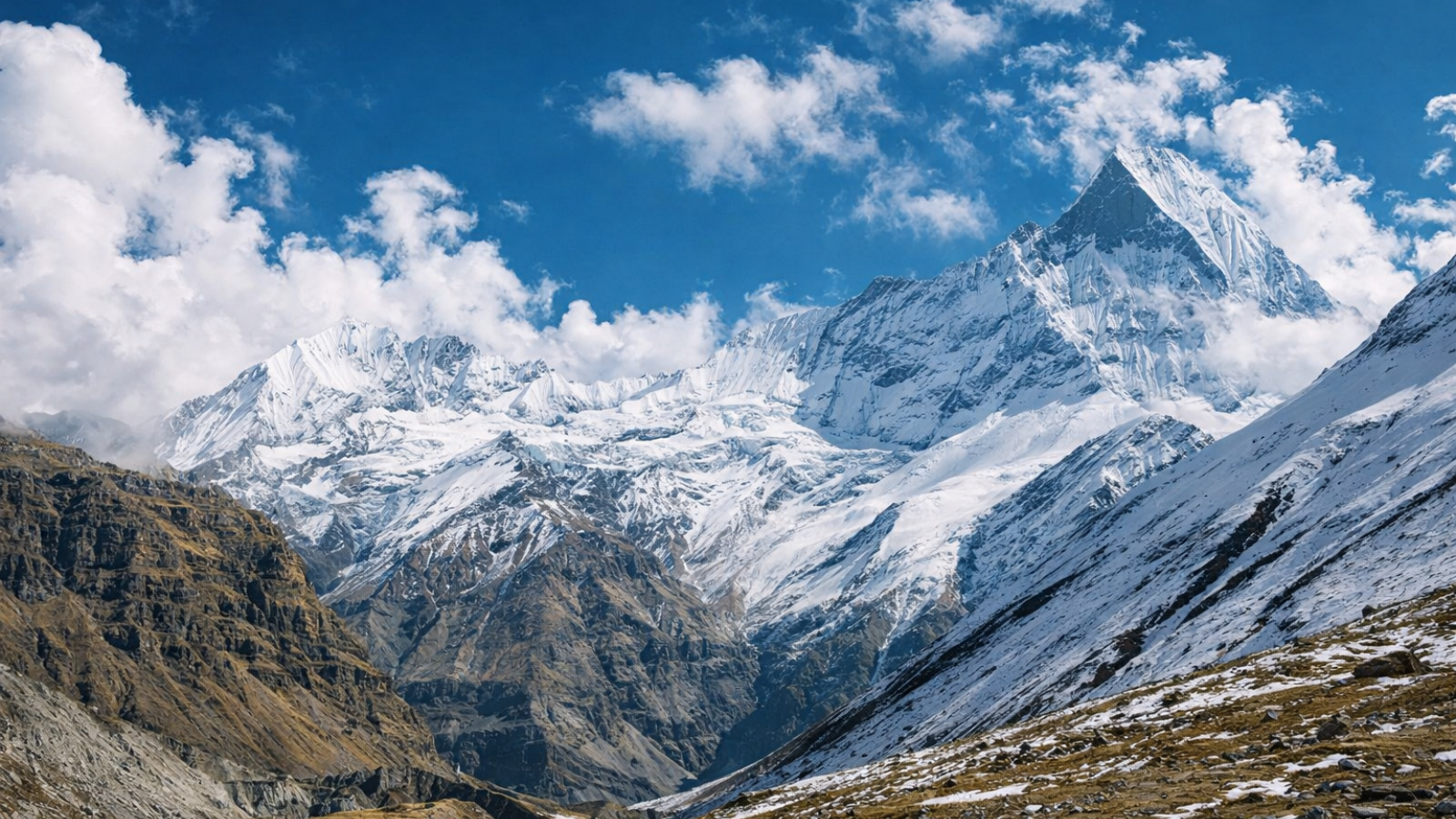

The 11 Day Annapurna Base Camp Trek is one of Nepal’s most accessible high-altitude trekking routes, leading hikers deep into the Annapurna Sanctuary within the Annapurna Conservation Area. This classic Himalayan trek covers roughly 96 kilometers (60 miles) and reaches Annapurna Base Camp at 4,130 meters (13,549 ft), the foot of Annapurna I (8,091 m), the tenth-highest mountain in the world. The route begins in Kathmandu, travels through the lakeside city of Pokhara, and follows the Modi Khola valley through rhododendron forests, terraced hillsides, and traditional Gurung and Magar villages such as Ghandruk and Chhomrong before entering the dramatic amphitheater of peaks that define the Annapurna Sanctuary.
The 11-day itinerary provides a balanced trekking schedule that allows gradual altitude gain, proper acclimatization, and time to experience highlights like the Poon Hill sunrise (3,210 m) and panoramic views of Machhapuchhre, Annapurna South, Gangapurna, and Hiunchuli. Compared with compressed 7- or 8-day versions, this pacing significantly reduces the risk of acute mountain sickness (AMS) while making the trek suitable for first-time Himalayan trekkers with moderate fitness. This guide explains the complete 11 day Annapurna Base Camp trek itinerary, permits, costs, packing list, and best seasons, giving trekkers a clear plan to prepare for one of the most rewarding adventures in the Nepal Himalaya.
What Is the 11 Day Annapurna Base Camp Trek and Why Choose This Duration?
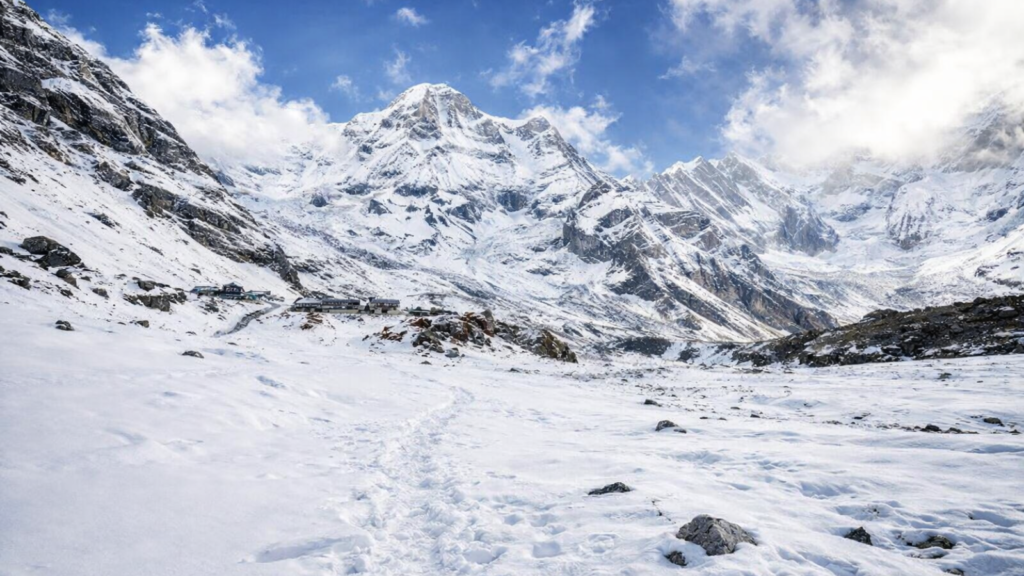
The 11 day Annapurna Base Camp trek is a structured trekking itinerary that begins in Kathmandu, moves through Pokhara, and follows the Modi Khola river valley into the Annapurna Conservation Area, reaching the base camp at 4,130 meters (13,549 ft) before descending along the same route to conclude in Pokhara.
The route covers approximately 96 kilometers (60 miles) of walking over 8 active trekking days, with 3 days allocated for transit and arrival logistics. Average daily walking time ranges from 4 to 7 hours, with the longest days concentrated in the middle section of the trek.
Why 11 Days Works Better Than Shorter Alternatives
The 7-day itinerary exists and many agencies sell it aggressively, but it compresses the upper sanctuary section into a single brutal push. Trekkers on compressed itineraries often experience acute mountain sickness (AMS) symptoms at Machhapuchhre Base Camp (3,700 m) or Annapurna Base Camp (4,130 m) precisely because they gained too much elevation too quickly.
The 11-day structure allows 300 to 500 meters of net elevation gain per trekking day in the critical upper section, the medically recognized safe ascent rate for high-altitude environments. A second rest or pacing day near Chhomrong (2,170 m) gives your body time to increase red blood cell production before you push into the sanctuary.
Who Is This Trek Best Suited For?
The Annapurna Base Camp trek suits trekkers with moderate fitness who can walk 4 to 7 hours daily for multiple consecutive days. Technical climbing skills are not required. The trail is non-technical, well-marked, and lined with teahouses that provide meals and accommodation throughout.
The ideal candidate:
- Has completed multi-day hikes or moderate trekking before
- Can sustain 5–6 hours of walking per day on uneven terrain
- Has trained with consistent cardio (hiking, cycling, running) for at least 6–8 weeks beforehand
- Understands that altitude affects fitness-level trekkers and non-fitness-level trekkers equally
First-time Himalayan trekkers successfully complete this route every season. The 11-day format specifically accommodates first-timers because the pacing is forgiving.
11 Day Annapurna Base Camp Trek: Day-by-Day Itinerary
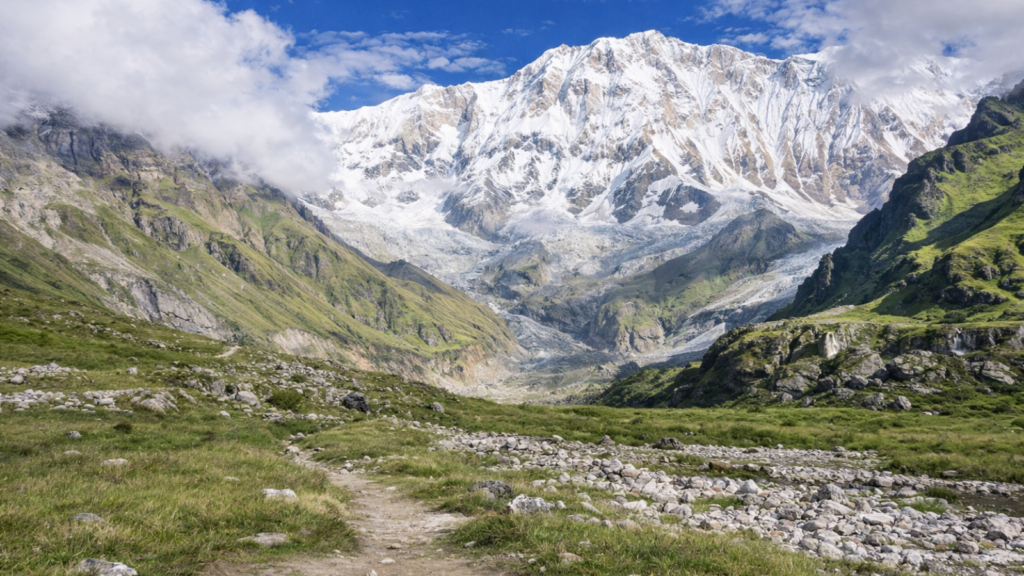
The itinerary begins in Kathmandu, moves to Pokhara on Day 2, and reaches Annapurna Base Camp (4,130 m) on Day 9 before descending to Jhinu Hot Springs on Day 10. Key highlights include the Poon Hill sunrise on Day 5, the Gurung village of Chhomrong on Day 6, and the full Annapurna Sanctuary panorama at base camp. The descent returns via the same valley route, concluding with a natural hot spring soak at Jhinu Danda before the drive back to Pokhara.
Day 1: Arrive in Kathmandu (1,400 m)
You arrive at Tribhuvan International Airport. A representative transfers you to your hotel in Thamel, Kathmandu’s main trekking hub. Use this day to complete permit paperwork, exchange currency, and pick up any gear you still need. Thamel has dozens of outdoor equipment shops where you can purchase or rent trekking poles, sleeping bag liners, and rain gear at reasonable prices.
Altitude: 1,400 m | Activity: Arrival, permit processing, gear check
Day 2: Drive or Fly Kathmandu to Pokhara (822 m)
Tourist buses cover the 200 km Kathmandu–Pokhara route in 7 to 9 hours along the Prithvi Highway. Flights take 25 minutes but cost significantly more. Most trekkers choose the bus for cost efficiency. The road passes the Trisuli River gorge, a scenic journey even on a slow day.
Pokhara serves as the logistical launch pad for all Annapurna treks. Use the afternoon to visit Phewa Lake, organize porter assignments, confirm your guide arrangements, and stock any remaining supplies. Lakeside district has quality food and reliable ATMs, withdraw enough cash here, as no ATMs exist on the trail.
Altitude: 822 m | Walking: None | Drive: 7–9 hours by bus
Day 3: Drive Pokhara to Nayapul, Trek to Tikhedhunga (1,540 m)
A short drive (1.5–2 hours) from Pokhara drops you at Nayapul, the traditional trailhead. The ACAP permit checkpoint at Birethanti is your first official entry point into the Annapurna Conservation Area. Rangers verify permits here and at subsequent checkpoints. Always carry both your Annapurna Conservation Area Permit (ACAP) and Trekkers’ Information Management System (TIMS) card in a waterproof document sleeve, as both permits are checked at multiple checkpoints along the route.
The trail climbs through terraced fields and stone-paved paths to Tikhedhunga. Stone staircases dominate much of this section, roughly 3,000 steps in the first major ascent, which new trekkers consistently underestimate. Pace yourself from the first hour.
Altitude: 1,540 m | Walking time: 3–4 hours | Distance: ~10 km
Day 4: Tikhedhunga to Ghorepani (2,860 m)
This is the toughest day on the lower route, a sustained climb of nearly 1,300 meters through dense rhododendron forest. In spring (March–May), the trail turns red and pink as rhododendrons bloom at different elevations. The village of Ulleri at 1,960 m offers a good rest stop midway.
Ghorepani is a large village with solid teahouse accommodation and reliable wifi. Settle in early, eat a high-carbohydrate dinner, and sleep well, tomorrow’s sunrise is one of the most spectacular of the entire trek.
Altitude: 2,860 m | Walking time: 5–6 hours | Elevation gain: ~1,320 m
Day 5: Poon Hill Sunrise, Trek to Tadapani (2,590 m)
Wake at 4:30 AM. The 45-minute climb to Poon Hill (3,210 m) is steep and cold in the predawn dark. At the summit, you join trekkers from across the world watching the sun rise over Dhaulagiri (8,167 m), Annapurna South (7,219 m), and the Fishtail peak of Machhapuchhre (6,993 m). This single moment justifies the early alarm.
After breakfast in Ghorepani, the trail continues through rhododendron and oak forest to Tadapani. The forest here harbors red pandas and Himalayan monals, Nepal’s national bird. Walk slowly and quietly on this section.
Altitude: 2,590 m | Walking time: 5–6 hours | Key highlight: Poon Hill sunrise
Day 6: Tadapani to Chhomrong (2,170 m)
The trail descends steeply to the valley floor before climbing again to Chhomrong, the last major Gurung village before the sanctuary proper. This descent-ascent rhythm is the defining characteristic of ABC trekking. Your legs work hard even on “easy” days.
Chhomrong marks a psychological and physical turning point. The teahouses here are among the best-quality on the route, with warm showers (paid) and reliable mobile network coverage. Stock extra water purification tablets or refill filter bottles here, water availability becomes more managed above this point. The village Gurung culture is deeply evident: stone houses, prayer flags, Buddhist mani walls along the trail’s edges.
Altitude: 2,170 m | Walking time: 4–5 hours | Cultural highlight: Gurung village experience
Day 7: Chhomrong to Dovan (2,600 m)
The day begins with a long stone staircase descent into the Modi Khola gorge before a sustained uphill through Sinuwa (2,340 m) and Bamboo (2,345 m) into Dovan. The forest changes character here, bamboo groves replace rhododendron, and the air grows noticeably cooler and more humid.
Landslide debris sections appear near Dovan. Your guide will navigate these safely. Do not trek this section in poor visibility or after heavy rainfall without consulting local advice. This is where having a mandatory guide adds real value beyond route-finding.
Altitude: 2,600 m | Walking time: 5–6 hours | Terrain: Gorge, bamboo forest
Day 8: Dovan to Machhapuchhre Base Camp (3,700 m)
The sanctuary walls close in. Hiunchuli (6,441 m) and Machhapuchhre (6,993 m) tower on either side of the valley. You pass through Himalaya Hotel (2,920 m) and Deurali (3,230 m) before the trail opens dramatically into the Annapurna Sanctuary.
At Machhapuchhre Base Camp (3,700 m), every direction delivers a mountain view. The air is thinner, you’ll notice it on steeper steps. Drink 3 to 4 liters of water today. Avoid alcohol. Many trekkers feel headaches here: this is normal mild AMS. Rest, hydrate, and do not ascend if symptoms worsen.
Altitude: 3,700 m | Walking time: 6–7 hours | Acclimatization: Critical day
Day 9: MBC to Annapurna Base Camp (4,130 m), Back to MBC
The final push to Annapurna Base Camp takes 2 to 3 hours from MBC. The path crosses a glacial moraine zone and emerges into the base camp clearing. Standing here, you are encircled by Annapurna I (8,091 m), Annapurna South (7,219 m), Gangapurna (7,454 m), Hiunchuli (6,441 m), and Machhapuchhre (6,993 m).
Spend at least 2 hours at base camp. Photograph the mountains in the morning light before cloud cover builds (typically by 10–11 AM). Return to MBC for lunch, then descend to Deurali or Bamboo for the night.
Altitude: 4,130 m | Walking time: 5–6 hours | Key highlight: Annapurna Sanctuary panorama
Day 10: Descend to Jhinu Hot Springs (1,780 m)
Knees work overtime on descent days. Trekking poles reduce the impact load on joints significantly. The trail drops from the sanctuary quickly, passing familiar teahouses in reverse. Jhinu Danda’s natural hot springs sit beside the Modi Khola river, a thermal reward after 7 days of climbing. A soak here genuinely accelerates muscle recovery.
Altitude: 1,780 m | Walking time: 6–7 hours | Highlight: Natural hot springs
Day 11: Drive Jhinu to Pokhara, Return to Kathmandu or Departure
A short walk from Jhinu connects to the road at Syauli Bazaar, where vehicles pick up trekkers. The 2-hour drive returns you to Pokhara. If your schedule allows, spend the evening on Lakeside, a celebratory dinner at Pokhara’s excellent restaurants is well-earned. Return to Kathmandu by bus or flight the following morning.
Altitude: 822 m | Drive: 2 hours to Pokhara | Activity: Departure prep
How Much Does the 11 Day Annapurna Base Camp Trek Cost?
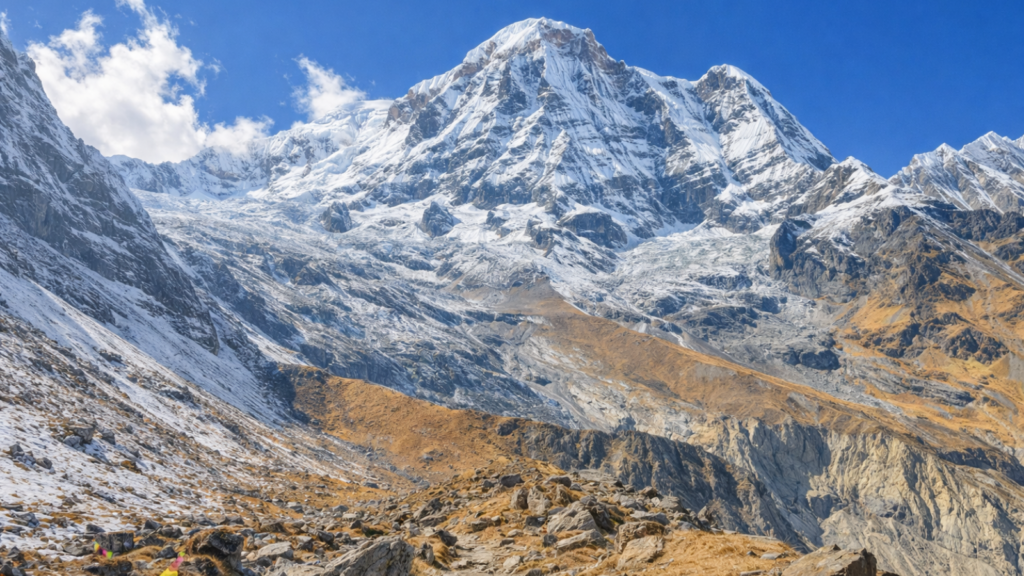
The total cost of an 11 day Annapurna Base Camp trek in 2026 ranges from $700 to $1,500 per person, depending on whether you book a full agency package or arrange components independently.Mandatory permits, including the Annapurna Conservation Area Permit (ACAP) and the Trekkers’ Information Management System (TIMS) card, cost approximately $40–50 USD combined in 2026, depending on the trekking agency and processing location. Daily teahouse food and accommodation averages $25–35 per person, and all cash must be withdrawn in Pokhara since no ATMs exist on the trail.
Permit Fees (Fixed for All Trekkers)
Trekkers on the Annapurna Base Camp route must obtain two permits before starting the trek: The Annapurna Conservation Area Permit (ACAP) and the Trekkers’ Information Management System (TIMS) card.
These permits help manage tourism, track trekkers for safety, and fund conservation and trail maintenance projects across the Annapurna region.
| Permit | Cost (Foreigners) | Approx. USD |
| Annapurna Conservation Area Permit (ACAP) | NPR 3,000 | ~$23 |
| TIMS Card (through trekking agency) | NPR 2,000 | ~$15 |
Total permit cost: approximately $30–40 USD per person. These fees are fixed year-round and do not change by season. Children under 10 years are exempt from ACAP fees but must be registered.
The ACAP permit funds conservation projects across the Annapurna Conservation Area, trail repair, wildlife protection programs, and local school construction. Your payment contributes directly to preserving the region for future trekkers.
Guide and Porter Costs
Since 2023, a licensed guide is mandatory for all trekkers on the Annapurna Base Camp route. This rule was implemented by the Nepal government to improve trekker safety and reduce incidents on high-altitude trails.
| Service | Daily Rate (USD) |
| Licensed guide | $25–30 |
| Porter (per person, per porter) | $20–25 |
| Guide + porter for 11-day trek | ~$500–600 |
What most trekkers overlook: guides and porters require their own accommodation, meals, and insurance, which are either included in package fees or paid separately. When hiring independently in Pokhara, confirm these are covered explicitly in your agreement.
Accommodation and Meals on the Trail
Teahouse accommodation costs $5–10 per night per person in shared rooms. Single rooms are available at higher prices in lower villages but rare above Chhomrong. Meals cost $4–8 per dish. A realistic daily food and lodging budget for the trekking section is $25–35 per day per person.
A 3-meal teahouse day on the trail typically costs:
- Breakfast (porridge, eggs, toast): $4–6
- Lunch (dal bhat, noodle soup): $5–7
- Dinner (rice, vegetables, soup): $5–8
- Tea and snacks: $3–5
Full Package vs. Independent Trekking
| Style | Estimated Total Cost (11 days) |
| Budget independent (guide + permits only) | $700–900 |
| Mid-range agency package | $900–1,200 |
| Premium guided package | $1,200–1,800 |
Full packages from reputable agencies include permits, guide and porter wages, accommodation, meals during the trek, and all ground transport. They exclude international flights, Nepal visa fees, personal insurance, and personal equipment.
Nepal visa fees (2026): $30 for 15 days, $50 for 30 days, obtained on arrival at Kathmandu’s Tribhuvan International Airport.
When Is the Best Time for the 11 Day Annapurna Base Camp Trek?
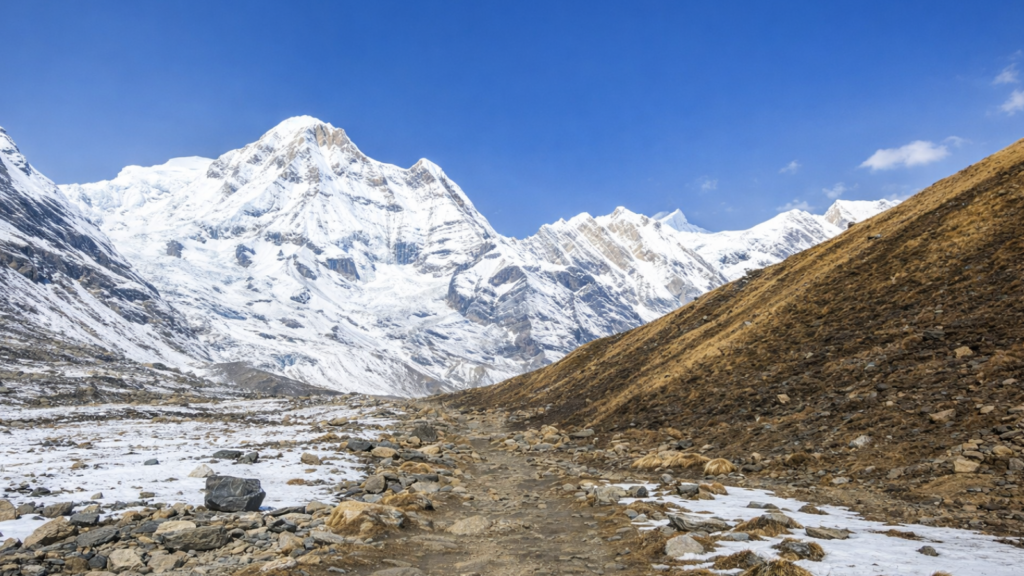
The two optimal trekking seasons are spring (March–May) and autumn (October–November), when skies are clear and trail conditions are stable. Spring offers rhododendron blooms and warm daytime temperatures, while October and November deliver the sharpest mountain visibility of the year. Monsoon season (June–September) brings landslide risk and heavy cloud cover, and winter (December–February) brings sub-zero temperatures at base camp with possible trail closures above 3,000 meters.
Spring Season: March to May
Spring is the most popular trekking season on the ABC route. Rhododendron forests bloom in vivid red, pink, and white from late February through April, the visual peak of the trail’s lower sections. Temperatures at base camp range from -5°C to 5°C at night and 5°C to 12°C during the day. Skies are clear in the mornings before afternoon clouds build.
March and April are optimal. May becomes warmer and pre-monsoon moisture increases cloud cover, though it remains a viable trekking month.
Autumn Season: October to November
Autumn delivers the clearest skies and sharpest mountain views. Post-monsoon trails are freshly washed, vegetation is lush, and visibility from Poon Hill and the sanctuary is exceptional. October is the peak month, trails are busy, teahouses fill early, and trailhead traffic is at its annual maximum.
Late October and early November offer peak-season conditions with slightly reduced crowds compared to the October 10–25 window.
Monsoon (June–September) and Winter (December–February)
Monsoon trekking is possible but demands experience. Trails become slippery, leeches appear below 2,000 meters, and landslides are a real risk on the gorge sections near Dovan. The mountains are frequently obscured by cloud.
Winter brings stable, cold, clear weather. Snow above 3,000 meters can close sections of the trail. Teahouses remain open but with reduced services and smaller menus. Fewer trekkers makes for a quieter experience, the trade-off is cold nights at base camp reaching -15°C.
Permits, Regulations, and the 2026 Guide Requirement
Trekkers entering the Annapurna Base Camp route must obtain two permits before starting the trek: the Annapurna Conservation Area Permit (ACAP) and the Trekkers’ Information Management System (TIMS) card. These permits are verified at multiple checkpoints including Birethanti, Ghandruk, and Chhomrong throughout the route. Since 2023, a licensed guide is mandatory for all foreign trekkers, with enforcement tightening through 2026 at permit offices and trail checkpoints including Birethanti, Ghandruk, and Chhomrong. Attempting the route without a registered guide risks permit rejection, checkpoint fines, and loss of emergency rescue tracking if an incident occurs in the upper sanctuary.
How to Obtain Permits
The ACAP permits are issued at:
- Nepal Tourism Board (NTB) offices in Kathmandu (Bhrikutimandap) and Pokhara (Lakeside/Damside)
- Online pre-registration is available at the NTNC e-permit portal, but final issuance requires physical presence at the office
- Trekking agencies can process permits on your behalf with your passport copy and 2 passport photos
Documents required: Original passport (valid 6+ months), 2 passport-sized photos, completed application form, fee payment in Nepali Rupees (cash).
Processing time: Same day, 1–2 hours during off-peak periods. Allow a full morning during peak season.
The 2026 Mandatory Guide Rule
Nepal’s government introduced mandatory guide regulations in 2023, and enforcement has progressively tightened through 2026. Permit offices verify that registered trekkers have guide arrangements before issuing documents in several control zones.
This rule applies specifically to foreign trekkers. The rationale: guided trekkers are tracked, and rescue operations can locate them efficiently in emergency situations. In the 3-year period before the rule, multiple solo trekkers required expensive helicopter evacuations from the sanctuary after becoming disoriented or suffering AMS without anyone to assist.
What this means practically: Budget the guide daily rate into your cost planning. Attempting the ABC route without a guide exposes you to permit rejection and trail checkpoint fines.
Checkpoint Verification Points
Rangers check your ACAP permit at multiple points:
- Birethanti: main ACAP entry checkpoint
- Ghandruk: secondary checkpoint
- Chhomrong: main upper valley checkpoint
- Sinuwa / Bamboo / Deurali: periodic checks in peak season
Always carry permits in an accessible location. A waterproof pouch inside your hip belt or chest pocket works best for daily checks.
What to Pack for the 11 Day Annapurna Base Camp Trek
The core packing requirement is a 3-layer clothing system, moisture-wicking base layer, insulating mid layer, and waterproof shell, to handle temperatures ranging from 25°C in the lowlands to -10°C at Annapurna Base Camp. Waterproof trekking boots broken in for at least 6 weeks before departure are non-negotiable, as are trekking poles that reduce knee impact load by an estimated 25% on descents. A personal first aid kit with ibuprofen, antidiarrheal medication, blister pads, and oral rehydration solution is essential, along with a headlamp, solar power bank, and travel insurance documents confirming high-altitude evacuation coverage.
Clothing System
The temperature range on this trek spans from 25°C in Pokhara’s lower trails to -10°C or colder at Annapurna Base Camp on winter nights. A layering system handles this range more effectively than any single heavy jacket.
The 3-layer system for ABC:
- Base layer: Moisture-wicking merino wool or synthetic long-sleeve shirt
- Mid layer: Fleece jacket or down vest for warmth-to-weight ratio
- Outer layer: Waterproof and windproof shell jacket
Pack 2 base layer sets maximum. Teahouses offer laundry services in the lower sections, and you will hand-wash or wear the same clothes through the upper sanctuary days regardless.
Footwear
Waterproof trekking boots with ankle support are non-negotiable. Break them in for at least 6 weeks before the trek, blisters from new boots at Ghorepani elevation are genuinely trip-ending. Gaiters are useful in spring when snow patches persist above 3,500 meters and in winter throughout the upper sections.
Bring camp sandals or lightweight shoes for teahouse evenings. Your feet will thank you for not spending every evening in heavy boots.
Electronics and Power
Power is available at teahouses throughout the route, at a cost. Charging a device typically costs $1–2 per hour. Solar-powered banks are useful in the upper sanctuary. Bring a headlamp with spare batteries: pre-dawn Poon Hill climbs and MBC to ABC morning departures happen in darkness.
Photography note: The sanctuary light at sunrise lasts approximately 15–20 minutes before the angle changes. Position yourself at the viewing area before first light.
Altitude Medication
Consult a doctor before departure about Acetazolamide (Diamox), a medication that accelerates acclimatization. It does not prevent AMS; it assists the body’s adaptation process. Common side effects include increased urination and tingling in the fingers, both manageable.
Carry a personal first aid kit with: ibuprofen, antihistamines, antidiarrheal medication, antiseptic wipes, blister pads, and an oral rehydration solution. Your guide carries a group first aid kit including an oximeter for daily oxygen saturation monitoring above 3,000 meters.
Altitude, Acclimatization, and Staying Safe on the ABC Trek
The Annapurna Base Camp trek reaches a maximum altitude of 4,130 meters, lower than Everest Base Camp but sufficient to cause acute mountain sickness (AMS) symptoms in 20–30% of trekkers above 3,000 meters. The 11-day itinerary’s pacing ensures trekkers reach Chhomrong (2,170 m) on Day 6, giving the body 5 full days of graduated ascent before entering the critical altitude zone above 3,700 meters. Emergency helicopter evacuation from the sanctuary costs $3,000–6,000 USD, making travel insurance that explicitly covers high-altitude trekking and emergency evacuation a mandatory, not optional, pre-departure requirement.
Understanding Altitude Risk on This Route
The Annapurna Base Camp trek reaches a maximum altitude of 4,130 meters, significantly lower than Everest Base Camp (5,364 m) or the Annapurna Circuit’s Thorong La Pass (5,416 m). This lower ceiling makes it more accessible but does not eliminate altitude risk.
Acute Mountain Sickness symptoms appear in 20–30% of trekkers above 3,000 meters. Common symptoms include: persistent headache, nausea, loss of appetite, fatigue disproportionate to exertion, and disturbed sleep.
The golden rule: Never ascend to sleep at a higher altitude if AMS symptoms persist or worsen. Descent is the definitive treatment for serious AMS.
The 11-Day Itinerary’s Acclimatization Advantage
The structured pacing of the 11-day format means you reach Chhomrong (2,170 m) on Day 6, with 3 full walking days before your first night above 3,000 meters. This graduated approach gives your body 5 days of progressive elevation gain before reaching the critical zone.
Trekkers on compressed 7-day itineraries sometimes reach Machhapuchhre Base Camp (3,700 m) by day 4, having jumped 2,500 meters in 3 days. The 11-day version avoids this dangerous compression.
Emergency Evacuation
Helicopter rescue from Annapurna Base Camp is available in emergencies. A helicopter evacuation costs $3,000–6,000 USD depending on weather conditions and insurance coverage. Travel insurance that specifically covers high-altitude trekking and emergency evacuation is mandatory, not optional. Verify your policy covers altitudes up to 4,500 meters minimum.
Cultural Highlights Along the Annapurna Base Camp Route
The Annapurna foothills are home to the Gurung people, whose stone-and-slate villages, Buddhist stupas, and mani walls inscribed with the Om Mani Padme Hum mantra define the trail’s cultural character from Ghandruk through Chhomrong. The Gurkha Heritage Museum in Ghandruk documents the Gurung community’s extraordinary military history in the British and Indian Gurkha regiments, with an entrance fee of approximately $2. Dal bhat, lentil soup, steamed rice, and vegetable curry with unlimited refills, is the standard trekking meal and remains the most nutritionally efficient food choice across all elevations on the route.
Gurung Villages: Ghandruk and Chhomrong
The Gurung people are the dominant ethnic community of the Annapurna foothills. Gurung soldiers historically served in the British and Indian Gurkha regiments, and the Gurkha Heritage Museum in Ghandruk documents this extraordinary military history. Entrance costs approximately $2.
Traditional stone-and-slate Gurung architecture is most visible in Ghandruk and Chhomrong. Stone walls, prayer flags, mani stones inscribed with the Om Mani Padme Hum mantra, and Buddhist stupas mark the trail throughout.
Tea House Culture
Nepal’s teahouse system is one of the world’s great trekking infrastructure achievements. A teahouse (locally called a lodge or bhatti) provides a bed, 3 meals daily, and increasingly, wifi and phone charging. The owners are almost universally local mountain families, your spending directly supports their livelihood.
An important cultural note: Order meals from the teahouse where you sleep. This unwritten rule is not enforced, but it maintains the economic relationship that keeps the teahouse system viable for future trekkers.
Dal Bhat: The Trekker’s Power Meal
Dal bhat, a plate of lentil soup, steamed rice, vegetable curry, and often pappadum, is the standard trekking meal across Nepal. It is nutritionally excellent: high carbohydrate, moderate protein, iron-rich. Many trekkers order it twice daily through the upper sanctuary. Dal bhat comes with unlimited refills in most teahouses, the phrase “dal bhat power, 24 hour” is a genuine cultural motto.
Final Tips From the Trail: What Most Guides Won’t Tell You
- Start early every day. The ABC trek rewards early risers twice, clear mountain views before 10 AM cloud buildup, and first choice of teahouse rooms at the day’s destination. Arrive by 2–3 PM.
- Carry more cash than you think. ATMs end at Pokhara. The 11-day trek budget for food, accommodation, extras, and tips can reach $400–500 cash. Underestimating cash needs is the single most stressful logistical mistake trekkers make.
- Tip your guide and porter. The standard tip rate is $10–15 per day for a guide and $7–10 per day for a porter on a completed trek. This is not included in any package price and forms a significant portion of their annual income.
- Book spring or autumn departures 3–4 months in advance. Peak season teahouses fill completely, particularly in Ghorepani and Chhomrong, and guides become unavailable on short notice. Last-minute planning in October or April-May results in inferior options.
- Prepare for the descent. Most trekkers train for the climb. The descent from ABC to Jhinu is 2,350 meters of downhill over 2 days. Quadriceps take the full load. Eccentric leg training, step-downs, walking lunges, downhill hiking, before departure reduces post-trek knee pain dramatically.
How Long Is the Annapurna Base Camp Trek in Total Distance?
The Annapurna Base Camp trek covers approximately 96 kilometers (60 miles) over 8 active trekking days on a standard 11-day itinerary. Daily walking distances range from 10 to 16 kilometers. The route follows the Modi Khola valley from Nayapul to Annapurna Base Camp and returns along the same trail.
What Is the Maximum Altitude on the Annapurna Base Camp Trek?
The maximum altitude on the Annapurna Base Camp trek is 4,130 meters (13,549 feet) at Annapurna Base Camp. Trekkers who add Poon Hill reach 3,210 meters (10,531 feet). This elevation is lower than Everest Base Camp at 5,364 meters, making ABC one of the most accessible Himalayan base camp treks.
Do I Need Prior Trekking Experience for the Annapurna Base Camp Trek?
Prior trekking experience is not required for the Annapurna Base Camp trek. Complete 8 to 12 weeks of cardiovascular training before departure to prepare for 4 to 7 hours of daily hiking. The 96-kilometer route is non-technical and requires no ropes, crampons, or mountaineering skills.
Is Altitude Sickness a Real Risk on the Annapurna Base Camp Trek?
Altitude sickness affects 20 to 30 percent of trekkers above 3,000 meters on the Annapurna Base Camp route. Symptoms include persistent headache, nausea, appetite loss, and unusual fatigue. Do not ascend higher if symptoms worsen. Descend immediately, as descent is the only definitive treatment for serious altitude illness.
Are There ATMs or Banks on the Annapurna Base Camp Trail?
No ATMs or banks operate on the Annapurna Base Camp trail beyond Pokhara. Withdraw all required cash in Pokhara before departure. Budget $400 to $500 USD per person for 11 trekking days to cover meals, lodging, showers, charging, snacks, and guide or porter tips.
Can I Drink the Water on the Annapurna Base Camp Trek?
Do not drink untreated tap or stream water on the Annapurna Base Camp trek. Contaminated water carries bacteria and parasites that cause gastrointestinal illness. Buy boiled water for $0.50 to $1.50 per liter or use a SteriPen UV purifier or filter bottle to eliminate pathogens and reduce plastic waste.
What Type of Accommodation Is Available on the Trail?
Teahouses provide accommodation along the entire Annapurna Base Camp route. Rooms cost $3 to $5 for shared dorms and $8 to $15 for private twin rooms in lower villages. Hot showers cost $2 to $4 up to Deurali. Facilities become more basic above Chhomrong.
Is Travel Insurance Mandatory for the Annapurna Base Camp Trek?
Travel insurance that covers trekking above 4,500 meters and helicopter evacuation is mandatory for the Annapurna Base Camp trek. A helicopter rescue from 4,130 meters costs $3,000 to $6,000 USD without coverage. Carry a printed policy copy because mobile service is limited above Chhomrong.
How Physically Fit Do I Need to Be for the Annapurna Base Camp Trek?
The Annapurna Base Camp trek requires walking 4 to 7 hours daily on uneven terrain for 8 consecutive days. Train for 8 to 12 weeks with weekly 3-hour hikes, stair climbing, and 3 to 4 cardio sessions per week. Strengthen quadriceps, glutes, and calves to manage long descents.
What Happens If I Need to Cancel or Cut the Trek Short?
If you must cancel or exit early, your licensed guide arranges descent or helicopter evacuation from the nearest communication point. Rescue coordination is mandatory in emergencies. Most agencies refund unused teahouse nights but retain guide and permit fees. Trip interruption insurance protects against financial loss.