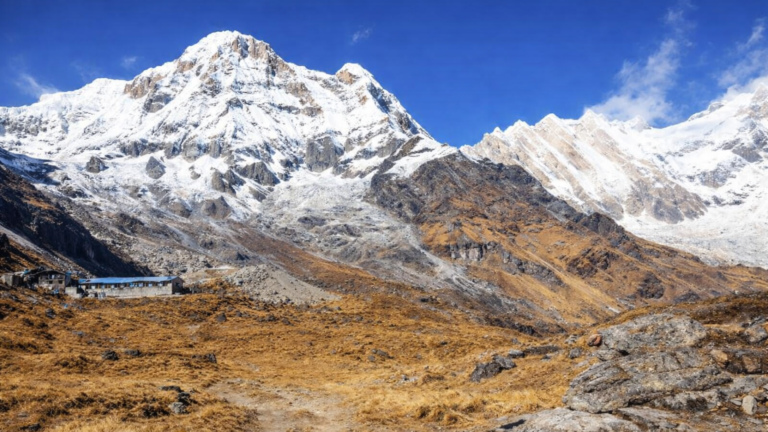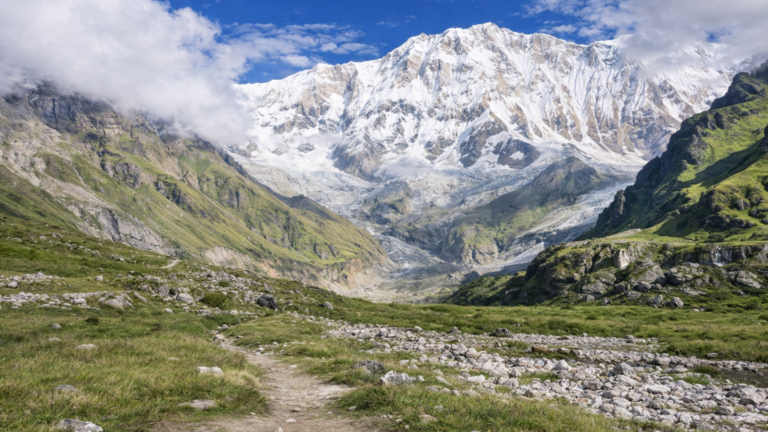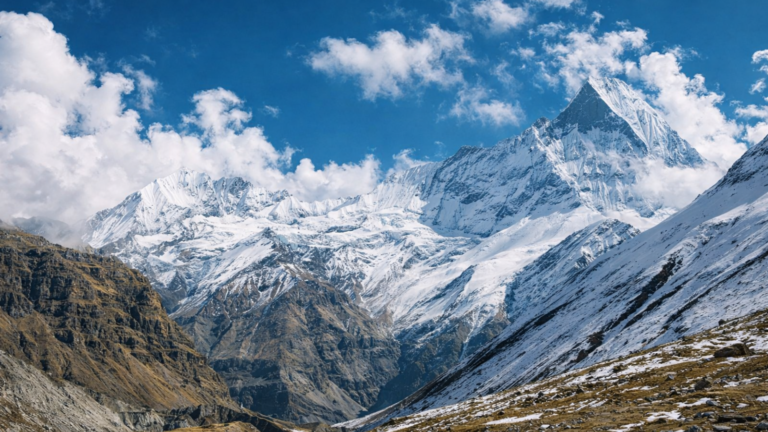
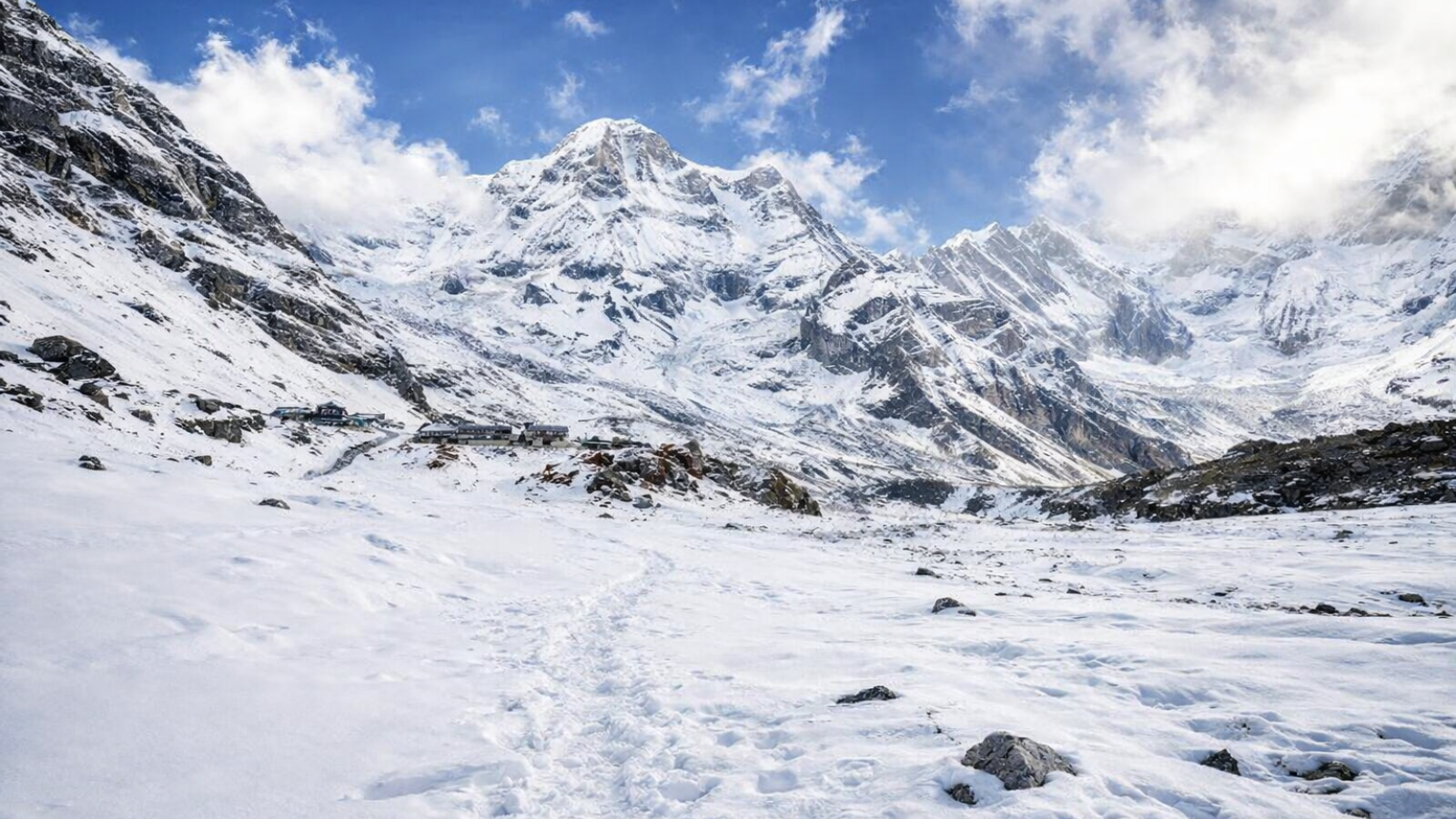

The 14-day Annapurna Base Camp trek is a classic Himalayan trekking route in Nepal that leads hikers through the Annapurna Conservation Area to Annapurna Base Camp (4,130 m), the glacial sanctuary beneath Annapurna I (8,091 m). This extended Annapurna trek itinerary combines the legendary Poon Hill sunrise viewpoint (3,210 m) with the full Annapurna Sanctuary trail, creating a balanced high-altitude adventure with panoramic views of peaks such as Machhapuchhre, Annapurna South, and Dhaulagiri. Trekkers begin the journey near Pokhara and gradually ascend through terraced villages, rhododendron forests, and alpine valleys before reaching the amphitheater of snow-covered Himalayan giants.
This complete guide to the 14-day Annapurna Base Camp trek explains every stage of planning and completing the route safely. The guide includes a detailed day-by-day itinerary, permit requirements, realistic trekking costs, best seasons for clear mountain views, and essential gear for high-altitude conditions. Practical trekking advice, altitude acclimatization strategies, and on-trail logistics help first-time Himalayan trekkers prepare for a 110 km journey that blends mountain landscapes, Gurung village culture, and one of the most iconic base camp destinations in the Himalayas.
What Is the 14-Day Annapurna Base Camp Trek?
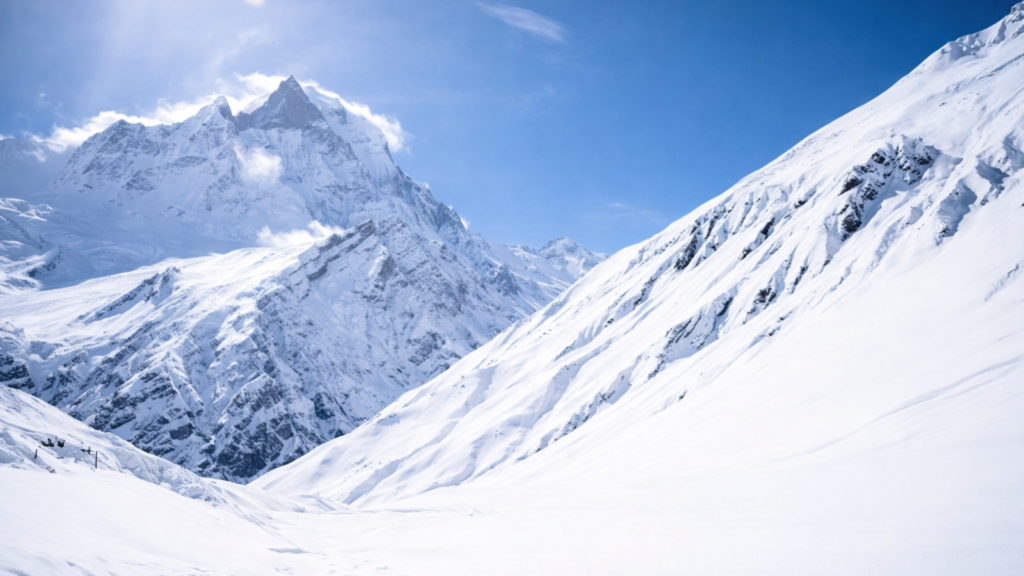
The 14-day Annapurna Base Camp trek is a moderate-to-challenging high-altitude walking route in Nepal’s Annapurna Conservation Area, covering approximately 110 km round-trip and reaching a maximum elevation of 4,130 meters at Annapurna Base Camp (ABC). The route departs from Nayapul near Pokhara, ascends through terraced rice paddies, dense rhododendron forests, and high alpine terrain before arriving at the glacial amphitheater beneath Annapurna I (8,091m), the world’s tenth-highest mountain.
Why 14 Days Is the Optimal Duration for ABC
Most operators advertise a 10-day to 12-day standard ABC itinerary. The 14-day version adds 2 to 4 critical extra days that serve 3 specific purposes: the Ghorepani–Poon Hill detour (adds 2 days), a proper rest day in Chhomrong (1 day), and a buffer day for weather delays or acclimatization (1 day).
The practical advantage is significant. Trekkers who rush the standard 10-day route report a 30–40% higher rate of altitude-related fatigue symptoms above Deurali (3,230m). A 14-day pace allows the body to ascend no more than 400–500 meters of net altitude gain per trekking day, the scientifically recommended limit for safe high-altitude acclimatization.
The 14-day format is best for: first-time Himalayan trekkers, anyone over 40, trekkers who want the Poon Hill sunrise experience, and those who prefer immersive cultural stops over speed records.
How the 14-Day Route Differs from the Standard Version
The core difference between a 10-day and 14-day ABC itinerary lies in 3 route additions:
- Ghorepani and Poon Hill (3,210m): A classic 4-hour sunrise hike above the rhododendron treeline offering direct views of Dhaulagiri (8,167m), Annapurna South (7,219m), and Machhapuchhre (6,993m). Most 10-day itineraries skip this section entirely.
- Rest day in Chhomrong (2,170m): The last large village before the restricted high-altitude zone. Spending two nights here allows proper leg recovery and cultural exploration of Gurung village life before the steep climb to Sinuwa.
- Flexible buffer day: Positioned between Pokhara arrival and trek start. This day handles permit collection, equipment checks, and prevents the common mistake of starting a trek fatigued from travel.
The result is a richer, safer, and more scenically complete experience than the compressed standard route.
Day-by-Day 14-Day Annapurna Base Camp Trek Itinerary
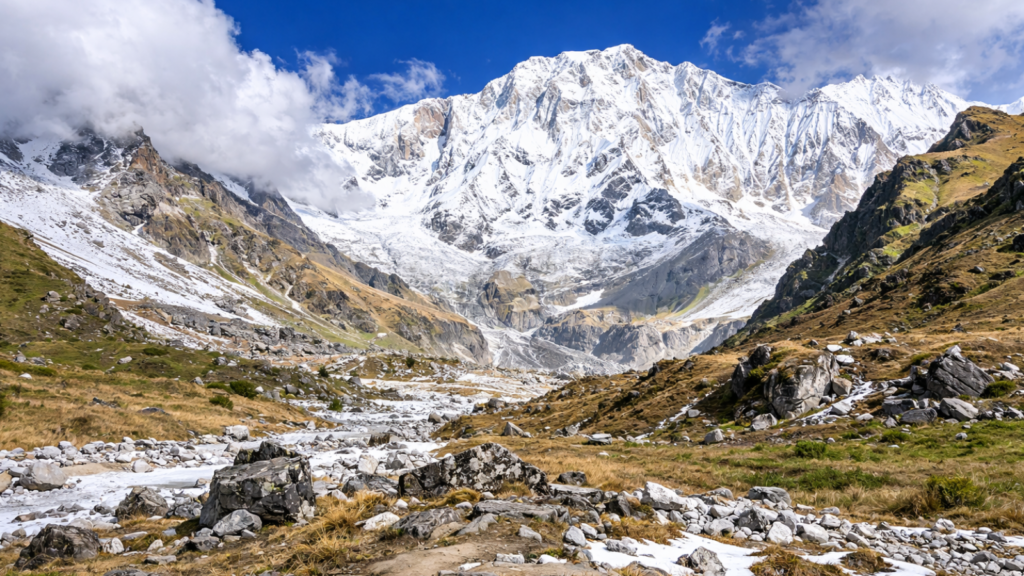
The 14-day itinerary begins in Kathmandu, travels to Pokhara on Day 2, and starts trekking from Nayapul on Day 3 through Tikhedhunga, Ghorepani, Poon Hill, Chhomrong, Bamboo, and Deurali before reaching Annapurna Base Camp on Day 10. Descent follows the same corridor with a hot spring stop at Jhinu Danda on Day 12 before returning to Pokhara on Day 13. Each day averages 5–7 hours of walking with no more than 400–500 meters of net altitude gain, keeping acclimatization within safe limits throughout.
Days 1–3: Kathmandu to Pokhara and Trek Preparation
- Day 1 Arrival in Kathmandu (1,400m) Arrive at Tribhuvan International Airport, transfer to Thamel district, and complete hotel check-in. Spend the afternoon exploring Thamel’s trekking gear markets or visiting Pashupatinath Temple. Use this day to purchase any missing gear at competitive Kathmandu prices, quality base layers, trekking poles, and sleeping bag liners are widely available.
- Day 2 Kathmandu to Pokhara (822m) | 6–7 hours by tourist bus or 25 minutes by flight Travel to Pokhara by tourist bus ($10–15) or domestic flight ($100–130). Arriving in Pokhara by afternoon gives you time to collect trekking permit, the Annapurna Conservation Area Permit (ACAP), from the Nepal Tourism Board office near Lakeside. Confirm your guide’s contact details and prepare your daypack for tomorrow’s drive to the trailhead.
- Day 3 Pokhara to Nayapul (1,070m) | Drive 1.5 hours, Trek to Tikhedhunga (1,540m) | 3–4 hours Drive from Pokhara to Nayapul by shared jeep ($8–10) or private jeep ($60–80). Begin trekking from Nayapul through Birethanti, the main ACAP permit checkpoint, and continue uphill through terraced farmland and small Magar villages to Tikhedhunga. This half-day opening allows legs and lungs to adapt gently. First night in a teahouse. Expect to pay $5–7 per room.
Days 4–7: Ghorepani, Poon Hill, and the Approach to Chhomrong
- Day 4 Tikhedhunga to Ghorepani (2,860m) | 5–6 hours The day begins with 3,400+ stone steps, the most demanding single climb of the entire first week. Ascend through Ulleri village (1,960m) and climb steeply through increasingly dense rhododendron and oak forest to Ghorepani. This village sits at 2,860m and serves as the Poon Hill base. Arrive by mid-afternoon to recover before tomorrow’s pre-dawn wake-up call.
- Day 5 Poon Hill Sunrise (3,210m) then Trek to Tadapani (2,630m) | 6–7 hours total This is one of the most photographed mornings in the entire Himalayan trekking world. Depart for Poon Hill at 4:30–5:00 AM with headlamps to catch the sunrise. At the top, 13 Himalayan peaks become visible simultaneously, including the full Annapurna Massif and Dhaulagiri. Return to Ghorepani for breakfast, then continue east through dense rhododendron forest to Tadapani. The trail here is less trafficked, quieter, and noticeably richer in birdlife.
- Day 6 Tadapani to Chhomrong (2,170m) | 4–5 hours Descend through Gurung villages with sweeping views of Machhapuchhre (Fishtail Mountain) before reaching Chhomrong, the last major village on the main ABC trail and a critical acclimatization stop. Chhomrong sits at 2,170m and marks the entry to the Annapurna Sanctuary. The village offers the best teahouses below base camp, with solid wifi, hot showers, and varied menus. Spend the afternoon exploring the village or visiting the local monastery.
- Day 7 Rest Day in Chhomrong This rest day is not optional, it is strategic. Most trekkers who skip it and push directly to ABC report stronger fatigue symptoms above Machhapuchhre Base Camp. Use the day for light walks on the ridge above the village, cultural interactions with local Gurung families, or equipment review. Stock up on snacks, refill water, and confirm your guide’s high-altitude plan before Day 8’s steep descent into the Modi Khola valley.
Days 8–11: Entering the Annapurna Sanctuary
- Day 8 Chhomrong to Bamboo (2,310m) | 4–5 hours Descend 500 stone steps out of Chhomrong to the valley floor before climbing into bamboo and rhododendron forest. The trail enters the Annapurna Sanctuary corridor, a narrow gorge flanked by walls of glaciated peaks. Bamboo is a small teahouse stop with basic but adequate facilities.
- Day 9 Bamboo to Deurali (3,230m) | 5–6 hours via Himalaya and Dovan Pass through Himalaya (2,920m) and Dovan (2,630m) on a trail that gradually strips away all tree cover, replacing it with alpine scrub and exposed moraine. Deurali marks the edge of the snow zone in winter and receives heavy snowfall between December and February. Altitude gain becomes serious from here, drink 3–4 liters of water per day, reduce alcohol entirely, and monitor any headache onset.
- Day 10 Deurali to Annapurna Base Camp (4,130m) via Machhapuchhre Base Camp (3,700m) | 5–6 hours This is the destination day. Depart Deurali early morning and cross the glacial moraine to Machhapuchhre Base Camp (MBC) at 3,700m, a standard lunch stop with jaw-dropping direct views of Fishtail’s twin spires. From MBC, the final 430-meter push to ABC takes 2–2.5 hours across open snowfields. Arrive at Annapurna Base Camp to a 360-degree glacial amphitheater: Annapurna I (8,091m), Annapurna South (7,219m), Hiunchuli (6,441m), Gangapurna (7,455m), and Machhapuchhre (6,993m) surround you on every side. This is the moment the entire 10 days of trekking builds toward.
- Day 11 ABC to Bamboo (2,310m) | 5–6 hours descent via MBC and Deurali Begin early descent. The steep descent from ABC to Bamboo in a single day is achievable and preferred, spending extra nights at high altitude without a purpose adds acclimatization risk, not benefit. Legs will feel the cumulative mileage on this long descent day. Use trekking poles actively.
Days 12–14: Descent, Rest, and Return
- Day 12 Bamboo to Jhinu Danda (1,760m) | 4–5 hours Continue descending through Sinuwa and back to Chhomrong, then take the alternate lower trail to Jhinu Danda, a small riverside teahouse village famous for its natural hot springs along the Modi Khola river. A 30-minute soak in the geothermal pools is the de facto reward for every Annapurna trekker. This is one of the highlights many trekkers underestimate before the trip.
- Day 13 Jhinu Danda to Pokhara | 3–4 hours trek to Nayapul then 1.5 hours drive Trek down to Nayapul through Siwai and Ghandruk alternative path, then catch a shared or private jeep back to Pokhara. Arrive by afternoon for a hot shower, a real bed, and your first restaurant meal in nearly two weeks. Pokhara’s lakeside strip rewards trekkers with excellent food, massage therapy, and panoramic Annapurna views from the shore.
- Day 14 Pokhara to Kathmandu and Departure Return to Kathmandu by tourist bus or flight, debrief with your guide, and arrange your departure or onward travel. Many trekkers add 1–2 extra days in Pokhara for paragliding over the Annapurna range, a perspective that makes the trek below even more vivid in retrospect.
What Are the Permit and Cost Requirements for the 14-Day ABC Trek?
Every trekker entering the Annapurna Conservation Area must obtain two permits: the Annapurna Conservation Area Permit (ACAP) and the Trekkers’ Information Management System (TIMS) card. Both permits can be collected at the Nepal Tourism Board offices in Kathmandu (Bhrikutimandap) or Pokhara (Lakeside). As of 2026, the ACAP costs NPR 3,000 (about $25) for foreign nationals, while the TIMS card costs NPR 2,000 (about $15–18) when trekking with a registered guide. These permits are required at multiple checkpoints along the trail. Total independent trek costs, including guide services, teahouse accommodation, meals, and transportation, generally range from $900 to $1,400 per person for the full 14-day trek.
Package treks booked through licensed Nepal agencies cost $700–$1,200 per person and bundle permits, guide, porter, and accommodation into a single price.
ACAP Permit Fees for 2026
Every trekker entering the Annapurna Conservation Area must carry two permits: the Annapurna Conservation Area Permit (ACAP) and the Trekkers’ Information Management System (TIMS) card. Both are available at Nepal Tourism Board offices in Kathmandu (Bhrikutimandap) and Pokhara (Lakeside district).
Annapurna Conservation Area Permit (ACAP)
- Cost for foreign nationals: NPR 3,000 (approximately $25)
- Cost for SAARC nationals: NPR 1,000
- Valid for the entire duration of your stay in the Annapurna region
- Funds trail maintenance, wildlife protection, and local school programs within the conservation area
Trekkers’ Information Management System (TIMS) Card
The TIMS card helps authorities track trekkers in Nepal’s trekking regions and improves safety and emergency response coordination.
TIMS Cost for 2026
- Foreign nationals (trekking with guide): NPR 2,000 (~$15–18)
- SAARC nationals: NPR 1,000
- Issued by: Nepal Tourism Board offices in Kathmandu and Pokhara
Trekkers must present their TIMS card together with the ACAP permit at checkpoints such as Birethanti, Chhomrong, and Sinuwa along the Annapurna Base Camp route.
Combined permit cost: approximately $40–45 per person for foreign trekkers (ACAP plus TIMS). Permit prices are fixed year-round, unlike some restricted area permits, ACAP fees do not fluctuate between spring and autumn seasons. Checkpoints at Birethanti, Chhomrong, and multiple points higher on the trail verify permits strictly. Trekkers caught without valid permits face fines on the trail.
An important 2023 regulation that remains in effect through 2026: solo trekking without a licensed guide is restricted on the ABC route and all major Nepal trekking trails. Every trekker must be accompanied by a government-registered guide, making guide hire a mandatory cost, not optional.
14-Day ABC Trek Cost Breakdown
The table below provides an accurate per-person cost breakdown for the 14-day Annapurna Base Camp trek in 2026, based on independent trekking with a guide.
| Cost Category | Budget Range (USD) | Notes |
| ACAP | $25 | One-time fixed fee |
| TIMS Card | $15–18 | Trekkers’ Information Management System card |
| Nepal Tourist Visa | $30–50 | 15-day ($30) or 30-day ($50) on arrival |
| Kathmandu–Pokhara transport (bus) | $10–15 one way | Tourist bus, 6–7 hours |
| Kathmandu–Pokhara (flight) | $100–130 one way | 25 minutes, book in advance |
| Pokhara–Nayapul jeep | $8–10 (shared) | Private: $60–80 |
| Licensed guide fee | $30–35/day | Includes guide’s food, room, insurance |
| Porter fee (optional) | $20–25/day | Carries up to 25 kg |
| Teahouse room per night | $5–15/night | Higher altitude = higher price |
| Meals per day on trail | $15–20/day | 3 meals; higher above 3,000m |
| Travel insurance | $40–80 | Mandatory; must cover helicopter evacuation to 5,000m |
| Gear purchases in Nepal | $50–150 | Fills gaps; quality items available in Kathmandu/Pokhara |
| Total (14 days, with guide) | $900–1,400 | Per person, full independent trek |
Package treks booked through licensed Nepal trekking agencies typically cost $700–$1,200 per person and bundle permits, guide, porter, teahouse accommodation, and 3 meals daily into a single price. Package treks eliminate logistical planning but offer less flexibility on trail timing.
Budget vs. Standard vs. Luxury Trek Packages Compared
- Budget: $700–900 per person. Shared rooms, set menus at teahouses, local bus transport, guide shared between 2–4 trekkers. No frills but fully functional. Best for experienced backpackers.
- Standard: $900–1,200 per person. Private rooms at better teahouses where available, private guide, porter for 2 trekkers, tourist bus or occasional flight. This is the most popular category and represents the best value-to-experience ratio.
- Luxury / Premium: $2,500–4,500 per person. Private guides and porters, helicopter return from ABC to Pokhara, boutique lodge accommodation in lower villages, pre-booked teahouse upgrades at altitude, 24/7 emergency support. The helicopter return from ABC to Pokhara saves 3 days of descent and costs approximately $500–700 per helicopter seat, an increasingly popular option for time-constrained trekkers.
When Is the Best Time to Do the 14-Day Annapurna Base Camp Trek?
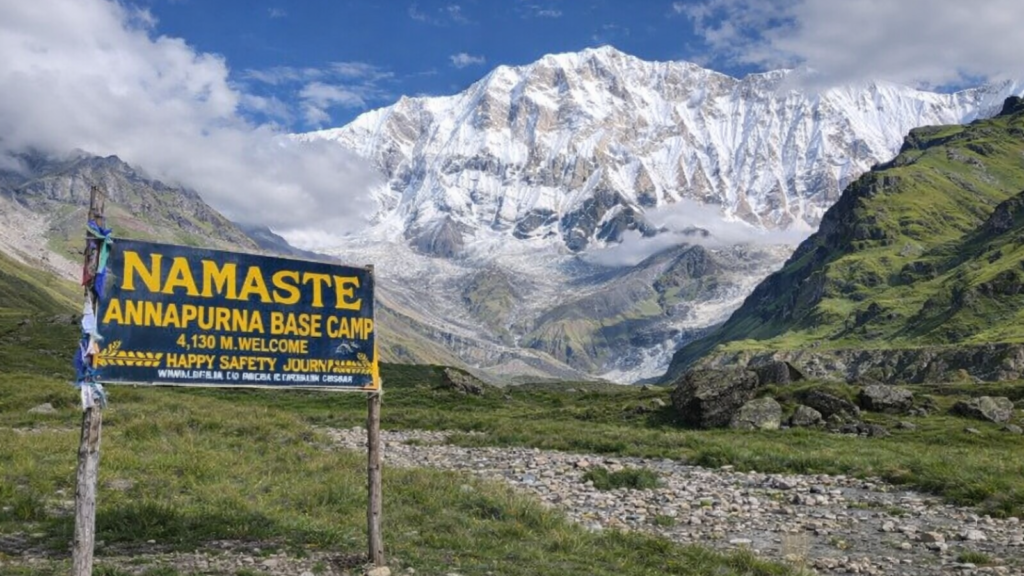
Spring (March–May) and autumn (September–November) are the 2 optimal seasons for the 14-day ABC trek, delivering clear mountain views, manageable temperatures, and fully open teahouses along the entire route. October offers the clearest skies of the year following the monsoon washout, while March and April combine rhododendron blooms with long daylight hours. Winter trekking (December–February) is possible but demands 4-season gear and advance confirmation of open teahouses above 3,000m.
Spring Season (March–May): Rhododendron Forests and Long Clear Days
Spring is the premier trekking season for ABC. March, April, and May deliver the most photogenic conditions: rhododendron forests between 2,000m and 3,500m explode in red, pink, and white bloom, mountain skies clear after morning mist burns off, and temperatures at base camp range between -5°C and 10°C during daytime. March and April combine optimal visibility with moderate trail crowds. May brings warmer temperatures but also the early signs of pre-monsoon cloud build-up, which creates photogenic dramatic skies rather than obscured views.
Trail crowds peak between late March and mid-April. Book teahouses in Ghorepani, Chhomrong, and MBC at least 2–3 weeks in advance during this window.
Autumn Season (September–November): Clearest Mountain Views of the Year
Autumn represents the second peak season and arguably the most visually rewarding one. The monsoon ends in late September, leaving washed air, deep blue skies, and freshly dusted snow on the high peaks. October is universally regarded as the single best month for Himalayan trekking visibility. Temperatures at ABC range from -8°C to 5°C. November brings colder nights but equally clear skies and significantly thinner trail crowds than October. Trekkers who go in November often describe the quieter trail as more intimate and meditative.
Off-Season Trekking: What Trekkers Should Know About Winter and Monsoon
Winter (December–February): The 14-day ABC route remains open in winter. Above Deurali and at ABC, snowfall is substantial and temperatures drop to -15°C at night. A 14-day winter ABC trek requires proper 4-season sleeping bags, insulated down jackets, and crampons for icy trail sections above 3,500m. The reward is near-complete solitude on the trail, you may encounter fewer than 10 other trekkers on the entire route. Many teahouses above Bamboo close between January and February, making advance confirmation of open lodges essential.
Monsoon (June–August): The Annapurna region receives 80% of its annual rainfall between June and August. Heavy rain creates landslide risk on steep sections near Sinuwa and Deurali. Views are obscured by cloud for most of the day. Leeches become an active nuisance below 2,500m. Most experienced trekkers skip ABC during peak monsoon months, though the Ghorepani section remains accessible on clear monsoon mornings. If you trek in June or late August, carry lightweight waterproof gaiters and budget an extra 2 days for weather delays.
What Fitness, Gear, and Preparation Do You Need?
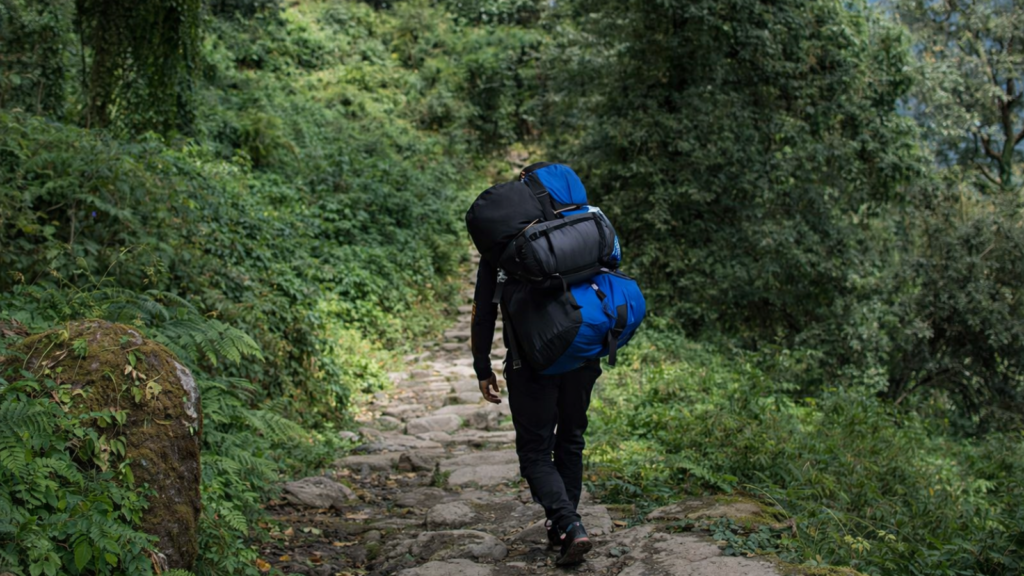
The 14-day ABC trek requires moderate-to-good fitness: the ability to walk 5–7 hours daily on steep uneven terrain for 14 consecutive days while sleeping at altitudes up to 4,130m. A 10–12 week preparation plan combining stair climbing, loaded weekend hikes, and leg-strengthening exercises builds the specific muscle endurance the trail demands. Mandatory gear includes fully broken-in hiking boots, a -10°C down jacket, trekking poles, a -5°C sleeping bag, UV sunglasses, and a water purification system.
Physical Fitness Requirements and Training Plan
The 14-day ABC trek is classified as moderate to challenging. You walk 5–7 hours per day on uneven trail, climb and descend 500–1,000 meters of net elevation multiple times, and sleep at altitudes between 2,000m and 4,130m.
A realistic minimum fitness standard: complete a 2-hour hike on hilly terrain without stopping, and climb 15–20 flights of stairs without losing breath. If you cannot currently meet this standard, a 10–12 week preparation program resolves it.
Effective pre-trek training involves 4 specific activities:
- Stair climbing: 20–30 minutes daily, 4 times per week for 8 weeks. Directly replicates the stone step climbs at Tikhedhunga and Chhomrong.
- Loaded hikes: Weekend hikes of 3–5 hours with a 7–10kg daypack on hilly terrain.
- Cardiovascular baseline: 30 minutes of sustained aerobic activity (cycling, running, swimming) 3 times per week.
- Leg strengthening: Squats, lunges, and single-leg deadlifts 3 times per week to protect knees on the long descents.
Trekkers who train specifically for stair climbing, not just flat running, report significantly less joint pain during the Chhomrong descent on Day 12.
Essential Gear List for the Annapurna Base Camp Trek
Gear requirements for the 14-day ABC trek divide into 3 categories: mandatory, strongly recommended, and optional.
Mandatory items:
- Hiking boots with ankle support, fully broken in before the trek
- Down jacket rated to -10°C (for ABC and MBC nights)
- Waterproof rain jacket and rain pants
- Trekking poles (reduces knee strain by 25–30% on steep descents)
- Headlamp with spare batteries
- Sleeping bag rated to -5°C minimum (teahouses provide blankets but not adequate warmth above 3,500m)
- Water purification tablets or a UV pen (SteriPen)
- Sunscreen SPF 50+ and UV-protective sunglasses (snow reflection above 3,500m is intense)
- First aid kit including altitude medication (acetazolamide / Diamox, prescribed by a doctor before departure)
Strongly recommended:
- Moisture-wicking base layers (2 sets minimum)
- Fleece mid-layer
- Lightweight camp shoes or sandals for teahouse evenings
- Portable power bank (charging points exist at teahouses but availability decreases above Bamboo)
- Lightweight dry bags for waterproofing your pack contents
What you do not need: A tent, sleeping mat, or stove. The entire ABC route operates on a teahouse system with beds, blankets, and cooked meals available every 2–4 hours of walking.
Quality gear is widely available in Kathmandu’s Thamel district and Pokhara’s Lakeside. Both areas sell authentic branded equipment alongside competitively priced local alternatives. Most trekkers spend $50–150 filling gear gaps in Nepal before the trek.
Altitude Acclimatization and Altitude Sickness Prevention
Acute Mountain Sickness (AMS) affects approximately 25–35% of trekkers above 3,500m on the ABC route. AMS symptoms include persistent headache, nausea, dizziness, and fatigue that do not resolve with rest. Severe AMS can progress to High Altitude Pulmonary Edema (HAPE) or High Altitude Cerebral Edema (HACE), both life-threatening conditions requiring immediate descent.
The 14-day itinerary above is specifically designed to prevent AMS through 4 mechanisms:
- Gradual ascent: Net elevation gain per trekking day stays below 500m for most of the route.
- Rest day in Chhomrong: Allows a 24-hour physiological adjustment before the rapid 2,000m altitude gain between Bamboo and ABC.
- Sleep-low principle: On Day 10, you ascend to ABC (4,130m) but descend to sleep at lower altitude if any AMS symptoms appear. The 14-day itinerary builds flexibility for this.
- Hydration protocol: 3–4 liters of water daily from Day 7 onward. Dehydration accelerates AMS onset significantly.
Acetazolamide (Diamox) at 125–250mg twice daily is the medically recommended prophylactic for AMS in high-altitude trekkers. Consult your doctor at least 4 weeks before the trek to get a prescription and test for sulfa drug allergies.
The golden rule for any altitude sickness symptom above 3,000m: do not ascend further until all symptoms resolve completely. Descend 300–500m immediately if symptoms worsen despite rest.
Practical Tips for First-Time Trekkers on the ABC Route
Solo unguided trekking on the ABC route is officially restricted under 2023 Nepal government regulations still active in 2026, making a licensed guide legally mandatory and practically essential for safety, medical support, and logistical efficiency. Travel insurance covering helicopter evacuation to 5,000m is equally non-negotiable, a rescue from ABC to Pokhara costs $4,000–6,000 without coverage. Eating Dal Bhat daily, purifying all water, and avoiding meat above 3,000m are the 3 most effective dietary practices for completing the trek without illness.
Solo vs. Guided Trekking: Rules and Recommendations for 2026
Solo unguided trekking on the Annapurna Base Camp route is officially restricted under Nepal government regulations that came into full enforcement in 2023 and remain active in 2026. Every trekker must hire a licensed guide registered with the Nepal government.
Beyond legal compliance, the practical reasons for hiring a licensed guide are concrete:
- Safety: Licensed guides know the exact evacuation routes from every section of the trail and carry emergency contact protocols.
- Medical support: Trained guides identify early AMS symptoms and make the call to descend when trekkers underestimate their own condition.
- Logistical efficiency: Guides handle teahouse negotiations, meal ordering, permit checks, and trail navigation, removing 40–50% of the mental load from the trekker.
- Cultural access: A Nepali guide provides real cultural context in villages, helps with language barriers, and connects you with local families in ways independent trekking cannot replicate.
Guides cost $30–35 per day for 14 days, bringing total guide costs to approximately $420–490. Shared guide fees split between 2–4 trekkers significantly reduce per-person costs.
Food, Water, and Teahouse Accommodation Along the Trail
The teahouse system on the ABC route is comprehensive. Over 200 tea houses and lodges operate along the route between Nayapul and Annapurna Base Camp. Accommodation quality and meal variety decrease with altitude, but no section of the 14-day itinerary requires camping or carrying food.
Food on the trail: Dal Bhat, Nepal’s national dish of lentil soup, rice, and seasonal vegetables, remains the most nutritious and cost-effective meal on the trail at $4–7 per serving. It comes with unlimited refills at most teahouses, making it the highest-calorie-per-dollar option available. At altitude, appetite decreases. Forcing yourself to eat 2–3 full meals daily above 3,500m is important for maintaining energy and immune function.
Avoid meat (especially chicken and buffalo) above 3,000m. Refrigeration is unreliable at high altitude, and food poisoning from spoiled protein is a common cause of early trek termination.
Water on the trail: Tap water and stream water on the trail require purification. Water purification tablets (chlorine or iodine) or a UV purification pen make any source safe to drink. Buying bottled water above base camp costs $2–5 per bottle and generates significant plastic waste in a conservation area. Carry a 2-liter reusable bottle and a purification system.
Teahouse accommodation: Rooms cost $5–15 per night depending on altitude and season. Rooms above 3,000m are smaller, colder, and offer fewer amenities. Most rooms above Bamboo have minimal insulation, your sleeping bag’s temperature rating determines your sleep quality more than the teahouse quality does. Hot showers cost an additional $2–5 at most locations. Wi-Fi is available at most teahouses below 3,700m but becomes expensive and unreliable above Deurali ($2–5 per hour or per session).
Communication, Safety, and Emergency Protocols on the Trail
Mobile coverage (Ncell and NTC networks) reaches most of the Annapurna Base Camp trail as far as Machhapuchhre Base Camp. ABC itself has intermittent signal. Download offline maps, Maps.me and Gaia GPS both offer detailed offline topographic maps of the Annapurna region, before departure.
Travel insurance is mandatory in practical terms, not just advisory. A helicopter rescue from ABC to Pokhara costs approximately $4,000–6,000. No helicopter rescue operator in Nepal dispatches without confirmed insurance coverage or immediate cash deposit. Policies covering emergency evacuation to 5,000m cost $40–80 for the trek duration. World Nomads, IMG Global, and SafetyWing are the 3 most commonly used providers among trekkers on the ABC route.
The 4 emergency contacts every trekker should carry:
- Your trekking agency or guide’s local number
- Pokhara Airport Rescue Coordination Centre: +977-61-465787
- Your travel insurance emergency line
- Your country’s embassy in Kathmandu
Register your trek with your country’s embassy in Kathmandu before departure. This takes 10 minutes online and ensures a search-and-rescue response is possible if you go missing without trace.
Planning Your 14-Day Annapurna Base Camp Trek in 2026
The 14-day Annapurna Base Camp trek stands as one of the most rewarding trekking experiences accessible to fit non-technical hikers anywhere in the world. The combination of cultural immersion in Gurung and Magar villages, the rhododendron forests of Ghorepani, the pre-dawn magic of Poon Hill, and the overwhelming arrival at the glacial sanctuary beneath Annapurna I creates a journey that remains vivid in memory long after the trail ends.
The difference between a stressful trek and a transformative one comes down to preparation: securing permits in advance, training specifically for loaded hill climbs, understanding acclimatization protocols, and building the 14-day timeline instead of rushing a 10-day version.
The Annapurna Conservation Area welcomes over 100,000 trekkers annually. The 14-day itinerary respects the mountain, the trail, and your own body’s limits. That respect is exactly what brings trekkers home safely, and often back for a second time.
Ready to start planning your 2026 Annapurna Base Camp trek? Reach out to learn about customized 14-day packages, permit assistance, and licensed guide arrangements tailored to your fitness level, budget, and travel dates.
How Difficult Is the Annapurna Base Camp Trek for Beginners?
The Annapurna Base Camp trek difficulty for beginners is moderate to challenging. Fit beginners can complete the 14-day trek after a structured 10–12 week training program. The most demanding sections include the 3,400 stone steps between Tikhedhunga and Ulleri and the steep descent from Chhomrong. Stair-climbing training improves endurance and reduces joint strain.
Do You Need Prior High-Altitude Trekking Experience for ABC?
Prior high-altitude trekking experience is not required for the 14-day Annapurna Base Camp trek. Trekkers must understand altitude sickness recognition and prevention before starting the trail. Acute Mountain Sickness affects 25–35% of trekkers above 3,500 meters. Gradual ascent and the scheduled rest day at Chhomrong significantly reduce AMS risk.
Can You Do the Annapurna Base Camp Trek Without a Guide?
Solo trekking on the Annapurna Base Camp route is prohibited under Nepal government regulations introduced in 2023. Every trekker must hire a licensed guide registered with the government. Permit checkpoints enforce the rule across the route. Licensed guides typically cost $30–35 per day and provide navigation, safety support, and evacuation coordination.
How Cold Does It Get at Annapurna Base Camp?
Annapurna Base Camp sits at 4,130 meters and experiences nighttime temperatures between −15°C and −5°C during peak trekking seasons. Daytime temperatures usually range from −5°C to 10°C depending on weather and wind exposure. Trekkers need a −10°C rated down jacket, a −5°C sleeping bag, and moisture-wicking base layers for safe overnight conditions.
What Is the Highest Point on the 14-Day Annapurna Base Camp Trek?
The highest point on the 14-day Annapurna Base Camp trek is Annapurna Base Camp at 4,130 meters above sea level. The route also reaches Machhapuchhre Base Camp at 3,700 meters before the final ascent. Poon Hill at 3,210 meters is the highest viewpoint on the Ghorepani section and offers panoramic Himalayan sunrise views.
Is Travel Insurance Required for the Annapurna Base Camp Trek?
Travel insurance is not legally required for the Annapurna Base Camp trek but remains essential for safety. Helicopter evacuation from Annapurna Base Camp to Pokhara costs about $4,000–6,000. Rescue operators require confirmed insurance coverage before dispatch. Policies must include emergency evacuation coverage up to at least 5,000 meters altitude.
How Many Days Does It Actually Take to Reach Annapurna Base Camp?
Reaching Annapurna Base Camp from Nayapul usually takes 8 trekking days on the standard 14-day itinerary. Trekkers arrive at base camp around Day 10 when including travel days from Kathmandu. The route limits daily altitude gain to under 500 meters, which supports safe acclimatization and reduces Acute Mountain Sickness risk.
What Food Is Available on the Annapurna Base Camp Trek?
Teahouses along the Annapurna Base Camp trek serve cooked meals such as Dal Bhat, noodles, pasta, eggs, soup, pancakes, and seasonal vegetables. Dal Bhat costs about $4–7 per serving and often includes unlimited refills. Trekkers should avoid meat above 3,000 meters due to limited refrigeration and higher food safety risk.
What Permits Do You Need for the Annapurna Base Camp Trek in 2026?
The Annapurna Base Camp trek requires two permits in 2026: the Annapurna Conservation Area Permit (ACAP) and the Trekkers’ Information Management System (TIMS) card. The ACAP costs NPR 3,000 (~$25) and the TIMS card costs NPR 2,000 (~$15–18) for foreign trekkers. Both permits can be obtained at the Nepal Tourism Board offices in Kathmandu or Pokhara.
What Is the Best Month for the Annapurna Base Camp Trek?
October is the best month for the Annapurna Base Camp trek because post-monsoon weather delivers clear skies, fresh mountain snow, and daytime temperatures between 5°C and 15°C at lower elevations. April is the best spring alternative due to rhododendron blooms and stable weather before pre-monsoon clouds arrive in May.