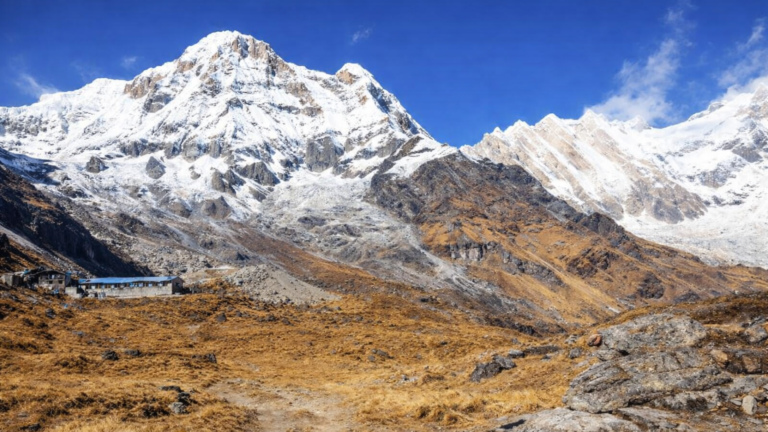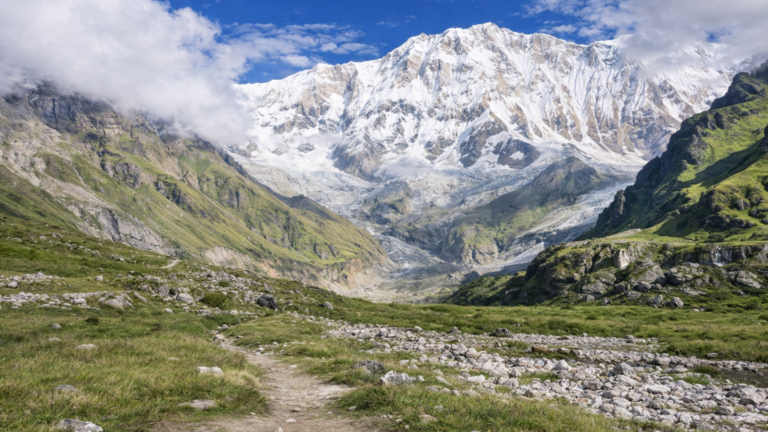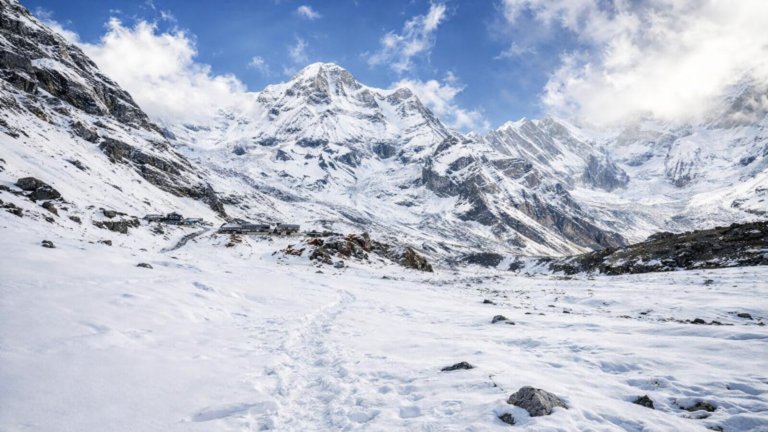
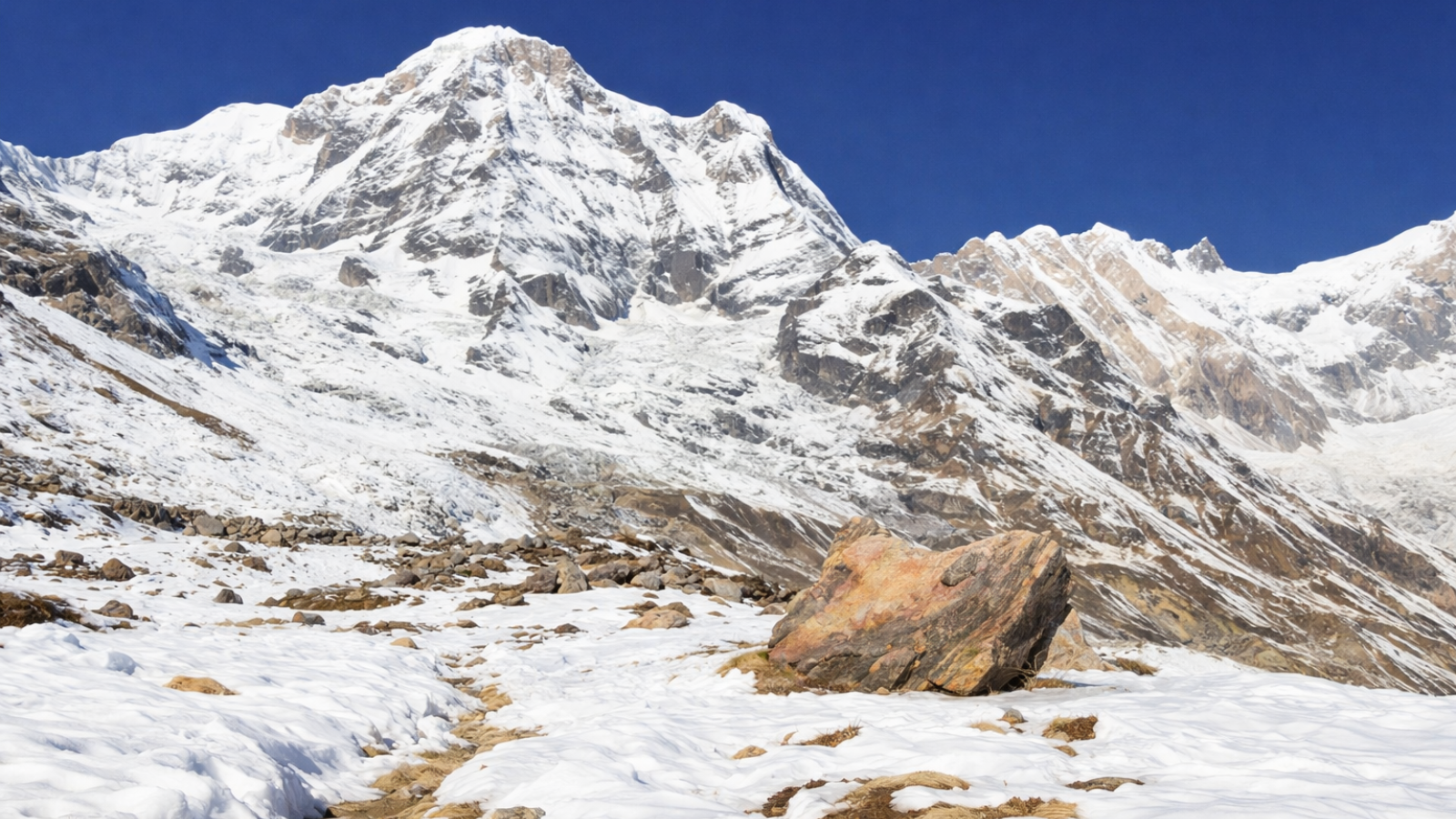

The 6 Day Annapurna Base Camp Trek is a high-altitude Himalayan trekking route in Nepal that reaches Annapurna Base Camp (4,130m) inside the Annapurna Conservation Area. This compact Annapurna Base Camp itinerary covers 60–65 km from Pokhara through Ghandruk, Chhomrong, and the Modi Khola valley to the glacial Annapurna Sanctuary. Trekkers stand beneath Annapurna I (8,091m), Machapuchare (6,993m), Annapurna South (7,219m), and Hiunchuli (6,441m), forming a 360-degree Himalayan amphitheatre unmatched on shorter Nepal treks.
This 6 day Annapurna Base Camp (ABC) trek is designed for time-efficient Himalayan travel with moderate to moderately strenuous difficulty. The route combines accelerated altitude gain, teahouse accommodation, Annapurna Conservation Area Project (ACAP) permit requirement, Trekkers’ Information Management System (TIMS) card, and structured acclimatization planning to reduce Acute Mountain Sickness (AMS) risk. Detailed coverage includes the day-by-day itinerary, 2026 permit fees, cost breakdown (USD 310–430), fitness benchmarks, seasonal weather patterns, and essential gear for temperatures ranging from 25°C in Ghandruk to -10°C at Annapurna Base Camp.
What Is the 6 Day Annapurna Base Camp Trek?
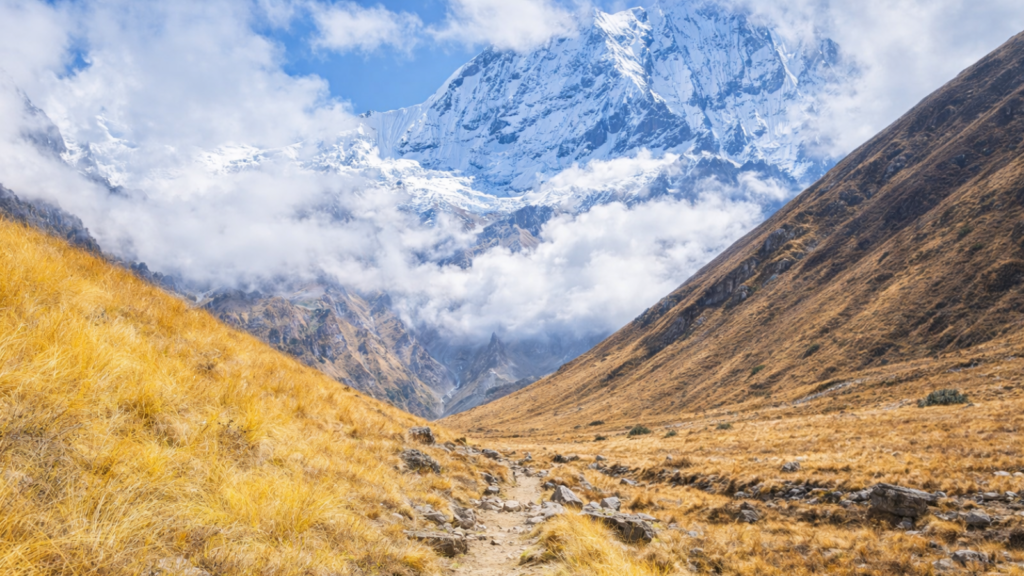
The 6 day Annapurna Base Camp trek is a condensed version of the classic ABC route in the Annapurna Conservation Area of central Nepal. It begins in Pokhara, Nepal’s adventure capital, and ascends through rhododendron forests, Gurung villages, and the Modi Khola river valley to reach Annapurna Base Camp at 4,130m.
Annapurna Base Camp (also called ABC or the Annapurna Sanctuary) is a glacial cirque surrounded by 7 peaks above 6,000 meters, including Annapurna I (8,091m), the world’s 10th highest mountain and statistically one of the most challenging 8,000m peaks in the world. The amphitheatre formed by Annapurna South (7,219m), Hiunchuli (6,441m), Machapuchare (6,993m), and Gangapurna (7,455m) creates a 360-degree Himalayan panorama that few other treks in Nepal can match.
How Does a 6-Day Itinerary Differ from Longer Variants?
The standard Annapurna Base Camp trek takes 7 to 10 days depending on the starting point and rest days included. The 6-day version achieves the same destination by:
- Starting at Ghandruk (1,940m) by vehicle from Pokhara, eliminating 1–2 days of lower-elevation walking from Nayapul
- Maintaining a faster but manageable daily pace of 5 to 7 hours of walking
- Combining the descent into 2 days instead of 3
The key trade-off: the 6-day itinerary does not include a dedicated acclimatization day at Deurali or Machapuchare Base Camp (MBC). Trekkers gain altitude from Chhomrong (2,170m) to ABC (4,130m) across 3 consecutive days, a nearly 2,000m elevation gain that requires careful attention to altitude symptoms.
What most guides overlook: trekkers arriving in Nepal directly from sea level and starting the 6-day route the next morning face a genuine acclimatization gap. Spending at least 2 nights in Pokhara (827m) before beginning the trek significantly reduces the risk of Acute Mountain Sickness (AMS) on day 3 and 4.
Who Is the 6 Day ABC Trek Best For?
The 6 day Annapurna Base Camp trek suits trekkers who:
- Have limited vacation time (7–10 total days in Nepal including Pokhara arrival and departure)
- Possess a moderate to good baseline fitness level and prior hiking experience at altitude
- Want the full Annapurna Sanctuary experience without the extended 10-day itinerary
It is not recommended for first-time altitude trekkers with zero hiking background, trekkers with pre-existing heart or respiratory conditions, or anyone who has experienced AMS on previous treks without medical clearance.
What Is the Day-by-Day Itinerary for the 6 Day Annapurna Base Camp Trek?
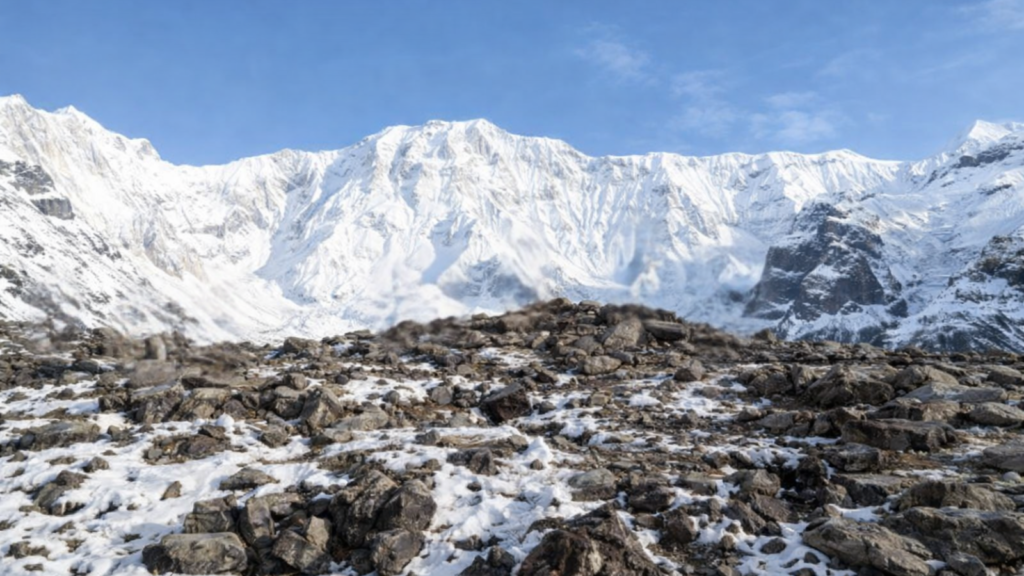
The 6 day Annapurna Base Camp itinerary follows the Modi Khola valley corridor, the only access route into the Annapurna Sanctuary. Each day’s walking time, elevation, and key landmarks are defined below.
Day 1: Drive Pokhara to Ghandruk, Trek to Kimche or Ghandruk Village (1,940m)
Walking time: 2–3 hours | Elevation gain: ~400m from trailhead
Depart Pokhara early by private jeep or shared vehicle to the Kimche trailhead (approximately 1.5 hours). The trek into Ghandruk village passes through terraced farmland and stone-paved paths characteristic of the Gurung homeland. Ghandruk is the second-largest Gurung settlement in Nepal and offers teahouses with reliable Wi-Fi, hot showers, and Gurung cultural displays.
Practical note: Arrive at the trailhead before 9:00 AM to begin trekking in cooler temperatures. Ghandruk’s teahouses fill quickly during October and November peak season, pre-booking 24 hours ahead is recommended during this period.
Day 2: Ghandruk to Chhomrong (2,170m)
Walking time: 5–6 hours | Elevation: Net gain ~230m with significant descent and re-ascent
Day 2 is deceptively demanding. The trail descends steeply from Ghandruk to the Kimrong Khola river (~1,800m) before climbing an equally steep stone staircase to Chhomrong village. The 3,000+ stone steps ascending to Chhomrong are the single most physically demanding section of the entire lower trail, not because of altitude, but pure muscular endurance.
Chhomrong is the last permanent settlement before entering the Annapurna Conservation Area’s restricted inner sanctuary. It serves as the last reliable checkpoint for purchasing snacks, extra warm layers, and battery charging. Stock up here: prices increase significantly above Chhomrong due to porter supply costs.
Common mistake: trekkers who push past Chhomrong to Sinuwa (2,360m) on Day 2 add extra altitude gain that often leads to fatigue and mild AMS symptoms on Day 3. Staying overnight in Chhomrong is the strategically correct decision on this schedule.
Day 3: Chhomrong to Dovan (2,580m)
Walking time: 5–6 hours | Elevation gain: ~410m
Day 3 enters the bamboo and rhododendron forest zone. The trail descends from Chhomrong to the Chhomrong Khola, then begins a sustained climb through Sinuwa (2,360m) and Bamboo (2,310m) before reaching Dovan at 2,580m.
The forest corridor between Bamboo and Dovan is the highest probability zone for encountering wild animals, including Himalayan black bears, barking deer, and the critically endangered Snow Leopard (rarely sighted). The Modi Khola roars loudly through this narrow gorge, and the trail becomes more rugged with rocky surfaces replacing the stone staircases of the lower route.
Temperature drops noticeably above Bamboo. Trekkers experience the shift from subtropical forest to temperate alpine climate. Evening temperatures at Dovan reach 3°C to 5°C in October–November, dropping below 0°C in winter.
Day 4: Dovan to Annapurna Base Camp (4,130m) via Deurali and MBC
Walking time: 6–8 hours | Elevation gain: ~1,550m, the single biggest day
Day 4 is the altitude-critical day of the entire trek. The route passes through Himalayan Hotel (2,920m), Deurali (3,230m), and Machapuchare Base Camp (3,700m) before the final push to Annapurna Base Camp at 4,130m.
The section from Deurali to MBC crosses a high glacial moraine with limited tree cover. Above MBC, the trail enters the open Annapurna Sanctuary, a glacially carved bowl where the walls of Annapurna I, Annapurna South, and Machapuchare rise vertically above the cirque. The visual impact is immediate and overwhelming.
AMS awareness is critical on Day 4. The 3 most common symptoms to monitor are persistent headache unrelieved by ibuprofen, nausea with vomiting, and loss of coordination. Any trekker experiencing 2 or more of these symptoms simultaneously must descend immediately, ascending in this condition is life-threatening.
At ABC, teahouses sit at the base of the Annapurna Glacier. Sunrise at ABC produces one of the most photographed Himalayan views on earth: alpenglow on Annapurna I and Machapuchare turning the summit snowfields amber and gold. Set an alarm for 5:30 AM.
Day 5: Annapurna Base Camp to Bamboo (2,310m)
Walking time: 5–6 hours | Net elevation loss: ~1,820m
Descent day is psychologically satisfying but physically demanding on the knees and quads. The route retraces the ascent path from ABC through MBC, Deurali, Himalayan Hotel, and Dovan to Bamboo. Trekking poles reduce knee impact significantly, this is the day they earn their place in your pack.
Most trekkers descend faster than anticipated, arriving at Bamboo by early afternoon. This creates the option of continuing to Chhomrong (an additional 2 hours), which builds a buffer into Day 6. The decision depends on leg fatigue and the next day’s transport schedule.
Day 6: Bamboo to Jhinu Danda Hot Springs, Drive to Pokhara
Walking time: 4–5 hours to Jhinu Danda | Elevation: Descent to ~1,760m
The final trekking day ends at Jhinu Danda, a small settlement famous for its natural hot spring pools positioned directly above the Modi Khola river. Soaking in 42°C thermal waters after 5 days of trekking is the classic way to conclude the ABC circuit. The hot springs operate from approximately 7:00 AM to 6:00 PM; entrance fee is NPR 200–300 (approximately USD 1.50–2.50) as of 2026.
From Jhinu Danda, a vehicle (arranged through your teahouse or trekking agency) drives 3–4 hours back to Pokhara via the New Bridge / Siwai road.
What Permits and Fees Are Required for the Annapurna Base Camp Trek in 2026?
Two permits are required for the Annapurna Base Camp trek in 2026: the Annapurna Conservation Area Permit (ACAP) and the Trekkers’ Information Management System (TIMS) card. These permits are checked at multiple checkpoints along the trail, and trekking without them can result in fines or being denied entry into the conservation area.
ACAP Permit (Annapurna Conservation Area Permit)
The ACAP permit grants access to the Annapurna Conservation Area, managed by the National Trust for Nature Conservation (NTNC). As of 2026, the fee structure is:
- SAARC nationals: NPR 1,000 (approximately USD 7.50)
- Non-SAARC nationals: NPR 3,000 (approximately USD 22.50)
Permit validity: single entry, valid for the duration of the trek. The ACAP permit is issued at the Nepal Tourism Board (NTB) offices in Kathmandu (Pradarshani Marg) or Pokhara (Damside Tourist Complex). Recent reports confirm online ACAP permit application is possible and prints are accepted, but carrying printed permits is highly recommended.
TIMS Card (Trekkers’ Information Management System)
The TIMS card is a trekking registration system managed by the Trekking Agencies’ Association of Nepal (TAAN) and the Nepal Tourism Board. The system records trekker details for safety monitoring, rescue coordination, and trail management.
TIMS card cost in 2026
- Independent trekkers: NPR 2,000 (~USD 15)
- Trekkers with a registered guide or trekking agency: NPR 1,000 (~USD 7–8)
Trekkers must provide:
- Passport copy
- Passport-sized photos
- Trekking itinerary
- Emergency contact details
TIMS cards can be issued in Kathmandu or Pokhara at Nepal Tourism Board or TAAN offices.
Checkpoint Verification
ACAP checkpoints operate at Ghandruk, Chhomrong, and Sinuwa. Carry physical permit copies, digital copies on phone are not accepted at all checkpoints.
How Difficult Is the 6 Day Annapurna Base Camp Trek?
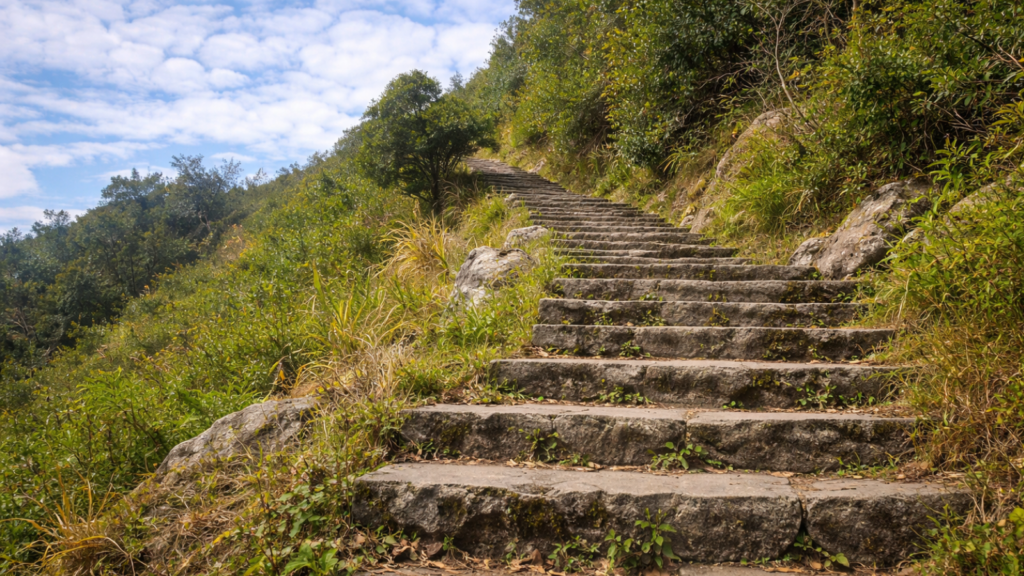
The 6 day Annapurna Base Camp trek rates moderate to moderately strenuous on the standard trekking difficulty scale. The difficulty comes from 3 primary factors: cumulative elevation gain, daily walking hours, and high-altitude exposure without a dedicated rest day.
Altitude and Acclimatization on the 6-Day Schedule
ABC sits at 4,130m, high enough to cause AMS in susceptible individuals but below the threshold requiring technical climbing skills or supplemental oxygen. The standard acclimatization guideline above 3,000m recommends ascending no more than 300–500m per day in net sleeping altitude.
Day 4 of the 6-day itinerary violates this guideline: trekkers sleep at Dovan (2,580m) on Night 3 and ABC (4,130m) on Night 4, a 1,550m jump in sleeping altitude. This is the structural vulnerability of the 6-day schedule.
Mitigation strategies used by experienced guides:
- Carry Diamox (acetazolamide) 125mg prescribed by a physician before the trek (start 2 days before ascending above 3,000m)
- Hydrate aggressively: minimum 3 liters of water per day above Chhomrong
- Ascend slowly on Day 4: spend 30 minutes at MBC before continuing to ABC
- Do not push to ABC if experiencing headache below MBC
Table of Daily Distance and Elevation
| Day | From → To | Distance | Ascent | Descent | Hours |
| 1 | Kimche → Ghandruk | 6 km | 400m | 0m | 2–3 |
| 2 | Ghandruk → Chhomrong | 14 km | 600m | 400m | 5–6 |
| 3 | Chhomrong → Dovan | 12 km | 750m | 300m | 5–6 |
| 4 | Dovan → ABC | 13 km | 1,550m | 0m | 6–8 |
| 5 | ABC → Bamboo | 14 km | 0m | 1,820m | 5–6 |
| 6 | Bamboo → Jhinu Danda | 8 km | 0m | 500m | 3–4 |
Fitness Requirements for the 6-Day Route
Trekkers complete the 6 day ABC trek successfully when they arrive with a fitness baseline of:
- Cardiovascular endurance: Ability to walk 5–6 hours consecutively on uneven terrain without stopping
- Leg strength: Comparable to hiking 15–20 km with 800–1,000m elevation gain in a single session
- Core stability: Relevant for rocky trail sections above Deurali
A minimum 8-week pre-trek training program focusing on stair climbing (500+ floors per week), loaded hiking with a 10–12 kg pack, and 30-minute zone-2 cardio sessions 4 days per week produces trekkers who complete the route without excessive fatigue.
What Equipment and Packing List Do You Need for the 6 Day ABC Trek?
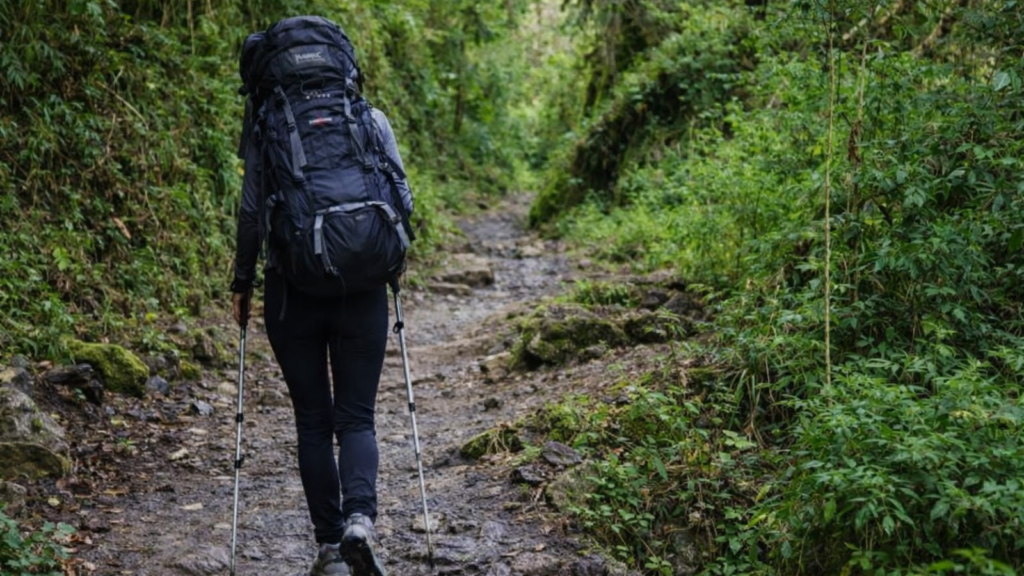
The 6 day ABC trek requires gear appropriate for temperatures ranging from 25°C in lower elevations to -10°C at ABC in pre-dawn winter conditions. The packing strategy centers on a layering system and strict weight discipline.
Essential Clothing and Layering System
The 3-layer system for the Annapurna Base Camp trek:
- Base layer: Moisture-wicking merino wool or synthetic long-sleeve shirt and thermal leggings. Cotton base layers are dangerous above Deurali, wet cotton loses all insulation value.
- Mid layer: 200-weight fleece jacket or lightweight down jacket (600-fill minimum). This layer is essential from Chhomrong upward and the primary insulation at ABC.
- Outer layer (shell): Waterproof, breathable hardshell jacket and rain pants. The Annapurna region receives heavy precipitation even in dry seasons, a quality shell is non-negotiable.
Additional clothing essentials:
- 2 pairs of trekking trousers (one convertible zip-off, one insulated)
- 4 pairs of moisture-wicking trekking socks (merino wool)
- Warm hat covering ears, neck gaiter, liner gloves + outer waterproof gloves
- Gaiters (useful in snow above Deurali in winter and monsoon)
Gear and Equipment Checklist
- Trekking boots: Waterproof, ankle-supporting boots broken in before the trek. Blisters developed on Day 2 become debilitating by Day 4 at altitude.
- Trekking poles: Collapsible, lightweight. Essential for the Chhomrong staircase ascent and ABC descent on Day 5.
- Daypack (20–25L): Carry daily essentials if using a porter for the main bag.
- Sleeping bag: Rated to -10°C or lower. Teahouse blankets exist but are inadequate at ABC in shoulder and winter seasons.
- Headlamp with spare batteries: Early-morning ABC summit viewings require reliable illumination on rocky terrain.
- Water purification: SteriPen UV purifier or iodine tablets. Teahouse water above Deurali is often unfiltered glacier melt.
- Sunscreen SPF 50+ and UV-blocking sunglasses: UV intensity increases 10–12% per 1,000m of altitude gain.
- Basic medical kit: Ibuprofen, Diamox (prescription), blister treatment, antiseptic, altitude sickness treatment protocol card.
What to Leave Behind
Weight reduction directly improves summit-day performance. Leave behind:
- Full-size camera tripods (use a phone tripod adapter)
- Multiple guidebooks (download offline maps on Gaia GPS or Maps.me)
- More than 2 sets of casual clothes (teahouses provide drying space)
- Hardcover books (Kindle Paperwhite weighs 158g)
- Bulky camp-style cookware (all meals are available in teahouses)
Target total pack weight: 8–12 kg for day-pack trekking with a porter, or 12–16 kg for fully independent trekkers.
What Is the Best Season for the 6 Day Annapurna Base Camp Trek?
The Annapurna Base Camp trek is accessible year-round, but 2 seasons produce dramatically superior conditions for the 6-day itinerary.
Spring Season (March–May): The Prime Rhododendron Window
Spring delivers the rhododendron bloom, an ecological spectacle where the forests below Chhomrong transform into corridors of red, pink, and white flowering trees. Peak bloom typically occurs in late March to mid-April depending on altitude.
Spring weather conditions: stable with increasing temperatures, occasional afternoon cloud build-up and short precipitation events. Visibility at ABC is excellent in morning hours. Trail conditions are ideal: snow has melted from lower elevations, and the path above Deurali is clear by April in most years.
Spring 2026 update: Increased trekker numbers in the April–May window have created booking pressure at teahouses between Bamboo and MBC. Pre-booking accommodation for Nights 3, 4, and 5 is strongly advisable for spring trekking.
Autumn Season (September–November): Crystal Visibility After Monsoon
October is statistically the single best month for Annapurna Base Camp trekking. Post-monsoon weather produces crystal-clear skies, the freshly washed trail landscape is at peak greenery, and mountain views from ABC achieve maximum clarity. The Annapurna massif, Machapuchare, and Gangapurna are visible without atmospheric haze.
Temperature range in October: 15–20°C at Ghandruk, 8–12°C at Chhomrong, 0–5°C at ABC. November brings colder temperatures but maintains visibility. Night temperatures at ABC drop to -5°C to -10°C by late November.
Autumn is peak season, trail congestion is real. Expect company at popular teahouses and the viewpoints at ABC.
Monsoon (June–August) and Winter (December–February): Real Risks and Limited Rewards
Monsoon trekking is possible but involves leeches on the lower trail, slippery rock surfaces, significantly reduced mountain visibility, and a higher risk of trail-blocking landslides in the Modi Khola gorge. Some experienced trekkers accept these conditions for lower teahouse prices (30–50% cheaper) and solitude.
Winter trekking above Deurali involves significant snowpack that frequently closes the trail above MBC from December through February. The trail to ABC is passable in winter only with crampons and prior experience on snow, what appears to be a “light dusting” in photographs often conceals ice-covered rock requiring technical footwear.
What Are the Teahouses and Accommodation Options Along the 6 Day ABC Trek?
Teahouses, family-run guesthouses serving food and providing dormitory or private room accommodation, are the exclusive accommodation type on the Annapurna Base Camp route. No camping infrastructure exists along this trail.
Teahouse Standards and What to Expect in 2026
Teahouse quality varies substantially by altitude. Below Chhomrong, guesthouses offer en-suite bathrooms, hot showers, Wi-Fi, and charging facilities at comfortable standards. Above Chhomrong, facilities reduce progressively:
- Sinuwa to Dovan: Shared squat toilets, cold showers (hot shower available for extra charge: NPR 300–500), solar-charged electricity evenings only
- Above Dovan to ABC: Pit toilets, no hot showers, limited electricity (charging available at NPR 200–300 per device for 1–2 hours), no Wi-Fi above Bamboo in most teahouses
ABC teahouses sit at the highest-altitude accommodation point on this route. Rooms are basic: 2 twin beds with thin mattresses, 1 blanket. A quality sleeping bag rated to -10°C is the single most important gear item at this elevation.
Food Options and Recommended Meals on the Trail
The Annapurna teahouse menu is standardized across the route. Every teahouse from Ghandruk to ABC serves:
- Dal Bhat: The definitive trekker’s meal. Rice, lentil soup, vegetable curry, and pickle. Most teahouses offer unlimited refills. Calorie density (approximately 800–1,200 kcal per serving) and electrolyte balance make it optimal for trekking recovery.
- Pasta, noodle soups, fried rice, Tibetan bread, porridge, pancakes
- Hot drinks: Black tea, milk tea, ginger lemon honey tea, coffee, hot chocolate
What most trekkers overlook: carbohydrate loading at dinner is more important than breakfast at altitude. The body processes complex carbohydrates overnight, supplying glycogen stores for the next morning’s ascent. Order dal bhat for dinner consistently from Day 3 onward.
Avoid meat above Chhomrong. Supply chains to high-altitude teahouses rely on porter carries, meat quality and cold-storage reliability above 2,500m are not consistent. Stick to eggs, vegetables, and lentil-based protein sources.
Booking Accommodation: Walk-In vs. Pre-Book
October and November: Pre-book teahouses at Chhomrong, Dovan (or Himalayan Hotel), ABC, and Bamboo. These fill completely by early afternoon during peak season. Contact teahouses directly by phone or WhatsApp, or book through your trekking agency.
March and April: Pre-book ABC and Chhomrong. Lower-altitude stops (Bamboo, Dovan) accept walk-ins in spring.
All other months: Walk-in is reliable. Teahouses actively solicit passing trekkers.
Average teahouse costs per person per night in 2026: NPR 600–1,200 (USD 4.50–9.00) for a private room. Teahouses often offer rooms at NPR 0–300 if meals are purchased from the in-house kitchen, this is the standard arrangement across the route.
Planning Your 6 Day Annapurna Base Camp Trek: Next Steps
The 6 day Annapurna Base Camp trek is one of the most efficient ways to experience a genuine Himalayan high-altitude journey within a tight travel window. The condensed schedule is achievable by trekkers with solid fitness, proper gear, and intelligent altitude management on Day 4.
The factors that determine success on this itinerary are: arriving in Pokhara 2 nights before the trek, pacing the ascent conservatively above MBC, and hydrating consistently from Day 2 onward. Trekkers who respect these 3 principles complete the route at a rate significantly higher than those who treat it as a straightforward hiking extension.
To plan your 6 Day Annapurna Base Camp trek, connect with a registered Nepal trekking agency to confirm current permit requirements, teahouse availability, and trail conditions, particularly for winter or monsoon departures where route conditions vary year to year.
How Fit Do You Need to Be for the 6 Day Annapurna Base Camp Trek?
You need a moderate to good fitness level to complete the 6 Day Annapurna Base Camp trek comfortably. Hike 5–7 hours daily on steep, uneven terrain while carrying a 10–12 kg pack. Train for at least 8 weeks with stair climbing, loaded hikes, and zone-2 cardio 4 times per week.
How Much Does the 6 Day Annapurna Base Camp Trek Cost in 2026?
The 6 Day Annapurna Base Camp trek costs USD 310–430 per person from Pokhara in 2026. This budget includes trekking permits (ACAP and TIMS totaling approximately USD 35–40), accommodation (USD 30–55), meals (USD 70–100), porter fees (USD 120–150), and transport (USD 40–60). Hiring a licensed guide adds USD 210–300.
What Permits Are Required for the Annapurna Base Camp Trek?
Two permits are required for the Annapurna Base Camp trek: the ACAP (Annapurna Conservation Area Permit) and the TIMS card (Trekkers’ Information Management System). The ACAP costs NPR 3,000 (~USD 22–25) and the TIMS card costs NPR 1,000–2,000 depending on whether you trek with a guide or independently.
Is the 6 Day Annapurna Base Camp Trek Safe for Solo Trekkers?
The 6 Day Annapurna Base Camp trek is reasonably safe for solo trekkers with prior hiking experience. The trail is well-marked and heavily trafficked. However, the 1,550-meter altitude gain on Day 4 increases AMS risk. Hiring a licensed guide (USD 35–50 per day) improves safety and symptom monitoring.
What Is the Best Month to Do the 6 Day Annapurna Base Camp Trek?
October is the best month for the 6 Day Annapurna Base Camp trek. Post-monsoon skies are clear, weather is stable, and mountain visibility is highest. March to mid-May ranks second due to rhododendron blooms. Avoid December to February unless equipped for snow above 3,700 meters.
Do You Need a Guide or Porter for the 6 Day ABC Trek?
You do not legally need a guide or porter for the 6 Day Annapurna Base Camp trek. Hiring a porter (USD 20–25 per day) reduces pack weight from 14 kg to 6–8 kg. A licensed guide adds altitude monitoring and emergency support, which improves safety on the compressed 6-day schedule.
How High Is Annapurna Base Camp and Will You Get Altitude Sickness?
Annapurna Base Camp sits at 4,130 meters above sea level, high enough to cause Acute Mountain Sickness (AMS). Common symptoms include persistent headache, nausea with vomiting, and loss of coordination. Drink at least 3 liters of water daily and descend immediately if two symptoms appear.
What Food and Water Is Available on the 6 Day ABC Trek?
Teahouses on the 6 Day ABC trek serve dal bhat, pasta, noodle soup, fried rice, Tibetan bread, and hot drinks. Dal bhat provides 800–1,200 kcal and usually includes unlimited refills. Treat water above Deurali with a SteriPen or iodine tablets due to unfiltered glacier sources.
What Clothing Should You Pack for the 6 Day Annapurna Base Camp Trek?
Pack a 3-layer system for the 6 Day Annapurna Base Camp trek: a moisture-wicking base layer, a fleece or lightweight down mid layer, and a waterproof hardshell. Temperatures range from 25°C to -10°C. Avoid cotton above 3,200 meters because wet cotton loses insulation.
Can You Do the Annapurna Base Camp Trek Without Prior Himalayan Experience?
You can complete the 6 Day Annapurna Base Camp trek without prior Himalayan experience. However, understand Acute Mountain Sickness risk before departure. Spend at least 2 nights in Pokhara (827 meters) to begin acclimatization. Starting immediately after arriving from sea level increases AMS probability on Days 3–4.