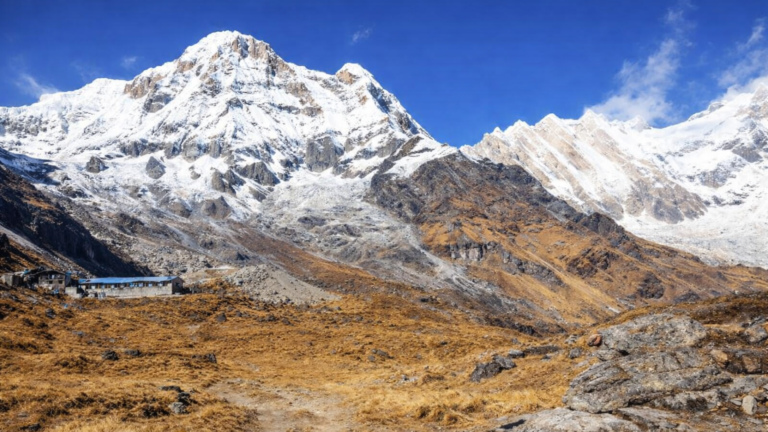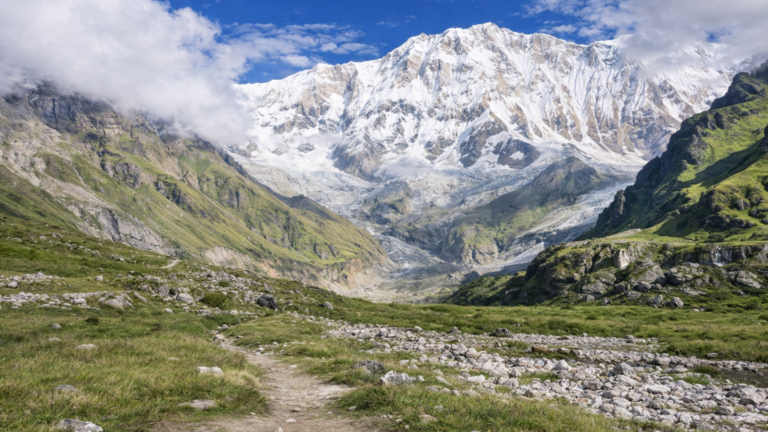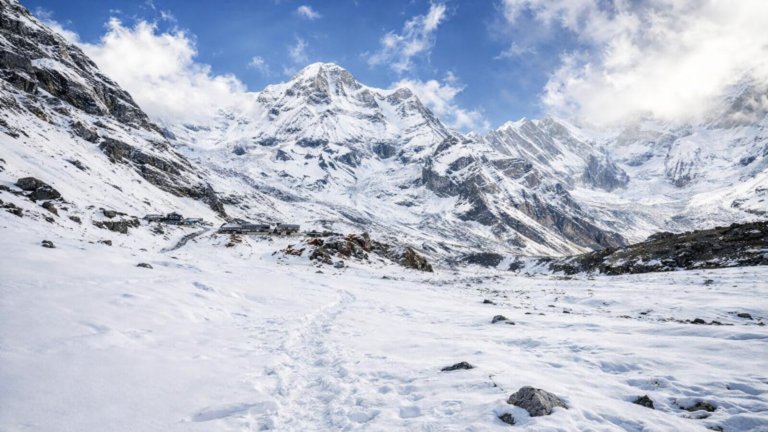
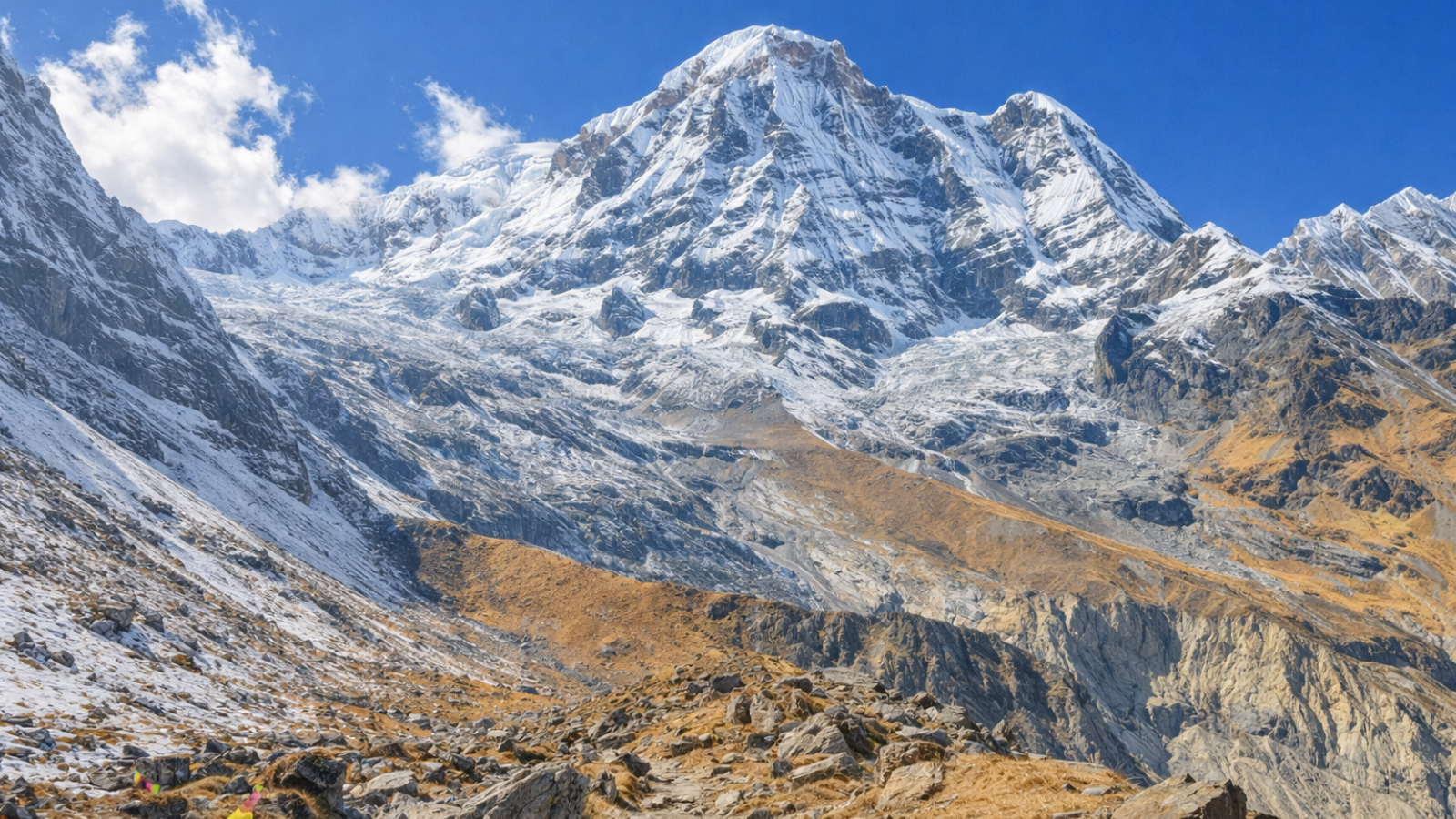

The 8 Day Annapurna Base Camp Trek is a high-impact Himalayan trekking route in Annapurna Conservation Area that leads to Annapurna Base Camp at 4,130 meters. This moderate 110 km mountain trek ascends from the subtropical villages near Pokhara to a glacial amphitheater surrounded by 7 major Himalayan peaks, including Annapurna I (8,091 m), Machapuchare (6,993 m), Annapurna South (7,219 m), and Hiunchuli (6,441 m). Designed for trekkers with moderate fitness, the 8-day itinerary balances steady acclimatization with efficient pacing, gaining over 3,000 meters in elevation without technical climbing. The result is a 4,000-meter Himalayan base camp experience for first-time altitude trekkers and time-limited travelers seeking maximum mountain scenery per day.
This guide to the 8 Day Annapurna Base Camp Trek provides the complete 2026 framework: day-by-day itinerary, permit requirements, mandatory licensed guide rules, altitude risk management, packing systems, teahouse standards, and seasonal performance analysis for spring and autumn. Compared with the longer Annapurna Circuit, the Annapurna Base Camp (ABC) route delivers a concentrated visual return inside a 360-degree glacial cirque rather than a multi-pass traverse. Trekkers reach sunrise views across Annapurna Sanctuary within five trekking days, then descend to lower elevations for faster recovery. For travelers with 2 weeks or less in Nepal, the 8-day Annapurna Base Camp trek offers the most efficient combination of Himalayan scale, cultural immersion, and structured altitude progression.
What Is the 8 Day Annapurna Base Camp Trek?
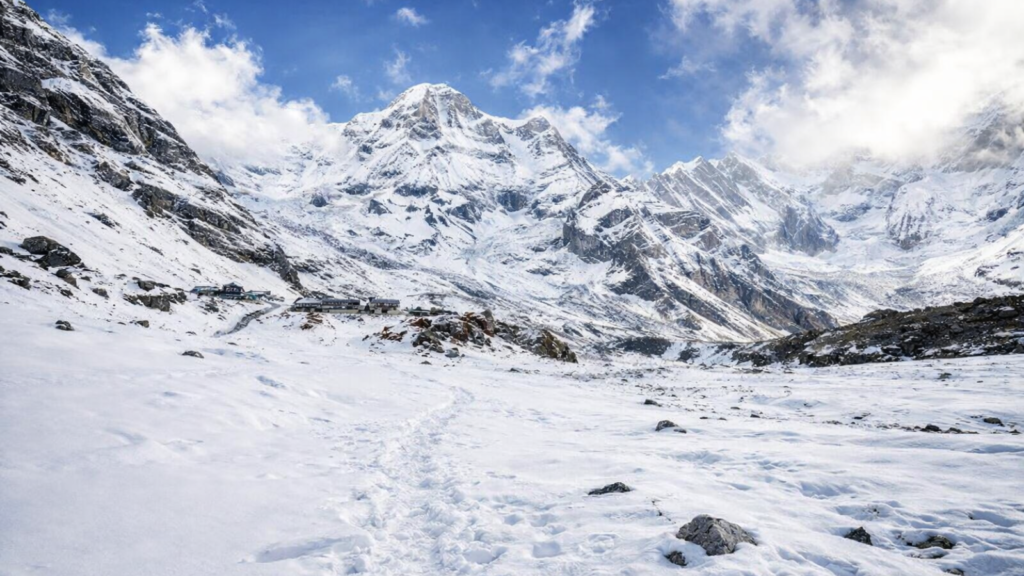
The 8 day Annapurna Base Camp trek is a structured trekking route through the Annapurna Conservation Area (ACA) in north-central Nepal. The route begins and ends near Pokhara, Nepal’s trekking gateway city, and passes through 8 key villages and elevation zones: Nayapul, Ghandruk, Chhomrong, Bamboo, Deurali, Machapuchare Base Camp (MBC), Annapurna Base Camp, and back via Jhinu Danda.
The trek covers approximately 110 km of trail, gaining over 3,000 meters in cumulative elevation. The highest point is Annapurna Base Camp at 4,130 meters above sea level.
Why 8 Days Works Better Than Shorter Options
Most operators offer 7-day and 10-day versions of this trek. The 8-day itinerary hits the optimal balance between acclimatization pace and total trekking time. A 7-day version compresses the ascent too aggressively, increasing altitude sickness risk between Chhomrong (2,170 m) and ABC (4,130 m). A 10-day option adds comfort nights that most fit trekkers do not need.
The 8-day format builds in 1 recovery margin, useful if cloud cover blocks sunrise at base camp or if minor knee soreness slows the descent from Deurali.
Annapurna Base Camp vs. Annapurna Circuit: Key Differences
| Feature | 8 Day ABC Trek | Annapurna Circuit |
| Duration | 8 days | 12–18 days |
| Max Elevation | 4,130 m | 5,416 m (Thorong La) |
| Difficulty | Moderate | Moderate–Strenuous |
| Cost (package) | $700–$1,000 | $1,200–$1,800 |
| Best For | First-time Himalayan trekkers | Experienced trekkers |
What most competitors miss: the ABC trek enters a glacial cirque, a 360-degree bowl of Himalayan peaks, that the Circuit never offers. For pure visual impact per trekking day, ABC outperforms the Circuit.
8 Day Annapurna Base Camp Trek: Day-by-Day Itinerary
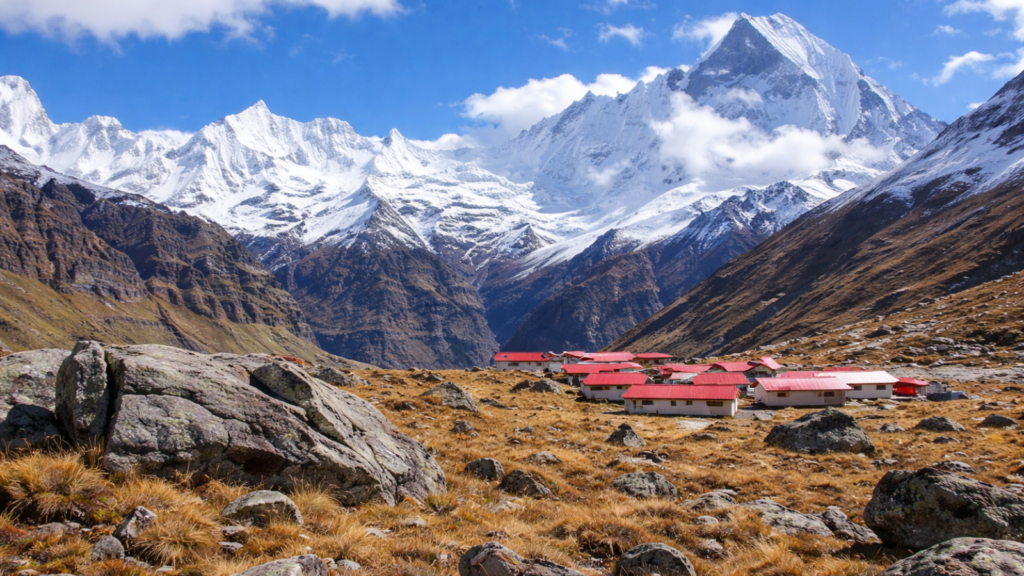
This itinerary is structured for trekkers with moderate fitness arriving in Pokhara the day before Day 1.
Day 1: Pokhara to Ghandruk (1,940 m)
Drive from Pokhara to Nayapul (1–1.5 hours, approximately 42 km). Begin trekking at Birethanti checkpoint, your first ACAP permit check. Ascend through terraced farmland and traditional Gurung villages to reach Ghandruk.
- Trekking time: 5–6 hours
- Altitude gain: ~1,200 m from Birethanti (740 m)
- Overnight: Ghandruk village guesthouse
- What most guides miss: Ghandruk is a UNESCO-recognized Gurung heritage village. Arrive early enough (before 4 PM) to visit the Gurung Museum, it provides cultural context that makes the entire trek more meaningful.
Day 2: Ghandruk to Chhomrong (2,170 m)
A moderate day with a significant descent to the Modi Khola river, followed by a steep climb to Chhomrong. This is the last major village with reliable ATMs and well-stocked shops before the higher trail.
- Trekking time: 5–6 hours
- Altitude gain: Net +230 m (total elevation change is much more due to descent and re-ascent)
- Overnight: Chhomrong
- Practical note: Withdraw all cash you need here. No ATMs exist above Chhomrong. Budget NPR 5,000–8,000 (~$34–$55 USD at the current rate of 145 NPR per USD) per person per day for meals and accommodation above this point.
Day 3: Chhomrong to Bamboo (2,310 m)
The trail enters the Annapurna Sanctuary proper. You descend steeply to Sinuwa, cross the Chhomrong Khola, and climb back through dense bamboo and rhododendron forest to reach Bamboo camp.
- Trekking time: 5–6 hours
- Altitude gain: Net +140 m
- Overnight: Bamboo or Sinuwa
- Altitude sickness watch begins here. The trail is now enclosed by valley walls. Symptoms to monitor: persistent headache, loss of appetite, disrupted sleep. These are early AMS (Acute Mountain Sickness) signals.
Day 4: Bamboo to Deurali (3,230 m)
The most dramatic single-day elevation gain in the itinerary: 920 meters. The trail passes through Doban and Himalaya Hotel (2,920 m) before reaching Deurali, a small cluster of teahouses at the snowline boundary.
- Trekking time: 6–7 hours
- Altitude gain: +920 m
- Overnight: Deurali
- Critical acclimatization point. Walk slowly. Drink 3–4 liters of water. Avoid alcohol. Do not take sleeping pills, they suppress respiratory drive at altitude.
Day 5: Deurali to Annapurna Base Camp (4,130 m) via MBC
Pass Machapuchare Base Camp (3,700 m), where Machapuchare’s “Fishtail” summit dominates the skyline at close range. Continue up the final glacial moraine to reach Annapurna Base Camp.
- Trekking time: 4–5 hours
- Altitude gain: +900 m
- Overnight: Annapurna Base Camp
- The signature experience: Sunrise at ABC with Annapurna I, Annapurna South, Gangapurna, Hiunchuli, and Machapuchare all visible within a single 360-degree view. Set your alarm for 5:30 AM. The alpenglow on Annapurna South begins at approximately 6:10 AM during spring season.
Day 6: Annapurna Base Camp to Bamboo (2,310 m)
Begin descent early, the altitude will feel noticeably better with each 500 meters dropped. This is a long day intentionally: sleeping low after days at altitude accelerates recovery and reduces post-trek fatigue.
- Trekking time: 7–8 hours
- Altitude drop: −1,820 m
- Overnight: Bamboo or Doban
- Common mistake: Trekkers rush this descent and arrive in Chhomrong instead of Bamboo, adding unnecessary knee stress. Stick to Bamboo. Your joints will thank you.
Day 7: Bamboo to Jhinu Danda (1,760 m)
Ascend back to Chhomrong, then take the lower trail down to Jhinu Danda, a riverside village famous for its natural hot springs.
- Trekking time: 5–6 hours
- Altitude drop: −550 m net (more total descent due to Chhomrong’s position)
- Overnight: Jhinu Danda
- Don’t skip the hot springs. After 6 days of trekking, 30 minutes in the Jhinu hot springs (entry fee: NPR 200 per person, ~$1.40 USD) is one of the best recovery tools on the entire route.
Day 8: Jhinu Danda to Pokhara
Trek to Siwai or Nayapul and take a local vehicle or tourist jeep back to Pokhara (1–1.5 hours). Arrive in Pokhara by early afternoon.
- Trekking time: 3–4 hours to Nayapul
- Drive time: 1–1.5 hours to Pokhara
- Optional: Some trekkers arrange a helicopter flight from Jhinu or from a landing pad near Chhomrong directly back to Pokhara (~$200–250 USD per person in a shared helicopter). This is increasingly popular for trekkers with tight schedules or sore knees.
When Is the Best Time to Do the 8 Day Annapurna Base Camp Trek?
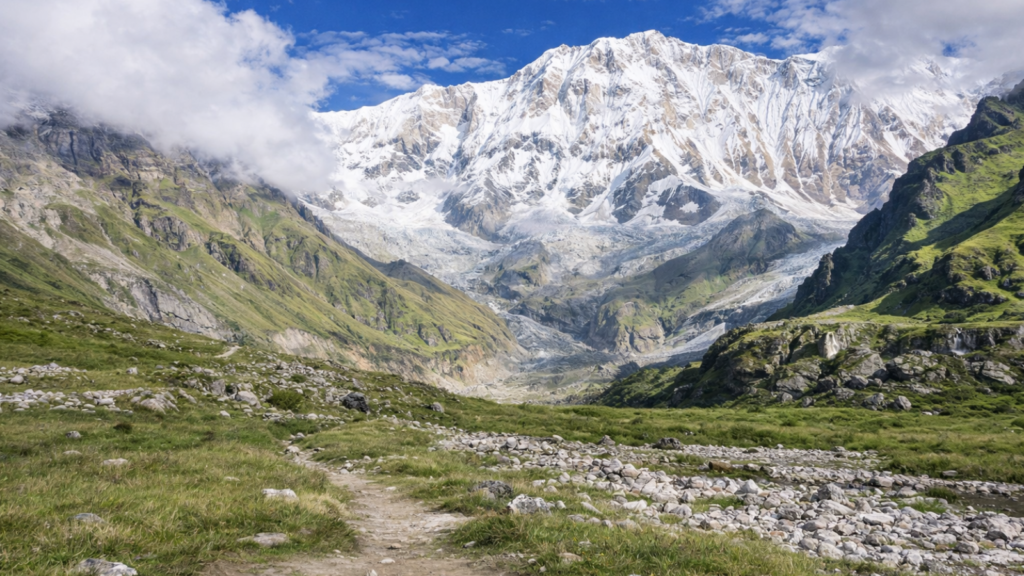
The 8 day Annapurna Base Camp trek is a year-round route, but 2 seasons deliver consistently excellent conditions.
Spring Season: March to May
Spring is the single best season for the ABC trek. Rhododendron forests bloom in full color between 1,800 m and 3,500 m from mid-March through April. Temperatures at base camp range from −5°C to 10°C. Trail conditions are dry and stable. Visibility is clearest in early March and again in May before the pre-monsoon clouds build.
- Best months: March and April
- Trail crowd level: High, expect 100–200 trekkers per day at busy checkpoints
- Average base camp temperature: 5°C (41°F) at midday
Autumn Season: October to November
Post-monsoon autumn delivers crisp air, freshly washed skies, and excellent mountain views. October is peak season, busier than spring but arguably offering the sharpest mountain visibility.
- Best months: October and early November
- Trail crowd level: Very high in October
- Average base camp temperature: 2°C (36°F) at midday
Seasons to Avoid (and When to Still Consider Them)
The monsoon (June–September) brings heavy rainfall, leeches on the lower trail, and frequent trail closures from landslides. However, experienced trekkers with proper rain gear find the Sanctuary dramatically quiet (fewer than 20% of normal trekker volume) and the waterfalls spectacular.
Winter (December–February) closes the high trail above MBC with snow. Temperatures at ABC drop to −15°C to −20°C at night. Experienced cold-weather trekkers with proper sleeping gear complete the trek in winter, but the risk of trail closure or snowfield crossing is real.
How Much Does the 8 Day Annapurna Base Camp Trek Cost in 2026?
As of March 2026, 1 USD = approximately 145 NPR (mid-market rate). All NPR values below are converted at this rate.
Required Permit Fees
| Permit | Cost (NPR) | Cost (USD at 145 NPR/USD) |
| Annapurna Conservation Area Permit (ACAP) | NPR 3,000 | ~$20.70 |
| TIMS Card (Foreign trekkers) | NPR 2,000 | ~$13.80 |
These fees are government-fixed and do not change by season. Children under 10 years do not require an ACAP permit.
Guide and Porter Costs
Since 2023, a licensed guide is mandatory for the Annapurna Base Camp trek. Solo trekking is no longer permitted.
| Service | Daily Rate (NPR) | Daily Rate (USD) |
| Licensed guide | NPR 3,000–4,500/day | $20–$31/day |
| Porter (per load, up to 25 kg) | NPR 2,000–3,000/day | $14–$21/day |
For an 8-day trek: guide cost runs $160–$250 total. Adding a porter adds another $110–$170 total. Tipping is customary: budget NPR 5,000–7,000 ($34–$48) per guide at trek end.
Accommodation and Food Costs
Teahouse accommodation on the ABC route operates on a basic structure: rooms are cheap (sometimes free) but meals are expected purchases.
| Item | Lower Trail (NPR/USD) | Upper Trail (NPR/USD) |
| Teahouse room (per night) | NPR 300–600 / $2–$4 | NPR 500–1,000 / $3.50–$7 |
| Dal bhat (set meal) | NPR 500–700 / $3.50–$5 | NPR 700–1,200 / $5–$8 |
| Breakfast (oatmeal, eggs, tea) | NPR 400–600 / $2.75–$4 | NPR 600–900 / $4–$6 |
| Hot shower | NPR 200–400 / $1.40–$2.75 | NPR 400–700 / $2.75–$5 |
| Device charging | NPR 200–400 / $1.40–$2.75 | NPR 400–700 / $2.75–$5 |
Daily food + accommodation budget: NPR 2,000–4,000 ($14–$28) per day on the lower trail; NPR 3,500–6,000 ($24–$41) per day at higher camps.
Total Budget Summary (Per Person, 8 Days)
| Budget Style | Total Cost (USD) |
| Independent budget trekker (guide only, basic teahouses) | $400–$600 |
| Mid-range package (agency arranged, guide + porter) | $700–$900 |
| Comfort package (agency, guide, porter, better lodges) | $1,000–$1,500 |
Full agency-organized packages, which include all permits, guide, porter, teahouse accommodation, and some meals, currently range from $600 to $765 per person for a standard 8-day itinerary from Pokhara. Adding a helicopter return from Jhinu or Chhomrong brings total cost to $800–$1,050.
Transportation extras: Pokhara to Nayapul by tourist vehicle costs NPR 2,000–3,000 ($14–$21) per person one way.
What Permits Do You Need for the 8 Day ABC Trek?
Two permits are mandatory for the 8 Day Annapurna Base Camp trek in 2026: the Annapurna Conservation Area Permit (ACAP) and the Trekkers’ Information Management System (TIMS) Card.
Annapurna Conservation Area Permit (ACAP)
The ACAP is issued by the National Trust for Nature Conservation (NTNC) and covers your entry into the 7,629 km² Annapurna Conservation Area. The fee is NPR 3,000 for foreign nationals (~$20.70 USD). SAARC nationals pay NPR 1,000. Nepali residents do not require this permit.
The permit is valid for single entry. If you exit and re-enter the conservation area, you purchase a new permit.
Where to Get Permits
- Kathmandu: Nepal Tourism Board office, Bhrikutimandap
- Pokhara: Damside Tourist Office, Lakeside district
- Online pre-registration: NTNC’s online portal (epermit.ntnc.org.np) allows pre-registration, submit your details in advance to reduce waiting time at the permit counter. Final issuance still requires in-person attendance with your original passport.
- Permit checkpoints on trail: Birethanti (main entry), Ghandruk, Chhomrong, and Sinuwa. Always carry both permits in a waterproof sleeve.
Important 2026 update: Permit fees are non-refundable once issued. Children under 10 years are exempt from ACAP fees but must be registered. Cards are not reliably accepted at permit offices, carry cash in NPR.
Trekkers’ Information Management System (TIMS) Card
The TIMS Card is a mandatory trekking registration system managed by the Trekking Agencies’ Association of Nepal and the Nepal Tourism Board. It records trekker details for safety monitoring and search-and-rescue coordination in remote mountain areas.
TIMS Card Cost (2026):
| Trekker Type | Cost (NPR) | Cost (USD at 145 NPR/USD) |
| Foreign trekkers (with guide) | NPR 2,000 | ~$13.80 |
| SAARC nationals | NPR 1,000 | ~$6.90 |
| Nepali trekkers | NPR 100 | ~$0.70 |
Since guides are mandatory on the Annapurna Base Camp route, foreign trekkers will normally pay NPR 2,000 for the TIMS card.
The TIMS card must be carried during the trek and shown at checkpoints along with the ACAP permit.
How Difficult Is the 8 Day Annapurna Base Camp Trek?
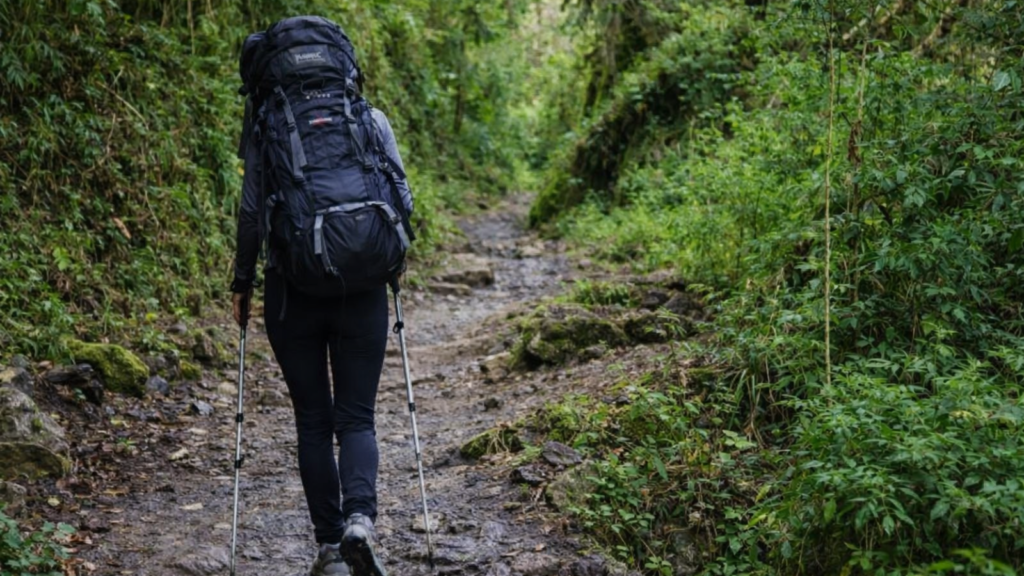
The 8 day Annapurna Base Camp trek is rated moderate. Most healthy adults with reasonable fitness complete it without technical climbing skills or previous high-altitude experience.
Elevation and Physical Demands
The trek gains 3,390 meters from Birethanti (740 m) to Annapurna Base Camp (4,130 m). The most demanding day is Day 4 (Bamboo to Deurali), with a 920-meter gain. The descent days on Day 6 and 7 test knee endurance more than cardiovascular fitness.
Physical preparation recommendations:
- Train for 6–8 weeks before the trek
- Include 3 cardio sessions per week (running, cycling, stair climbing)
- Add 2 leg-strength sessions weekly (squats, lunges, step-ups with pack)
- Train in your trekking boots, blisters from new footwear are the most common reason trekkers quit early
Altitude Sickness Risk on the 8 Day Route
Annapurna Base Camp at 4,130 m sits in a zone where approximately 25–30% of trekkers report mild AMS symptoms (headache, disrupted sleep, mild nausea). The 8-day itinerary’s gradual ascent profile, with no single day exceeding 920 meters of gain, reduces serious AMS risk significantly compared to shorter versions of the trek.
The 3 most common mistakes that trigger AMS on this route:
- Ascending too fast from Chhomrong to Deurali in one day, always overnight at Bamboo or Doban between these points
- Dehydration at altitude, respiratory water loss doubles; drink 3–4 liters per day minimum
- Alcohol above 3,000 m, vasodilation from alcohol at altitude significantly increases headache severity
Diamox (Acetazolamide) use: Consult your physician before the trek. The standard prophylactic dose is 125–250 mg twice daily, beginning 24 hours before ascent above 3,000 m. It is widely available in Pokhara pharmacies at NPR 10–15 per tablet (~$0.07–$0.10 USD).
What to Pack for the 8 Day Annapurna Base Camp Trek?
Pack weight is a decisive factor in trek experience. The ideal pack weight for a trekker using a porter (porter carries up to 25 kg including shared gear) is 8–10 kg in your daypack. If you carry your own full pack, target 12–15 kg maximum.
Essential Gear Checklist
Clothing layers (the 3-layer system):
- Base layer: 2 moisture-wicking long-sleeve tops (merino wool preferred)
- Mid layer: Fleece jacket or down vest (critical above 3,000 m)
- Outer layer: Waterproof hardshell jacket (non-negotiable, afternoon rain is common even in spring and autumn)
- Trekking trousers: 2 pairs convertible zip-off
- Thermal leggings: 1 pair for overnight use above Chhomrong
- Warm hat, sun hat, gloves, neck gaiter
Footwear:
- Trekking boots: ankle-support, waterproof, broken in before the trek
- Camp sandals or lightweight shoes for teahouse evenings
- Wool or synthetic hiking socks: 4–5 pairs
Sleeping system:
- Sleeping bag rated to −10°C / 14°F (teahouses above Deurali provide blankets, but a quality bag is essential for base camp nights)
- Sleeping bag liner adds 5°C warmth and saves on laundry
Technical and safety items:
- Trekking poles: essential for descent, reduces knee load by 20–25%
- Headlamp with spare batteries
- Water purification (tablets or UV pen, Steripen is lighter than a filter pump)
- High-SPF sunscreen (SPF 50+) and UV-protection sunglasses
- Personal first aid kit including blister care, pain relief, and ORS sachets
Documents and money:
- Original passport + 2 photocopies
- 2 passport-sized photos (for permits)
- All permits in waterproof sleeve
- Cash in NPR for the entire trek (no ATMs above Chhomrong)
- Travel insurance documents (rescue by helicopter costs $3,000–$5,000 without insurance)
What to Rent in Pokhara Instead of Buying
Several items are better rented in Pokhara than purchased at home, especially for one-time trekkers:
- Down jacket: NPR 200–400/day (~$1.40–$2.75)
- Sleeping bag: NPR 200–400/day (~$1.40–$2.75)
- Trekking poles: NPR 100–200/day (~$0.70–$1.40)
- Trekking gaiters: NPR 150–300/day (~$1.00–$2.00)
Rental shops are concentrated in Pokhara’s Lakeside district. Inspect rental gear carefully, check zipper function on sleeping bags and stitching on down jackets.
Where Do You Stay on the 8 Day Annapurna Base Camp Trek?
The entire 8-day Annapurna Base Camp route operates on a teahouse system, a network of family-run guesthouses providing basic accommodation and food. No camping is required or permitted within the Annapurna Conservation Area for standard trekkers.
Teahouse Standards by Elevation Zone
- Lower trail (Ghandruk to Chhomrong, 1,940 m–2,170 m): Rooms are basic but comfortable, twin beds, cotton mattresses, and shared bathrooms. Some guesthouses in Ghandruk now offer en-suite bathrooms and Wi-Fi. Electric blankets occasionally available.
- Mid trail (Sinuwa to Himalaya Hotel, 2,360 m–2,920 m): Rooms become simpler and colder. Shared squat toilets are standard. Blankets provided but thin, your sleeping bag is essential from this point.
- Upper trail (Deurali to Annapurna Base Camp, 3,230 m–4,130 m): Basic dormitory-style or twin rooms with no heating. Wood-burning stoves heat the dining hall only. Temperatures drop to −10°C to −15°C at night at ABC. Quality sleeping bags are mandatory.
Pre-booking Recommendations by Season
- In October (peak season), Annapurna Base Camp teahouses reach capacity by late afternoon. If you arrive after 3:30 PM without a reservation, expect to sleep in the dining hall on a mat. Ask your guide to call ahead by radio or mobile (signal exists at MBC and ABC) each morning.
- In March–April and November, pre-booking is recommended but not critical, arriving by 2:00–3:00 PM secures a room in almost all conditions.
- In off-season (June–September, December–February), the trail runs at 10–20% capacity. Pre-booking is unnecessary, you often have entire teahouses to yourself.
Practical Tips to Know Before You Start the Trek
These 8 insights come from accumulated experience guiding thousands of trekkers on the ABC route, insights that most published guides do not include.
1. Register your trek with your embassy. Nepal’s terrain makes search and rescue complex. Most Western embassies in Kathmandu offer a free online registration service for trekkers, it takes 5 minutes and provides a safety net.
2. Carry more cash than you think you need. Above Chhomrong, all transactions are cash-only in NPR. The average trekker underestimates daily spending by 30–40% once you account for hot showers, charging, and snacks. Budget NPR 5,000 (~$34) per person per day minimum above Chhomrong.
3. Buy comprehensive travel insurance before you leave home. Helicopter evacuation from ABC costs approximately NPR 400,000–500,000 (~$2,750–$3,450). Standard travel policies often exclude high-altitude trekking, verify that your policy explicitly covers trekking above 4,000 m and helicopter rescue.
4. The trail above Deurali can be closed by snowfall with no warning. Between November and February and occasionally in early March, snow blocks the trail between Deurali and MBC. Carry crampons or Yak Trax if trekking in shoulder season. Your guide monitors conditions, listen to their advice about turning back.
5. Machapuchare (Fishtail) is officially unclimbed. Nepal’s government declared Machapuchare a sacred peak permanently closed to climbing after a 1957 British expedition reached within 50 meters of the summit but respected a no-summit pledge made to the Nepal government. No permit for Machapuchare has been issued since. Standing at ABC, directly below its north face, remains the closest any trekker legally comes to this peak.
6. Start each day early. The best trekking window is 6:30 AM–1:00 PM. Afternoons bring cloud build-up that reduces visibility and increases rainfall probability. The critical sunrise at ABC is only visible if you are already at base camp, not something to rush to on Day 5 morning.
7. Dal Bhat is both the best value and the best nutritional choice on trail. A standard dal bhat set (lentil soup, rice, vegetable curry, pickle, and often a papadam) costs NPR 500–1,200 (~$3.50–$8.25) depending on altitude, includes free refills at most teahouses, and delivers the carbohydrate and electrolyte profile your body needs for sustained trekking. Experienced trekkers eat dal bhat twice daily from Bamboo onward.
8. Respect the mandatory guide rule, it protects more than just you. Since Nepal’s 2023 mandatory guide regulation, licensed guides complete formal first aid, altitude management, and navigation certification. On this route, guides have identified early AMS symptoms in trekkers who dismissed their own headaches as dehydration. The NPR 3,000–4,500 (~$21–$31) per day rate is a reasonable cost for a trained safety professional in a remote mountain environment.
Is the 8 Day Annapurna Base Camp Trek Right for You?
The 8 day Annapurna Base Camp trek is the right choice for you if:
- You have 2 weeks or less available for Nepal trekking
- You want Himalayan 4,000-meter+ terrain without technical climbing
- You are prepared physically with 6–8 weeks of cardio and strength training
- You have a budget of at least $600–$700 USD (all-in, with agency support)
- You want a high emotional return per trekking day, few trails on Earth deliver what you see at ABC sunrise
The trek demands genuine commitment: 8 days of 5–8 hours of daily walking, temperatures below freezing at base camp, and altitude that will challenge your body above 3,500 m. Trekkers who underestimate preparation are the ones who turn back at Deurali.
Plan at least 6 weeks of preparation, book permits and your guide 4–6 weeks in advance for spring and autumn seasons, carry enough cash, and arrive in Pokhara with properly broken-in boots. Do those 4 things, and the 8 day Annapurna Base Camp trek delivers exactly what it promises: a mountain experience that most people describe as one of the best weeks of their lives.
Do I Need a Guide for the 8 Day Annapurna Base Camp Trek?
Yes, a licensed guide is mandatory for the 8 Day Annapurna Base Camp trek under Nepal’s 2023 trekking regulation. Solo trekking is prohibited in the Annapurna Conservation Area. Licensed guides complete certified training in first aid, altitude management, and route navigation. Expect to pay NPR 3,000–4,500 per day ($21–$31 USD at 145 NPR/USD).
How Fit Do I Need to Be for the 8 Day Annapurna Base Camp Trek?
The 8 Day Annapurna Base Camp trek requires moderate fitness. You walk 5–8 hours daily for 8 consecutive days and gain over 3,000 meters in elevation. Train for at least 6 weeks with 3 weekly cardio sessions and 2 leg-strength sessions. The steepest ascent is 920 meters to Deurali (3,230 m) on Day 4.
What Is the Maximum Altitude on the 8 Day ABC Trek?
The maximum altitude on the 8 Day Annapurna Base Camp trek is 4,130 meters (13,549 feet) at Annapurna Base Camp. About 25–30% of trekkers experience mild Acute Mountain Sickness symptoms at this elevation. The itinerary limits daily elevation gain to 920 meters, reducing serious altitude illness risk.
How Much Cash Should I Carry Above Chhomrong?
Carry at least NPR 5,000 ($34 USD) per person per day above Chhomrong. No ATMs operate beyond this village. Budget covers lodging (NPR 500–1,000), meals (NPR 1,800–3,000), showers (NPR 400–700), and charging (NPR 400–700). Add NPR 10,000–15,000 as an emergency reserve.
What Is the Best Month to Trek to Annapurna Base Camp?
March and April are the best months to trek to Annapurna Base Camp for stable weather and rhododendron blooms between 1,800–3,500 meters. October delivers the clearest Himalayan views after monsoon. Book permits and teahouses 4–6 weeks in advance during peak seasons (March–April, October–November).
Is Travel Insurance Required for the 8 Day ABC Trek?
Travel insurance is not legally required for the 8 Day ABC trek but is essential. Helicopter evacuation from Annapurna Base Camp costs NPR 400,000–500,000 ($2,750–$3,450 USD) without coverage. Choose a policy that covers trekking above 4,000 meters and helicopter rescue. Two-week policies start at $80–$120 USD.
Can Beginners Complete the 8 Day Annapurna Base Camp Trek?
Yes, beginners can complete the 8 Day Annapurna Base Camp trek. The route requires no technical climbing skills under normal spring and autumn conditions. Complete a structured 6–8 week training program before departure. Use trekking poles and broken-in boots to reduce joint fatigue over 8 walking days.
What Food Is Available on the Annapurna Base Camp Trail?
Teahouses on the Annapurna Base Camp trail serve dal bhat, pasta, soups, fried rice, omelettes, porridge, and Tibetan bread from Ghandruk to Base Camp. Dal bhat costs NPR 500–1,200 and includes free refills. Vegetarian options are widely available; vegan options decrease above Deurali.
What Happens If I Get Altitude Sickness on the Trek?
Descend 500–1,000 meters immediately if you develop Acute Mountain Sickness on the ABC trek. Most moderate symptoms resolve within 2–4 hours after descent. Evacuate by helicopter for severe symptoms such as confusion, ataxia, or breathing difficulty. Never continue ascending with a persistent headache or vomiting.
How Do I Get to the Start of the 8 Day ABC Trek from Pokhara?
Start the 8 Day Annapurna Base Camp trek at Nayapul, 42 km west of Pokhara. Drive 1–1.5 hours by jeep or bus. Tourist jeeps cost NPR 2,000–3,000 per person; local buses cost NPR 200–350. Most trekking agencies include Pokhara–Nayapul transport in their package.