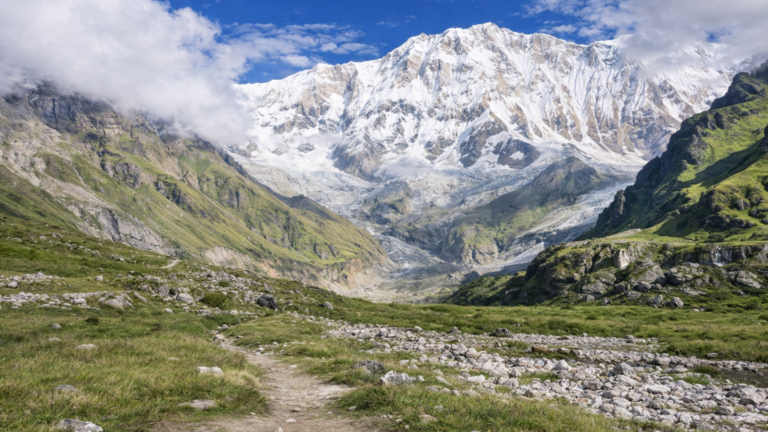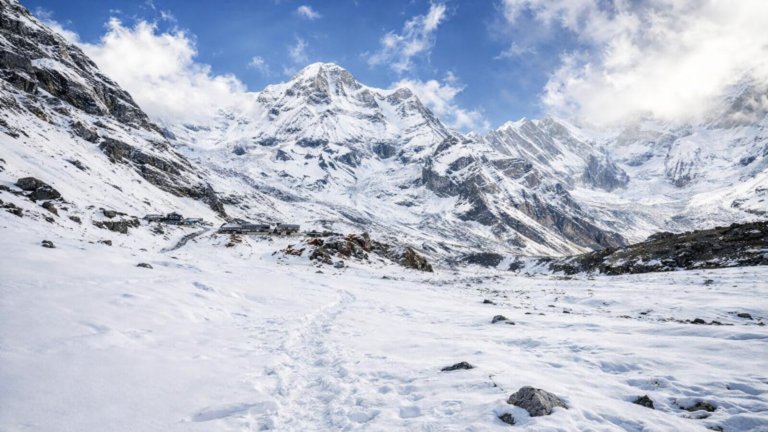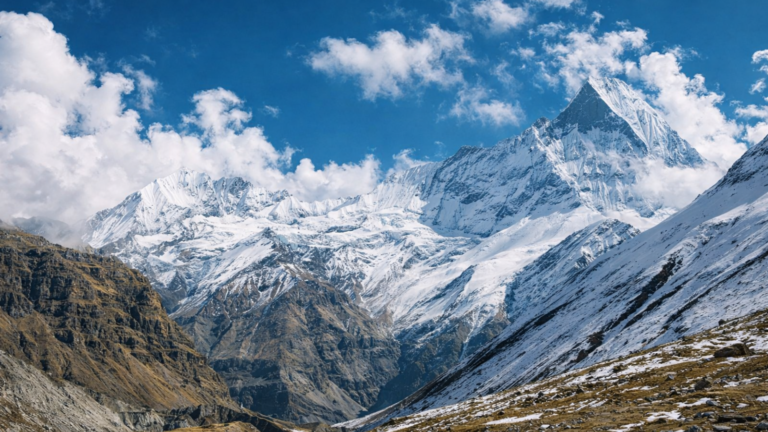
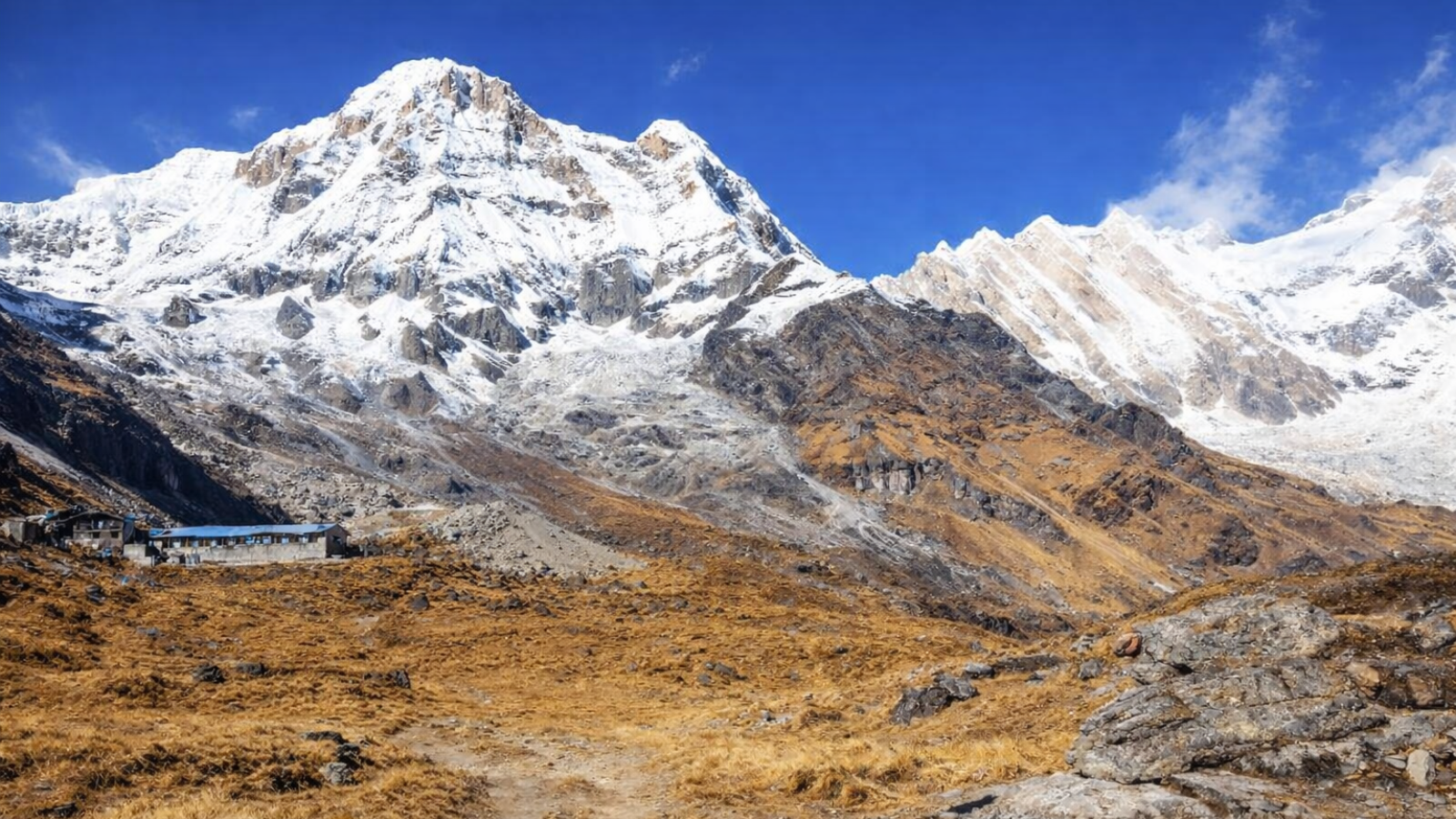

The 16 Day Annapurna Base Camp Trek is a comprehensive Himalayan trekking journey in Nepal that leads hikers deep into the glacial basin of the Annapurna Sanctuary, culminating at Annapurna Base Camp (4,130 m). This extended itinerary combines high-altitude trekking with cultural exploration in Kathmandu and Pokhara while following forested mountain trails through the Annapurna Conservation Area. Trekkers ascend gradually from subtropical valleys to alpine terrain surrounded by peaks such as Annapurna I (8,091 m), Machhapuchhre, and Annapurna South. A 16 day schedule allows proper acclimatization, cultural immersion with Gurung and Magar villages, and iconic Himalayan viewpoints including the sunrise panorama from Poon Hill.
The route covers roughly 110–115 km of mountain trails through rhododendron forests, river valleys, and glacial landscapes before reaching the amphitheater-like basin of Annapurna Base Camp. Trekkers pass classic villages such as Ghorepani and Chhomrong, climb through the Modi Khola valley to Machhapuchhre Base Camp, and finish the journey with a restorative soak at the natural hot springs of Jhinu Danda. Compared with shorter itineraries, the 16-day Annapurna Base Camp trek offers safer altitude progression, time to experience Nepal’s mountain culture, and a complete circuit that includes the Poon Hill detour and relaxed descent. The result is a balanced trekking experience that combines Himalayan scenery, cultural discovery, and high-altitude adventure in one of the world’s most famous mountain regions.
What Makes the 16 Day Annapurna Base Camp Trek Different From Shorter Versions?
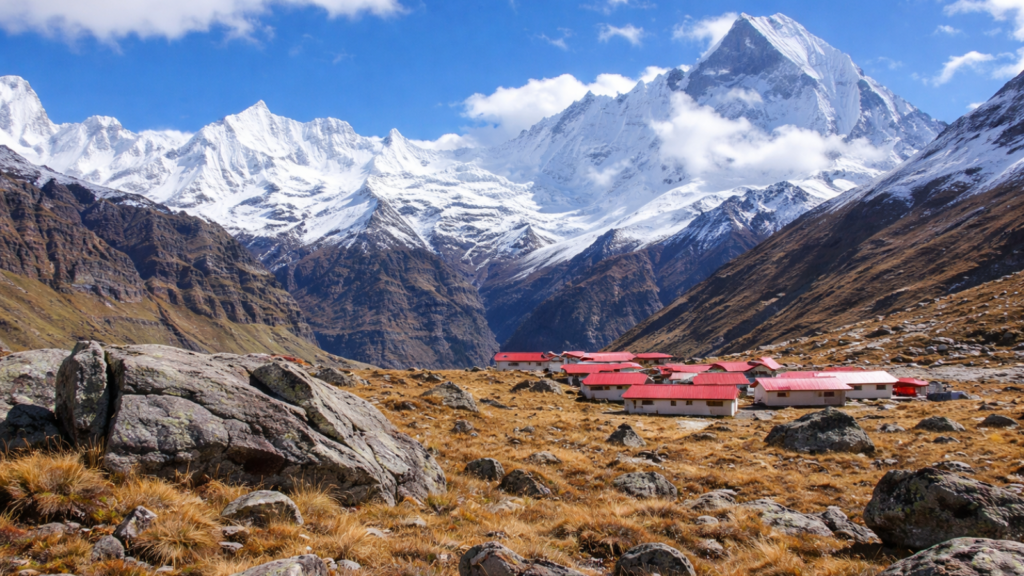
The 16-day format is the most complete version of the Annapurna Base Camp trek. It covers approximately 115 kilometers of trail, includes 2 nights in Kathmandu, a full day in Pokhara, the classic Poon Hill detour, proper acclimatization stages, and a relaxed descent with time at Jhinu Danda hot springs.
Most 10- to 12-day packages cut the Poon Hill leg, rush the descent, or skip Kathmandu cultural orientation entirely. The 16-day itinerary solves 4 specific problems trekkers frequently face on shorter versions:
- Altitude fatigue: Extra days between 2,000m and 3,000m allow the body to produce more red blood cells before the climb to 4,130m.
- Missed cultural context: Two days in Kathmandu visiting UNESCO World Heritage Sites grounds the entire journey in Nepal’s history.
- Rushed descent injuries: Knee strain is the leading cause of premature trek termination. Spreading the descent across 3 days, rather than 1.5, reduces cumulative joint stress significantly.
- No recovery buffer: Bad weather, a sick day, or a slow acclimatization day derails a 10-day itinerary. The 16-day format includes 2 built-in contingency days.
Where Does the 16-Day Annapurna Base Camp Trek Go? Route Overview and Key Elevations
The standard 16-day itinerary follows the Annapurna Conservation Area (ACA) trail through the Modi Khola river valley, ascending into the Annapurna Sanctuary, a natural glacial basin enclosed on three sides by peaks exceeding 6,000 meters.
The trek passes through several elevation zones, from subtropical valleys to alpine glacial terrain.
| Location | Elevation | Trek Day |
| Kathmandu | 1,400m | Days 1–2 |
| Pokhara | 822m | Day 3 |
| Tikhedhunga | 1,540m | Day 4 |
| Ghorepani | 2,860m | Day 5 |
| Poon Hill (viewpoint) | 3,210m | Day 6 |
| Chhomrong | 2,170m | Day 7 |
| Himalaya Hotel | 2,920m | Day 9 |
| Machhapuchhre Base Camp (MBC) | 3,700m | Day 11 |
| Annapurna Base Camp (ABC) | 4,130m | Day 12 |
The route passes through subtropical forest, oak and rhododendron stands, bamboo corridors, and finally bare glacial moraine. Each zone registers a distinct microclimate, the temperature at ABC can be 15°C colder than Chhomrong on the same afternoon.
The Annapurna Conservation Area spans 7,629 square kilometers, making it the largest protected area in Nepal. The Annapurna Sanctuary itself, the inner glacial amphitheatre, was first documented by British explorer Colonel Jimmy Roberts in 1956, who named it the “Sanctuary of Gods.” That sense of a protected, sacred space still shapes the experience today.
What Is the Day-by-Day 16-Day Annapurna Base Camp Trek Itinerary?
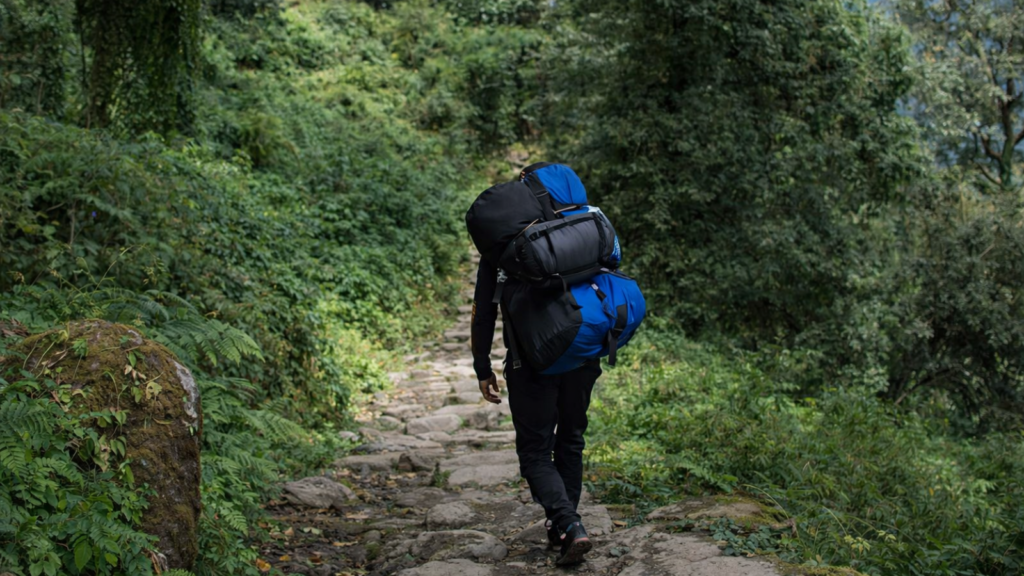
The itinerary opens with 2 cultural days in Kathmandu, transitions to Pokhara on Day 3, and begins the trail at Birethanti on Day 4 before ascending through Ghorepani and Poon Hill by Day 6. The sanctuary ascent runs from Day 7 through Day 12, reaching Annapurna Base Camp at 4,130 meters with a sunrise on Day 13 before the 3-day descent begins. The trek closes with a soak at Jhinu Danda hot springs on Day 14 and a vehicle transfer to Pokhara on Day 15 before the Kathmandu return on Day 16.
Day 1: Arrive Kathmandu (1,400m)
Arrive at Tribhuvan International Airport. Transfer to hotel in Thamel. Attend a trek briefing to review gear, permits, and daily expectations. Permits are arranged by your agency, you need a passport copy and 2 passport-size photos. Rest, rehydrate after the flight, and adjust to the time zone.
Day 2: Kathmandu Cultural Orientation
Kathmandu has 7 UNESCO World Heritage Sites within a 10km radius. Visit Pashupatinath Temple (the most sacred Hindu site in Nepal), Boudhanath Stupa (one of the largest Buddhist stupas in the world), and Patan Durbar Square (Newari architecture dating back to the 12th century). This day is not optional filler, understanding Nepal’s religious and cultural landscape transforms how you read the villages along the trail.
Day 3: Fly or Drive to Pokhara (822m)
The 25-minute flight from Kathmandu to Pokhara delivers immediate views of Machhapuchhre (the sacred “Fishtail” peak, 6,993m) and the Annapurna range. If flying is unavailable or you prefer a scenic ground journey, the Prithvi Highway drive takes 6–7 hours. Afternoon at leisure on Phewa Lake. Gear check and early sleep.
Day 4: Pokhara to Tikhedhunga (1,540m), Drive plus Trek
Drive 1.5 hours from Pokhara to Nayapul (1,070m). Check in at the ACAP and TIMS checkpoint at Birethanti (1,025m), the entry point to the Annapurna Conservation Area. Trek 3–4 hours through terraced rice paddies and scattered stone villages to Tikhedhunga. First night on trail. Elevation gain: 470m.
Day 5: Tikhedhunga to Ghorepani (2,860m)
The trail climbs 3,400+ stone steps through Ulleri (1,960m), the steepest sustained ascent of the entire trek. Dense oak and rhododendron forests begin above 2,000m. In spring (March–April), rhododendrons bloom in 28 species across red, pink, and white. Ghorepani is a ridge village with clear westward views of Dhaulagiri (8,167m) and south-facing views of the Modi Khola valley. Elevation gain: 1,320m.
What most guides don’t mention: The stone steps from Tikhedhunga to Ulleri claim more knees than any other section of the entire route. Use trekking poles on this day, even if you haven’t needed them yet.
Day 6: Poon Hill Sunrise, Trek to Tadapani (2,620m)
Wake at 4:30 AM. The 45-minute ascent to Poon Hill (3,210m) in darkness is rewarded by a 180-degree panoramic sunrise over Dhaulagiri, the Annapurna range, Machhapuchhre, Hiunchuli, and Nilgiri. The Annapurna massif turns gold in alpenglow before the sun clears the horizon. One of the most famous sunrise viewpoints in the Himalayas.
After breakfast, descend from Ghorepani and traverse through dense rhododendron forest to Tadapani (2,620m). Elevation loss: 240m.
Day 7: Tadapani to Chhomrong (2,170m)
The trail descends through forest into the Kimrong Khola valley before climbing back to the Gurung village of Chhomrong, the last major village before the Annapurna Sanctuary. Chhomrong sits on a steep ridge with unobstructed views of Annapurna South (7,219m) and Machhapuchhre. The teahouses here are the most developed on the route, hot showers, charging points, and wifi. The ascent from Kimrong valley to Chhomrong involves 600+ stone steps. Elevation change: –700m then +700m.
Day 8: Chhomrong to Sinuwa (2,360m)
The ACAP and TIMS checkpoint at Chhomrong marks the entry into the inner sanctuary trail. Trail character shifts dramatically, narrower, quieter, with increasing forest density. Chhomrong’s famous stone staircase (2,000+ descending steps to the bridge, then 1,100+ ascending steps to Sinuwa) demands full concentration. This 4–5 hour day is deliberately short to preserve energy for the steeper days ahead. Elevation gain: 190m net.
Day 9: Sinuwa to Dovan (2,580m) via Bamboo
Pass through Bamboo (2,310m), a narrow gorge section where the trail is enclosed by dense bamboo and the sound of the Modi Khola fills the canyon below. The trail crosses the river twice via suspension bridges and climbs through increasingly alpine vegetation to Dovan (2,580m). Elevation gain: 220m.
Day 10: Dovan to Deurali (3,230m)
Pass through Himalaya Hotel (2,920m), the last outpost with consistent teahouse accommodation before the high camp. The trail becomes steeper and the vegetation thinner above 3,000m. Deurali (3,230m) is a sparse cluster of stone lodges at the mouth of the sanctuary’s inner gorge. Nights are cold here, temperatures regularly drop below 0°C in October and below –10°C in January. Elevation gain: 650m.
Common mistake: Trekkers who push straight from Sinuwa to Deurali in one day frequently report severe headaches at ABC. The 2-day ascent through Dovan is not optional for most people.
Day 11: Deurali to Machhapuchhre Base Camp (3,700m)
The final approach to the sanctuary. The trail crosses the Modi Khola’s rocky upper bed and climbs onto the lateral moraine of the Annapurna Glacier. Machhapuchhre Base Camp (MBC) at 3,700m sits directly beneath the south face of Machhapuchhre, a sacred and has never been officially summited; a 1957 expedition stopped just below the summit out of respect. At MBC, the sanctuary walls open and 6 peaks above 6,000m become simultaneously visible. Elevation gain: 470m.
Day 12: Annapurna Base Camp (4,130m), The Summit Day
The 3–4 hour ascent from MBC to ABC is the most anticipated section of the entire journey. The trail follows the right lateral moraine of the Annapurna Glacier, surrounded on 3 sides by: Annapurna I (8,091m, the 10th highest mountain on Earth), Annapurna South (7,219m), Hiunchuli (6,441m), Gangapurna (7,455m), Khangsar Kang (7,485m), and Machhapuchhre (6,993m).
The flat glacial basin at ABC is the geographic and emotional high point of the trek. At sunrise the following morning, the surrounding walls of rock and ice ignite in orange and crimson alpenglow. This is the closest most trekkers will ever stand to an 8,000m peak. Elevation gain: 430m.
Day 13: ABC to Bamboo (2,310m), Long Descent Begins
Begin descending before 8 AM to avoid afternoon cloud buildup. Retrace the sanctuary trail: ABC → MBC → Deurali → Himalaya Hotel → Dovan → Bamboo. Total elevation loss: 1,820m across approximately 7–8 hours of walking. This is the longest descent day and the most demanding on the knees. Anti-inflammatory medication (Ibuprofen or Diclofenac) taken before descent significantly reduces joint stress.
Day 14: Bamboo to Jhinu Danda (1,760m), Hot Springs
Trek from Bamboo down to Chhomrong, then descend the opposite side of the Chhomrong ridge to Jhinu Danda (1,760m). The natural hot springs at Jhinu Danda sit beside the Modi Khola and reach temperatures of 40–45°C. After 10 days of cold teahouse showers, the hot spring soak is a near-universal highlight of the trek. Elevation loss: 550m.
Day 15: Jhinu Danda to Pokhara
Trek from Jhinu Danda to the roadhead at Siwai or Matkyu (1.5–2 hours), then transfer by vehicle to Pokhara (approximately 3 hours). Afternoon in Pokhara, lakeside restaurants, rooftop cafes, and the opportunity to debrief the experience with a cold drink and Phewa Lake views. Celebrate with a proper sit-down meal.
Day 16: Pokhara to Kathmandu, Departure
Transfer to Pokhara Airport for the 25-minute flight to Kathmandu (or 6–7 hour drive). Connect with international flights or spend an additional night in Kathmandu. Trek complete.
What Permits Are Required for the Annapurna Base Camp Trek in 2026?
Every trekker requires two permits: the Annapurna Conservation Area Permit (ACAP) and the Trekkers’ Information Management System (TIMS) card, which costs NPR 3,000, approximately $23 USD, for foreign nationals and is verified at a minimum of 4 checkpoints between Birethanti and Machhapuchhre Base Camp. In addition to the Annapurna Conservation Area Permit (ACAP), trekkers must also obtain a Trekkers’ Information Management System (TIMS) card. Both permits are mandatory for the Annapurna Base Camp Trek in 2026 and are verified at multiple checkpoints along the route. Licensed guides are legally mandatory on all Nepal trekking routes since 2023, solo trekking is not permitted anywhere on the ABC trail.
Annapurna Conservation Area Permit (ACAP)
- Fee: NPR 3,000 (~$23 USD) for foreign nationals
- Fee: NPR 1,000 (~$8 USD) for SAARC nationals
- Issued by: Nepal Tourism Board offices in Kathmandu or Pokhara, or through a registered trekking agency
- Required documents: Passport photocopy, 2 passport-size photos, completed application form
TIMS Card (Trekkers’ Information Management System)
- Fee: NPR 2,000 (~$15 USD) for foreign nationals trekking with a guide
- Fee: NPR 1,000 (~$8 USD) for SAARC nationals
Issued by: Nepal Tourism Board offices in Kathmandu or Pokhara, or through a registered trekking agency.
Purpose: The TIMS card helps the Nepal Tourism Board track trekkers for safety, emergency rescue coordination, and trekking data management. Checkpoints along the Annapurna Base Camp route may verify TIMS records alongside the ACAP permit and guide license.
Required documents:
- Passport copy
- Passport-size photos
- Completed application form
Mandatory Guide Requirement (2023–Present): Nepal’s government made licensed guides compulsory for all trekking routes in 2023. Solo trekking is no longer legally permitted anywhere in Nepal, including the ABC route. A licensed guide is not a recommendation, it is a legal requirement, and checkpoints verify this.
Permits are checked at a minimum of 4 checkpoints: Birethanti, Chhomrong, Deurali, and MBC. Trekkers without valid ACAP and TIMS permits face on-the-spot double fines or forced removal from the trail.
How Much Does the 16-Day Annapurna Base Camp Trek Cost in 2026?
The total cost of the 16-day Annapurna Base Camp trek falls into 4 categories:
1. Agency Package (All-Inclusive) A quality all-inclusive guided package, covering accommodation, all meals on trek, Kathmandu and Pokhara hotels, guide fees, porter fees, airport transfers, permits, and ground transportation, ranges from $950 to $1,500 per person for 2026 departures.
Budget packages below $800 typically exclude: Kathmandu hotel nights, Pokhara nights, breakfast/lunch in cities, porter, and emergency rescue contingency fund. Read inclusions carefully.
2. Permits
- ACAP: ~$23
- TIMS: ~$15
3. Personal Spending
- Hot showers on trail: $1–3 per shower
- Charging devices: $1–2 per device
- WiFi: $2–5 per day above Chhomrong
- Extra snacks, bottled drinks, tea: $3–8 per day
- Jhinu Danda hot springs entry: $3–5
Budget $150–$250 for personal trail spending across 11 trekking days.
4. Tips The local industry standard for guide tips is $10–15 USD per day. For a porter, $6–10 per day. On a 11-day guided trek: guide tip $110–165, porter tip $66–110. Tips are discretionary but culturally expected and directly affect guide income.
Total estimated budget (excluding international flights): $1,200–$1,800 per person for a comfortable, full-service 16-day experience.
When Is the Best Time to Do the 16-Day Annapurna Base Camp Trek?
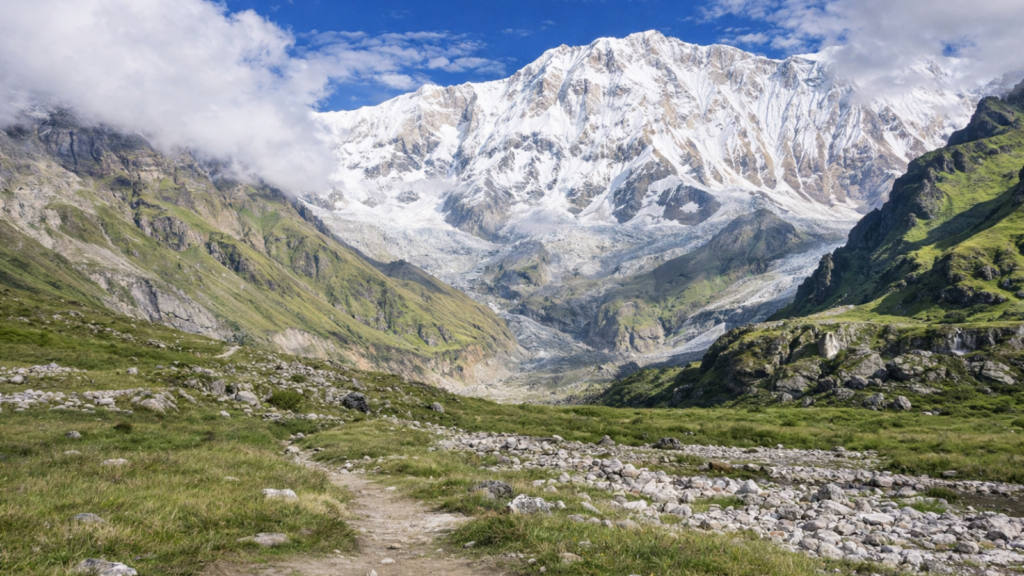
The Annapurna Base Camp trek operates year-round. Season selection affects visibility, trail conditions, temperature, and crowd levels in 4 distinct ways.
Spring: March to May (Peak Season)
- Temperature at ABC: –5°C to +5°C
- Visibility: Excellent (clearest in March–April before pre-monsoon haze)
- Trail condition: Dry, with late snowpack above 3,500m in March
- Rhododendron bloom: March–April, most vivid between Tikhedhunga and Ghorepani
- Crowds: High, Chhomrong and MBC teahouses fill quickly; book ahead
- Best month overall: October (autumn) or April (spring)
Autumn: September to November (Peak Season)
- Temperature at ABC: –8°C to +2°C
- Visibility: Outstanding, the post-monsoon sky is the clearest of the year
- Trail condition: Freshly washed, excellent
- Crowds: Very high in October, the most popular month on trail
- October brings the most consistent clear windows with 6+ days of peak visibility between weather events
Winter: December to February
- Temperature at ABC: –15°C to –5°C
- Visibility: Surprisingly clear, with dramatic snow conditions above 3,000m
- Trail condition: Ice and snow above 3,000m, microspikes or crampons required
- Crowds: Very low, teahouses operate with reduced menus and some close above Deurali
- Best for experienced trekkers who prefer solitude and don’t mind cold
Monsoon: June to August
- The trail remains open but experiences daily afternoon rain and significant landslide risk above 2,500m
- Leeches are common below 2,500m from June through August
- Not recommended for a first visit, save monsoon trekking for when you know the route
What Level of Fitness Does the 16-Day Annapurna Base Camp Trek Require?
The ABC trek is classified as a Grade B moderate trek, it does not require technical climbing skills or crampons in spring/autumn, but it demands sustained cardiovascular fitness over multiple consecutive days.
The specific physical demands are:
- Daily walking time: 5–8 hours
- Maximum single-day elevation gain: 1,320m (Day 5, Tikhedhunga to Ghorepani)
- Maximum elevation reached: 4,130m (altitude-related symptoms possible above 3,500m)
- Cumulative stone steps: Estimated 8,000+ (ascending and descending combined)
- Total route distance: ~70km (trekking only) to ~115km (full 16-day route with Poon Hill)
Who completes this trek successfully? Trekkers aged 18–70 who can hike 15–20km per day on hilly terrain before arrival. Prior high-altitude experience is not required but is beneficial above 3,500m. Regular runners, cyclists, and active hikers complete this trek comfortably.
Who struggles? Trekkers who arrive without prior leg strength training, rely entirely on porters (limiting their pacing flexibility), or ignore early warning signs of altitude sickness above Deurali.
Acute Mountain Sickness (AMS) awareness: Above 3,000m, headache, nausea, loss of appetite, and disturbed sleep are early AMS signals. The 16-day itinerary is designed to prevent AMS through gradual ascent. The rule is: ascend high, sleep low whenever possible, and descend immediately if symptoms worsen.
What Should You Pack for the 16-Day Annapurna Base Camp Trek?

Packing for the ABC trek follows one principle: layer, don’t bulk. The temperature range across 16 days spans from +25°C in Pokhara to –10°C at ABC, a 35-degree differential that a 3-layer system handles better than heavy single garments.
The 3 essential layers:
- Base layer: Moisture-wicking merino wool or synthetic long-sleeve shirt and leggings
- Mid layer: Fleece jacket (250g weight) or softshell, worn from Chhomrong upward
- Outer layer: Waterproof, windproof hardshell jacket, essential above 3,000m and during Poon Hill mornings
14 critical items most first-time trekkers underpack:
- Trekking poles (2): knee protection on descents, balance on river crossings
- Headlamp plus spare batteries: for Poon Hill pre-dawn start and emergency use
- Wool or synthetic sleeping bag liner: teahouse blankets are available but not guaranteed clean
- Merino wool base layers (3 sets minimum): wool manages odor across multiple days better than synthetic
- Waterproof trekking boots: broken in before arrival, ankle support mandatory
- Lightweight trail runners: for rest days and lower-altitude sections
- Trekking gaiters: for snow and mud above 3,500m in winter
- Personal first aid kit: Ibuprofen, Diamox (Acetazolamide) if prescribed, Loperamide, blister packs
- Water purification tablets or UV SteriPen: reduces reliance on bought bottled water
- Sunscreen SPF 50+ and UV-protective sunglasses: UV intensity increases by ~10% per 1,000m elevation
- Warm gloves (inner liner plus outer waterproof shell)
- Wool buff/balaclava: for ABC mornings and Poon Hill predawn
- Dry bags for electronics and documents: monsoon border seasons bring unexpected rain
- Portable power bank (20,000mAh minimum): charging is expensive and unreliable above Chhomrong
Porter allowance: Most agencies allow each trekker to hand 10–12kg to their porter. Your pack while walking should ideally weigh 7–9kg, carrying only day essentials: water, snacks, layers, camera, first aid.
What Is the Food and Accommodation Experience on the Annapurna Base Camp Trek?
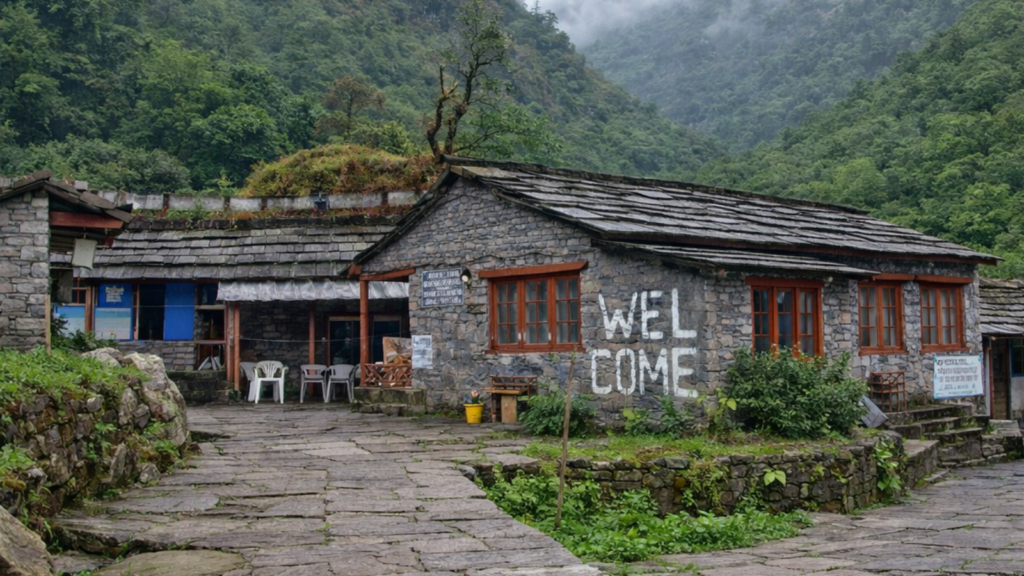
The ABC route is a teahouse trek, meaning fixed-roof accommodation and cooked meals are available every night on trail. There are no camping nights on the 16-day standard itinerary.
Teahouse accommodation by zone:
- Below Chhomrong: Clean dormitory or private rooms, hot showers standard, wifi available
- Chhomrong to Bamboo: Solid private rooms, limited hot shower, solar charging
- Dovan to Deurali: Basic but functional, cold water only, no wifi, generator charging may be available
- MBC and ABC: Larger teahouse complexes with 20–40 beds, dry composting toilets, limited charging
Food on trail: Teahouse menus are standardized across the ACA. The most energy-efficient meal on trail is Dal Bhat, lentil soup, steamed rice, vegetable curry, and achaar (pickle). It is the only meal that comes with unlimited refills on most trails and delivers a complete macronutrient profile (carbohydrate plus protein plus fat) for sustained energy.
Additional menu standards: porridge, pancakes, fried noodles, pasta, Tibetan bread, garlic soup (widely regarded as beneficial for altitude acclimatization), apple pie, and instant coffee. Above 3,500m, prices increase by 20–40% for all items.
Drinking water: Tap water on trail is not safe for consumption without treatment. Options: purification tablets ($0.50/day), UV SteriPen ($40–60 once), or purchased bottled water ($1–3 per bottle, increasing with altitude). A quality SteriPen pays for itself within 4 days on trail.
What Are the Most Common Mistakes Trekkers Make on the Annapurna Base Camp Route?
15 years of guiding experience on this trail reveals 6 patterns that consistently derail treks:
1. Wearing new boots on Day 1. Bring boots broken in over 50+ km minimum. A blister discovered on Day 4 at altitude is not a minor inconvenience, it changes every remaining decision.
2. Skipping acclimatization cues above 3,000m. Headaches at Deurali are a signal, not an inconvenience. Resting one extra day at Himalaya Hotel costs 24 hours but may save the entire trip.
3. Underestimating the descent. Most injuries, twisted ankles, blown knees, muscle failure, happen on the 3-day descent, not the ascent. Trekking poles, slow pace, and anti-inflammatory management matter most between ABC and Jhinu Danda.
4. Not booking teahouses in advance during peak season. October through November, teahouses at MBC and ABC reach capacity. Trekkers without reservations sleep on dining room floors. Your agency confirms bookings ahead.
5. Rushing Kathmandu. Trekkers who treat Kathmandu as a transit city miss the cultural groundwork that gives the trail villages their full meaning. The 2 days in Kathmandu are part of the experience.
6. Overloading the pack. Every gram above 9kg that you carry yourself degrades performance on Day 5’s stone staircase ascent, Day 9’s gorge section, and the long Day 13 descent. Use a porter for bags above 10kg.
Why Choose the 16-Day Format Over the 12 or 14-Day Annapurna Base Camp Trek?
The additional days in the 16-day format serve 3 direct purposes that are difficult to recover once lost:
- Purpose 1: Altitude safety margin. The 16-day ascent gains elevation at an average of 220m per day (departure to ABC). The 12-day version averages 340m per day. The difference directly affects AMS risk above 3,500m.
- Purpose 2: Full route coverage. The Poon Hill detour (Days 5–6) is the single most visually spectacular addition to the standard ABC route and is only possible with the time buffer the 16-day format provides.
- Purpose 3: Experience completeness. Jhinu Danda hot springs, Chhomrong’s ridge views, Tadapa0ni forest paths, and the 2-night Kathmandu cultural immersion collectively define the 16-day trek as the most well-rounded Nepal trekking experience at this altitude category.
The 16-day Annapurna Base Camp trek is not the longest option and not the hardest. It is the most balanced: enough time to acclimatize, enough altitude to feel genuinely high, enough cultural depth to make the journey meaningful, and enough recovery built in to finish strong rather than limp to the finish line.
Ready to Start Planning Your Annapurna Base Camp Trek?
The 16-day Annapurna Base Camp trek operates year-round with the best windows in spring (March–May) and autumn (September–November). Spaces in quality guided groups fill fastest in October, if autumn is your target season, book 3–4 months ahead.
Contact our team to customize this itinerary, confirm availability, review your fitness level against the route profile, or answer any specific questions about packing, permits, or altitude preparation. Every successful trek starts with a well-informed decision.
Is the Annapurna Base Camp Trek Suitable for Beginners?
The Annapurna Base Camp (ABC) Trek is suitable for fit beginners who prepare with aerobic training before arrival. Trekkers must handle 15–20 kilometers of daily hiking on steep terrain for 10–16 days. Prior Himalayan trekking experience is not required, but completing 2–3 hikes above 2,500 meters improves altitude adjustment and trekking success.
How High Is Annapurna Base Camp and Will I Get Altitude Sickness?
Annapurna Base Camp sits at 4,130 meters above sea level. This elevation can cause mild altitude symptoms such as headache, reduced appetite, and poor sleep. Most symptoms resolve within 12–24 hours with rest and hydration. Following a gradual 14–16 day itinerary significantly reduces the risk of acute mountain sickness (AMS).
Do I Need a Guide for the Annapurna Base Camp Trek?
Nepal requires a licensed guide for the Annapurna Base Camp Trek under the 2023 trekking regulation. Solo trekking is no longer permitted on Nepal trekking routes. Checkpoints verify both the ACAP and TIMS permit and the guide license along the ABC trail. Guides provide navigation, trail updates, and altitude safety support above 3,500 meters.
What Is the Maximum Elevation on the 16-Day Annapurna Base Camp Trek?
The maximum elevation on the standard 16-day Annapurna Base Camp Trek is 4,130 meters at Annapurna Base Camp. Trekkers reach this altitude on the summit day and usually sleep there for one night. The second highest viewpoint is Poon Hill at 3,210 meters, visited briefly for sunrise during the itinerary.
Can I Do the Annapurna Base Camp Trek in Winter?
You can complete the Annapurna Base Camp Trek in winter between December and February. Night temperatures at 4,130 meters drop to about –15°C. Snow and ice cover sections of the trail above 3,000 meters, so trekkers require microspikes or crampons. Some teahouses above Deurali close in January.
How Long Is the Trek Each Day on the Annapurna Base Camp Route?
Daily trekking on the Annapurna Base Camp route lasts 3–8 hours depending on the itinerary stage. Most trekking days average 5–6 hours or about 10–14 kilometers of trail distance. Trekkers usually start walking between 7:00 and 8:00 AM to avoid afternoon clouds and precipitation above 3,000 meters.
What Food Is Available on the Annapurna Base Camp Trek?
Teahouses on the Annapurna Base Camp trail offer 20–35 menu items including porridge, pancakes, Tibetan bread, noodles, pasta, soups, vegetable curry, and Dal Bhat. Dal Bhat is the most common dinner above 3,000 meters because it provides high carbohydrates and unlimited refills. Expect food prices to increase 20–40% above Chhomrong.
Is There Mobile Signal and WiFi on the Annapurna Base Camp Trek?
Mobile signal on the Annapurna Base Camp Trek is reliable below Chhomrong but becomes weak above 2,000–2,500 meters. Nepal Telecom and Ncell networks work in lower villages. Many teahouses offer paid WiFi for $2–$5 per day below Chhomrong and $3–$6 satellite internet sessions at higher lodges.
Can Children Trek to Annapurna Base Camp?
Children aged 12 years and older can trek to Annapurna Base Camp if they have good physical fitness and hiking experience. The trek reaches 4,130 meters, so altitude monitoring is essential above 3,000 meters. Families usually add extra rest days and hire experienced guides for safe pacing and altitude management.
What Happens If the Weather Is Bad During My Trek?
Bad weather on the Annapurna Base Camp Trek usually brings afternoon rain below 3,000 meters and snowfall above 3,500 meters. Standard itineraries include 1–2 contingency days to manage delays. Teahouses provide shelter and food along the route, and trekkers can descend safely if storms persist.