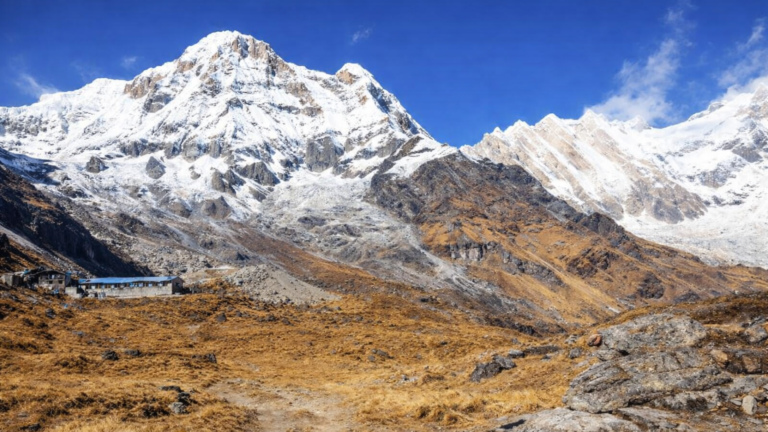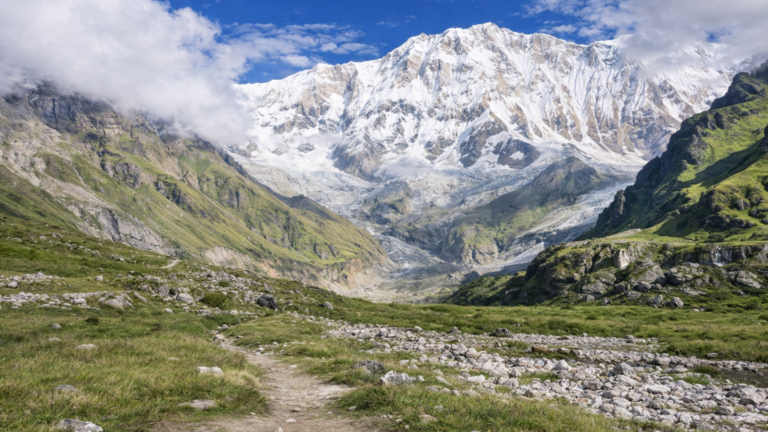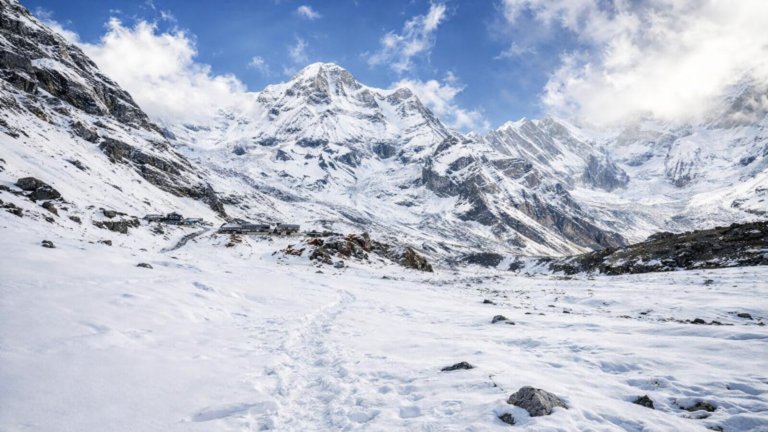

The Annapurna Base Camp trek packing list is a high-altitude gear framework designed for a 7–14 day Himalayan expedition reaching 4,130 meters inside the Annapurna Conservation Area of Nepal. Annapurna Base Camp (ABC) is a glacial amphitheater beneath Annapurna I (8,091 m) and Machhapuchhre (6,993 m), where temperatures drop to -10°C and oxygen levels decline significantly above 3,000 meters. A properly structured ABC packing list keeps total pack weight between 8–12 kg, and prevents hypothermia across four climate zones, subtropical forest, temperate rhododendron, alpine meadow, and glacial basin. Strategic gear selection for layering, insulation, hydration, and load distribution directly determines trekking performance and summit success.
This Annapurna Base Camp trek packing guide targets trekkers departing from Pokhara and ascending via the Modi Khola Valley through Chhomrong and Dovan. The route covers approximately 110 km round trip and gains 3,500 meters of elevation, demanding waterproof boots, a -10°C rated sleeping bag, altitude medication such as acetazolamide, and a 40–55L backpack with hip belt support. High-calorie nutrition (3,500–5,000 kcal daily burn), 3–4 liters of purified water intake, and mandatory permits including the ACAP and TIMS card complete the essential preparation system. Precise packing transforms the ABC trek from an equipment-failure risk into a controlled, efficient high-altitude expedition.
Annapurna Base Camp Trek and Why Does Your Packing List Determine Trek Success?
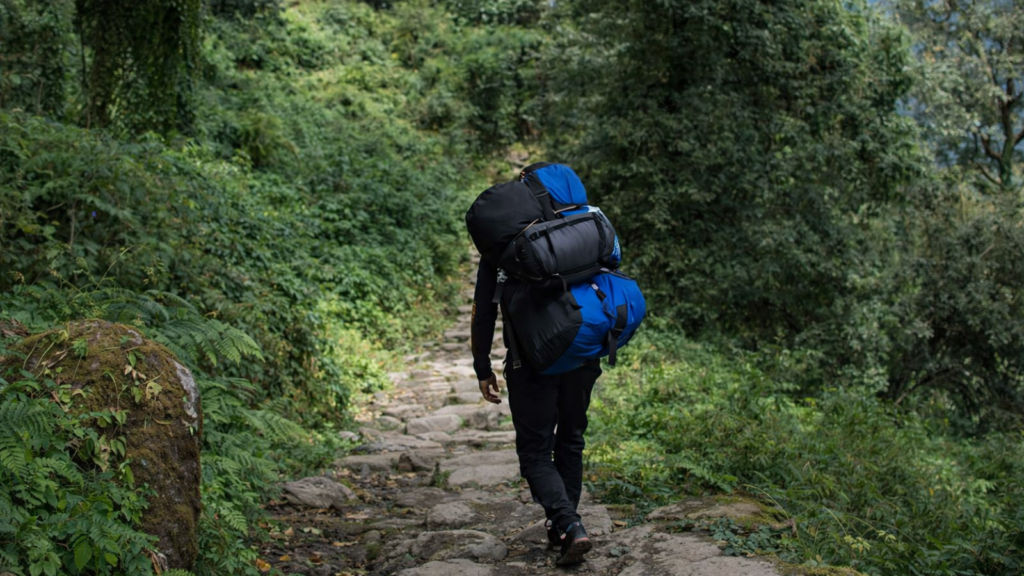
The Annapurna Base Camp trek is a high-altitude trekking route in Nepal’s Annapurna Conservation Area, covering approximately 110 km (68 miles) round-trip from Nayapul or Phedi near Pokhara. The trek gains 3,500 meters of elevation from the starting point at Birethanti (1,025 m) to base camp at 4,130 m.
Packing incorrectly causes 3 common failures on this trek: hypothermia from insufficient layering, knee injury from poor footwear, and forced evacuation from altitude sickness worsened by dehydration. A well-structured packing list eliminates all 3 risks before you step onto the trail.
How Does Elevation Affect What You Pack for ABC?
Every 1,000 meters of altitude gain reduces air temperature by approximately 6.5°C (11.7°F). At ABC, the daytime temperature in October (the peak trekking month) averages 5°C, dropping to -5°C at night. In January, nighttime temperatures reach -15°C.
The Annapurna Conservation Area also experiences the monsoon season from June to August, during which trails become slippery, leeches appear below 2,500 m, and rainfall averages 400 mm per month. Packing for monsoon trekking requires waterproofing for every layer.
What Is the Ideal Pack Weight for the Annapurna Base Camp Trek?
The ideal backpack weight for ABC is 8–12 kg (18–26 lbs), excluding water. Trekkers carrying over 15 kg report more knee strain on descent, based on biomechanical studies of high-altitude porters. Hiring a local porter, which costs USD 20–25 per day and supports the local Gurung and Magar community economy, lets you carry a 5–7 kg daypack instead.
What Clothing Should You Pack for the Annapurna Base Camp Trek?
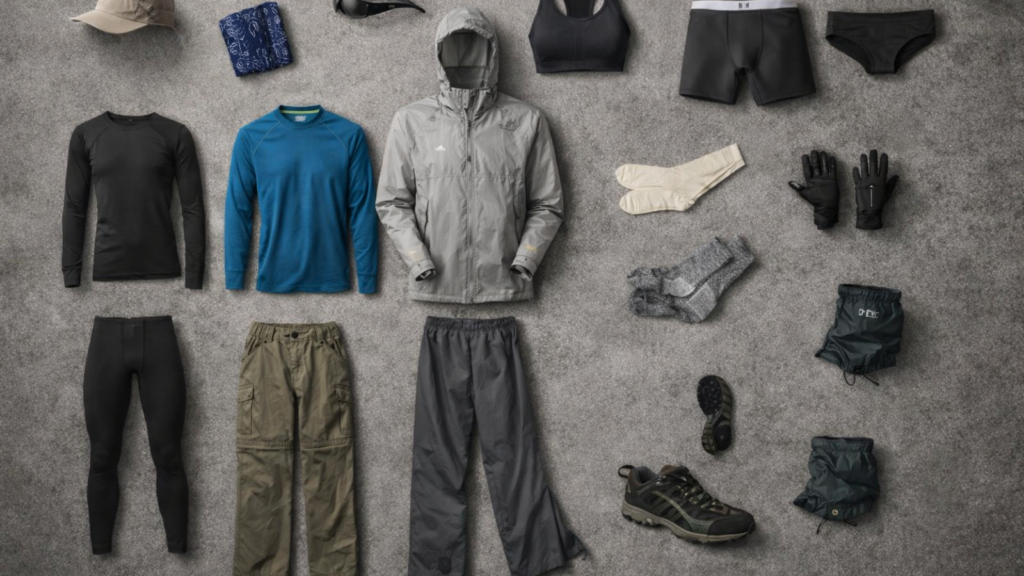
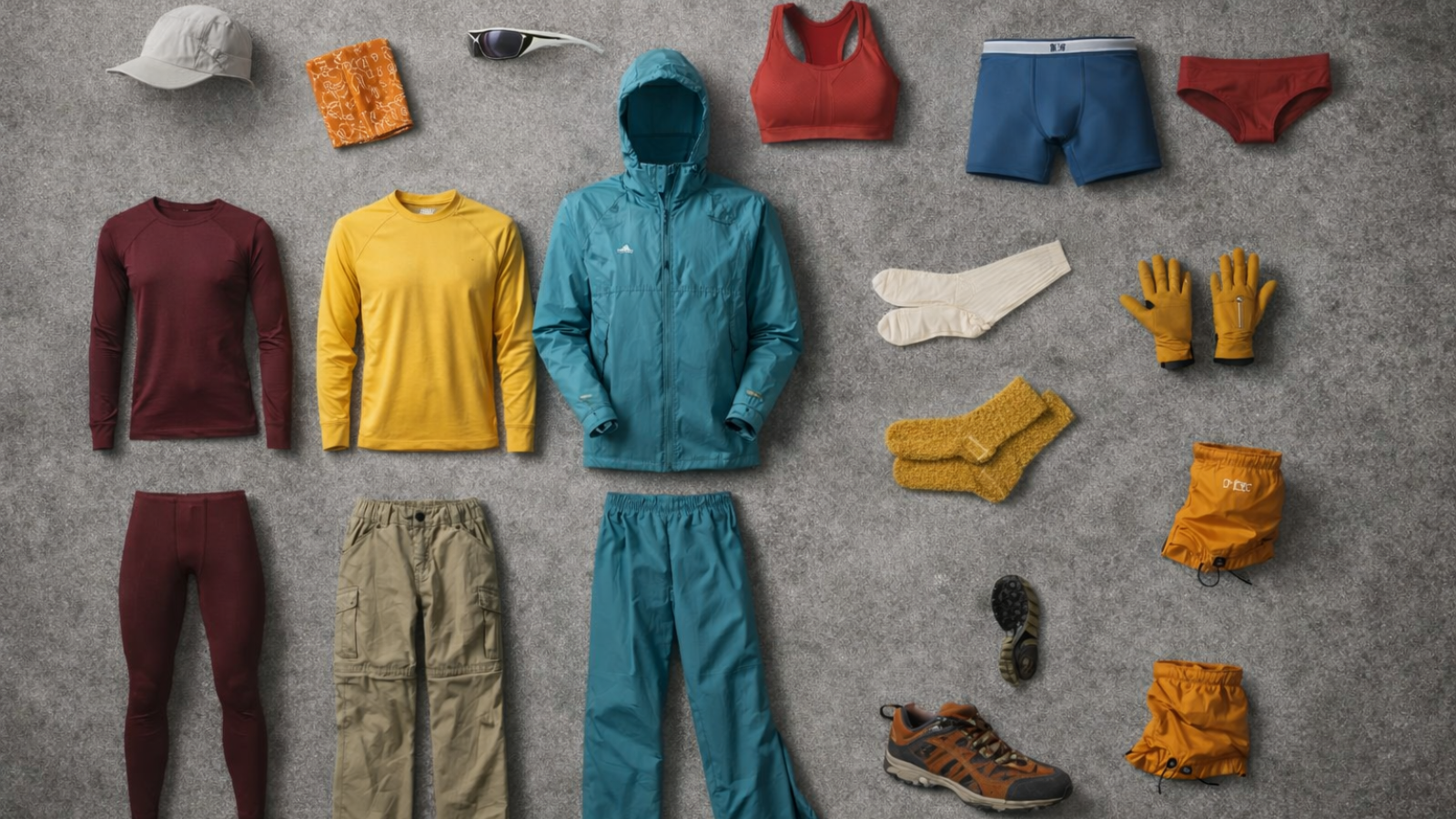
The ABC trek clothing system uses 4 functional layers: a moisture-wicking base layer, an insulating mid-layer, a fleece or down layer, and a waterproof shell. Each layer serves a specific thermodynamic function that no other layer can replicate.
Pack 3 sets of base layers, 1 fleece, 1 down jacket, and 1 hardshell jacket for a 10-day trek. This covers every weather condition from subtropical heat at Jhinu Danda (1,760 m) to glacial cold at Machhapuchhre Base Camp (3,700 m).
Which Base Layers Work Best for the ABC Trek?
Base layers for ABC must wick moisture 3x faster than cotton to prevent chilling when you stop moving. Merino wool and polyester blends perform best. Merino wool at 150–200 gsm provides natural odor resistance across 3–4 days of use, a practical advantage on a trail with limited shower access.
Pack the following base layer items:
- 3 moisture-wicking long-sleeve shirts (merino wool or synthetic)
- 3 pairs of moisture-wicking underwear (merino or Coolmax polyester)
- 2 pairs of trekking trousers (zip-off legs for climate zone transitions)
- 1 pair of thermal leggings (200 gsm fleece-lined)
- 2 pairs of light trekking socks (below Chhomrong at 2,170 m)
- 2 pairs of thick wool socks (above Dovan at 2,600 m)
What Insulation and Shell Layers Do You Need Above 3,000 Meters?
Above 3,000 meters on the ABC trail, specifically from Himalaya Hotel (2,920 m) onward, temperatures drop below freezing every night. Pack these 3 insulation and shell items:
- Down jacket (600-fill power or higher, synthetic down for monsoon season): This is your primary warmth layer at MBC and ABC. It compresses to the size of a football and weighs under 500 g.
- Fleece mid-layer (300 gsm Polartec or equivalent): Wear this between your base layer and down jacket during active trekking at altitude. It regulates temperature better than down when you are moving.
- Hardshell jacket (Gore-Tex or equivalent 2.5-layer): Blocks wind and rain completely. ABC sits in a glacial amphitheater where afternoon winds exceed 40 km/h. A waterproof rating of 20,000 mm HH minimum is adequate.
What Accessories Prevent Cold Injuries on the ABC Trek?
Cold injuries, frostbite and trench foot, affect 3–7% of trekkers who reach ABC without adequate accessories. Pack these 6 accessories without exception:
- Woolen or fleece beanie hat covering ears
- Balaclava for sleeping at ABC (4,130 m)
- Fleece gloves (liner weight)
- Waterproof over-mittens for summit-morning wind exposure
- Buff or neck gaiter (used as face protection above 3,500 m)
- UV-protection sunglasses (Category 3 or 4 lens, essential above treeline)
What Footwear and Foot Care Items Belong on the ABC Packing List?
Footwear is the single most critical item on the Annapurna Base Camp packing list. Incorrect boots cause many mid-trek evacuations on Nepal’s trekking routes.
The ABC trail includes river crossings, stone-paved sections, muddy jungle paths, and snow-covered glacial moraine. No single shoe type handles all 4 terrain types. The solution is a 2-shoe system.
What Type of Trekking Boots Do You Need for Annapurna Base Camp?
Pack 1 pair of waterproof mid-cut or high-cut trekking boots with a Vibram or equivalent rubber sole and Gore-Tex lining. The boot must have ankle support for the 800-step stone staircase descent from Chhomrong to Sinuwa and the moraine scrambling between Deurali and ABC.
Break in your boots for a minimum of 40 hours of walking before departure. Unbroken boots on the ABC trail cause blisters within the first 3 km. Blisters at altitude become infected more easily due to reduced immune response caused by hypoxia.
Size your boots one half-size larger than your normal shoe size. Feet swell by up to one full size during long daily descents due to fluid pooling.
What Foot Care Supplies Prevent Blisters and Infections?
Pack these 5 foot care essentials inside your medical kit:
- Moleskin or Leukotape P (pre-apply to hotspot areas before day 1)
- Blister plasters (Compeed or equivalent, 6–8 pieces minimum)
- Foot powder (antifungal, for moisture management in teahouse conditions)
- Toenail clippers (long nails cause subungual hematoma on descent)
- Camp sandals or lightweight trail runners (for teahouse rest and river crossings below 2,000 m)
What Trekking Gear and Equipment Do You Need for the ABC Trail?
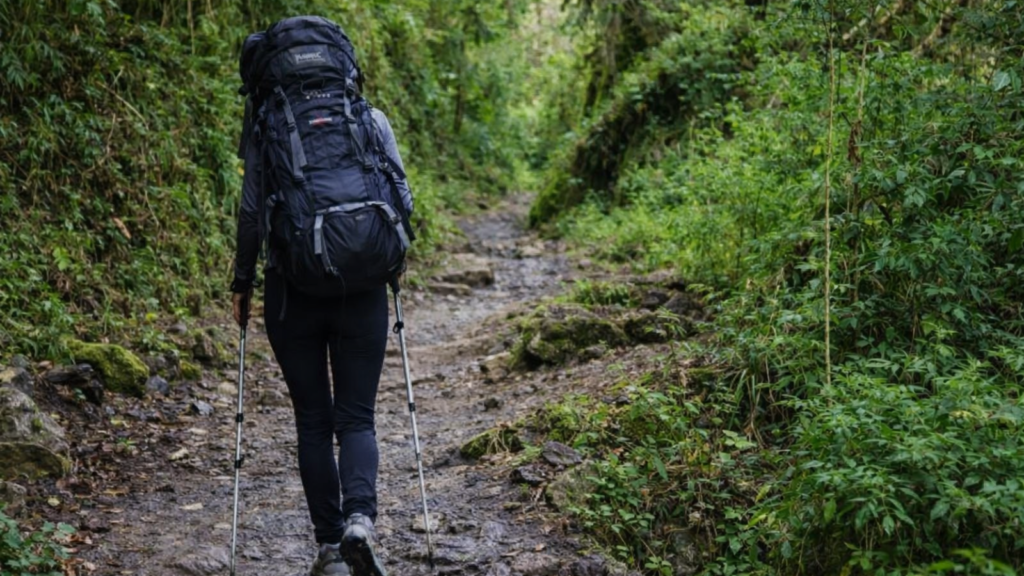
Trekking gear for ABC covers 5 functional categories: navigation and shelter, load-carrying, sleeping, lighting, and trail tools. Each item serves a non-redundant purpose on the route.
What Backpack Size Is Correct for the Annapurna Base Camp Trek?
Pack a 40–55 litre backpack with a hip belt and back panel support if you carry your own gear. The hip belt transfers 60–70% of pack weight from your shoulders to your hips, reducing upper-body fatigue on the 8–10 hour trekking days between Chhomrong and Annapurna Base Camp.
Use a 20–25 litre daypack if you hire a porter. Store valuables, water, snacks, a rain jacket, and a camera in your daypack while the porter carries your main bag.
Pack a waterproof pack cover regardless of season. Rain may falls on the ABC trail during October, even outside monsoon season.
What Sleeping Equipment Do You Need for ABC Teahouses?
ABC teahouses provide foam mattresses and basic blankets. The blankets are not sufficient below 0°C, which occurs at every teahouse above 3,000 m from November through March.
Pack a sleeping bag rated to -10°C (14°F) for all ABC trekking between October and April. A 3-season bag rated to 0°C is adequate only for May and September.
A sleeping bag liner adds 5–8°C of effective warmth and keeps your bag clean across 14 nights. Silk liners weigh 130 g and compress to fist-size.
A sleeping pad is optional if teahouses confirm mattress availability on your route dates. Always call ahead for Annapurna Base Camp teahouse availability during peak season (October and November).
What Trekking Poles Do for Your Knees on the ABC Descent
Trekking poles reduce knee joint load by 25% on descent, measured by EMG studies of lower-limb muscle activity on mountain trails. The 1,500-meter descent from ABC to Jhinu Danda over 2 days concentrates enormous cumulative stress on the quadriceps and patellofemoral joint.
Use carbon fiber or aluminum trekking poles with anti-shock mechanisms. Set pole length to elbow height on flat terrain, shortening 5–10 cm on ascent and lengthening 5–10 cm on steep descent.
Pack trekking pole rubber tips for the stone-paved sections below Ghandruk. Metal tips on stone create slipping hazards and damage trail surfaces.
What Food, Nutrition, and Hydration Supplies Should You Carry for the ABC Trek?
Teahouses on the ABC route serve food at every stop from Nayapul to ABC. The question is not whether food is available, but whether it is calorie-dense, altitude-appropriate, and safe enough for your nutritional needs across 7–14 days.
How Many Calories Do You Burn Per Day on the ABC Trek?
Trekkers on the ABC route burn 3,500–5,000 kilocalories per day, depending on body weight, altitude, and pack weight. At altitude, appetite decreases due to elevated leptin levels triggered by hypoxia, meaning you feel full when you are not adequately fueled.
Pack 500–800 kcal of trail snacks per day to supplement teahouse meals. Reliable high-calorie options include:
- Mixed nuts and trail mix (170 kcal per 30 g handful)
- Dark chocolate (minimum 70% cacao, 150 kcal per 25 g piece)
- Energy bars (Clif, Larabar, or Nepali Wai-Wai noodle packs, 200–250 kcal each)
- Electrolyte powder sachets (ORS or Nuun tablets, 10–15 sachets minimum)
How Do You Maintain Safe Hydration at Altitude on the ABC Trek?
Hydration at altitude requires drinking 3–4 liters of water per day, approximately double your sea-level intake. Dehydration accelerates altitude sickness symptoms including headache, fatigue, and nausea.
Water sources on the ABC trail include teahouse boiled water, natural springs, and stream crossings. Never drink unfiltered water above 1,500 m. Pack one of these 2 purification systems:
- Option 1: Portable water filter (Sawyer Squeeze or LifeStraw, filters to 0.1 micron, removes giardia and bacteria). Weighs 85–130 g. Reusable for the entire trek.
- Option 2: Purification tablets (Aquatabs or iodine, 2 tabs per liter). Lightweight backup to any filter. Does not remove sediment or viruses without pre-filtering.
Pack a 1-liter insulated water bottle and a 2-liter hydration reservoir. The reservoir enables hands-free drinking during the continuous uphill sections where stopping to drink breaks trekking rhythm.
What Safety and Medical Items Belong on the Annapurna Base Camp Packing List?
The Annapurna Conservation Area has 4 Himalayan Rescue Association (HRA) posts, at Manang, Pheriche, staffed by physicians during peak season. Despite this infrastructure, every trekker carries a personal medical kit for emergencies between posts.
What Altitude Sickness Medications Do You Need for ABC?
Altitude sickness, clinically termed Acute Mountain Sickness (AMS), affects 25% to 48% of trekkers who ascend above 3,500 m without proper acclimatization, per Wilderness Medical Society data. Symptoms include headache, nausea, fatigue, dizziness, and insomnia within 6–12 hours of rapid ascent.
Carry these 3 altitude-specific medications after consulting your physician:
- Acetazolamide (Diamox): 125–250 mg twice daily, starting 24 hours before ascent above 3,000 m. Requires prescription in most countries.
- Dexamethasone: 4 mg every 6 hours as emergency treatment for High-Altitude Cerebral Edema (HACE). Carry but do not use prophylactically.
- Nifedipine: 30 mg extended-release as emergency treatment for High-Altitude Pulmonary Edema (HAPE). Only for confirmed HAPE diagnosis.
The only guaranteed treatment for severe AMS, HACE, or HAPE is immediate descent of a minimum 500 meters. No medication substitutes for descent.
What Should a Trekker’s Personal First Aid Kit Contain?
A complete personal first aid kit for ABC weighs under 600 g and contains:
- Ibuprofen (400 mg tablets, 20 count) for headache, muscle pain, inflammation
- Loperamide (Imodium, 2 mg tablets, 10 count) for traveler’s diarrhea management
- Oral Rehydration Salts (10 sachets) for diarrhea-induced dehydration
- Antihistamine (cetirizine 10 mg, 10 count) for allergic reactions
- Betadine antiseptic wipes (10 count) for wound cleaning at altitude
- Elastic bandage (7.5 cm width, 1 roll) for ankle support after sprains
- Waterproof adhesive bandages (12 mixed sizes)
- Sterile gauze pads (4 count, 10×10 cm)
- Medical scissors and tweezers (for blister drainage and splinter removal)
- SAM splint (foldable, for suspected fractures)
- Pulse oximeter (measures blood oxygen saturation, critical above 3,500 m)
A pulse oximeter is the single most important diagnostic tool on the ABC trek. A reading below 85% SpO2 at rest at altitude indicates the need for descent. Readings of 90–95% are normal at 4,000 m for acclimatized trekkers.
How Does Travel Insurance Connect to Your ABC Safety Plan?
Travel insurance for the ABC trek must include helicopter evacuation coverage to a minimum of USD 10,000. Helicopter evacuation from ABC to Pokhara costs USD 3,000–5,000 per flight and is paid upfront by the rescue team before airlift.
Verify that your policy covers trekking above 4,500 m, pre-existing conditions if applicable, and trip cancellation due to weather or trail closure. World Nomads, True Traveller, and Heymondo all offer Nepal trekking-specific policies starting at USD 80 per week.
What Documents and Permits Do You Need for Annapurna Base Camp?
The Annapurna Base Camp trek requires 2 mandatory permits and 1 recommended permit. Trekking without them results in fines between NPR 2,000–10,000 (USD 15–75) and trail exclusion at checkpoint posts.
Which Permits Are Mandatory for the ABC Trek in 2025?
- Permit 1: Annapurna Conservation Area Permit (ACAP) Cost: NPR 3,000 (USD 22) for SAARC nationals, NPR 3,000 for international trekkers (recently standardized). Issued at: Nepal Tourism Board offices in Kathmandu (Bhrikutimandap) or Pokhara (Damside). Validity: Single entry, covers the entire ACAP area including the ABC route.
- Permit 2 (not mandatory): Trekkers’ Information Management System (TIMS) Card Cost: NPR 2,000 (USD 15) for independent trekkers, NPR 1,000 for agency-registered trekkers. Issued at: Nepal Tourism Board offices or registered trekking agencies. Validity: Single trip, requires a registered Nepal trekking agency if purchased at agency rate.
Pack permits in a waterproof document pouch alongside your passport, travel insurance certificate, emergency contact card, and your agency’s 24-hour emergency number.
What Electronics and Communication Devices Should You Pack?
Pack these 6 electronics items:
- Headlamp with 200+ lumen output and fresh lithium batteries (teahouses cut power by 9 PM)
- Portable power bank (20,000 mAh minimum, charges phone 5 times for a 10-day trek)
- Universal travel adapter (Nepal uses Type C, D, and M sockets)
- Camera or smartphone with downloaded offline maps (Maps.me or Gaia GPS with ABC route)
- Satellite communicator (Garmin inReach Mini, optional but recommended for solo trekkers)
- Solar charging panel (lightweight, for multi-day sections without electricity above Deurali)
How Do You Pack and Organize Your ABC Trek Backpack Efficiently?
Backpack organization on a 10-day trek reduces item retrieval time, keeps critical gear accessible during weather changes, and distributes weight to protect your spine.
What Is the Correct Weight Distribution System for the ABC Pack?
Pack in 3 vertical zones by item density and access frequency:
- Bottom zone (heaviest items): Sleeping bag, sleeping liner, down jacket. These go deepest in the pack and rest closest to your lower back. Heavy items low and close to your spine reduce forward lean by 15–20 degrees.
- Middle zone (moderate weight): Clothing layers, food supplies, first aid kit, water reservoir. Pack clothing in compression bags to save 40% volume.
- Top zone and hip belt pockets (lightest, most accessible items): Rain jacket, trail snacks, headlamp, passport documents, sunscreen, lip balm, and phone. You access these items 10–20 times per day without removing your pack.
What Personal Care and Hygiene Items Do You Need for ABC?
Teahouses on the ABC route provide squat toilet facilities and bucket showers (hot water costs NPR 200–400 extra). Pack these 8 hygiene items in a 1-liter zip-lock bag:
- Biodegradable soap (Dr. Bronner’s or equivalent, 60 ml travel size)
- Toothbrush and toothpaste (50 ml travel size)
- Sunscreen SPF 50+ (UV radiation increases 10% per 1,000 m of elevation gain)
- Lip balm SPF 30+ (lips crack above 3,000 m without regular application)
- Wet wipes (30 count, for no-shower nights above Deurali)
- Hand sanitizer (60 ml, for pre-meal hygiene when water is cold or unavailable)
- Menstrual products if applicable (pack-out all waste; no disposal facilities on trail)
- Toilet paper (2 rolls in a zip-lock bag, teahouses run out frequently above 3,000 m)
What Is the Complete Annapurna Base Camp Trek Packing List Checklist?
The complete ABC trek packing list organized by category is the following:
- Clothing (13 items): 3 moisture-wicking base layer shirts, 3 pairs moisture-wicking underwear, 2 trekking trousers, 1 thermal legging, 2 light trekking socks, 2 thick wool socks, 1 fleece mid-layer, 1 down jacket, 1 hardshell rain jacket, 1 beanie, 1 balaclava, 1 pair fleece gloves, 1 pair waterproof over-mittens, 1 buff/neck gaiter, 1 pair UV sunglasses.
- Footwear (2 items): 1 pair waterproof trekking boots (broken in), 1 pair camp sandals or trail runners.
- Gear (8 items): 40–55 L backpack with hip belt, waterproof pack cover, sleeping bag (-10°C rated), sleeping bag liner, trekking poles (pair), headlamp with spare batteries, 1 L insulated water bottle, 2 L hydration reservoir.
- Nutrition (6 items): 500–800 kcal snacks per day, electrolyte tablets, water purification filter, purification tablets (backup), camp stove (optional for hut-to-hut), lightweight spork.
- Medical (15 items): As listed in the safety section above, including pulse oximeter, altitude medications, and first aid supplies.
- Documents (6 items): Passport, ACAP permit, TIMS card, travel insurance certificate, emergency contact card, offline trail map.
- Electronics (6 items): Headlamp, power bank, travel adapter, camera, satellite communicator (optional), solar panel (optional).
- Hygiene (8 items): Biodegradable soap, toothbrush and toothpaste, sunscreen SPF 50+, lip balm, wet wipes, hand sanitizer, menstrual products if applicable, toilet paper.
- Total item count: 64 items. Total packed weight with sleeping bag and poles: 10–12 kg.
Final Packing Advice for First-Time ABC Trekkers
The Annapurna Base Camp trek rewards trekkers who pack light, layer intelligently, and carry a properly stocked medical kit. Every gram above 12 kg adds cumulative fatigue across 110 km of trail.
The most important 3 decisions on your packing list are boots, sleeping bag, and altitude medication. These 3 items determine whether you summit to 4,130 m comfortably or turn back at Machhapuchhre Base Camp.
Trekking agencies in Pokhara provide gear rental for down jackets, sleeping bags, trekking poles, and crampons at NPR 200–500 per item per day. First-time trekkers who are unsure about investment in personal gear use rental equipment to test preferences before purchasing.
The Annapurna Base Camp trek is one of the most accessible high-altitude treks in the Himalayas, reaching a glacial amphitheater surrounded by Annapurna I (8,091 m), Annapurna South (7,219 m), Hiunchuli (6,441 m), and Machhapuchhre (6,993 m). The right packing list makes this trek a transformative 10-day experience rather than an equipment-failure survival challenge.
What is the most important item to pack for the Annapurna Base Camp trek?
Waterproof trekking boots are the most important item to pack for the Annapurna Base Camp trek. Durable, broken-in boots prevent blisters, ankle injuries, and evacuation on stone staircases and glacial moraine above 3,000 meters. Break your boots in for at least 40 hours before departure to ensure foot stability and protection.
How cold does it get at Annapurna Base Camp and how do I pack for it?
Annapurna Base Camp reaches nighttime temperatures of -10°C between October and April at 4,130 meters. Pack a -10°C rated sleeping bag, a 600-fill down jacket, a fleece mid-layer, and a waterproof hardshell. Add a balaclava and waterproof over-mittens to protect against early morning glacial exposure.
Can I rent trekking gear in Pokhara instead of buying everything?
You can rent trekking gear in Pokhara’s Lakeside district for NPR 200–500 per item per day. Rental shops provide down jackets, sleeping bags, trekking poles, and crampons. Inspect insulation, waterproofing, and sole wear before signing the agreement to ensure safety above 3,000 meters.
Do I need a sleeping bag if ABC teahouses provide blankets?
You need a sleeping bag rated to -10°C for the Annapurna Base Camp trek because teahouse blankets are insufficient below 0°C above 3,000 meters from November to March. Add a silk liner for 5–8°C of extra warmth and improved hygiene during 14 nights in shared lodges.
How much water should I drink per day on the Annapurna Base Camp trek?
Drink 3–4 liters of water per day on the Annapurna Base Camp trek to prevent altitude dehydration. Elevation above 3,000 meters increases fluid loss through faster breathing and low humidity. Purify all water above 1,500 meters using a Sawyer Squeeze filter or Aquatabs tablets before drinking.
What permits do I need to trek to Annapurna Base Camp in 2025?
The Annapurna Base Camp trek requires two permits: the Annapurna Conservation Area Permit (ACAP) and the TIMS card. ACAP costs NPR 3,000 and TIMS costs NPR 1,000–2,000. Purchase both permits at the Nepal Tourism Board office in Pokhara and carry them at all route checkpoints.
Should I take altitude sickness medication for the ABC trek?
Take acetazolamide (Diamox) 125–250 mg twice daily to reduce Acute Mountain Sickness risk when ascending above 3,000 meters. Start 24 hours before ascent and consult a physician for a prescription. Descend immediately if blood oxygen saturation drops below 85% SpO2 at 4,130 meters.
How heavy should my backpack be for the Annapurna Base Camp trek?
Keep your Annapurna Base Camp backpack between 8–12 kg excluding water. Packs over 15 kg increase knee strain by 34% during steep descents such as the 1,500-meter drop to Jhinu Danda. Hire a porter for USD 20–25 per day to reduce your load to a 5–7 kg daypack.
What food and snacks should I carry for the Annapurna Base Camp trek?
Carry 500–800 kilocalories of snacks per day on the Annapurna Base Camp trek to meet a 3,500–5,000 kcal daily burn. Pack mixed nuts at 170 kcal per 30 g, dark chocolate above 70% cacao, and electrolyte powder sachets. Eat on schedule to prevent calorie deficits above 3,500 meters.
What should I pack in my ABC trek first aid kit?
Pack an ABC trek first aid kit under 600 g with ibuprofen, loperamide, oral rehydration salts, antiseptic wipes, elastic bandage, blister plasters, sterile gauze, and a pulse oximeter. Use the pulse oximeter to monitor SpO2; descend if readings fall below 85% at 4,130 meters.