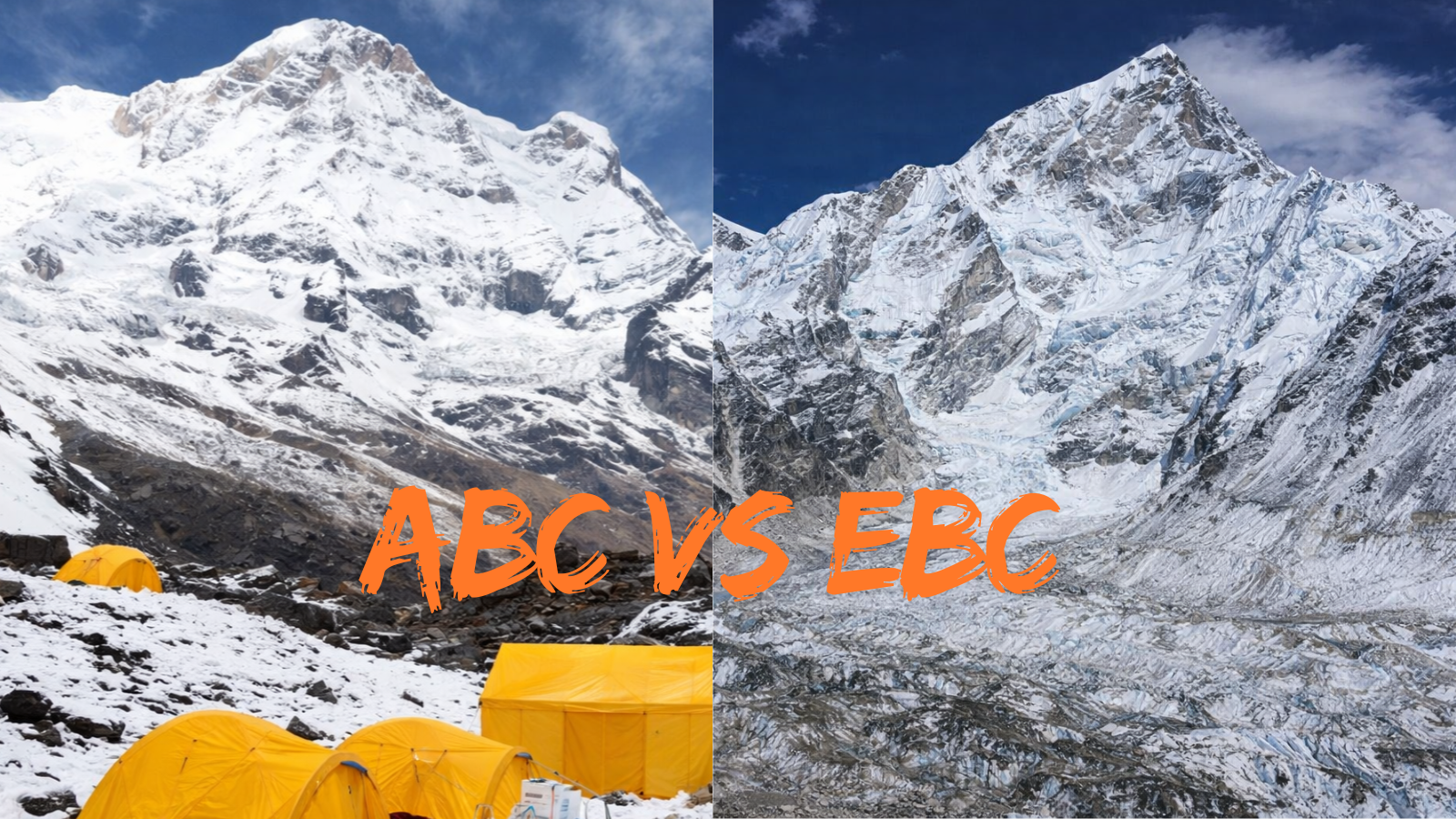

Annapurna Base Camp and Everest Base Camp are Nepal’s two most iconic high-altitude trekking destinations, each offering a distinct Himalayan expedition defined by altitude, terrain, cost, and cultural immersion. Annapurna Base Camp (4,130 m) lies within the Annapurna Conservation Area, surrounded by a 360-degree amphitheater of peaks including Annapurna I and Machhapuchhre, and delivers a moderate-altitude trek through rhododendron forests and Gurung villages. Everest Base Camp (5,364 m), set inside Sagarmatha National Park, leads trekkers to the foot of Mount Everest via the Sherpa heartland and the dramatic Khumbu Glacier. Maximum elevation, oxygen concentration (53% of sea level at Everest Base Camp), and acclimatization demands create the primary performance gap between the two routes.
Annapurna Base Camp is the ideal Himalayan trek for first-time high-altitude hikers with 10–14 days available, moderate fitness, and a USD 600–1,200 budget. Everest Base Camp suits experienced trekkers with 16–22 days, prior exposure above 3,500 m, and readiness for higher daily costs driven by the Lukla flight and remote logistics. Annapurna Base Camp emphasizes landscape diversity, cultural depth, and lower Acute Mountain Sickness (AMS) risk (5–10%), while Everest Base Camp prioritizes iconic altitude milestones, Kala Patthar panoramas, and a higher Acute Mountain Sickness (AMS) incidence (25–40%). Choosing between them depends on altitude tolerance, time commitment, and whether the goal is immersive sanctuary trekking or standing beneath the world’s highest peak.
Annapurna Base Camp and Everest Base Camp
Annapurna Base Camp sits at 4,130 meters (13,550 ft) in the Annapurna Conservation Area of north-central Nepal. It sits inside a vast glacial amphitheater surrounded by 7 peaks above 7,000 m, including Annapurna I (8,091 m), the 10th highest mountain on Earth. The trek begins from Nayapul or Phedi, near Pokhara, and passes through dense rhododendron forests, Gurung villages, and terraced farmland before rising into alpine terrain.
Everest Base Camp sits at 5,364 meters (17,598 ft) in the Sagarmatha National Park, a UNESCO (United Nations Educational, Scientific and Cultural Organization) World Heritage Site, in the Khumbu region of northeast Nepal. It serves as the launchpad for climbers attempting Mount Everest (8,849 m), the world’s highest peak. The trek starts with a dramatic 35-minute flight to Lukla airport, passes through the Sherpa heartland of Namche Bazaar, and climbs steadily through one of the most iconic mountain landscapes on the planet.
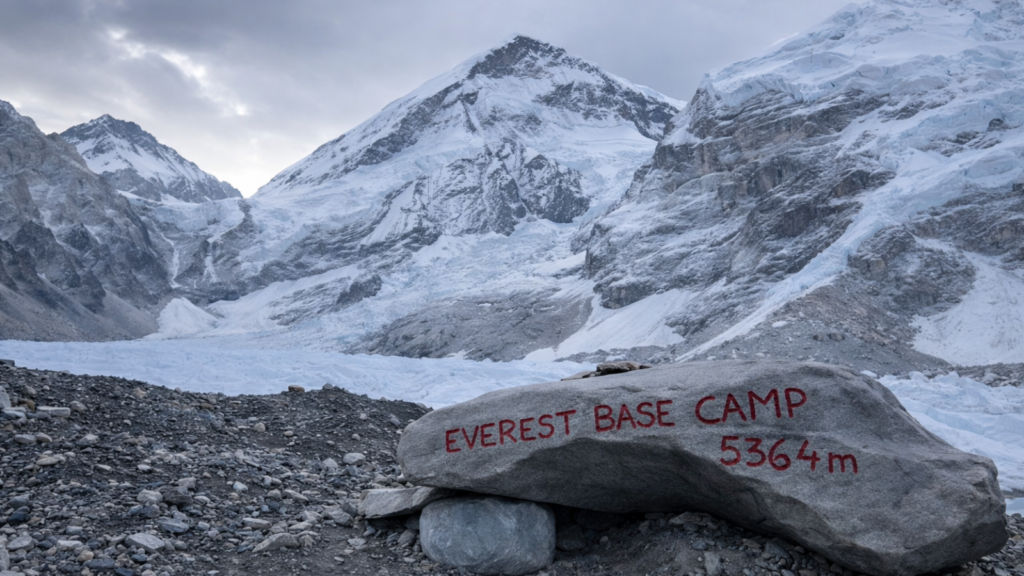
The core difference: ABC rewards you with a lush, intimate bowl of Himalayan giants at a moderate altitude. EBC rewards you with the visceral experience of standing at the foot of the world’s tallest mountain at a significantly higher, more demanding elevation.
Comparison Table of ABC and EBC
| Category | Annapurna Base Camp | Everest Base Camp |
| Maximum Altitude | 4,130 m (13,550 ft) | 5,364 m (17,598 ft) |
| Trek Duration | 7–12 days | 12–16 days |
| Distance (approx.) | 115 km round trip | 130 km round trip |
| Difficulty Level | Moderate | Strenuous |
| Best Season | March–May, Oct–Nov | March–May, Oct–Nov |
| Permit Required | ACAP | Sagarmatha NP and Khumbu Local |
| Permit Cost (approx.) | NPR 3,000 (~$23–25) | NPR 3,000 (~$23–25) |
| Typical Daily Cost | $30–$60 USD | $50–$90 USD |
| Acclimatization Days | 1–2 days | 3–4 days |
| Scenery Type | Lush rhododendron, amphitheater | High alpine, glaciers, Khumbu Icefall |
| Nearest Airport | Pokhara | Lukla |
| Crowding Level | Moderate | High |
| AMS Risk | Moderate | High |
How Difficult Is Each Trek?
ABC rates as moderate, most fit trekkers with 3–4 weeks of advance preparation complete it comfortably, with daily elevation gains averaging 600–800 m. EBC rates as strenuous, where atmospheric oxygen drops to 53% of sea-level concentration and mandatory acclimatization days in Namche Bazaar and Dingboche are non-negotiable. AMS affects 5–10% of ABC trekkers versus 25–40% of EBC trekkers, making altitude the single most important variable separating the two.
Annapurna Base Camp Difficulty: What to Expect Each Day
The ABC trek rates as moderate. Most fit trekkers with 3–4 weeks of advance walking preparation complete it comfortably. The highest point, ABC itself at 4,130 m, sits well below the altitude threshold where serious acute mountain sickness (AMS) becomes a dominant concern for most people.
Daily elevation gains on ABC average 600–800 meters on ascent days. The steepest section runs through the Annapurna Sanctuary approach between Deurali and Machhapuchhre Base Camp. The terrain includes stone staircases, forest paths, and exposed ridgelines. Leeches are present below 2,500 m during the monsoon season.
Fitness benchmark: If you can hike 5–6 hours per day for 5 consecutive days carrying a 10–12 kg daypack, you are physically prepared for ABC.
Everest Base Camp Difficulty: Altitude, Acclimatization, and Endurance
EBC rates as strenuous to very strenuous. The altitude is the dominant challenge. Above 3,500 m, the body begins to feel the effects of reduced oxygen. At 5,364 m, atmospheric oxygen is approximately 53% of sea-level concentration. Every step above 4,000 m feels harder than it would at lower elevation.
Acclimatization days are mandatory, not optional. The standard EBC itinerary includes rest days in Namche Bazaar (3,440 m) and Dingboche (4,410 m). Skipping these days dramatically increases AMS risk. Symptoms of AMS include severe headache, nausea, vomiting, fatigue, and difficulty sleeping, all of which become dangerous if ignored above 4,000 m.
Fitness benchmark: You need consistent aerobic fitness, prior hiking experience at altitude above 3,000 m (strongly recommended), and a minimum of 12–16 full days available for the return journey.
AMS Risk: The Altitude Factor Most Trekkers Underestimate
Acute mountain sickness affects 25–40% of trekkers on the EBC route at some point during the journey. On ABC, AMS affects a smaller percentage, roughly 5–10%, because the maximum altitude is lower and acclimatization is less demanding.
Critical rule for EBC: Ascend no more than 300–500 m per day above 3,000 m. Descent is the only cure for worsening AMS. Diamox (acetazolamide) can help prevent and treat mild AMS but does not eliminate the risk.
The practical implication: If you have no prior experience trekking above 3,500 m, ABC is the smarter first choice. EBC demands either prior altitude experience or a very conservative itinerary with additional acclimatization time built in.
Scenery and Landscapes: What You Actually See on Each Trek
ABC delivers a varied ecological journey, from rhododendron forests blooming red and pink in March–April to a 360-degree Himalayan amphitheater at the sanctuary. EBC offers a starker, more austere beauty that builds progressively toward the Khumbu Icefall, the iconic Kala Patthar Everest panorama, and Ama Dablam rising above Tengboche. Trekkers who value landscape diversity prefer ABC; those drawn to iconic singular landmarks consistently find EBC more compelling.
Annapurna Base Camp: The Himalayan Amphitheater
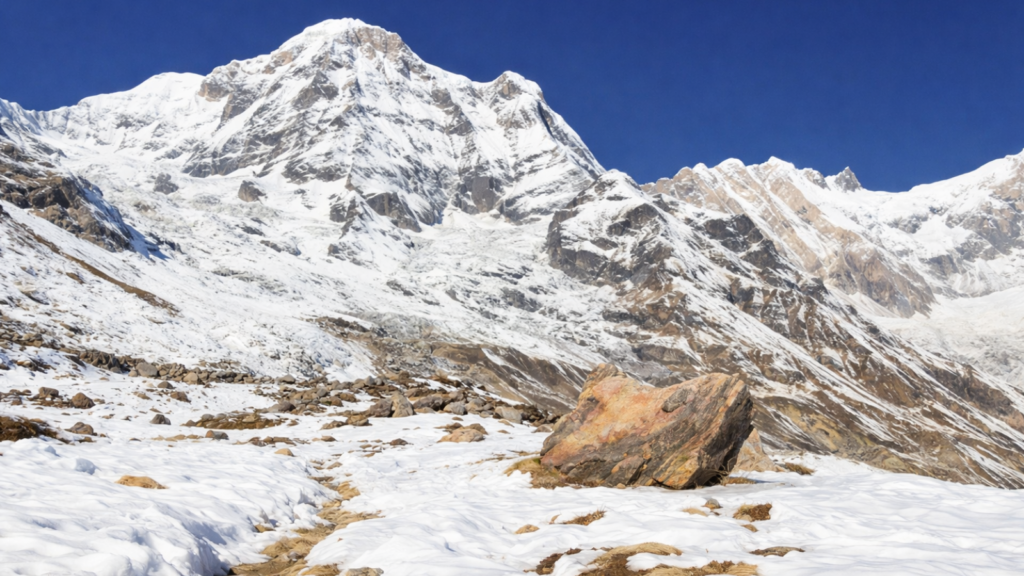
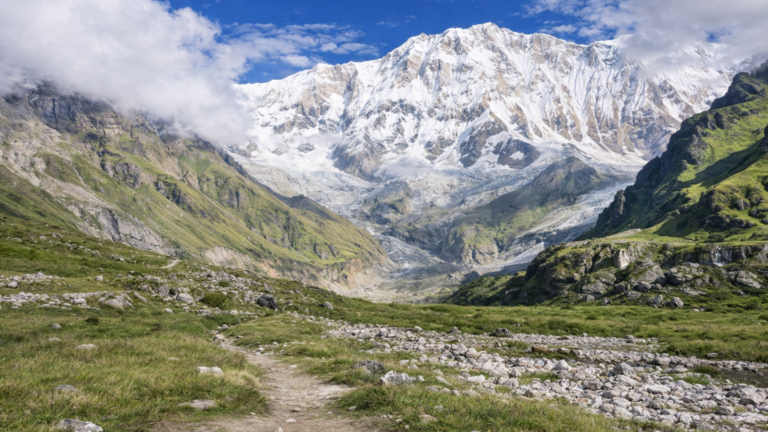
The ABC trek is famous for its visual variety. The lower sections pass through rhododendron and oak forests, particularly spectacular from mid-March to mid-April when rhododendrons bloom in shades of red, pink, and white. Above the treeline, the landscape opens into high pastures and glacier-carved valleys.
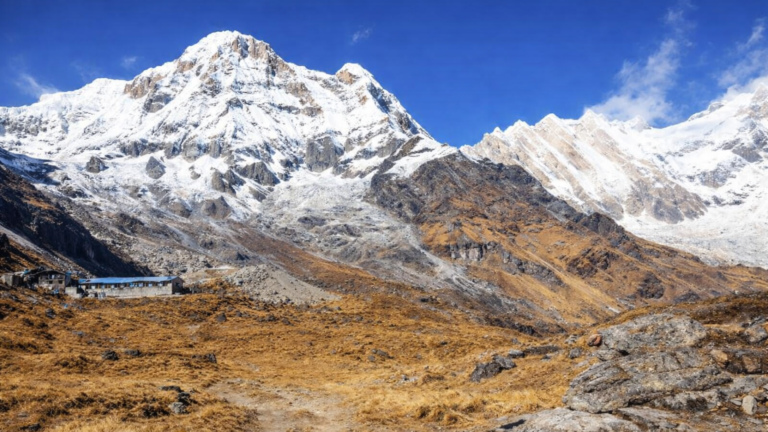
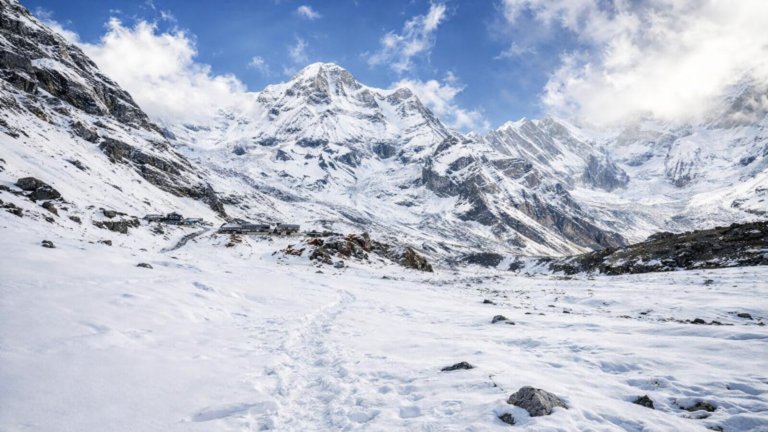
The defining moment of ABC arrives when you emerge into the Annapurna Sanctuary: a natural amphitheater enclosed by Annapurna I (8,091 m), Annapurna South (7,219 m), Hiunchuli (6,441 m), Machhapuchhre (6,993 m), Nepal’s sacred fishtail peak, never officially summited, Gangapurna (7,455 m), and Glacier Dome (7,193 m). Standing at base camp, 360 degrees of peaks above 6,000 m surround you.
Sunrise from ABC is one of the great Himalayan spectacles: golden alpenglow illuminates Machhapuchhre and Annapurna South while the glacier below catches the first light. Most trekkers describe this moment as the emotional peak of the entire trek.
Everest Base Camp: The Roof of the World in Sight
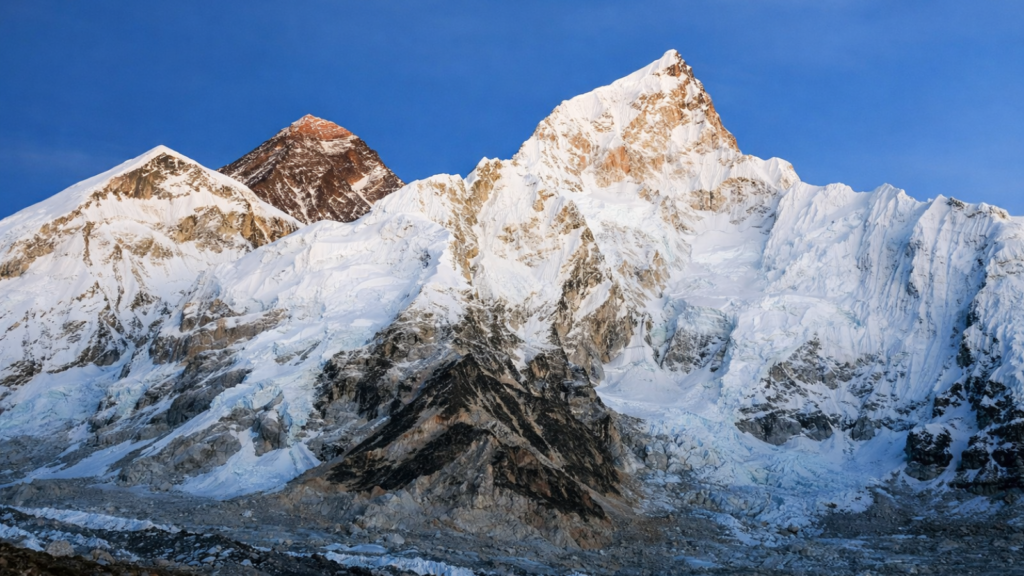
EBC delivers a starker, more austere beauty. The lower Khumbu Valley features rhododendron and juniper forests around Phakding and Namche, but above 3,800 m, vegetation gives way to rocky moraines, glacial lakes, and high-altitude shrub. The landscape is raw and elemental.
The trek’s most celebrated viewpoint is Kala Patthar (5,545 m), a short optional summit above Gorakshep. From Kala Patthar, you see Mount Everest (8,849 m) in its full profile, the only point on the classic EBC route where Everest is visible without obstruction. The Khumbu Icefall, the serrated glacier climbers must cross to reach the Western Cwm, creates an otherworldly spectacle of ice towers and crevasses.
Notable peaks visible along the EBC route include Ama Dablam (6,812 m), widely considered one of the most beautiful mountains in the world, Thamserku (6,623 m), Lhotse (8,516 m), and Nuptse (7,861 m). Ancient Buddhist monasteries at Tengboche and Pangboche, mani stone walls, prayer flags, and yak caravans define the Sherpa heartland through which the trail passes.
Comparing Scenery: Lush vs. Raw, Intimate vs. Epic
ABC offers a more varied ecological journey, from subtropical forests to high alpine sanctuary, within a compact geographic space. The Annapurna Sanctuary amphitheater creates a rare feeling of total Himalayan immersion.
EBC offers a longer visual build, the scenery becomes progressively more dramatic as you ascend, culminating in the visceral experience of standing on the Khumbu Glacier at the foot of Everest. The scale is larger, the altitude more pronounced, and the sense of human smallness more acute.
Personal preference matters here. Trekkers who value landscape diversity and lush natural beauty consistently prefer ABC’s scenery. Those drawn to iconic landmarks, maximum altitude, and the cultural weight of the Sherpa region consistently find EBC more compelling.
Cost and Duration: Which Trek Fits Your Budget and Schedule?
ABC costs 20–40% less than EBC, daily expenses run USD 30–60, no expensive internal flight is needed, and a complete guided 10-day package starts from USD 600 with local operators. EBC requires a USD 300–420 round-trip Lukla flight, daily costs above 4,000 m average USD 50–90, and a guided 14-day package runs USD 1,200–2,500 from Kathmandu. Time-wise, ABC demands 10–14 total days while EBC requires 16–22 days including potential Lukla weather delays.
Annapurna Base Camp: Cost Breakdown
The ABC trek is accessible from Pokhara, Nepal’s second-largest city, reachable by a 25-minute domestic flight or 7-hour bus ride from Kathmandu. This eliminates the cost of an internal flight to a remote airstrip, a significant saving over EBC.
Permit costs for ABC total approximately USD 37: the Annapurna Conservation Area Permit (ACAP) at NPR 3,000 (USD 22) and the TIMS card at NPR 2,000 (USD 15). Teahouse accommodation runs USD 5–15 per room per night, with meals costing USD 3–8 per dish. Total daily expenses range from USD 30–60. On a 10-day trek, total in-Nepal expenses run USD 300–600 for independent budget trekkers.
Guided ABC treks with a licensed guide and porter add USD 25–40 per day for guide fees and USD 15–25 per day for porter fees. A complete guided 10-day ABC package from Pokhara costs USD 600–1,200 from local operators, or USD 1,800–3,500 through international companies.
Everest Base Camp: Full Cost Breakdown and Hidden Expenses
EBC is consistently 20–40% more expensive than ABC. The biggest cost driver is the Lukla flight: a round-trip Kathmandu–Lukla ticket costs USD 300–420 per person. Delays and cancellations due to weather are common, and some trekkers spend 1–3 unplanned nights waiting for flights, adding unbudgeted accommodation and meal costs.
Teahouse accommodation in the Khumbu region is more expensive than in the Annapurna region, especially above Namche Bazaar. Rooms cost USD 10–25 per night, and food prices rise steeply with altitude, a plate of dal bhat that costs USD 5 in Phakding can cost USD 12–15 in Gorakshep. Total daily expenses average USD 50–90 above 4,000 m.
On a standard 14-day EBC trek, total in-Nepal expenses (including the Lukla flight) run USD 700–1,400 for independent trekkers. A guided 14-day EBC package from a Kathmandu-based operator costs USD 1,200–2,500. International companies charge USD 3,500–7,000.
Duration: What Time Commitment Does Each Trek Actually Require?
ABC can be completed in as few as 7 days from Nayapul, though 10–12 days allows a more comfortable pace and rest days when needed. Total time away from home: approximately 10–14 days including travel to and from Pokhara.
EBC requires a minimum of 12 days from Lukla. A 14–16 day itinerary is standard and strongly recommended for proper acclimatization. Flying into and out of Lukla adds at least 2 travel days, and weather delays can add 1–3 more.
Total time away from home for EBC: 16–22 days including Kathmandu transit and potential Lukla delays. If you have fewer than 15 days available, ABC is the only realistic choice between the two.
When to Go: Best Seasons for Annapurna and Everest Base Camp
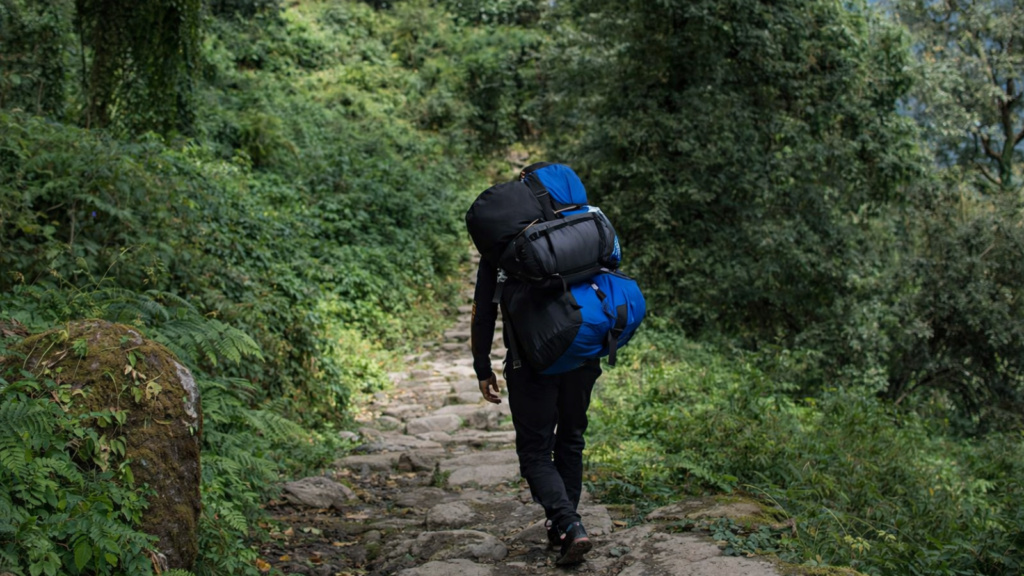
Both treks share 2 optimal windows, spring (March–May) and autumn (October–November), with spring delivering rhododendron blooms on ABC and active Everest expeditions at EBC. Autumn offers the clearest skies and most stable weather of the year across both regions, though October is the busiest single month on the EBC trail. Monsoon (June–September) and winter (December–February) are generally avoided, with nighttime temperatures at EBC dropping to -15°C to -20°C even in the optimal autumn window.
Spring Season (March to May): Peak Blooms and Climbing Activity
Spring is the premier season for both treks. Skies clear after winter, temperatures rise, and trails open fully. On ABC, March through April marks rhododendron bloom season, arguably the most beautiful time to trek in the Annapurna region. Forest trails turn crimson, pink, and white as flowers cover entire hillsides.
On EBC, spring (March–May) is also the primary Everest climbing season. Base camp fills with expedition teams from dozens of countries, creating a remarkable atmosphere of high-altitude human endeavor. The trail becomes busier, advance teahouse booking is essential from late March through May.
May is the busiest month on both routes. Weather windows are longest, but crowding peaks. Book accommodation 4–6 weeks in advance for a May EBC trek.
Autumn Season (October to November): Clearest Skies and Stable Weather
Autumn is the most popular overall trekking season in Nepal. October and November deliver the most consistently clear skies and stable weather of the year. The post-monsoon landscape is clean, visibility is exceptional, and temperatures are cool but manageable.
October is the single busiest month on the EBC trail, the section between Lukla and Namche Bazaar sees hundreds of trekkers daily. Both treks require advance accommodation booking in October and November.
Temperatures in October and November: At ABC (4,130 m), nighttime temperatures fall to -5°C to -10°C. At EBC (5,364 m), nighttime temperatures drop to -15°C to -20°C. Proper sleeping bags and insulated layers are non-negotiable for both.
Monsoon and Winter: Seasons to Avoid (With One Exception)
The monsoon season (June–September) brings heavy rainfall to both regions. On ABC, rain is daily, landslides are common, and leeches infest lower trails. The Khumbu region receives less monsoon rainfall than Annapurna due to its more northern, rain-shadow position, EBC in monsoon is technically possible but offers poor visibility and slippery trails.
Winter (December–February) brings frigid temperatures and potential trail closures above 4,000 m. ABC below Machhapuchhre Base Camp is accessible in winter for experienced trekkers with proper gear. EBC in winter is reserved for well-acclimatized trekkers with cold-weather experience, teahouses thin out and some close entirely above Dingboche.
Permits, Gear, and Logistics: Practical Planning for Both Treks
Both treks require 2 permits each, the ACAP or Sagarmatha National Park Entry Permit plus a TIMS card, totaling approximately USD 37, obtainable at Nepal Tourism Board offices in Kathmandu or near each trailhead. ABC gear requirements are lighter, centered on layered clothing, -10°C sleeping bag, and trekking poles; EBC demands a -20°C down jacket, expedition sleeping bag, and a pulse oximeter to monitor blood oxygen above 4,000 m. A licensed guide adds safety, cultural context, and logistical support, while a porter at USD 15–25 per day dramatically reduces fatigue across both routes.
Required Permits: What You Need Before You Start
For ABC, you need 2 permits: the Annapurna Conservation Area Permit (ACAP) and the TIMS card. Both are obtainable in Kathmandu (Nepal Tourism Board office) or in Pokhara (ACAP office in Damside). Processing takes approximately 30 minutes with passport photos and passport photocopies.
For EBC, you need 2 permits: the Sagarmatha National Park Entry Permit and the TIMS card. The national park permit is obtained at the park entrance gate in Monjo during the trek, or in Kathmandu in advance. Total permit costs for both treks are comparable at approximately USD 37.
Neither trek requires a climbing permit, that applies only to mountaineers ascending the peaks themselves. Permit regulations in Nepal update periodically; confirm current requirements through the Nepal Tourism Board before departure.
Essential Gear for Annapurna Base Camp
The ABC packing list is lighter than EBC because the maximum altitude is lower. Core gear includes:
- Layered clothing system: moisture-wicking base layers, fleece mid-layer, waterproof-breathable outer shell
- Trekking boots: waterproof, ankle-supporting, broken in before departure, blisters derail ABC treks more often than altitude
- Sleeping bag rated to -10°C: most teahouses provide blankets, but temperatures at ABC drop below 0°C
- Trekking poles: essential for steep descents on the Annapurna Sanctuary approach
- Water purification (tablets or filter): all water requires treatment at every elevation
- Sun protection: SPF 50+ sunscreen, UV-protective lip balm, quality sunglasses
- First aid kit including AMS medication: consult a doctor about Diamox before departure
Essential Gear for Everest Base Camp: The Altitude Demands More
Everything in the ABC list applies to EBC, plus:
- Down jacket rated to -20°C: mandatory above Namche Bazaar, especially for pre-dawn Kala Patthar ascents
- Expedition-grade sleeping bag rated to -20°C to -25°C: for nights at Gorakshep (5,164 m) and Lobuche (4,940 m)
- Pulse oximeter: monitors blood oxygen saturation and detects early AMS, a critical safety tool above 4,000 m
- Electrolyte supplements: dehydration accelerates at altitude and is a primary AMS trigger
- Gaiters: useful for crossing snow and icy sections above Dingboche
Guide and Porter: Do You Need One?
Both treks are completed independently by experienced trekkers. Trails are well-marked, teahouses provide food and accommodation, and English is spoken widely in both regions. However, a licensed guide adds 3 critical values: safety (guides recognize AMS symptoms faster than first-time trekkers), cultural context (especially through Sherpa villages and monasteries on EBC), and logistical support (accommodation booking, permit processing, weather monitoring).
A porter carries packs up to 20–25 kg, allowing you to trek with a lighter daypack and dramatically reducing fatigue and joint stress on multi-day ascents. The daily cost, USD 15–25 per porter, is modest relative to the total trek budget and provides direct economic benefit to local Nepali communities.
Cultural Experience: Gurung Villages vs. the Sherpa Heartland
The ABC route passes through Gurung and Magar villages, including the iconic stone-paved town of Ghandruk, home to communities with distinct languages, Buddhist and animist traditions, and a 200-year history of service in the British Gurkha regiments. The EBC route traverses the ancestral homeland of the Sherpa people, passing through Namche Bazaar’s thriving mountain hub and Tengboche Monastery, the Khumbu’s most important Buddhist site, host to the ancient Mani Rimdu festival each October–November. Both routes offer genuine cultural immersion unavailable anywhere else, but EBC’s Sherpa culture carries the added weight of the world’s greatest mountaineering heritage.
ABC: Gurung and Magar Culture Along the Trail
The lower sections of the ABC route pass through villages inhabited predominantly by the Gurung and Magar peoples, indigenous communities with distinct languages, animist and Buddhist traditions, and agricultural practices shaped by generations of mountain living. Towns like Ghandruk (1,940 m) and Chhomrong (2,170 m) are among the most photographed villages in Nepal.
Ghandruk’s stone-paved lanes, traditional Gurung architecture, and views of Machhapuchhre offer genuine cultural immersion. The Gurung Museum in Ghandruk documents the culture, history, and military traditions of a people who have served in the British Gurkha regiments for over 200 years.
EBC: The Sherpa Heartland and Khumbu’s Living Buddhist Culture
The EBC route passes through the ancestral homeland of the Sherpa people, a Tibetan ethnic group who migrated to the Khumbu region approximately 500 years ago. Namche Bazaar (3,440 m) is a thriving mountain town with bakeries, gear shops, cultural museums, and a weekly market that draws traders from across the region.
Tengboche Monastery (3,867 m) is the most important Buddhist monastery in the Khumbu, set against the backdrop of Ama Dablam and Thamserku. It hosts the Mani Rimdu festival (October–November): a 3-day celebration featuring masked dances, fire offerings, and ceremonies dating to the 17th century. Walking through yak caravans, mani walls, and prayer wheels connects you to a living culture shaped by ancient Tibetan Buddhism and the extraordinary demands of the world’s highest mountains.
Which Trek Is Right for You?
Choose ABC if you are a first-time Himalayan trekker, have 10–13 days available, prioritize landscape diversity over a single iconic destination, and want to keep costs lower. Choose EBC if standing at the foot of Everest is a non-negotiable goal, you have 16–22 days, prior altitude experience above 3,500 m, and the cultural depth of the Sherpa heartland motivates you. A combined 28–35 day itinerary, ABC first, then EBC, is the ideal sequence for trekkers who want both, as ABC builds the altitude tolerance and fitness that makes EBC safer and more enjoyable.
Choose Annapurna Base Camp If:
- You are trekking in the Himalayas for the first time and want a route with lower altitude risk
- You have 10–13 days available including travel days to and from Pokhara
- You want diverse scenery, rhododendron forests, terraced farms, and Himalayan sanctuary, in a single trek
- Budget is a primary concern: ABC costs 20–40% less than EBC for most trekkers
- You prefer a less crowded trail with a more intimate atmosphere
- You want to trek in rhododendron bloom season (March–April) for the most visually stunning forest experience in Nepal
Choose Everest Base Camp If:
- Standing at the foot of the world’s highest mountain is a specific, non-negotiable goal
- You have 16–22 days available including travel and potential Lukla weather delays
- You have prior trekking experience above 3,500 m and understand how your body responds to altitude
- You want deep immersion in Sherpa culture and Tibetan Buddhist mountain traditions
- The iconic imagery of Kala Patthar, the Khumbu Icefall, and Ama Dablam motivates you
Can You Do Both Treks on One Trip to Nepal?
Yes, and many trekkers do. A combined itinerary of 28–35 days allows you to complete ABC first (as a lower-altitude warm-up and acclimatization primer) and then proceed to EBC. This sequence works well because ABC prepares your body for altitude, making the EBC acclimatization process smoother.
Logistics: Complete ABC from Pokhara, fly back to Kathmandu, rest 1–2 days, then fly to Lukla for EBC. Total time: approximately 30–32 days.
Two Legendary Treks, Two Different Journeys
Annapurna Base Camp and Everest Base Camp are both bucket-list treks that deliver experiences most people only dream about. Choosing between them is not about which one is better, it is about which one is right for you, right now.
ABC offers an accessible, visually diverse, and culturally rich trek that most fit trekkers can complete safely. It is the right first Himalayan trek for the majority of people. EBC offers a higher, harder, more expensive, and ultimately more iconic journey to the base of the world’s tallest mountain, a trek that rewards preparation, experience, and commitment.
Both treks pass through landscapes that redefine your understanding of what mountains are. Both connect you to Nepali cultures with thousands of years of mountain heritage. And both end with a view that stays with you for the rest of your life.
Ready to start planning your Nepal trek? Contact our team of experienced trekking specialists to design a customized itinerary for Annapurna Base Camp, Everest Base Camp, or a combined journey through Nepal’s greatest Himalayan landscapes.
Is Annapurna Base Camp easier than Everest Base Camp?
Annapurna Base Camp is significantly easier than Everest Base Camp. ABC reaches 4,130 m, while EBC climbs to 5,364 m, where oxygen levels drop to about 53% of sea-level concentration. Trekkers with moderate fitness complete ABC comfortably. EBC requires longer acclimatization, stronger endurance, and higher tolerance for altitude discomfort.
How many days does each trek take to complete?
Annapurna Base Camp takes 7–12 days from Nayapul, with 10 days common for a comfortable pace. Everest Base Camp requires at least 12 days from Lukla, with 14–16 days recommended for proper acclimatization at Namche Bazaar and Dingboche. Total trip duration is 10–14 days for ABC and 16–22 days for EBC including travel.
Which trek costs less, Annapurna or Everest Base Camp?
Annapurna Base Camp costs 20–40% less than Everest Base Camp. ABC daily teahouse expenses range from USD 30–60 and require no internal flight from Pokhara. EBC requires a Lukla flight costing USD 300–420, and daily costs above 4,000 m average USD 50–90 in the Khumbu region.
What is the best time of year to trek to Annapurna Base Camp and Everest Base Camp?
The best time to trek to Annapurna Base Camp and Everest Base Camp is spring (March–May) and autumn (October–November). Spring brings rhododendron blooms on the ABC trail and Everest expeditions at EBC. Autumn delivers the clearest skies and most stable weather. Monsoon and winter are generally avoided.
Do I need prior trekking experience for Everest Base Camp?
Prior trekking experience above 3,000 m is strongly recommended for Everest Base Camp. AMS affects 25–40% of EBC trekkers during the journey. Without altitude experience, acclimatization response is unpredictable. Completing Annapurna Base Camp first builds altitude tolerance, trekking fitness, and familiarity with Nepal’s trails.
Which trek has better mountain views, ABC or EBC?
Both treks offer world-class mountain scenery. ABC provides a 360-degree amphitheater of peaks above 6,000 m including Annapurna I, Machhapuchhre, and Annapurna South. EBC offers Everest (8,849 m) from Kala Patthar (5,545 m), plus Ama Dablam and Lhotse. Landscape preference determines the better choice.
Can a beginner trek to Everest Base Camp?
A complete beginner is not well-prepared for Everest Base Camp. EBC requires 12–16 days of continuous hiking at increasing altitude, with nighttime temperatures of -15°C to -20°C above 5,000 m. Annapurna Base Camp provides a safer first Himalayan trek before attempting EBC.
What permits do I need for Annapurna Base Camp and Everest Base Camp?
Annapurna Base Camp requires the ACAP permit costing NPR 3,000 (USD 22). Everest Base Camp requires the Sagarmatha National Park permit at NPR 3,000 (USD 22). Processing takes about 30 minutes. If trekking independently: Some municipalities may require local registration, but TIMS is no longer universally required in Annapurna. TIMS is no longer issued for the Khumbu region.
Is it possible to do Annapurna Base Camp and Everest Base Camp in one Nepal trip?
Many trekkers complete Annapurna Base Camp and Everest Base Camp in one 28–35 day Nepal itinerary. The recommended order is ABC first, followed by EBC, with 1–2 rest days in Kathmandu between treks. This sequence improves acclimatization and reduces AMS risk.
Do I need a guide for Annapurna Base Camp or Everest Base Camp?
Both treks allow independent travel with well-marked trails and English-speaking teahouses. A licensed guide improves safety by recognizing AMS symptoms, providing cultural insight, and managing logistics. A porter costing USD 15–25 per day reduces pack weight and fatigue while supporting local communities.