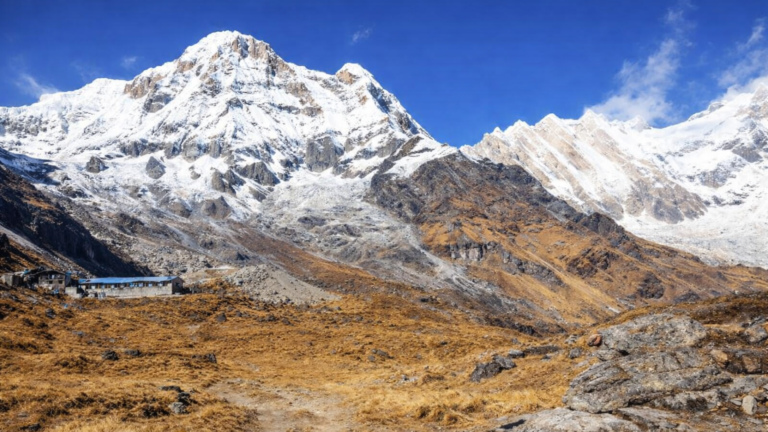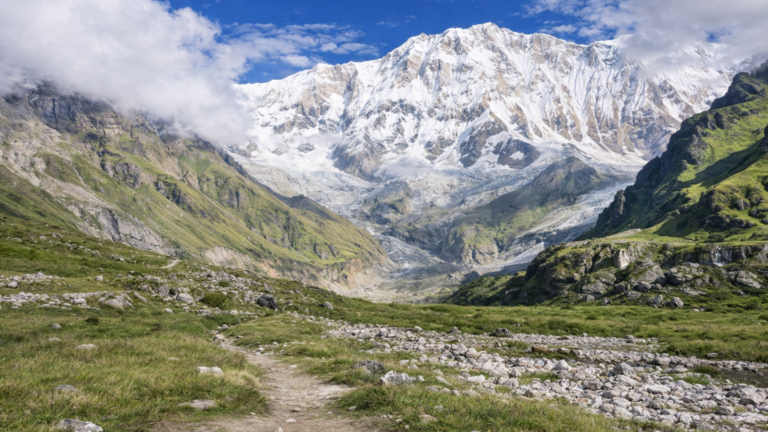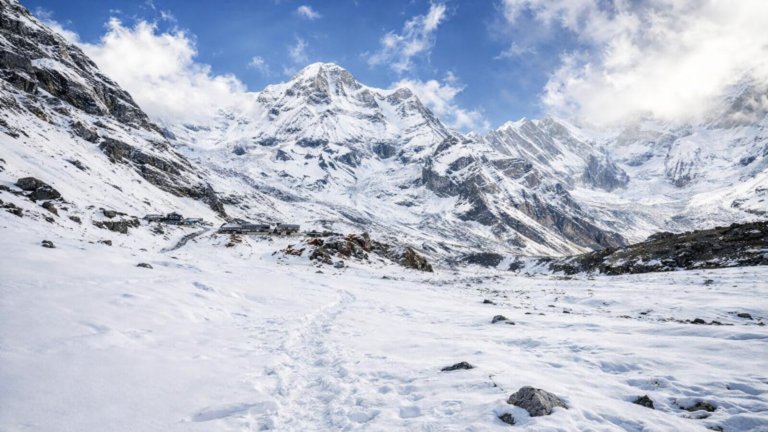
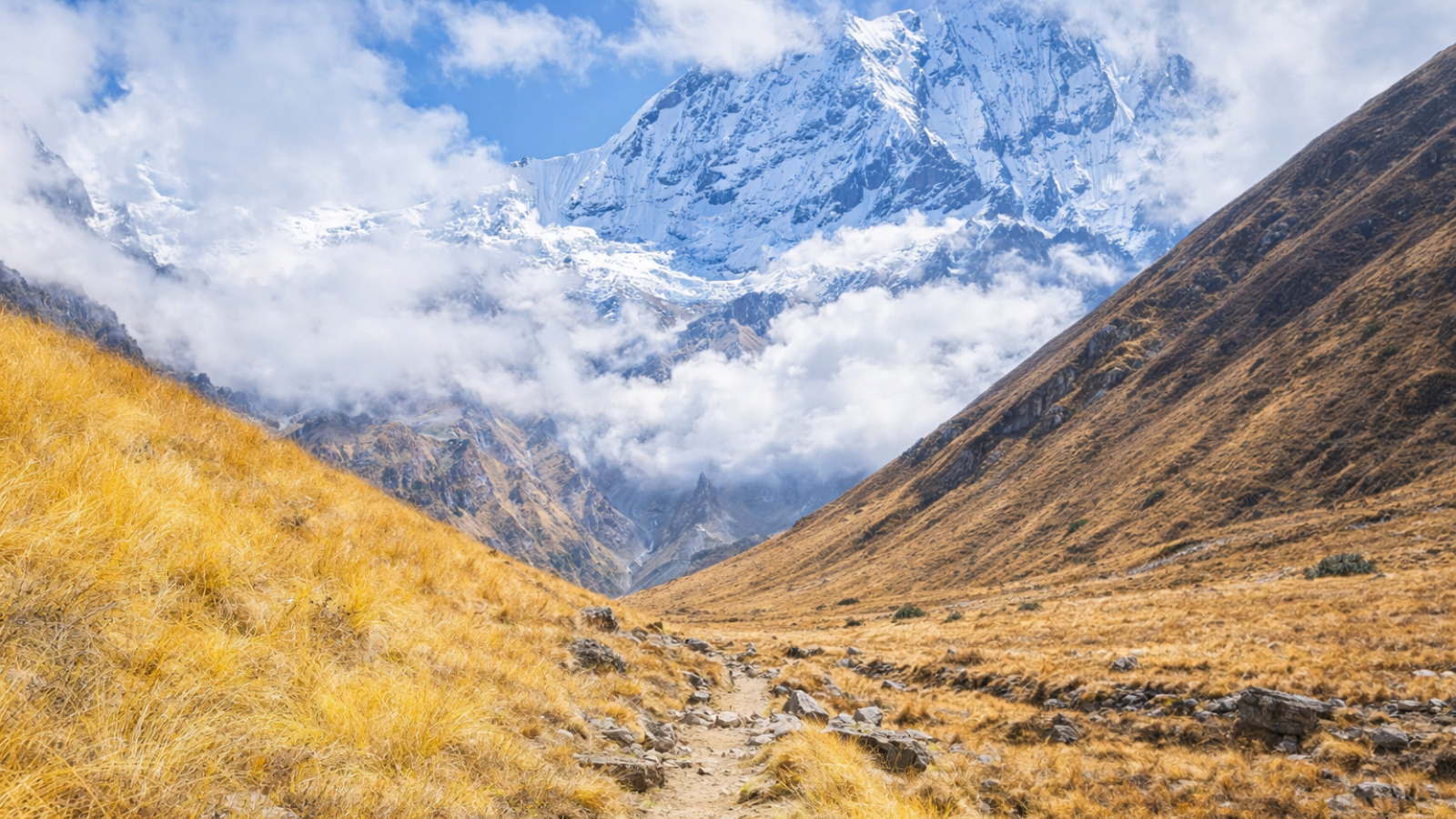

The 12 Day Annapurna Base Camp Trek is one of Nepal’s most iconic Himalayan trekking routes, leading trekkers deep into the Annapurna Sanctuary to the base of Annapurna I (8,091 m), the world’s tenth-highest mountain. Starting from Pokhara, the trail travels through terraced farmland, rhododendron forests, and traditional Gurung and Magar villages before reaching Annapurna Base Camp at 4,130 meters. The route also passes key Himalayan landmarks such as Machhapuchhre (Fishtail Mountain), Annapurna South, and Hiunchuli, creating one of the most dramatic mountain panoramas in Nepal. Covering roughly 110 kilometers over 12 days, the trek combines moderate trekking difficulty with exceptional scenery, making it one of the most accessible high-altitude adventures in the Himalayas.
A 12-day itinerary is widely considered the ideal duration for the Annapurna Base Camp trek because it balances safe acclimatization, cultural immersion, and time to experience the region’s best viewpoints. The journey includes historic villages such as Ghandruk and Chhomrong, follows the Modi Khola valley through diverse ecological zones, and often ends with a sunrise climb to Poon Hill, one of the most famous Himalayan viewpoints. Trekkers gain gradual elevation while exploring the protected Annapurna Conservation Area, the largest conservation area in Nepal. The result is a trekking experience that delivers both natural diversity and breathtaking alpine scenery while maintaining a pace that reduces the risk of altitude sickness and maximizes enjoyment of the Annapurna region.
What Is the 12 Day Annapurna Base Camp Trek and Why Choose This Duration?
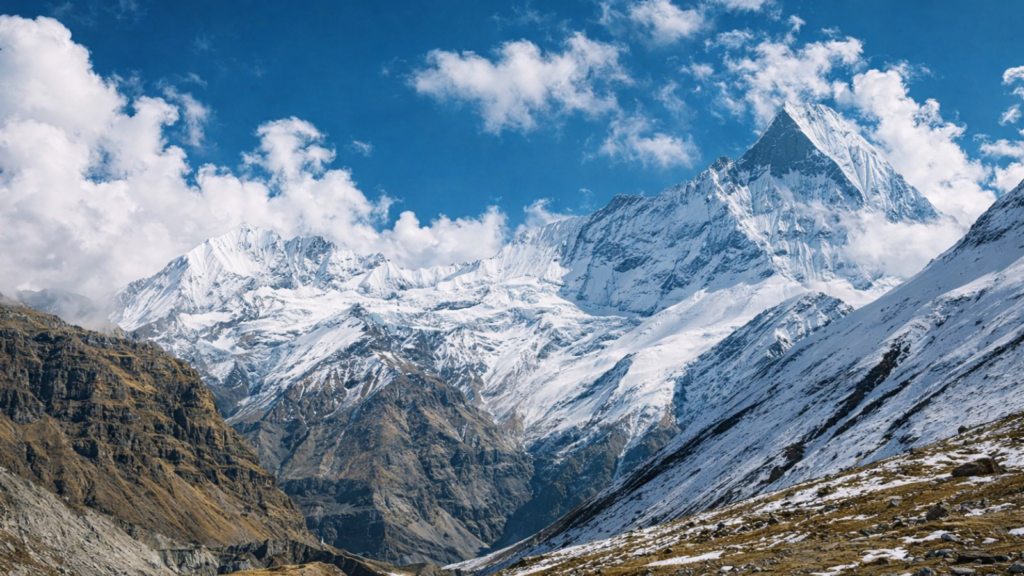
The 12 day Annapurna Base Camp trek is the most balanced and experience-rich version of the classic ABC itinerary. The route covers approximately 110 kilometers of trail, with a maximum elevation of 4,130 meters at Annapurna Base Camp itself. Total cumulative ascent across the full route reaches around 6,500 meters.
Annapurna Base Camp Trek Overview: Route, Elevation, and Distance
The trek begins in Nayapul or Phedi, a short drive from Pokhara, and follows the Modi Khola River valley deep into the heart of the Annapurna Sanctuary, a protected glacial basin enclosed by a near-continuous wall of high peaks. The 6 key elevation milestones are:
- Nayapul: 1,070 m (trek start)
- Ghandruk: 1,940 m (major Gurung village)
- Chhomrong: 2,170 m (last permanent settlement)
- Deurali: 3,230 m (gateway to the sanctuary)
- Machhapuchhre Base Camp (MBC): 3,700 m
- Annapurna Base Camp (ABC): 4,130 m
The route passes through 7 distinct ecological zones: subtropical forest, broadleaf forest, oak and rhododendron forest, bamboo groves, alpine meadow, moraine, and glacial terrain. No other trek in Nepal of comparable difficulty delivers this ecological diversity in a single route.
Why 12 Days Is the Ideal Duration for the ABC Trek
The most common mistake trekkers make is choosing a compressed 7- or 8-day itinerary to save time. At higher elevations, the body needs adequate time to acclimatize. The 12-day format solves 3 core problems that shorter itineraries create:
- First, it includes a dedicated acclimatization rest day at Chhomrong or Dovan (around 2,600–2,800 m) before the steep ascent to ABC. This single day reduces the risk of Acute Mountain Sickness (AMS) significantly.
- Second, it incorporates Poon Hill (3,210 m) into the return route. Poon Hill is one of the finest sunrise viewpoints in Asia, overlooking Annapurna South, Hiunchuli, Machhapuchhre, Dhaulagiri, and Gangapurna simultaneously. Shorter itineraries bypass it entirely.
- Third, it keeps daily elevation gains within the safe range of 400–600 meters, which aligns with international high-altitude medicine guidelines. Rushing above 3,000 meters risks altitude sickness, which ruins the trek and can become genuinely dangerous.
How the 12-Day Itinerary Compares to Shorter Options
A 7-day ABC trek exists primarily as a product for trekkers with no alternatives for time. It requires daily ascents that regularly exceed 900 meters and bypasses every culturally significant village. Trekkers on 7-day routes report dramatically higher rates of altitude-related illness and miss Ghandruk, Poon Hill, and meaningful time at base camp.
The 10-day version is better but still omits either Poon Hill or the Chhomrong acclimatization day. The 12-day format is the route that the most experienced Nepali guides recommend by default.
Day-by-Day 12 Day Annapurna Base Camp Trek Itinerary
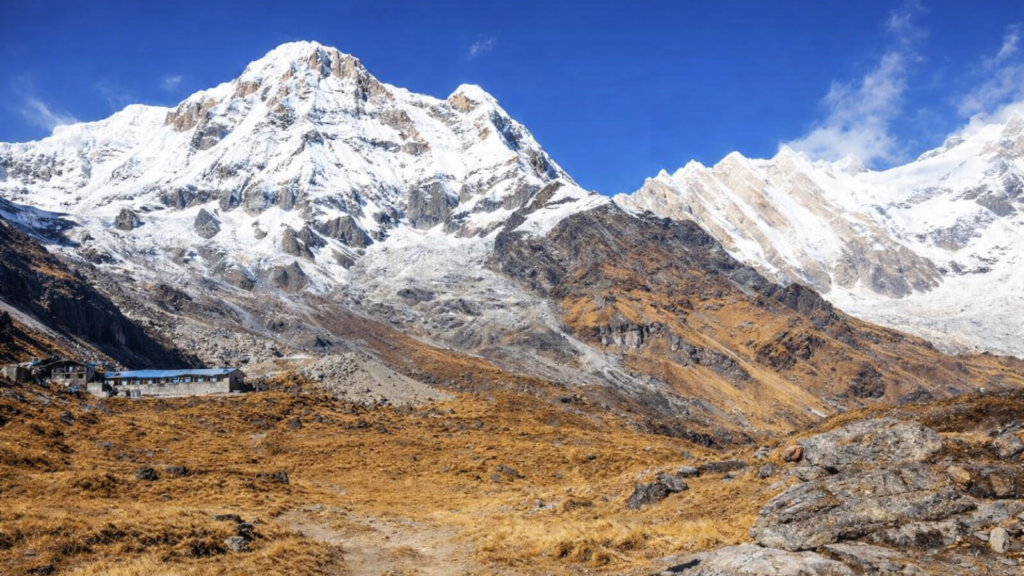
The 12-day itinerary begins in Nayapul, ascends through Ghandruk and Chhomrong, and reaches Annapurna Base Camp on Day 6 via Machhapuchhre Base Camp. A full morning at base camp on Day 7 allows for sunrise views and acclimatization before the descent begins. The return route branches through Tadapani and Ghorepani, finishing with the Poon Hill sunrise on Day 11 before the drive back to Pokhara.
Days 1–3: Pokhara to Ghandruk and Chhomrong
Day 1 Pokhara to Nayapul to Tikhedhunga (1,070 m → 1,540 m | ~4 hours)
Your trek begins with a 1.5-hour drive from Pokhara’s Lakeside district to Nayapul. From the trailhead, the path follows the Modi Khola valley through small bazaar villages, rice terraces, and traditional stone-paved stairways. The first major ascent leads to Ulleri, 3,280 stone steps rising 600 meters, before leveling off at Tikhedhunga. This opening day calibrates your legs and lungs for what lies ahead.
Day 2 Tikhedhunga to Ghandruk (1,540 m → 1,940 m | ~5 hours)
The trail winds through some of the largest rhododendron forests in the world. In spring (March–April), these trees bloom in dense red and pink canopies overhead. Ghandruk is the primary Gurung village on the route, a UNESCO-recognized cultural landscape with slate-roofed stone houses, local museums, and the finest unobstructed view of Machhapuchhre (Fish Tail Mountain, 6,993 m) available at this elevation. Spend the evening exploring the village. The local raksi (rice wine) here is genuinely good.
Day 3 Ghandruk to Chhomrong (1,940 m → 2,170 m | ~4–5 hours)
The trail descends to the Kimrong Khola river and climbs sharply back up to Chhomrong, the last permanent settlement before the Annapurna Sanctuary. Chhomrong sits on a tiered hillside with panoramic views of Annapurna South (7,219 m) and Hiunchuli (6,441 m). This is an important checkpoint, your permits are inspected here. The day ends early, giving your body its first meaningful acclimatization window at elevation.
Days 4–6: The Push Through the Sanctuary to ABC
Day 4 Chhomrong to Dovan (2,170 m → 2,600 m | ~5 hours)
The trail drops to the Modi Khola gorge, crossing the river on a suspension bridge, then climbs steadily through bamboo and rhododendron forest. You pass Sinuwa and Bamboo camp before reaching Dovan. This section is where the weather begins to behave differently, the narrow gorge funnels cloud and moisture from lower valleys, meaning even on clear days, mist rolls in by early afternoon. Start hiking by 7 AM to reach Dovan before noon.
Day 5 Dovan to Himalaya Hotel / Deurali (2,600 m → 3,230 m | ~5 hours)
The trail crosses the river multiple times and enters progressively higher terrain, passing Himalaya Hotel (2,920 m) before the final climb to Deurali. Above Deurali, you enter the Annapurna Sanctuary proper, the geological basin enclosed by peaks on all sides. Avalanche debris is visible on the slopes above the trail between November and April. The path here is exposed, and during winter and early spring, it can be snow-covered and icy. Microspikes are worth carrying.
Day 6 Deurali to Annapurna Base Camp via MBC (3,230 m → 4,130 m | ~5–6 hours)
Machhapuchhre Base Camp (MBC) at 3,700 m is a natural rest stop on the approach to ABC. From MBC, the trail crosses the moraine plateau and enters the ABC amphitheater, a bowl of roughly 3 kilometers in diameter, ringed by Annapurna I (8,091 m), Annapurna South (7,219 m), Hiunchuli (6,441 m), Gangapurna (7,455 m), Glacier Dome (7,193 m), and Machhapuchhre (6,993 m). Arriving at ABC in the late afternoon allows you to experience the alpenglow on the peaks at dusk, arguably the single most spectacular moment of the entire trek.
Day 7 Full Day at Annapurna Base Camp
Most 12-day itineraries include an additional morning at ABC for the sunrise. The light at dawn turns the summits gold and then pink before the full sun hits. Professional photographers and mountaineers describe ABC’s sunrise view as among the finest in the world. This morning also provides crucial acclimatization time before the descent begins.
Days 8–10: Descent and the Poon Hill Extension
Day 8 ABC to Bamboo (4,130 m → 2,310 m | ~6 hours)
Descending is deceptively hard on the knees. The trail retraces to MBC, Deurali, and continues past Himalaya Hotel to Bamboo. The drop of nearly 1,800 meters in a single day is significant, trekking poles are invaluable here. Most trekkers feel a surprising energy surge during descent, but maintaining controlled pace protects joints and prevents fatigue-related missteps on steep sections.
Day 9 Bamboo to Tadapani via Chhomrong (2,310 m → 2,630 m | ~6–7 hours)
This is the day the itinerary branches from the standard return route. Instead of heading back to Ghandruk directly, you climb through Chhomrong and continue to Tadapani, a small but well-equipped camp sitting above the forest line with direct views of Machhapuchhre and Gangapurna.
Day 10 Tadapani to Ghorepani (2,630 m → 2,874 m | ~5 hours)
The trail from Tadapani to Ghorepani passes through dense rhododendron forest at peak elevation. Ghorepani is the hub village for Poon Hill access, with better facilities than many points earlier on the trail. Hot showers, good WiFi (by mountain standards), and excellent dal bhat are available at multiple tea houses here.
Days 11–12: Poon Hill Sunrise and Return to Pokhara
Day 11 Poon Hill Sunrise, then Ghorepani to Nayapul (2,874 m → 1,070 m | ~6–7 hours)
The 4:30 AM wake-up for Poon Hill is mandatory. The 45-minute climb to the viewpoint tower at 3,210 m in darkness, arriving just before first light, is one of the great shared experiences in Himalayan trekking. The sunrise reveals a 180-degree panorama of 14 named peaks, including Dhaulagiri I (8,167 m), Annapurna I, Annapurna South, Hiunchuli, Machhapuchhre, and Nilgiri South. After sunrise, descend back to Ghorepani for breakfast, then follow the trail down through Ulleri and Tikhedhunga to Nayapul.
Day 12 Drive Nayapul to Pokhara, then Pokhara to Kathmandu
A short drive returns you to Pokhara. Most trekkers spend one night in Pokhara to recover before flying or driving back to Kathmandu. The 25-minute Pokhara–Kathmandu flight is worth the cost at this point. Your legs earned it.
What Permits and Regulations Apply to the ABC Trek in 2026?
Every foreign trekker on the Annapurna Base Camp route requires two permits: the Annapurna Conservation Area Permit (ACAP) and the Trekkers’ Information Management System (TIMS) card.The ACAP permit costs NPR 3,000 (approximately $23–$25) for foreign nationals, while the TIMS card costs NPR 2,000 (about $15–$17) when trekking with a registered guide. Both permits are mandatory for entering the Annapurna region in 2026. Permits are checked at 5 trail checkpoints and must be carried in original form throughout the trek. Since 2023, Nepal’s mandatory guide regulation requires all trekkers to hire a TAAN-licensed guide, solo independent trekking on this route is not permitted in 2026.
The 12 day Annapurna Base Camp trek requires two mandatory permits for all foreign nationals: the Annapurna Conservation Area Permit (ACAP) and the Trekkers’ Information Management System (TIMS) card.
ACAP Permit: Costs and Requirements
Annapurna Conservation Area Permit (ACAP): This permit covers entry into the Annapurna Conservation Area, one of the largest protected areas in Asia at 7,629 square kilometers. The ACAP fee for foreign nationals is approximately $21 per person. SAARC nationals pay a reduced rate. Children under 10 years do not require permits.
Authorities check permits at 5 key points: Birethanti, Tikhedhunga, Ghandruk, Chhomrong, and Deurali. Always carry original permits in a waterproof pouch with a digital backup on your phone.
TIMS Card: Trekker Registration System
The Trekkers’ Information Management System (TIMS) card is the second required document for the Annapurna Base Camp trek. TIMS was introduced by the Trekking Agencies’ Association of Nepal (TAAN) and the Nepal Tourism Board to track trekkers for safety, rescue coordination, and route management.
TIMS costs NPR 2,000 (around $15–$17) for foreign trekkers trekking with a licensed guide. Independent trekkers previously paid NPR 3,000, but solo trekking without a guide is no longer permitted on the Annapurna Base Camp route under the 2023 trekking regulations.
The TIMS card stores trekker identity details, trekking route information, and emergency contacts. Authorities use this system to locate trekkers quickly in case of accidents, natural disasters, or emergency evacuations.
2026 Mandatory Guide Requirement: What Solo Trekkers Must Know
Since 2023, Nepal’s government mandates that all trekkers on major routes, including the Annapurna Base Camp trail, hire a licensed guide registered with the Trekking Agencies’ Association of Nepal (TAAN). This rule is enforced at permit checkpoints. Trekkers arriving without a guide are turned back at Birethanti or Chhomrong.
The guide requirement exists for 3 verified reasons: a measurable reduction in trekking fatalities, faster emergency response due to registered route logging, and support for local employment in mountain communities. The rule is not optional, regardless of a trekker’s prior experience level.
What this means practically: you cannot do the ABC trek independently in 2026. Budget for a guide as a core trekking expense, not an optional upgrade.
How and Where to Get ABC Trek Permits
Permits are issued at 2 offices in Nepal:
- Nepal Tourism Board office, Bhrikutimandap, Kathmandu, Open Sunday to Friday, 10 AM to 5 PM
- Pokhara Tourism Information Center, Lakeside, Pokhara, Open Sunday to Friday, 10 AM to 5 PM
Required documents: original passport (valid for 6+ months), 2–4 passport-sized photographs, completed application form, trek itinerary, and payment in Nepalese rupees (cash preferred; card occasionally accepted in peak season).
Online pre-registration through the Nepal Tourism Board portal reduces wait time, but physical presence at the office remains required for final permit issuance. Processing takes 1–2 hours outside peak season, potentially longer in March–April and October.
Registered trekking agencies handle permits on your behalf when you book a package, this is the most efficient option and removes any risk of documentation errors.
How Much Does the 12 Day Annapurna Base Camp Trek Cost in 2026?
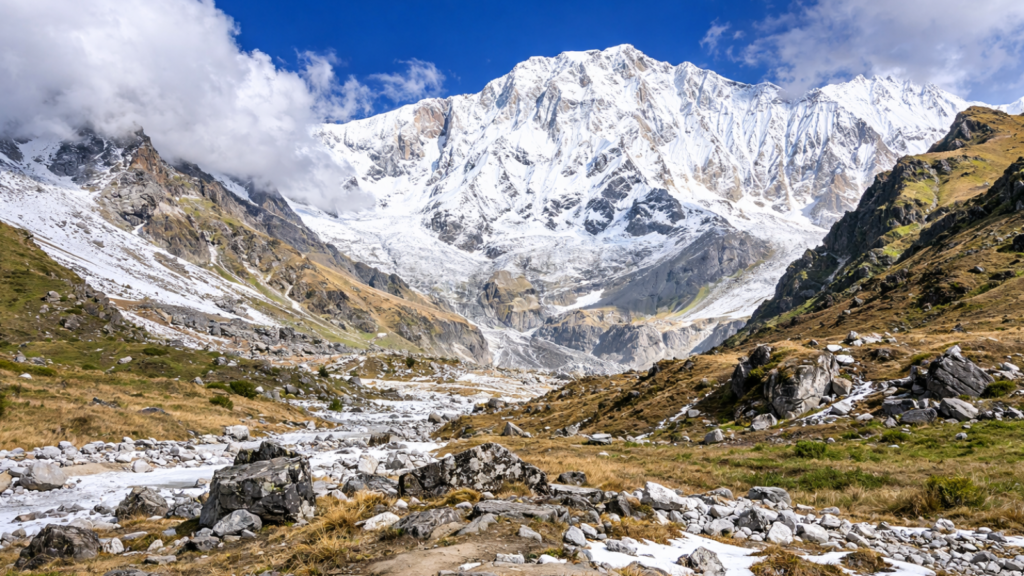
The total cost of a 12 day Annapurna Base Camp trek varies based on 4 primary factors: whether you book a package or arrange independently, accommodation tier, group size, and the season. The broad range for foreign trekkers in 2026 runs from $700 to $1,500 for the complete trek experience.
Package Trekking Costs: Budget, Standard, and Private
- Budget package (group joining, basic tea houses): $600–$800 per person. Includes guide, permit processing, basic accommodation, and set meals. Groups typically have 6–12 trekkers.
- Standard private package: $800–$1,200 per person. Includes a dedicated licensed guide, a porter (for luggage up to 10 kg), permit processing, tea house accommodation, and 3 meals per day. This is the most popular option for independent travelers.
- Luxury/private premium package: $1,200–$1,800 per person. Includes upgraded accommodation at better-equipped tea houses, dedicated guide and porter, Pokhara hotel nights, and optional helicopter return from ABC.
The helicopter option, flying directly from ABC to Pokhara, adds approximately $200–$250 per person in a shared helicopter (5–6 person groups) and eliminates the 4-day descent. This is a genuine consideration for trekkers with limited time or knee problems.
Tea House Accommodation and Meal Costs
Tea house room rates in 2026: $5–$15 per night at most elevations, with the cheapest rooms at lower elevations and the most expensive at MBC and ABC (where supply logistics are most challenging). Most tea houses provide a basic private room with 2 single beds, a shared toilet, and access to a dining room.
Expect to spend approximately $3–$8 per meal, dal bhat (the Nepali rice and lentil staple) remains the best value at $4–$6 and includes unlimited refills. Western menu items like pasta, pizza, and pancakes are available at most tea houses from Chhomrong upward but cost 30–50% more than local dishes. Boiled drinking water or tea is preferable to bottled water for both cost and environmental reasons. Bottled water costs $1–$3 per liter at elevation.
Licensed Guide and Porter Daily Rates
Licensed guides: $25–$35 per day plus food and accommodation (usually covered by the trekking package). Guides from TAAN-registered agencies carry official certification and are trained in altitude first aid, verify certification before hiring independently.
Porters: $18–$25 per day plus food and accommodation. A porter typically carries 20–25 kg. Hiring a porter is strongly recommended for the ABC route, the cumulative ascent makes carrying a heavy pack a genuine physical risk that compromises both speed and enjoyment.
What Is the Best Season for the 12 Day Annapurna Base Camp Trek?
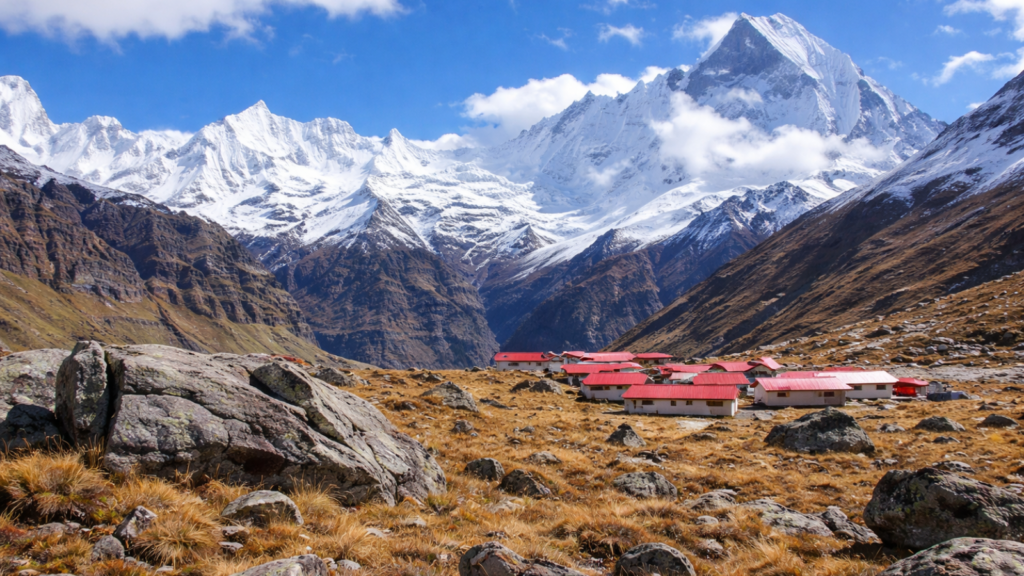
The 2 optimal seasons for the 12 day Annapurna Base Camp trek are spring (March–May) and autumn (September–November), which together account for approximately 80% of annual trekker traffic. Spring delivers rhododendron blooms and stable daytime temperatures of 10–18°C at mid-elevation, while autumn produces the clearest mountain views after the monsoon clears the air. Monsoon (June–August) and winter (December–February) are possible for experienced trekkers but carry higher risks from landslides and avalanche-prone snow conditions respectively.
Spring Season (March–May): Rhododendrons and Reliable Skies
Spring is the premier season for the ABC trek. March through May delivers stable weather with daytime temperatures between 10°C and 18°C at mid-elevations and -5°C to 5°C at base camp. The rhododendron forests between Tikhedhunga and Ghorepani, home to 47 rhododendron species, bloom in full color from mid-March through April. The trail is at its most visually spectacular during this window.
The practical downside: March, April, and especially the first two weeks of October are the peak crowding periods. Tea houses at Chhomrong, Deurali, MBC, and ABC can fill to capacity by mid-afternoon. Book accommodation at least 48 hours in advance during March–April peak. Some trekkers report sleeping on dining room floors at MBC during busy spring weeks.
Autumn Season (September–November): The Clearest Mountain Views
The post-monsoon autumn season (mid-September through November) is the second major trekking window. Post-monsoon air is washed clean of dust and haze, delivering the sharpest, highest-contrast mountain views of the year. October is considered the single best month for photography on the route, the combination of clear skies, fresh snow on high peaks, and warm daytime temperatures creates ideal conditions.
October crowds rival spring but trail infrastructure is fully functional and well-stocked after the monsoon supply season.
Monsoon (June–August) and Winter (December–February) Trekking
Monsoon season brings heavy daily rainfall that makes lower-elevation trails muddy and upper-elevation routes prone to landslides and flash flooding. Leeches are active below 2,500 m from June through August. The trail between Sinuwa and Deurali runs beneath avalanche zones that become unstable in heavy rain. Most trekking agencies classify June–August as a high-risk window for ABC and do not recommend it to first-time trekkers.
Winter trekking (December–February) is possible for experienced trekkers with proper cold-weather gear. Trails above Deurali are snow-covered from December onward. The sanctuary section from Deurali to ABC requires crampons or microspikes and carries a real avalanche risk after heavy snowfall. January is the most dangerous month for the high section. However, winter delivers the most dramatic sky conditions and near-zero crowds. Trekkers who complete ABC in winter consistently describe it as the most solitary and powerful version of the experience.
How to Prepare for the 12 Day Annapurna Base Camp Trek
Adequate preparation for the 12 day ABC trek requires 8 weeks of structured training combining cardiovascular fitness, weighted hiking, and leg-strengthening exercises targeting the quads and knees. Essential gear includes waterproof ankle-support trekking boots broken in for 40+ hours, a down jacket rated to -10°C, and a full rain protection system. Altitude sickness prevention centers on 3 actions: following the gradual ascent schedule, drinking 3–4 liters of water daily above 3,000 meters, and recognizing early AMS symptoms before they escalate.
Physical Fitness and Pre-Trek Training
The 12 day ABC trek is classified as a moderate-to-challenging trek, not a technical climb, but a serious physical undertaking. The daily 5–7 hours of hiking over 12 days with cumulative elevation gains requires genuine cardiovascular fitness.
A realistic 8-week pre-trek training plan includes 4 core components:
- Cardiovascular base: 3–4 sessions per week of sustained aerobic activity (running, cycling, swimming) at 60–75% maximum heart rate, building to 60+ minutes per session
- Weighted hiking: Weekend hikes of 4–6 hours with a 7–10 kg pack on varied terrain, focusing on stair ascent and descent
- Strength training: Quad, glute, and calf strengthening exercises, leg press, step-ups, and eccentric squats specifically prepare the knee joints for the steep descents from ABC
- Flexibility and recovery: 15 minutes of hip flexor and hamstring stretching daily reduces injury risk on uneven trail surfaces
Trekkers who arrive without adequate preparation are the ones most likely to turn back early, develop altitude sickness from rushing compensatory elevation gains, or suffer knee injuries on descent.
Essential Gear and Packing List for the ABC Trek
The 3 most important gear categories for the ABC trek are footwear, insulation, and rain protection.
- Footwear: Waterproof, ankle-supporting trekking boots that have been broken in for at least 40 hours of walking. New boots on the ABC trail produce blisters by Day 3. Gaiters are useful for the snowy upper sections in winter and early spring.
- Insulation: A down jacket rated to -10°C covers every temperature scenario below Chhomrong. Layering is essential, the trail moves through subtropical (20–25°C) to alpine (-5°C at night at ABC) in 5 days. A moisture-wicking base layer, fleece mid-layer, and waterproof outer shell handle everything in between.
- Rain protection: A quality rain jacket and waterproof pack cover are non-negotiable. The Annapurna region receives some of the highest annual rainfall in Nepal. At lower elevations, a single afternoon storm can soak everything you carry in 20 minutes.
Additional critical items: trekking poles (saves 25–30% of knee stress on descents), a 2–3 liter hydration capacity, headlamp with spare batteries, personal medical kit with altitude sickness medication, and a sleeping bag liner for the coldest tea houses above 3,500 m.
Altitude Sickness Prevention and Acclimatization at ABC
Annapurna Base Camp at 4,130 m sits below the threshold where severe altitude illnesses, High Altitude Pulmonary Edema (HAPE) and High Altitude Cerebral Edema (HACE), are common. However, Acute Mountain Sickness (AMS) is a real risk above 3,000 m, and the transition from Deurali (3,230 m) to ABC (4,130 m) in a single day is the stretch where most AMS cases occur.
The 3 most effective prevention strategies are:
- Ascend gradually. The 12-day itinerary is designed to keep daily elevation gains below 600 m above 2,500 m. Do not modify the itinerary by skipping rest days to save time.
- Hydrate consistently. Dehydration worsens AMS symptoms directly. Drink 3–4 liters of water daily above 3,000 m regardless of thirst level.
- Recognize symptoms early. Headache, nausea, dizziness, and disrupted sleep are early AMS indicators. If 2 or more symptoms appear simultaneously above 3,500 m, do not ascend further. Descend 300–500 m and reassess within 24 hours. Acetazolamide (Diamox), taken as a prophylactic from Day 4 onward, reduces AMS risk by approximately 75% according to peer-reviewed altitude medicine research. Consult a physician before the trek for a prescription.
Travel Insurance: The 2026 Requirement You Cannot Skip
Nepal requires that all trekkers above 4,000 m carry travel insurance covering emergency helicopter evacuation up to 5,000 m. This requirement is verified at permit checkpoints. Permit offices and registered trekking agencies request proof of insurance coverage before processing permits.
Helicopter evacuation from ABC costs approximately $2,500–$4,500 per flight without insurance. With adequate coverage, the full evacuation is covered. Policies from providers like World Nomads, True Traveller, and Battleface offer Nepal-specific high-altitude coverage from approximately $100–$150 for a 3-week trip.
Do not purchase the cheapest generic travel insurance and assume it covers helicopter evacuation, read the policy altitude limits carefully. Many standard policies cap at 4,000 m, which is just below ABC elevation.
Plan Your 12 Day Annapurna Base Camp Trek
The 12 day Annapurna Base Camp trek is the right version of this iconic route. It provides the time to acclimatize safely, experience Ghandruk and Poon Hill, spend a full morning at base camp, and return without the compressed daily schedule that makes shorter versions feel like an endurance test rather than a journey.
The optimal booking window for spring treks is January–February. For autumn, book by July. Both peak seasons fill quality guides and tea houses faster than most international trekkers expect.
If you are planning your ABC trek and want guidance on route customization, permit logistics, guide selection, or gear requirements specific to your travel dates, get in touch. Accurate, current information makes the difference between a stressful first day scrambling for permits in Pokhara and arriving at the trailhead fully prepared to enjoy every step of one of the world’s great mountain walks.
How Difficult Is the 12 Day Annapurna Base Camp Trek?
The 12-day Annapurna Base Camp trek is rated moderate to challenging. Trekkers hike 5–7 hours per day for 12 days with a cumulative ascent near 6,500 meters. The steepest sections include the Ulleri stone stair climb and the descent from ABC. Trekkers with regular hiking experience and 8 weeks of conditioning complete the route comfortably.
Is Annapurna Base Camp Trek Safe for Solo Trekkers in 2026?
Solo trekking on the Annapurna Base Camp route is not permitted for foreign trekkers in 2026. Nepal’s regulation introduced in 2023 requires all foreign trekkers to hire a TAAN-licensed guide. Guides register at trail checkpoints and carry altitude first-aid training, which significantly improved trail safety and reduced rescue incidents.
What Is the Maximum Altitude on the 12 Day Annapurna Base Camp Trek?
The maximum altitude on the 12-day Annapurna Base Camp trek is 4,130 meters at Annapurna Base Camp. Machhapuchhre Base Camp at 3,700 meters serves as the main high camp before the final ascent. Poon Hill at 3,210 meters is the highest elevation reached on the return section of the itinerary.
Do You Need Prior Trekking Experience for the ABC Trek?
Prior trekking experience is not required for the Annapurna Base Camp trek, but physical preparation determines success. First-time trekkers who complete 8 weeks of training with 4–6 hour practice hikes carrying a loaded pack usually finish the route. Poor preparation increases risk of altitude sickness and knee injuries.
What Food and Water Options Are Available on the ABC Trek?
Tea houses along the Annapurna Base Camp route serve hot meals including dal bhat, noodle soup, pasta, eggs, porridge, and pancakes. Dal bhat costs about $4–$6 and offers unlimited refills. Safe drinking water is available as boiled or purified water, but trekkers should carry purification tablets or filters.
How Cold Does It Get at Annapurna Base Camp at Night?
Night temperatures at Annapurna Base Camp (4,130 m) range from -5°C to -15°C during spring and autumn. Winter nights in January can drop to -20°C. Tea house rooms provide blankets but no heating. Trekkers improve sleep comfort by using a sleeping bag rated to 0°C or lower.
Can You See Annapurna I (8,091 m) Clearly from Base Camp?
Annapurna I at 8,091 meters is clearly visible from Annapurna Base Camp. The peak rises about 4 kilometers from the sanctuary floor, creating close-range Himalayan views. Sunrise and late afternoon produce the clearest visibility. Cloud cover typically forms between 11 AM and 2 PM inside the sanctuary.
Is It Possible to Helicopter Out from Annapurna Base Camp?
Helicopter flights operate from Annapurna Base Camp to Pokhara and take about 25 minutes. Shared helicopter seats cost approximately $200–$250 per person in a 5–6 seat aircraft. Morning departures provide the most reliable weather window because cloud formation often builds inside the sanctuary after 11 AM.
What Mobile Network Coverage and Charging Facilities Exist on the Trail?
Ncell and NTC provide mobile signal along most of the Annapurna Base Camp trail. Reliable coverage exists from Nayapul to Chhomrong, while signal becomes intermittent from Sinuwa to Machhapuchhre Base Camp. Charging devices at tea houses costs about $1–$2 per hour, so trekkers should carry a 20,000 mAh power bank.
What Happens If You Get Altitude Sickness on the 12 Day ABC Trek?
Altitude sickness above 3,000 meters on the Annapurna Base Camp trek requires immediate action. Stop ascending, rest at the same altitude, and drink about 4 liters of water within 24 hours. If symptoms persist for 12 hours, descend 300–500 meters. Severe cases such as HAPE or HACE require helicopter evacuation.