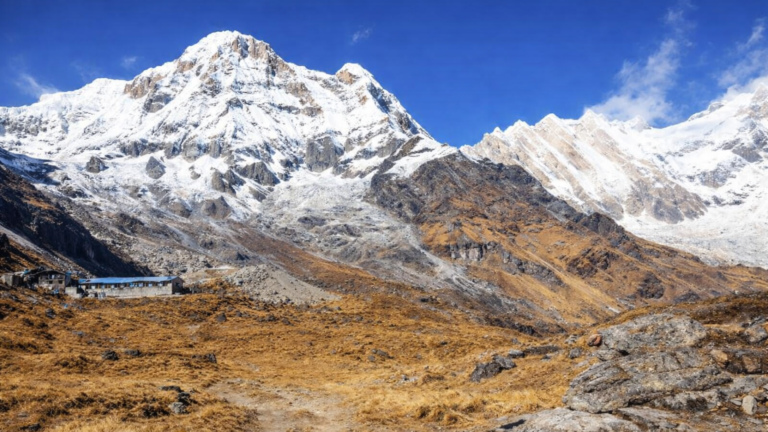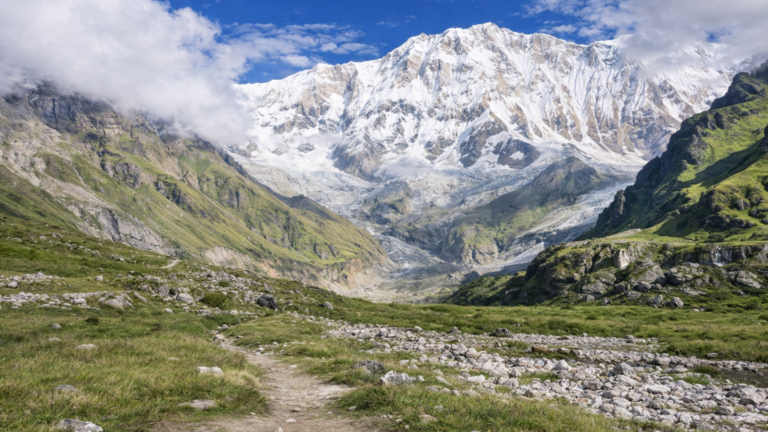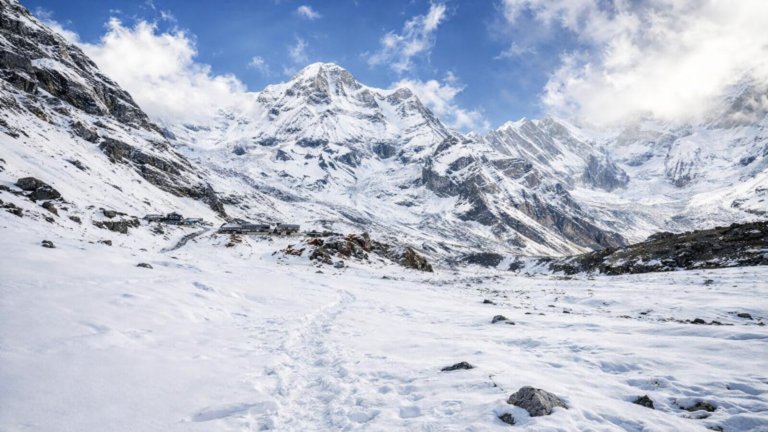
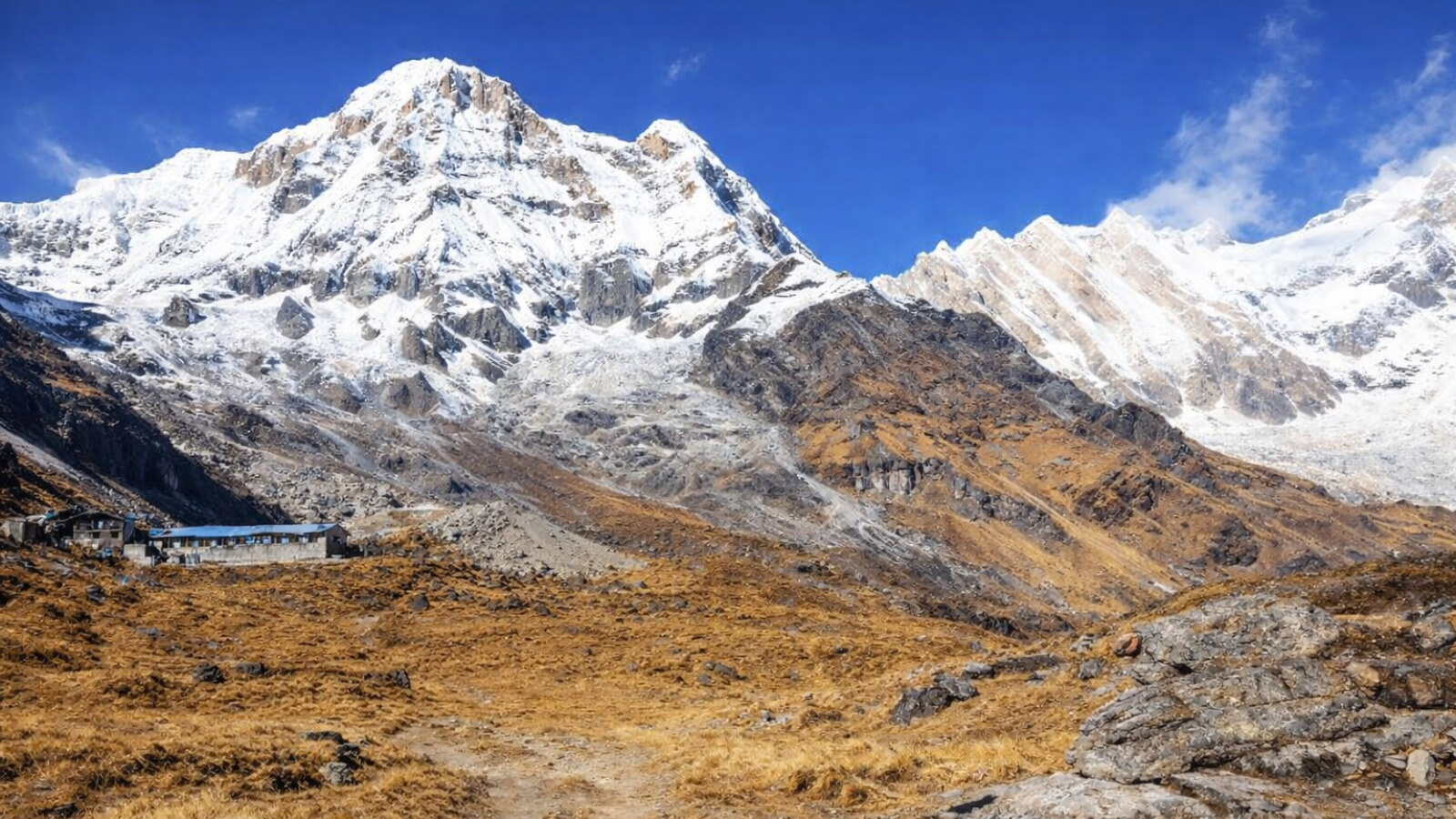

The 9 Day Annapurna Base Camp trek offers a premier Himalayan adventure in Nepal, combining vibrant rhododendron forests, terraced rice fields, traditional Gurung villages, and the awe-inspiring Annapurna Sanctuary. Reaching a maximum altitude of 4,130 meters (13,550 feet), trekkers stand within a glacial amphitheater surrounded by eight towering peaks, including Annapurna I (8,091 m), Machapuchare (6,993 m), Hiunchuli (6,441 m), and Gangapurna (7,455 m). This structured 9-day itinerary balances daily elevation gain with acclimatization, providing moderate-level trekkers and first-time Himalayan explorers a safe, immersive experience while capturing iconic sunrise views over Machapuchare from base camp.
This complete 2026 guide equips you with everything needed to plan your Annapurna Base Camp (ABC) trek: detailed day-by-day itinerary, permit requirements, recommended seasons, essential gear lists, and practical insider tips often missed by standard trekking guides. From exploring cultural highlights in Ghandruk and Chhomrong, soaking in Jhinu Danda’s natural hot springs, to understanding altitude sickness management and hiring licensed guides or porters, this guide ensures you approach the trail fully prepared, maximizing both safety and enjoyment. The 9-day format prioritizes acclimatization and trail pacing, making it the ideal choice for those seeking a high-value, accessible Himalayan adventure.
What Is the 9 Day Annapurna Base Camp Trek and Who Is It Best For?
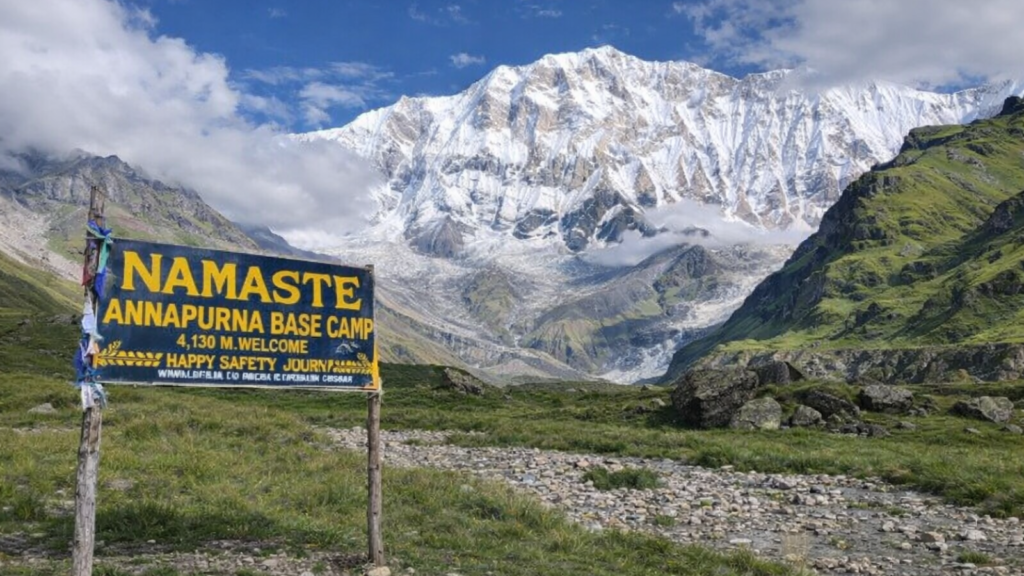
The 9 day Annapurna Base Camp trek is a structured round-trip trekking route that starts and ends in Pokhara, reaching the glacial sanctuary of the Annapurna Conservation Area via the villages of Ghandruk, Chhomrong, Dovan, and Deurali. The standard duration for this route is 7 to 12 days, and the 9-day format is the most popular itinerary because it includes a rest day at Chhomrong, a proper acclimatization pace to base camp, and a comfortable return to Pokhara.
This trek is best suited for:
- Trekkers with moderate physical fitness who can cover 5 to 8 hours of walking per day
- First-time Himalayan trekkers seeking a high-altitude sanctuary experience without the technical demands of Everest Base Camp
- Photographers targeting the iconic Machapuchare (Fishtail Mountain) silhouette at sunrise from base camp
- Trekkers aged 18 to 65 with no prior acclimatization history who want a structured, teahouse-supported route
What separates this from a 7-day version: The 9-day format adds a full rest/acclimatization day at Chhomrong (2,170 m) and distributes daily elevation gain more evenly. This single change measurably reduces altitude-related discomfort above 3,000 meters. Trekkers who rush through in 7 days frequently report headaches and nausea at Deurali and above. The extra 2 days cost approximately $60–90 in additional lodging and meals, a worthwhile investment against the risk of abandoning the trek at altitude.
9 Day Annapurna Base Camp Trek Itinerary: Day-by-Day Breakdown
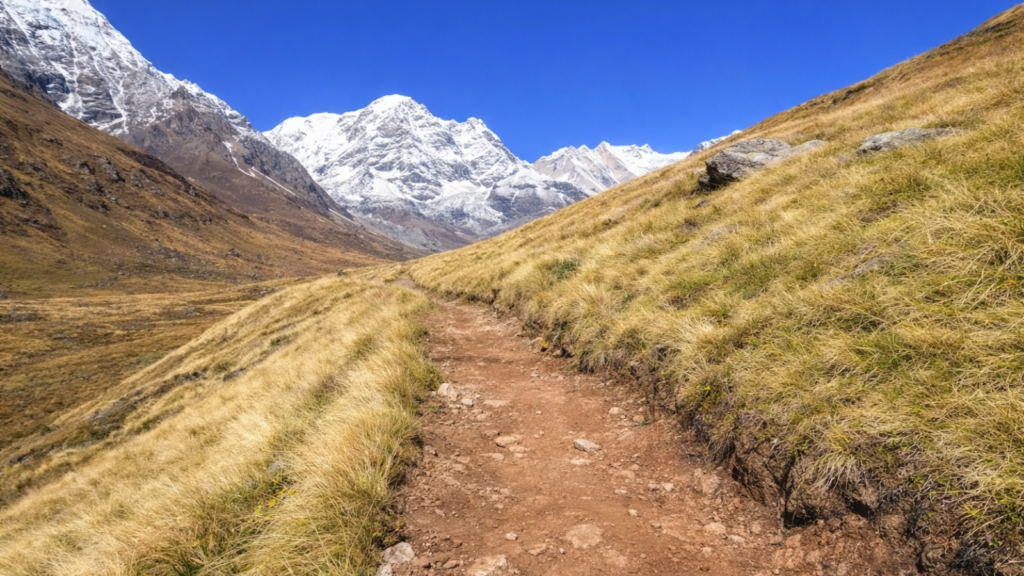
Day 1: Pokhara to Nayapul to Tikhedhunga (1,540 m), 3 to 4 Hours Walking
The trek begins with a 1.5-hour drive from Pokhara to Nayapul (850 m), the official trailhead for the ABC route via the Modi Khola Valley. From Nayapul, the trail climbs steadily through subtropical forests and past the village of Birethanti, where your ACAP permits are first checked.
The day’s walking is gentle, mostly stone-paved trails through farmland and small bazaar settlements. Tikhedhunga sits at 1,540 meters and offers comfortable teahouses. Arriving by early afternoon gives you time to explore the waterfall just below the village, which most trekkers walk past without stopping.
Practical tip: Birethanti is your last ATM point. Withdraw enough Nepalese Rupees to cover the entire trek, no ATMs operate beyond this point on the ABC route.
Day 2: Tikhedhunga to Ghandruk (1,940 m), 5 to 6 Hours Walking
Day 2 begins with the most leg-burning section of the first half of the trek: a steep stone staircase of approximately 3,300 steps climbing from Tikhedhunga to Ulleri (1,960 m). Porters carry loads up these steps daily, a reminder that the stone infrastructure you walk on was built and is maintained by the communities it connects.
After Ulleri, the trail eases through Banthanti (2,250 m) and Nayathanti before descending into Ghandruk, the largest Gurung village on the ABC route. Ghandruk sits at 1,940 meters and offers panoramic views of Annapurna South (7,219 m) and Machapuchare directly from the village.
What most guides miss about Ghandruk: The Ghandruk Museum (Gurung Museum) documents the history of Gurkha soldiers, Gurung shamanic traditions, and traditional agricultural practices. Entry is free. Spend 30 minutes here before dinner, the cultural context it provides transforms how you interpret the rest of the trek.
Day 3: Ghandruk to Chhomrong (2,170 m), 5 to 6 Hours Walking
The trail from Ghandruk descends sharply to Kimche (1,640 m), crosses a suspension bridge over the Kimrong Khola, and climbs again to Chhomrong. This up-down-up pattern is a defining characteristic of the ABC approach and is the primary reason leg fatigue accumulates by Day 3.
Chhomrong is the last major permanent settlement before the restricted Annapurna Sanctuary. All supplies for teahouses beyond Chhomrong, Bamboo, Dovan, Himalaya, Deurali, and Base Camp, are carried by porters from here. This explains why meal and room prices increase noticeably above Chhomrong.
Permit check: Rangers verify ACAP at Chhomrong checkpoint. Carry originals, not copies.
Day 4: Rest and Acclimatization Day at Chhomrong (2,170 m)
This day distinguishes the 9-day itinerary from the rushed 7-day version. Resting at Chhomrong while your body adapts to the 2,170-meter baseline prepares your cardiovascular system for the sustained altitude above 3,000 meters on Days 5 through 7.
Use this day to:
- Walk 30 to 40 minutes uphill toward Sinuwa without a pack to stimulate red blood cell production
- Eat high-carbohydrate meals (dal bhat remains the most nutritionally complete option on the trail)
- Hydrate consistently, aim for 3 to 4 liters of water throughout the day
- Check your teahouse weather forecast for the summit day (Day 6), clear mornings at base camp depend on overnight conditions at Deurali
A practical note on food costs above Chhomrong: A standard dal bhat meal costs NPR 700–900 (~$4.80–$6.20 USD) at Chhomrong. By the time you reach Annapurna Base Camp, the same meal costs NPR 1,200–1,500 (~$8.25–$10.30 USD). Budget accordingly rather than being surprised at high camp.
Day 5: Chhomrong to Himalaya Hotel (2,920 m), 6 to 7 Hours Walking
The trail drops sharply from Chhomrong to the Chhomrong Khola river (1,950 m), a descent that your knees will remember on the return, then climbs through Sinuwa (2,360 m), Bamboo (2,310 m), and Dovan (2,600 m) before reaching Himalaya Hotel.
The forest character changes significantly above Bamboo. Oak, maple, and bamboo give way to magnolia, fir, and at higher elevations, birch. Above Dovan, the trail enters a canyon where avalanche debris sometimes covers sections of trail after heavy snowfall, particularly between January and March.
Terrain reality: This is the longest and most physically demanding day of the trek. Cumulative elevation gain plus multiple descents make it harder than the altitude suggests. Many trekkers underestimate Day 5.
Day 6: Himalaya Hotel to Annapurna Base Camp (4,130 m) via Machhapuchhre Base Camp (3,700 m), 6 to 7 Hours Walking
This is the summit day of the trek, not a technical summit, but the emotional and physical high point that everything else builds toward.
The trail climbs from Himalaya Hotel through Deurali (3,230 m) and then enters the open glacial valley leading to Machhapuchhre Base Camp (MBC) at 3,700 meters. The exposed terrain above Deurali offers the first unobstructed views of the surrounding peaks, and weather changes rapidly here, wind, cloud, and visibility can shift within 20 minutes.
From MBC, the final 430 meters of elevation gain to Annapurna Base Camp takes 2 to 2.5 hours through moraine and rocky terrain. The sanctuary opens without warning: the trail rounds a ridge and the full 360-degree amphitheater of the Annapurna Himal appears. Annapurna I (the world’s 10th highest peak at 8,091 m), Annapurna South, Hiunchuli, Gangapurna, Glacier Dome, and Machapuchare all surround the base camp.
What to do at base camp:
- Arrive before noon to maximize clear sky window (clouds typically build by early afternoon)
- Walk the full perimeter of the camp area, the views shift dramatically depending on your position
- Eat lunch at base camp before the 14:00 temperature drop
- Stay overnight at base camp (do not return to MBC the same day, the sunrise from ABC is the experience that defines the entire trek)
Day 7: Annapurna Base Camp Sunrise, then Descend to Bamboo (2,310 m), 6 to 7 Hours Walking
Wake at 05:30 for sunrise. At this elevation and within this amphitheater, alpenglow, the orange-pink illumination of high-altitude snow faces, hits Annapurna I, Fang, and Gangapurna approximately 20 minutes before full sunrise. This is the photograph that has defined the Annapurna region in trekking literature for 40 years. No filter required.
After breakfast, begin the descent through MBC, Deurali, Dovan, and Bamboo. Descent from 4,130 meters to 2,310 meters in a single day is achievable but physically demanding on joints. Trekking poles reduce knee strain on the long stone-stair sections significantly.
Day 8: Bamboo to Jhinu Danda (1,760 m), 5 to 6 Hours Walking
The trail returns through Sinuwa and Chhomrong, then descends to Jhinu Danda, a small settlement along the Modi Khola river famous for its natural hot springs.
Jhinu Danda hot springs: Located a 20-minute walk below the village, these natural thermal pools sit directly beside the Modi Khola river. Entry costs NPR 200 (~$1.37 USD) per person. After 7 days of high-altitude trekking, this is one of the most genuinely restorative experiences on the entire route. Soak for at least 45 minutes.
Day 9: Jhinu Danda to Nayapul to Pokhara, 4 Hours Walking plus Drive
The final day descends through Chomrong village trails and the Modi Khola valley to the roadhead at Nayapul. A 1.5-hour jeep or bus ride returns you to Pokhara by midday.
Pokhara’s Lakeside district (Baidam) is 2 kilometers from the central bus area and offers everything the tired trekker needs: hot showers with real pressure, pizza that tastes unreasonably good after 9 days of dal bhat, and a view of Annapurna South and Machapuchare from the lakeside that gives the mountains a final curtain call.
What Are the Permits Required for the 9 Day Annapurna Base Camp Trek in 2026?
Two permits are required for all foreign trekkers on the Annapurna Base Camp route in 2026: the Annapurna Conservation Area Permit (ACAP) and the Trekkers’ Information Management System (TIMS) card.
Annapurna Conservation Area Permit (ACAP)
- Cost: NPR 3,000 per person (~$20.63 USD)
- Valid for the entire duration of the trek
- Issued at: Nepal Tourism Board (NTB) offices in Kathmandu (Bhrikutimandap) or Pokhara (Damside)
- Also available online at epermit.ntnc.org.np with a 2.9% payment gateway fee
Documents required:
- Original passport (valid for 6+ months)
- 2 passport-sized photographs
- Completed application form (available at permit offices)
- Payment in Nepalese Rupees (cash only at the counter)
Trekkers’ Information Management System (TIMS) Card
Cost (2026):
- NPR 2,000 per person (~$13.75 USD) when trekking with a registered guide
- NPR 1,000 for SAARC nationals
Purpose:
The TIMS card is issued by the Trekking Agencies’ Association of Nepal (TAAN) and records trekker information for safety and emergency tracking across Nepal’s trekking regions.
Issued at:
- TAAN Office in Kathmandu (Maligaon)
- TAAN Office in Pokhara (Damside)
- Through registered trekking agencies
Documents required:
- Passport copy
- Passport-size photographs
- Trek itinerary and agency details (if trekking with a guide)
Important note:
TIMS helps authorities track trekkers in case of emergencies, natural disasters, or lost trekkers in remote Himalayan regions.
2026 regulation update: Since 2023, solo trekking in the Annapurna region requires that trekkers register with a licensed guide. While the regulations technically allow for permit issuance without a guide, permit officers verify guide registration at checkpoints. Booking through a registered trekking agency, registered with the Trekking Agencies’ Association of Nepal (TAAN), ensures full compliance and avoids checkpoint delays.
How Much Does the 9 Day Annapurna Base Camp Trek Cost in 2026?
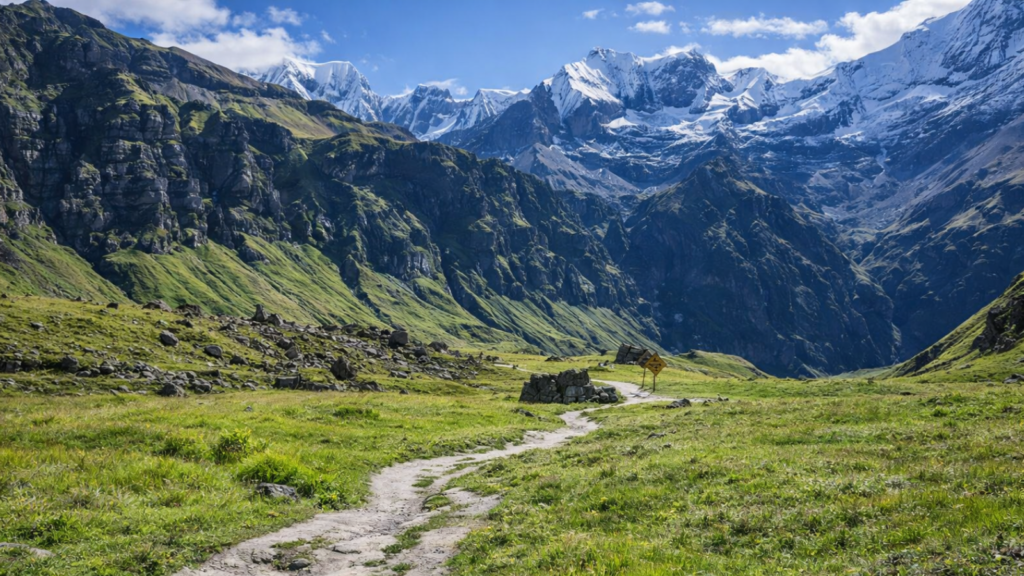
The total cost of the 9 day Annapurna Base Camp trek ranges from $600 to $1,500 USD per person in 2026, depending on whether you book a package or travel independently and what level of service you choose.
9 Day ABC Trek Cost Breakdown Table
| Expense Category | Budget Range (USD) | Notes |
| ACAP Permit | $20.63 | NPR 3,000 fixed, non-negotiable |
| TIMS Card | $13.75 | NPR 2,000 issued by TAAN |
| Kathmandu–Pokhara Bus | $10–$15 | Tourist bus, 6–7 hours |
| Kathmandu–Pokhara Flight | $100–$130 | 25 minutes, save time |
| Pokhara–Nayapul Jeep/Bus | $3–$8 | Per person, shared transport |
| Teahouse Accommodation | $5–$15/night | NPR 700–2,200 per night per person |
| Meals on Trail | $4–$10 per meal | NPR 580–1,450 |
| Licensed Guide | $25–$35/day | Standard rate for ABC route |
| Porter | $18–$25/day | Carries up to 20 kg |
| Travel Insurance (Nepal) | $50–$120 | Helicopter evacuation coverage mandatory |
| Gear Rental (Pokhara) | $5–$15/day | Down jacket, sleeping bag |
Total Cost by Trekking Style
- Budget independent trekker (with guide, shared teahouses): $700–$900 USD for 9 days
- Mid-range package trekker (agency-arranged, private rooms): $900–$1,200 USD
- Comfort package (helicopter return option): $1,200–$1,800 USD
What Independent Trekkers Spend Per Day
- Accommodation: NPR 700–1,500 (~$4.80–$10.30 USD)
- Breakfast: NPR 450–700 (~$3.09–$4.81 USD)
- Lunch: NPR 550–900 (~$3.78–$6.19 USD)
- Dinner: NPR 650–1,200 (~$4.47–$8.25 USD)
- Water, snacks, and extras: NPR 300–600 (~$2.06–$4.13 USD)
Daily total above Chhomrong (Days 5–7): NPR 3,500–6,000 (~$24–$41 USD)
Money-saving fact most trekkers overlook: Teahouses reduce room rates or offer free accommodation if you commit to eating all meals at their establishment. This deal works well in lower-elevation villages (Ghandruk, Chhomrong) where competition is higher. Above Bamboo, teahouses have less incentive to discount because the number of lodges drops sharply and supply-chain costs are much higher.
When Is the Best Season for the 9 Day Annapurna Base Camp Trek?
4 distinct trekking windows exist for the ABC route, each with different visibility, crowd density, trail conditions, and temperature ranges.
Spring Season: March to May (Recommended)
Spring is the most visually spectacular season for the Annapurna Base Camp trek. Rhododendron forests between Ghandruk and Chhomrong bloom from late February through April, layering the trail with dense red, pink, and white flowers at elevations between 1,500 and 3,500 meters. Nepal has 32 species of rhododendron, and the Annapurna Conservation Area contains one of the highest concentrations in the Himalayas.
- Morning temperatures at base camp: -5°C to 5°C
- Afternoon temperatures at base camp: 5°C to 12°C
- Trail visibility: Excellent in March, progressively cloudier in May as pre-monsoon builds
- Crowd level: High, March and April are the busiest trekking months in the Annapurna region
- Trail condition: Excellent
Best weeks: Mid-March to mid-April.
Autumn Season: September to November (Also Recommended)
Autumn delivers the clearest skies of the year for Himalayan trekking. The monsoon cleans the atmosphere from June through August, and the October–November window offers crystal-clear mountain visibility with lower humidity and stable weather patterns.
- Morning temperatures at base camp: -8°C to 2°C in November
- Trail visibility: Exceptional, often the clearest weeks of the entire year
- Crowd level: High in October, moderate in November
- Trail condition: Excellent, dry and firm
Best weeks: First two weeks of October and second half of November.
Winter Season: December to February (For Experienced Trekkers)
Winter trekking on the ABC route offers significant advantages: dramatically fewer trekkers, lower teahouse prices (10–20% discount common), and snow-covered landscapes above 2,500 meters that transform the trail aesthetically. The base camp environment in January or February is genuinely extraordinary when snowfall is fresh.
The risk: heavy snowfall can close the section between Deurali and MBC without warning, requiring a 1–2 day wait at Himalaya Hotel or descent. Trekkers who build in a weather buffer day are rarely turned back.
- Minimum temperature at base camp: -15°C to -20°C overnight
- Required additional gear: microspikes, thick down jacket, balaclava
- Crowd level: Very low, 5 to 10% of peak-season volume
Monsoon Season: June to August (Not Recommended)
Heavy rainfall from the Bay of Bengal renders the ABC trail consistently wet, leeched, and prone to landslide closures above Deurali. Views are minimal. Most trekking agencies suspend ABC packages during monsoon for safety reasons.
What Physical Preparation Does the 9 Day Annapurna Base Camp Trek Require?
The 9 day Annapurna Base Camp trek is graded moderate, which in practical terms means:
- Walking 5 to 8 hours daily on consecutive days
- Ascending and descending 600 to 1,200 meters of elevation on a single day
- Carrying a daypack of 6 to 10 kg for 9 consecutive days
- Operating at altitudes between 1,500 and 4,130 meters for 4 to 5 days
Minimum fitness standard: Walk for 3 to 4 hours continuously on varied terrain without significant fatigue. Trekkers who meet this baseline consistently complete the 9-day route.
8-Week Pre-Trek Training Plan
Weeks 1–2: 3 walks per week, 60–90 minutes each, on hilly terrain
Weeks 3–4: 4 walks per week, 2 to 3 hours each; add a weighted pack (5–7 kg)
Weeks 5–6: 3 longer hikes (4–5 hours), 2 shorter cardio sessions
Weeks 7–8: Taper, reduce distance by 30%, maintain pack weight; add stair climbing
The exercise most trekkers skip but should do: Eccentric quad training (slow downhill step-downs). The descents from Chhomrong to Jhinu Danda and from Deurali to Bamboo put enormous eccentric load on quadriceps. Trekkers who develop this strength before the trip avoid the stiff-legged shuffle that defines the last 2 days for the unprepared.
What Gear Do You Need for the 9 Day Annapurna Base Camp Trek?
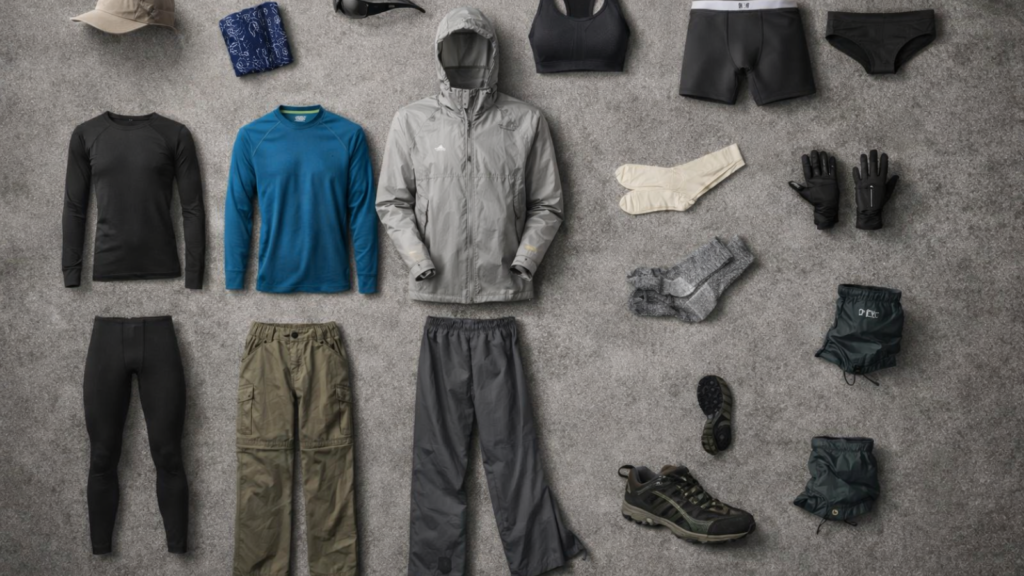
Essential Gear List
Footwear:
- Waterproof trekking boots with ankle support (broken in before the trek, not new)
- Lightweight camp sandals for teahouses
Clothing layers:
- Moisture-wicking base layer (2 sets)
- Mid-layer fleece or light down jacket
- Waterproof hardshell jacket and trousers
- Warm down jacket for above 3,500 meters (rentable in Pokhara for $5–$8/day)
- Thermal long underwear for evening camp use
Equipment:
- 40–50L trekking backpack
- Trekking poles (collapsible, with adjustable baskets)
- Headlamp with spare batteries
- Sleeping bag rated to -10°C (rentable in Pokhara for $2–$4/day)
- Water purification tablets or UV pen
- Reusable 1-liter water bottle (minimum 2)
Health and safety:
- Diamox (acetazolamide) 250mg tablets, consult a physician before the trek
- Basic first aid kit: blister pads, antiseptic, elastic bandage, ibuprofen
- Sunscreen SPF 50+
- Lip balm with UV protection
- Hand sanitizer and toilet tissue
Gear rental in Pokhara: Trekking poles, sleeping bags, down jackets, and gaiters are available from rental shops in Lakeside (Baidam) for NPR 200–600/day ($1.37–$4.13 USD/day). Renting reduces packing weight for international travelers.
Altitude Sickness on the 9 Day Annapurna Base Camp Trek: What Trekkers Actually Experience
Acute Mountain Sickness (AMS) becomes a genuine concern above 3,000 meters. The section from Himalaya Hotel (2,920 m) through Deurali (3,230 m) to MBC (3,700 m) and ABC (4,130 m) crosses this threshold rapidly.
3 common AMS symptoms at ABC elevation:
- Headache: most frequent, often manageable with hydration and ibuprofen
- Nausea and appetite loss: typically begins at Deurali or MBC
- Sleep disturbance: common at base camp; periodic breathing (Cheyne-Stokes pattern) during sleep is normal at this altitude
What trekkers often misidentify: Dehydration produces symptoms nearly identical to mild AMS, headache, fatigue, and dizziness. Drink 3 to 4 liters of water daily above 3,000 meters before concluding you have altitude sickness.
The golden rule: If symptoms worsen after 24 hours at the same altitude, descend immediately. Annapurna Base Camp to MBC is a 45-minute descent. MBC to Deurali is another 40 minutes. Most AMS symptoms resolve measurably within 400 to 600 meters of descent.
Helicopter evacuation: Available from ABC and MBC. Flight time to Pokhara is approximately 25 minutes. Cost without insurance: $3,000–$5,000 USD. Travel insurance with helicopter evacuation coverage typically costs $50–$120 USD and covers this expense entirely. This insurance is not optional for any prudent trekker.
Tea House Accommodation and Food on the ABC Trek: What to Realistically Expect
The 9 day Annapurna Base Camp trek is entirely teahouse-supported. No camping equipment is required. Teahouses along the route range from family-run guesthouses in lower villages to purpose-built trekking lodges at MBC and ABC.
Accommodation Quality by Elevation Zone
Ghandruk and Chhomrong (1,940–2,170 m): Best-quality teahouses on the route. Private en-suite rooms with attached bathrooms available at NPR 1,000–2,500 (~$6.88–$17.19 USD) per night. Some properties offer WiFi.
Sinuwa to Himalaya Hotel (2,360–2,920 m): Mix of private rooms and dormitories. Shared bathrooms standard. NPR 700–1,200 (~$4.81–$8.25 USD) per person.
Deurali to Annapurna Base Camp (3,230–4,130 m): Basic wooden or stone lodges. Shared squat toilets. No showers above Dovan. Rooms cost NPR 700–1,000 (~$4.81–$6.88 USD) but meals are significantly more expensive. Heating is coal stove in the dining room, not in bedrooms.
Food and Nutrition Reality
The standard trail menu includes: dal bhat (lentil soup with rice and vegetables), pasta, pizza, fried rice, noodle soup, momo (dumplings), porridge, pancakes, and seasonal vegetable dishes. The dal bhat set is the most calorically dense and nutritionally complete option on the trail, and most teahouses refill it once for no additional charge.
Avoid tap water entirely above Nayapul. Water purification tablets cost NPR 150–300 (~$1.03–$2.06 USD) per pack and treat 20 liters. Using refillable bottles with purification tablets instead of buying bottled water saves NPR 3,000–5,000 (~$20–$34 USD) over the 9-day trek and eliminates the plastic waste problem that affects higher-elevation campsites.
Hiring a Guide and Porter for the 9 Day ABC Trek: Costs, Value, and 2026 Requirements
2026 Guide Requirements
Since 2023, the Government of Nepal officially mandated that foreign trekkers in the Annapurna region must trek with a licensed guide. Enforcement occurs at permit checkpoints including Birethanti, Chhomrong, and occasionally Deurali. Trekkers found without registered guides face permit issues at checkpoints.
A licensed guide for the ABC route in 2026 costs:
- NPR 3,600–5,000 per day (~$24.76–$34.39 USD/day)
- Standard 9-day guide cost: $220–$310 USD total
- Tipping is customary, NPR 2,000–5,000 ($13.75–$34.39 USD) for a 9-day trek is the standard range
Porter Services
- Cost: NPR 2,600–3,600 per day (~$17.88–$24.76 USD/day)
- Carries maximum 20 kg (porters should never carry more, this is an ethical standard)
- 9-day porter total: $160–$225 USD
The practical case for hiring a porter: Reducing your daypack from 12 kg to 5 kg changes the experience significantly above 3,000 meters. The energy saved by not carrying the extra 7 kg of clothing, sleeping bag, and gear is the difference between arriving at base camp strong versus exhausted. Porters are also the primary source of income for many trail communities, their employment directly supports the families of the villages you walk through.
5 Common Mistakes Trekkers Make on the Annapurna Base Camp Trek
1. Starting in Phedi instead of Nayapul. Some agency itineraries begin at Phedi for the trail via Poon Hill, which adds 2 days and changes the approach character entirely. If your target is ABC in 9 days, the Nayapul–Ghandruk–Chhomrong route is faster and more direct.
2. Underestimating Day 5. The Chhomrong-to-Himalaya Hotel stage consistently catches trekkers off guard. The net elevation gain is modest, but multiple descents followed by steep climbs, combined with cumulative trail fatigue from Days 1–4, make this the day most people fall behind schedule.
3. Not carrying cash above Pokhara. No card machines operate above the Pokhara tourist zone. Arrive in Nayapul with NPR 30,000–45,000 (~$206–$309 USD) for an independent 9-day trek to cover all meals, accommodation, and incidentals.
4. Skipping the hot springs at Jhinu Danda. The 20-minute detour to the Modi Khola hot springs at Jhinu Danda is consistently rated as one of the most memorable experiences of the trek. Most 7-day itineraries route around Jhinu entirely. The 9-day version includes it by design.
5. Not building in a weather buffer day. One in five trekking groups encounters a day of heavy precipitation or visibility closure above Deurali between October and March. If your flight home departs 48 hours after your scheduled Pokhara return, a single weather delay forces a choice between rushing dangerous terrain or missing the flight. Build a one-day buffer at minimum.
Annapurna Base Camp Trek vs. Everest Base Camp Trek: Which Is Right for You?
Both are Nepal’s two most iconic trekking routes. The choice depends on 4 key factors:
| Factor | Annapurna Base Camp (9 days) | Everest Base Camp (14 days) |
| Maximum altitude | 4,130 m | 5,364 m |
| Duration | 7–9 days standard | 12–14 days standard |
| Flights required | No (drive from Pokhara) | Yes (Kathmandu–Lukla, $200–$350) |
| Total permit cost | ~$34–$40 USD (ACAP plus TIMS) | ~$50–$70 USD |
| Average package cost | $600–$1,200 | $1,200–$2,500 |
| Acclimatization demand | Moderate | High |
| Cultural diversity | Gurung villages, rice terraces | Sherpa culture, Buddhist monasteries |
The Annapurna Base Camp trek costs significantly less, requires no domestic flights, and is accessible to a broader range of trekking experience levels. Everest Base Camp reaches a higher elevation and delivers a different cultural and landscape experience. For first-time Himalayan trekkers with 9 to 12 days available, Annapurna Base Camp is the better starting point.
How to Book and Plan Your 9 Day Annapurna Base Camp Trek in 2026
Booking Timeline
- 6 months before: Book flights to Kathmandu and arrange travel insurance with helicopter evacuation coverage
- 3 months before: Contact registered trekking agencies (TAAN-registered) for package quotes and guide arrangements
- 1 month before: Arrange permits if booking independently; confirm trek dates with your agency
- 2 weeks before: Complete gear acquisition and pre-trek training ramp-up
- 1 week before: Arrive in Nepal early; acclimatize 1 night in Kathmandu before moving to Pokhara
What a Reputable Agency Package Includes
A reliable 9-day ABC trek package from a TAAN-registered agency includes: airport transfers, Pokhara hotel accommodation (1 night before and after trek), all ACAP permits, licensed guide, optional porter, all teahouse accommodation on the trail, three daily meals during trekking days, and emergency contact support.
Agency packages typically exclude: international flights, travel insurance, personal gear, drinks, snacks, hot showers, battery charging fees ($1–$2 per device on trail), and tips.
Final Thoughts: Why the 9 Day Format Is the Right Choice for Annapurna Base Camp
The 9 day Annapurna Base Camp trek is neither the shortest route to base camp nor the longest. It is the itinerary most consistently recommended by experienced Himalayan guides because it gives the trekker enough time to absorb what makes this region extraordinary, the cultural texture of Gurung settlements, the ecological transition from subtropical forest to glacial moraine, and the singular experience of standing inside the Annapurna Sanctuary surrounded by eight mountains above 6,000 meters.
The trail does not reward those who rush it. The 2 extra days compared to a 7-day sprint allow your body to adjust, your mind to settle into the rhythm of mountain life, and your eyes to actually see what surrounds you rather than simply survive the distance.
In 2026, with trekking permits costing approximately $34–$40 USD total (ACAP plus TIMS), teahouse accommodation available every hour of trail time, and licensed guides available from $25 per day, the 9 day Annapurna Base Camp trek remains one of the highest-value mountain experiences available anywhere on the planet.
The mountain will be there regardless of how fast or slow you walk toward it. Walk at the pace that lets you arrive well.
How Difficult Is the 9 Day Annapurna Base Camp Trek?
The 9 day Annapurna Base Camp trek is moderately difficult and suits trekkers with average fitness who can walk 5 to 8 hours daily on steep, uneven trails. The route requires no technical climbing or mountaineering experience. Train for 6 to 8 weeks with hill walking and stair climbing using a 5–8 kg pack to prepare fully.
Do I Need a Guide for the Annapurna Base Camp Trek in 2026?
You need a licensed guide for the Annapurna Base Camp trek in 2026. The Government of Nepal requires foreign trekkers in the Annapurna Conservation Area to trek with a registered guide. Rangers verify guide documentation at Birethanti and Chhomrong checkpoints. Book through a TAAN-registered agency to ensure full compliance and avoid delays.
What Is the Total Cost of the 9 Day Annapurna Base Camp Trek in 2026?
The total cost of the 9 day Annapurna Base Camp trek in 2026 ranges from $600 to $1,200 USD per person with an agency, or $700 to $900 USD for independent trekkers hiring a guide. In 2026, with trekking permits costing approximately $34–$40 USD total (ACAP plus TIMS). Hiring a porter adds $160 to $225 USD for 9 days and reduces fatigue above 3,000 meters.
What Is the Maximum Altitude on the Annapurna Base Camp Trek?
The maximum altitude on the Annapurna Base Camp trek is 4,130 meters (13,550 feet) at Annapurna Base Camp. Machhapuchhre Base Camp sits at 3,700 meters and comes approximately 2.5 hours before ABC. These elevations remain manageable without supplemental oxygen when trekkers ascend gradually and acclimatize properly.
When Is the Best Time to Do the Annapurna Base Camp Trek?
The best time to do the Annapurna Base Camp trek is spring (mid-March to mid-April) and autumn (early October and late November). Spring offers rhododendron blooms between 1,500 and 3,500 meters and stable morning visibility. Autumn delivers the clearest skies after monsoon. Winter trekking from December to February requires cold-weather gear and flexibility for snow above 3,200 meters.
How Many Days Does Annapurna Base Camp Trek Take?
The Annapurna Base Camp trek takes 7 to 12 days depending on pace and starting point. The 9-day itinerary is optimal because it includes acclimatization at Chhomrong (2,170 m), distributes elevation gain evenly, and reduces AMS risk above 3,000 meters. Completing the trek in 7 days increases altitude-related symptoms significantly.
What Permits Are Required for the Annapurna Base Camp Trek?
Two permits are required for the Annapurna Base Camp trek: Annapurna Conservation Area Permit (ACAP) is NPR 3,000 (~$20.63 USD) and TIMS Card (Trekkers’ Information Management System) is NPR 2,000 (~$13.75 USD). Both permits can be obtained in Kathmandu or Pokhara with your original passport and passport photos.
Is Altitude Sickness a Risk on the Annapurna Base Camp Trek?
Altitude sickness becomes a genuine risk above 3,000 meters, which the ABC route crosses on Day 5 approaching Himalaya Hotel and sustains through Days 6 and 7. The 3 most common symptoms at base camp elevation are headache, nausea, and disturbed sleep, all of which most trekkers experience in mild form. Descending 400 to 600 meters resolves symptoms rapidly, and helicopter evacuation from ABC to Pokhara takes approximately 25 minutes for severe cases, making travel insurance with evacuation coverage essential.
What food and accommodation are available on the ABC Trek?
The entire 9-day route is teahouse-supported, with lodges available every 1 to 2 hours of walking, no camping equipment is required. Teahouse menus offer dal bhat, pasta, fried rice, noodle soup, momos, and porridge; dal bhat is the most nutritionally complete option and most teahouses refill it once at no extra charge. Accommodation quality is best in Ghandruk and Chhomrong (private en-suite rooms from NPR 1,000/$6.88 USD) and most basic at Deurali and above (shared facilities, no hot showers, coal stove heating in dining rooms only).
How Do I Get to the Annapurna Base Camp Trek Starting Point?
The trek starts at Nayapul (850 m), reached by a 1.5-hour jeep or local bus from Pokhara for NPR 400 to 1,200 (~$2.75 to $8.25 USD). Pokhara is connected to Kathmandu by daily flights (25 minutes, $100–$130 USD) or tourist buses (6 to 7 hours, $10–$15 USD). Nayapul is the last point with ATM access on the route, withdraw sufficient Nepalese Rupees before leaving Pokhara, as no card payment facilities operate on the trail.