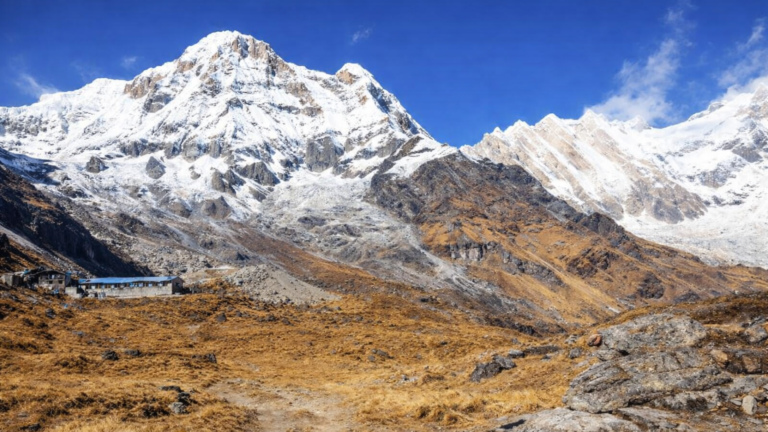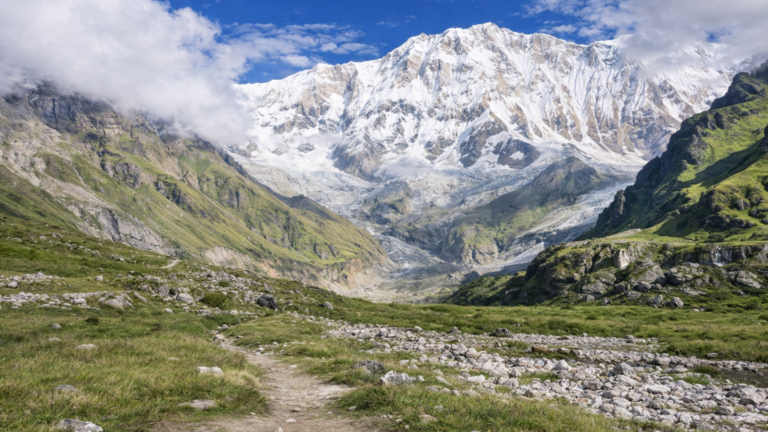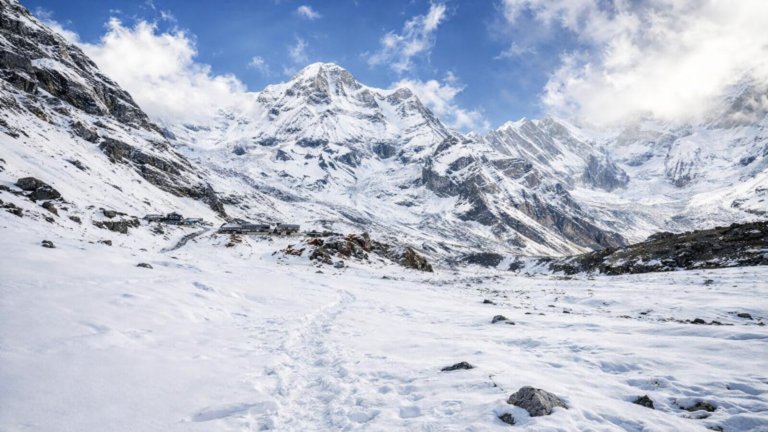
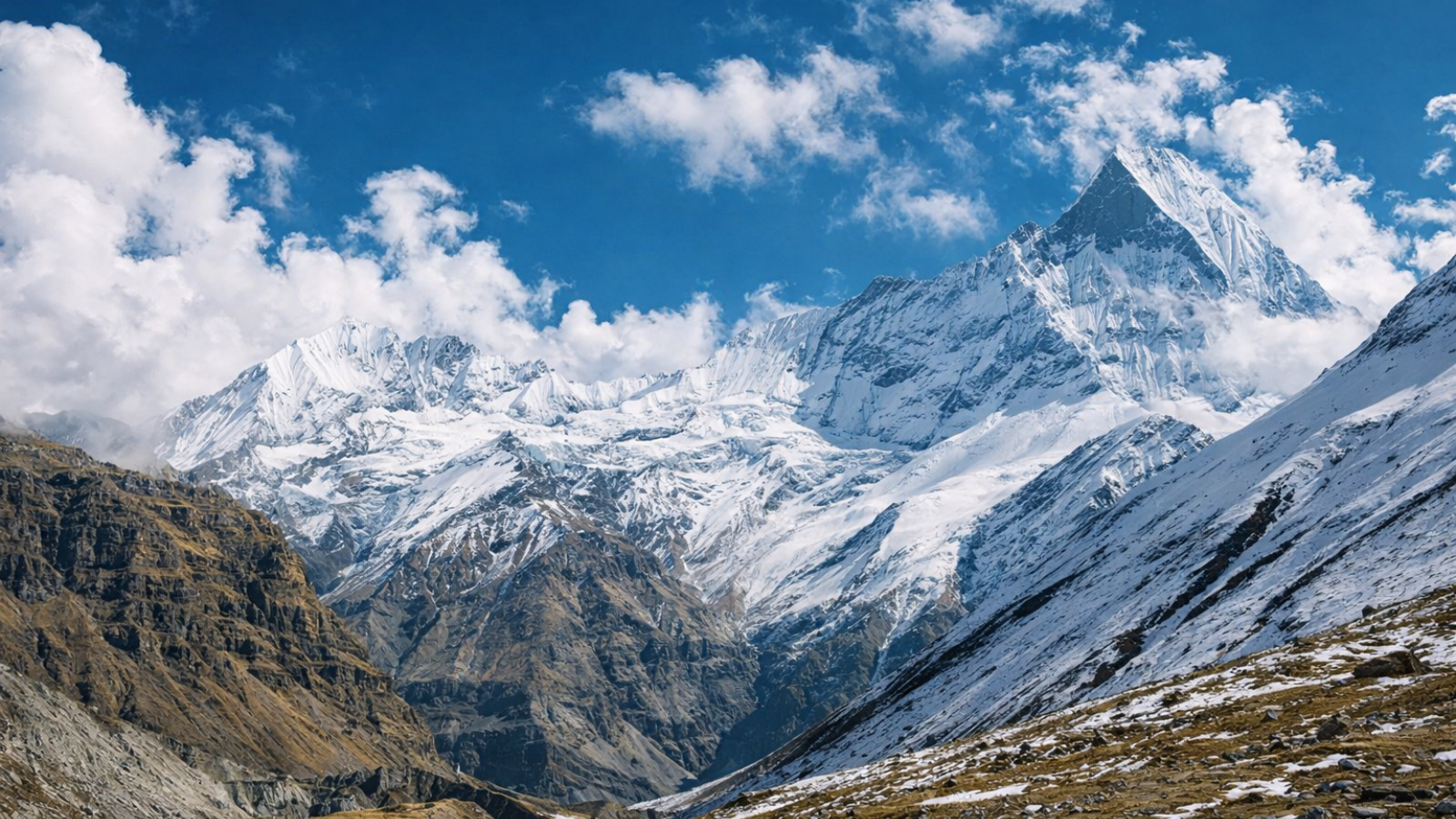

The 13 Day Annapurna Base Camp Trek is a classic Himalayan trekking route in Nepal that leads deep into the Annapurna Sanctuary, a high glacial basin surrounded by peaks above 6,000 meters including Annapurna I (8,091 m), the tenth-highest mountain on Earth. This moderate-difficulty trekking itinerary covers roughly 96 kilometers from Nayapul to Annapurna Base Camp (4,130 m), passing through terraced farmland, rhododendron forests, Gurung villages such as Ghandruk and Chhomrong, alpine valleys, and the dramatic Modi Khola glacial corridor. Trekkers experience a progressive elevation journey that culminates in a natural amphitheater of Himalayan giants including Machhapuchhre, Hiunchuli, Gangapurna, and Annapurna South.
A well-structured 13-day Annapurna Base Camp itinerary balances altitude acclimatization, cultural immersion, and scenic trekking through Nepal’s largest protected region, the Annapurna Conservation Area. The route integrates iconic highlights such as the Poon Hill sunrise viewpoint (3,210 m), traditional teahouse villages, and the final ascent to Annapurna Base Camp where ten major Himalayan peaks surround the sanctuary. This guide explains the complete trekking plan, including the day-by-day itinerary, permits, costs, best seasons, preparation requirements, accommodation, and essential travel logistics for completing the Annapurna Base Camp trek safely and efficiently.
What Makes the 13-Day Format the Right Choice for Annapurna Base Camp?
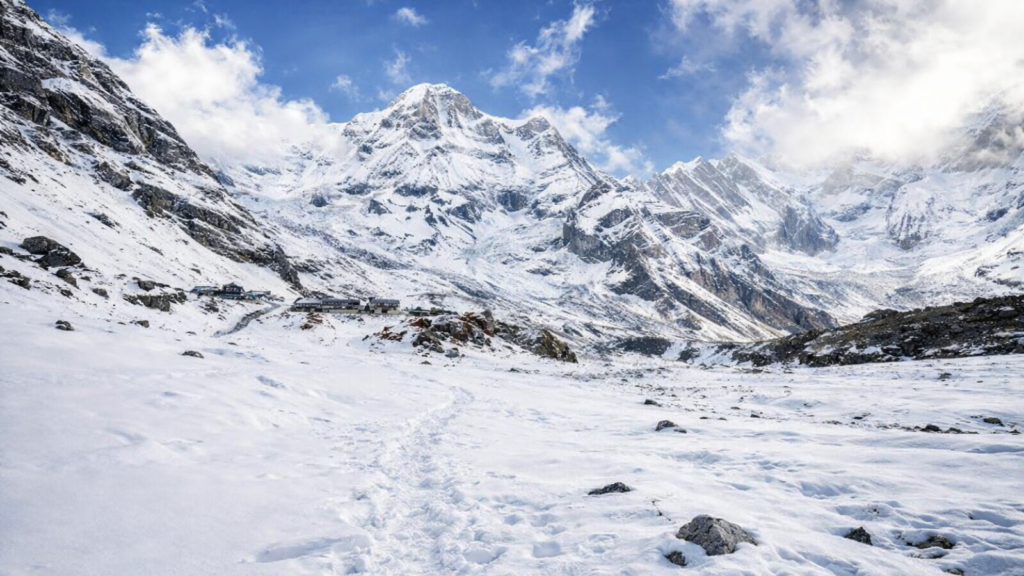
The 13 day format is the ideal duration for the Annapurna Base Camp trek because it builds in adequate acclimatization time, includes the classic Poon Hill viewpoint detour, and avoids the rushed ascent that causes most altitude-related issues on shorter 7–9 day versions.
The total trekking distance on the standard 13-day route, starting from Nayapul, passing through Poon Hill, Chhomrong, and Machhapuchhre Base Camp, and returning via Jhinu Danda, covers approximately 96 kilometers round trip. You walk an average of 8–12 kilometers per day across varied terrain.
How the 13-Day Route Compares to Shorter Versions
Shorter 7–9 day Annapurna Base Camp treks skip Poon Hill entirely, reduce rest days, and force trekkers to ascend more than 500 vertical meters per day in the upper sections. This creates three compounding problems:
- Acclimatization gap: above 3,000 meters, the body needs time to produce red blood cells; rushing this stage triggers headaches, nausea, and in serious cases, High Altitude Pulmonary Edema (HAPE).
- Missed cultural depth: the Gurung villages of Ghandruk and Ghorepani deserve more than a single brief stop.
- Physical fatigue: cramming descents into fewer days damages knees and reduces enjoyment significantly.
The 13-day structure solves all three problems. You gain altitude gradually, spend meaningful time in villages, and have built-in buffer for weather delays, which are common, particularly in the upper sanctuary.
Who Should Choose the 13-Day Annapurna Base Camp Trek
This trek suits first-time Himalayan trekkers, returning trekkers who want a complete experience rather than a rushed summit push, travelers combining the ABC with Poon Hill sunrise, and trekking groups of mixed fitness levels. You do not need prior high-altitude experience, but you do need to be comfortable walking 5–7 hours daily on uneven terrain.
Day-by-Day Itinerary: 13 Day Annapurna Base Camp Trek
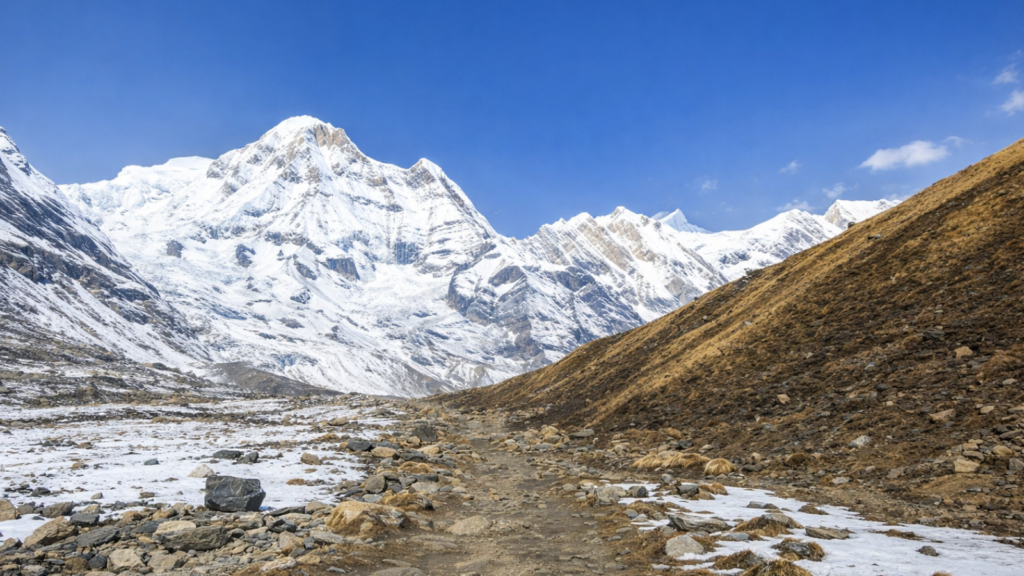
The 13-day itinerary covers approximately 96 kilometers round trip, starting from Nayapul and ascending through Ghorepani, Chhomrong, and Machhapuchhre Base Camp before reaching Annapurna Base Camp at 4,130 meters on Day 9. Each day is structured to balance elevation gain, rest, and cultural exploration across 4 distinct terrain zones: terraced farmland, rhododendron forest, alpine meadow, and glacial sanctuary. The return route descends via Jhinu Danda hot springs, completing a loop that avoids full trail repetition and ends with a natural recovery stop.
Day 1: Arrival in Kathmandu (1,400 m)
Arrive at Tribhuvan International Airport. Transfer to your hotel in Thamel, the main tourist district. Use this afternoon to collect permits if your agency hasn’t arranged them in advance, exchange currency, and recheck gear. Rest is the priority, jet lag affects altitude performance more than most trekkers realize.
Day 2: Kathmandu to Pokhara (822 m) | Drive or Flight
Travel from Kathmandu to Pokhara, the gateway city to the Annapurna region. The tourist bus takes 7–9 hours along the Prithvi Highway; the domestic flight takes 25 minutes. Note that road construction along this highway has extended driving times significantly in 2026, factor in 8–9 hours if traveling by bus. Arrive in Pokhara’s Lakeside district, check in, and acclimatize at 822 meters.
Day 3: Pokhara to Hile / Nayapul, Trek to Ulleri (1,980 m) | 5–6 hrs
Drive approximately 1.5–2 hours from Pokhara to Nayapul (1,070 m), the main trailhead. Begin trekking through Birethanti (1,025 m), where your ACAP and TIMS permit is checked for the first time. The trail climbs steadily through farmland and forest to Tikhedhunga before a steep stone-staircase ascent leads to Ulleri. This 3,000-step ascent is the hardest section on the entire first half of the trek. Arriving at Ulleri at sunset, with Annapurna South visible on clear evenings, sets the tone for everything ahead.
Day 4: Ulleri to Ghorepani (2,860 m) | 4–5 hrs
A steady climb through dense rhododendron forest, which blazes red, pink, and white from March through April, brings you to Banthanti and then to Ghorepani. The village sits at 2,860 meters and offers the best concentration of teahouses before Chhomrong. Buy hot tea, rest your legs, and sleep early. Tomorrow’s 4:00 AM wake-up call is non-negotiable.
Day 5: Poon Hill Sunrise, then Trek to Tadapani (2,590 m) | 5–6 hrs
This is the single most photographed morning of the entire trek. The 45-minute pre-dawn climb to Poon Hill (3,210 m) delivers a 360-degree Himalayan panorama that includes Dhaulagiri (8,167 m), Annapurna I (8,091 m), Annapurna South (7,219 m), Hiunchuli (6,441 m), and Machhapuchhre (6,993 m). Poon Hill is one of the most famous sunrise viewpoints in Nepal. After breakfast in Ghorepani, descend and trek through rhododendron and oak forest to Tadapani. This day covers terrain that transitions clearly from mid-hills to high-altitude approach zones.
Day 6: Tadapani to Chhomrong (2,170 m) | 5–6 hrs
Descend from Tadapani through forest to Chhomrong, the last major village before entering the inner Annapurna Sanctuary. Chhomrong is a Gurung village built across steep terraces. It has the best food selection on the upper trail, stock up on snacks here. The village sits at a natural acclimatization sweet spot: high enough to prepare the body for what comes next, low enough to sleep comfortably. Confirm your teahouse booking for Dovan or Himalaya Hotel, as high-season occupancy fills quickly.
Day 7: Chhomrong to Dovan (2,600 m) | 5–6 hrs
Descend from Chhomrong to the Modi Khola river, then climb again through Sinuwa (2,340 m) and bamboo forest to Dovan. The trail narrows through forest zones rich in biodiversity, the Annapurna Conservation Area hosts red pandas, Himalayan black bears, snow leopards, and over 100 bird species including the endangered Cheer pheasant. Avalanche debris is visible on the slopes above; this section of trail is widened annually by conservation crews. Altitude gain is moderate, and the teahouses at Dovan are basic but functional.
Day 8: Dovan to Deurali (3,230 m) | 4–5 hrs
A shorter day designed specifically for acclimatization. The trail passes through Himalaya Hotel (2,920 m) and continues to Deurali, the last settlement before Machhapuchhre Base Camp. The landscape here is noticeably more alpine, tree cover thins, glacial moraines appear, and the air is measurably colder. Use the afternoon to walk 30–40 minutes higher and return to Deurali for the night. This “climb high, sleep low” protocol reduces acute mountain sickness risk.
Day 9: Deurali to Annapurna Base Camp (4,130 m) via Machhapuchhre Base Camp | 5–6 hrs
This is the climax of the 13-day Annapurna Base Camp trek. From Deurali, the bouldered trail opens into the wide glacial valley of Modi Khola. Reach Machhapuchhre Base Camp (3,700 m) after 3–4 hours, where the famous Fishtail peak looms directly overhead. Machhapuchhre is sacred, it has never been summited and remains permanently off-limits to climbers. The final 2 hours climb to Annapurna Base Camp (4,130 m), an open glacial bowl encircled by peaks on all sides.
Standing at ABC, 10 major peaks are visible simultaneously: Annapurna I, II, III, and IV, Annapurna South, Gangapurna (7,455 m), Gandharvachuli, Hiunchuli, Machhapuchhre, and Tent Peak. Sunrise here, a slow bronze-gold light flooding the entire amphitheater, is consistently described by returning trekkers as the single most powerful visual experience of their lives.
Day 10: Annapurna Base Camp to Bamboo (2,345 m) | 6–7 hrs
Catch the ABC sunrise before descending. The descent from 4,130 meters to 2,345 meters in one day is significant, this is the longest descent day of the trek and demands knee support. Trekking poles reduce knee impact by an estimated 25% on sustained downhill terrain. Pass back through MBC and Deurali, then continue through Himalaya Hotel and Dovan to Bamboo. The change in vegetation and temperature across 1,785 vertical meters of descent in a single day is dramatic and satisfying.
Day 11: Bamboo to Jhinu Danda (1,780 m) | 4–5 hrs
A shorter, pleasant descent through rhododendron and oak forest returns you to Chhomrong and continues down to Jhinu Danda. The hot spring at Jhinu Danda, accessible via a 20-minute trail from the village, sits at the edge of the Modi Khola river. After 9 days on the trail, soaking tired muscles in the natural hot spring is one of the most genuinely restorative experiences the ABC trek offers. Most trekkers rate this stop as the best recovery moment of the entire journey.
Day 12: Jhinu Danda to Nayapul, Drive to Pokhara
Trek the final 8–10 kilometers through Siwai (1,530 m) and Lower Siwai to Nayapul. A vehicle meets you at Nayapul for the 1.5–2 hour drive back to Pokhara. Arrive by early afternoon with enough time to visit Phewa Lake, the World Peace Pagoda, or simply rest. Pokhara remains one of the most pleasant cities in Nepal, its lakeside atmosphere after 12 days on high-altitude trails feels genuinely luxurious.
Day 13: Drive/Fly Back to Kathmandu, Final Departure
Return to Kathmandu by tourist bus (7–9 hours) or domestic flight (25 minutes). Transfer to your departure hotel or directly to the international terminal. If your flight departs late, Thamel offers excellent options for a final Nepali meal and last-minute souvenir shopping.
What Is the Total Cost of the 13 Day Annapurna Base Camp Trek?
The 13 day Annapurna Base Camp trek costs between $700 and $1,500 per person in 2026, depending on whether you choose a budget package, standard guided package, or private luxury option.
The 3 main pricing tiers are:
- Budget package ($600–$900): basic teahouse accommodation, simple meals, shared guide, permits, and transport included.
- Standard package ($900–$1,200): upgraded teahouses where available, full-board meals, private licensed guide, single porter per 2 trekkers, and all logistics handled.
- Private package ($1,200–$1,500): private guide and porter, personalized pace, flexible itinerary, and premium teahouse options.
Cost Breakdown by Category
| Expense Category | Approximate Cost (USD) |
| ACAP Permit (NPR 3,000 foreigners) | ~$22 |
| TIMS Card (NPR 2,000) | ~$15 |
| Licensed Guide (per day) | $25–$35/day |
| Porter (per day) | $18–$25/day |
| Teahouse accommodation (per night) | $5–$15/night |
| Meals on trail (per day) | $20–$35/day |
| Kathmandu–Pokhara bus | ~$15 each way |
| Kathmandu–Pokhara flight | ~$100–$120 each way |
What most trekkers overlook: Tea, hot showers, device charging, Wi-Fi ($2–$5/day at upper elevations), and bottled water ($1–$3 per liter above Chhomrong) are almost always excluded from package prices. Budget an additional $150–$200 for these daily extras across 9 trekking days.
Why Annapurna Costs Less Than Everest Region
The Annapurna region sits approximately 40 kilometers from Pokhara, and roads now reach many villages along the approach. Supply chains for food and fuel are shorter, which keeps teahouse prices lower than in the Khumbu region. Manaslu circuit treks require special restricted-area permits at $100 per week; Annapurna trekking permits remain relatively affordable at approximately $35–$40 total (ACAP plus TIMS) for foreign trekkers, a 50% cost advantage for similar Himalayan scenery at comparable altitude.
What Permits Do You Need for the Annapurna Base Camp Trek?
The 13 day Annapurna Base Camp trek requires two mandatory permits: the Annapurna Conservation Area Permit (ACAP) and the Trekkers’ Information Management System (TIMS) Card, both required for all foreign trekkers entering the Annapurna region.
Annapurna Conservation Area Permit (ACAP)
- Cost: NPR 3,000 for foreign nationals; NPR 1,000 for SAARC nationals
- Issued by: Nepal Tourism Board office in Kathmandu (Bhrikutimandap) or Pokhara (Lakeside/Damside)
- Purpose: Controls access to the Annapurna Conservation Area, Nepal’s largest protected area at 7,629 km²
- Valid for: Single entry; non-transferable and non-refundable
- Note: ACAP can now be obtained online via the NTNC e-permit portal (epermit.ntnc.org.np) for convenience, though an additional 2.9% payment gateway fee applies. Physical completion at the office is still required for first-time applications.
Trekkers’ Information Management System (TIMS) Card
Cost (2026):
- NPR 2,000 for foreign trekkers (group trekkers)
- NPR 1,000 for SAARC nationals
Issued by: Trekking Agencies’ Association of Nepal (TAAN) offices in Kathmandu or Pokhara.
Purpose: The TIMS system records trekking itineraries and helps authorities track trekkers in case of emergencies, accidents, or natural disasters in remote Himalayan regions.
Validity: Single trekking route and non-transferable.
Important Note: Since Nepal introduced the mandatory licensed guide regulation in 2023, most trekking agencies arrange the TIMS card together with the ACAP permit before the trek begins.
Mandatory Guide Requirement (2023 Regulation, Active in 2026)
Since 2023, Nepal has made hiring a licensed guide mandatory for all trekkers in the Annapurna, Everest, and other protected trekking regions. Solo trekking without a registered guide is no longer legally permitted. This regulation exists for safety: it reduces helicopter rescue incidents and ensures trekkers have emergency support. Permit offices now verify guide registration as part of the ACAP application process.
What to bring to the permit office: Original passport, 2–4 passport-sized photographs, completed application form (available at the office), proof of travel insurance covering emergency helicopter evacuation up to 5,000 meters, and your trekking itinerary with dates.
Children under 10 do not require an ACAP permit but must be registered on the group trekker’s permit documentation.
When Is the Best Time to Do the 13 Day Annapurna Base Camp Trek?
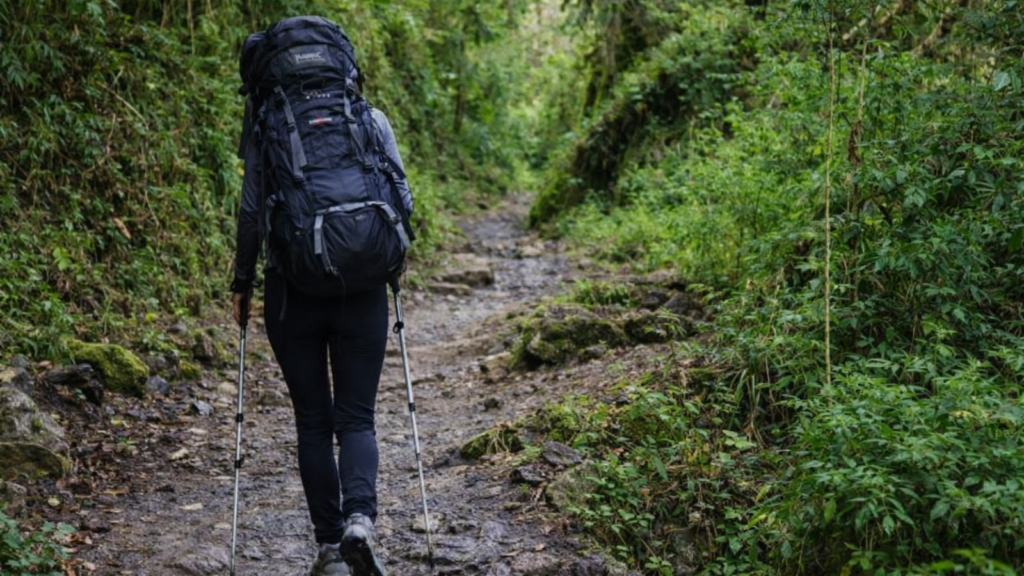
Spring (March–May) and autumn (September–November) are the 2 optimal seasons for the 13-day Annapurna Base Camp trek, delivering stable weather, clear mountain visibility, and comfortable daytime temperatures. Spring offers peak rhododendron blooms from late February through April, while autumn delivers the year’s clearest post-monsoon skies with visibility at ABC regularly exceeding 100 kilometers. Monsoon (June–August) and deep winter (December–February) treks are technically possible but require significantly higher preparation, experience, and tolerance for poor visibility or extreme cold.
Spring: March to May
Spring is widely considered the premier season for the 13 day Annapurna Base Camp trek, and the numbers support this. The rhododendron forests, Nepal’s national flower, bloom from late February through April, transforming the entire lower trail into a vivid corridor of red, pink, and white. Temperatures at lower elevations range from 15–25°C during the day; at Annapurna Base Camp, expect 2–8°C daytime and -5 to -10°C at night.
What most guides miss about spring: The month of May is the best compromise between peak wildflower season and pre-monsoon stability. Early March sees some lingering winter snow above 3,500 meters. April delivers the most reliable rhododendron bloom and clearest mountain visibility. May retains good conditions but requires monitoring weather, the monsoon occasionally arrives early from the south.
Autumn: September to November
Autumn delivers the clearest mountain views of the year. Post-monsoon skies are washed clean, visibility at ABC regularly exceeds 100 kilometers, and the trail feels freshly green from monsoon rains. October is the peak month for trekkers, book teahouses at Chhomrong, MBC, and ABC at least 2 months in advance for October dates. November becomes progressively colder; above 3,500 meters, nighttime temperatures drop to -10 to -15°C by month’s end.
Seasons to Avoid
Monsoon (June–August): Sustained rainfall makes the lower trail muddy and slippery, and cloud cover obscures mountain views for most of the day. Leech activity is high below 2,500 meters. Avalanche risk increases in the upper sanctuary during heavy rain events.
Winter (December–February): The trek is technically possible but demanding. Ice and snow above 3,000 meters require crampons; teahouses thin out above Chhomrong; temperatures at ABC drop to -20°C at night. Experienced trekkers with proper winter gear can still complete the route, but it requires significantly higher preparation.
How Difficult Is the 13 Day Annapurna Base Camp Trek?
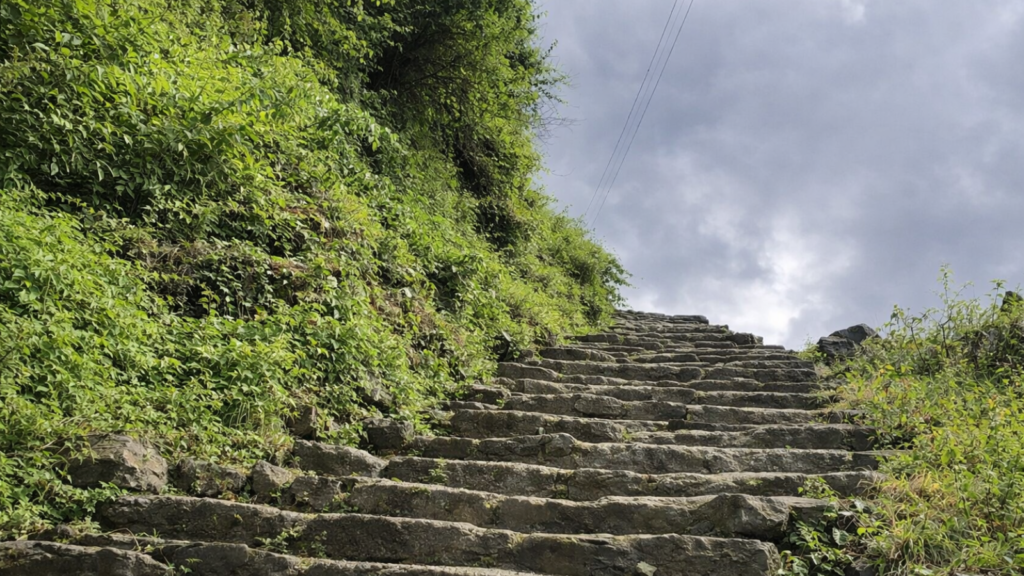
The 13 day Annapurna Base Camp trek is rated moderate difficulty, achievable without prior Himalayan experience, but requiring consistent physical preparation for 4–6 months before departure.
The 4 primary physical demands of the trek are:
- Daily walking duration: 5 to 8 hours per day on consecutive days
- Cumulative elevation gain: approximately 3,500 meters total ascent from Nayapul to ABC
- Terrain variety: stone staircases, forest trails, rocky glacial moraine, and open ridgelines
- Altitude above 3,000 meters: where oxygen is reduced and the body requires more recovery time
Physical Preparation: What Actually Works
Most altitude-related problems on the Annapurna trek are not caused by insufficient fitness, they are caused by insufficient aerobic conditioning. The body’s ability to efficiently use reduced oxygen at altitude correlates directly with cardiovascular base fitness, not raw strength.
The 6-month preparation protocol that consistently produces the best results:
- Months 1–3: 4–5 days per week of 45-minute cardiovascular exercise (running, cycling, stair climbing)
- Months 3–5: Add loaded hiking with a 7–10 kg pack on terrain with 300–500 meters elevation gain
- Month 6: Increase hiking frequency to 3–4 times per week; include at least one 15+ km day hike
Leg strength training, specifically single-leg squats, step-ups, and calf raises, reduces knee fatigue on the long descent from ABC to Bamboo on Day 10.
Altitude Sickness: What to Know Before Day 8
Acute Mountain Sickness (AMS) affects approximately 30% of trekkers who ascend above 3,000 meters without proper acclimatization. The 3 most common early symptoms are: headache that worsens when bending over, unusual fatigue that rest doesn’t resolve, and nausea or loss of appetite. If 2 or more of these symptoms appear simultaneously, do not ascend further. Descend 300–500 meters and reassess after 12 hours.
Acetazolamide (Diamox) is prescribed by some doctors as a prophylactic. Consult a physician specializing in travel medicine at least 4 weeks before departure. The drug has known side effects, tingling in hands and feet, increased urination, and sensitivity to sunlight, that affect trekking comfort and should be tested before the trek.
What Is the Accommodation Like on the 13 Day Annapurna Base Camp Trek?
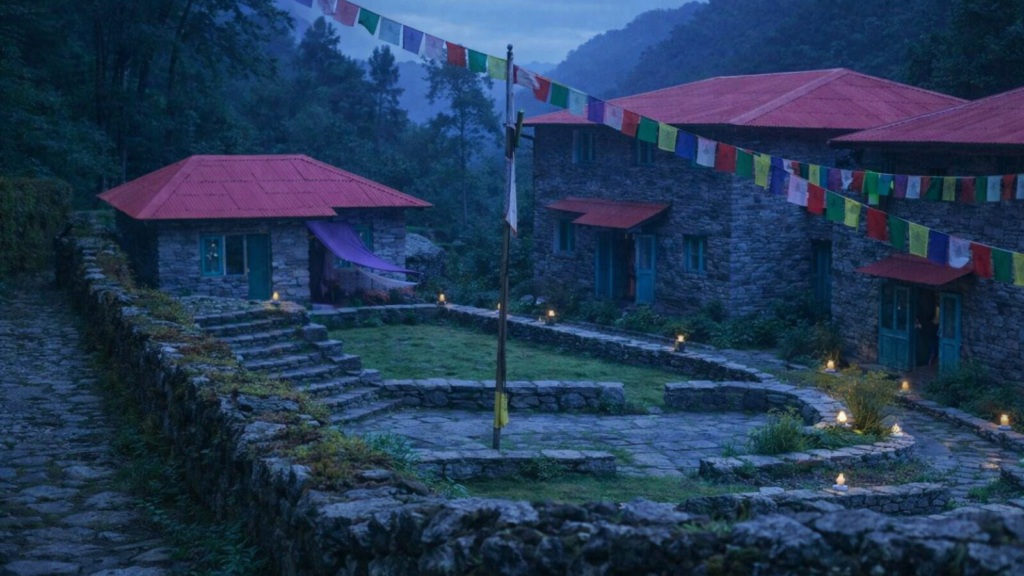
Accommodation on the 13 day Annapurna Base Camp trek is entirely teahouse-style, family-run mountain lodges that provide a bed, meals, and basic facilities. The standard of teahouses improves significantly between lower elevation villages and what was available 5 years ago; infrastructure investment in the Annapurna region has been consistent since 2020.
Teahouse Quality by Elevation Zone
- Below 2,500 meters (Nayapul to Ghorepani): Teahouses in this zone typically offer attached or shared bathrooms with hot showers (sometimes solar-heated, sometimes gas), multiple meal options, and reliable Wi-Fi in most establishments. Room sizes are adequate; mattresses are functional.
- 2,500–3,500 meters (Tadapani to Deurali): Rooms are smaller and simpler. Attached bathrooms are less common; shared facilities are the standard. Hot showers require payment ($2–$4 per shower). Heating is not provided in rooms, bring a sleeping bag rated to at least -5°C.
- Above 3,500 meters (MBC and ABC): Teahouses at Machhapuchhre Base Camp and Annapurna Base Camp are basic and deliberately so, construction above 3,700 meters is restricted by conservation regulations. Expect shared rooms, basic toilet facilities, and dining halls heated by kerosene. Sleeping bag rated to -10°C is essential here.
Booking ahead in peak season: In October and during the Dashain-Tihar festival period, Chhomrong, MBC, and ABC teahouses fill by 2:00 PM. A licensed guide handles bookings, one of the practical advantages of the mandatory guide requirement.
What Should You Pack for the 13 Day Annapurna Base Camp Trek?
Pack precisely for the 13 day Annapurna Base Camp trek: total carry weight should not exceed 10–12 kilograms in your day pack. Porters carry the main bag (maximum 15 kg per porter is the standard regulated weight).
Essential Gear List
Clothing layers (4-season approach):
- 2 moisture-wicking base layer shirts (merino wool preferred over synthetic for multi-day use)
- 1 mid-layer fleece jacket (300g weight minimum)
- 1 down jacket (rated to -5°C; essential above 3,000 m at night)
- 1 waterproof hardshell jacket and pants
- 2 trekking pants (1 convertible, 1 insulated for upper sections)
- 4 pairs wool trekking socks
- Warm hat, sun hat, gloves, and balaclava for ABC nights
Footwear:
- Waterproof trekking boots with ankle support (broken in for at least 50 km before the trek)
- Camp sandals or lightweight shoes for teahouse evenings
Equipment:
- Trekking poles (collapsible, with rubber tips for trail surfaces and carbide tips for optional winter ice)
- Sleeping bag (-10°C comfort rating for upper elevations; -5°C minimum for lower sections)
- Headlamp with spare batteries (LED, 200+ lumens for predawn Poon Hill ascent)
- Sunglasses (CE category 4 for glacial UV exposure at ABC)
- Sunscreen SPF 50+ and lip balm with SPF (UV intensity at 4,130 meters is 40% higher than at sea level)
Health kit:
- Water purification tablets or UV pen (SteriPen), reduces plastic waste and costs versus buying bottled water
- Blister kit (compeed, antiseptic, needle)
- Altitude sickness medication (Diamox, if prescribed)
- Personal first aid basics
Documents:
- Original passport and 4 photocopies
- ACAP and TIMS permits in a waterproof document pouch
- Digital copies of all documents stored offline on your phone
- Travel insurance policy with helicopter evacuation coverage clearly stated
Transportation: Getting to and from the Annapurna Base Camp Trek
Reaching the Annapurna Base Camp trailhead requires two transport legs: Kathmandu to Pokhara (7–9 hours by tourist bus for $10–$20, or 25 minutes by domestic flight for $100–$120), then Pokhara to Nayapul trailhead (1.5 hours by private jeep for $30–$50, or 2.5 hours by local bus for $2–$3). In 2026, ongoing Prithvi Highway construction extends road travel times between Kathmandu and Pokhara, allow 8–9 hours if choosing the bus. A helicopter exit from Annapurna Base Camp directly to Pokhara costs $350–$450 per person (minimum 4 passengers) and can be pre-arranged for trekkers with time constraints or early descent requirements.
Kathmandu to Pokhara
The tourist bus from Kathmandu to Pokhara departs from the Thamel area between 6:00 AM and 8:00 AM daily. The journey costs approximately $10–$20 per person and takes 7–9 hours (allow 8–9 hours in 2026 due to ongoing Prithvi Highway construction). The domestic flight from Tribhuvan International Airport to Pokhara Airport takes 25 minutes and costs $100–$120 each way. For trekkers with limited time or motion sensitivity, the flight is strongly worth the price difference.
Pokhara to Nayapul
A private jeep from Pokhara to Nayapul takes approximately 1.5 hours and costs $30–$50 per vehicle (shareable among groups). Local buses run the same route for $2–$3 per person but take up to 2.5 hours with stops.
Helicopter Exit Option
A helicopter flight from Annapurna Base Camp to Pokhara can be arranged in advance for approximately $350–$450 per person (minimum 4 passengers for charter pricing). This option shortens the journey significantly, useful for trekkers with time constraints on Day 10 or those experiencing mild altitude effects that warrant early descent without a full downward trek. Agencies arrange this from Pokhara before the trek begins.
Food and Nutrition on the Annapurna Base Camp Trek
Teahouse menus along the 13 day Annapurna Base Camp route are more diverse than most trekkers expect. The standard menu available from Nayapul to ABC includes:
Nepali staples: Dal bhat (lentil soup, rice, vegetable curry, and pickle) is the best calorie-to-cost ratio on the trail, at $5–$8 per plate with unlimited refills at most lodges, it is the preferred meal of guides and porters for good reason. The salt, carbohydrate, and vegetable balance supports high-altitude performance better than most alternatives.
International options (below 3,000 m): Pasta, fried rice, omelettes, pancakes, garlic soup, apple pie, and Tibetan bread are available at most lodges below Chhomrong. Above Dovan, menus simplify significantly, dal bhat, noodles, and soup dominate.
What to avoid above 3,000 meters: Alcohol dehydrates the body and suppresses the acclimatization response at altitude. Avoid alcohol entirely above 3,000 meters. Heavy, fatty meals are harder to digest at altitude, stick to carbohydrate-rich foods like rice, bread, and pasta in the upper sections.
Water strategy: Carry a 2-liter water bottle and refill with boiled or purified water from teahouses ($1–$2 per liter). Buying individual plastic bottles above Chhomrong costs $2–$3 per liter and generates significant waste in a protected conservation area. A UV purification pen pays for itself in 4–5 days of use.
Why Trekkers Return: The Annapurna Base Camp Experience Beyond the Summit
The 13-day format creates cultural and experiential depth that compressed versions cannot replicate, including meaningful time in Gurung villages like Ghandruk and Chhomrong where the community’s distinct history, architecture, and traditions are fully accessible. The Annapurna Sanctuary itself, a glacial amphitheater enclosed by 10 peaks above 6,000 meters, is one of the geologically rarest enclosed mountain basins on earth, first entered by Westerners in 1956. The Jhinu Danda natural hot springs at 1,780 meters, with water temperatures of 40–45°C year-round, deliver a genuine physical recovery experience that most trekkers cite as one of the journey’s most memorable moments.
Gurung Cultural Immersion
The Gurung people, one of Nepal’s prominent hill communities, historically serving in the Gurkha military units of the British and Indian armies, inhabit the villages of Ghandruk, Chhomrong, and Landruk along the ABC trail. Their stone-paved villages, decorated facades, and tradition of warm hospitality toward trekkers create genuine cross-cultural encounters. Ghandruk in particular has a Gurung Museum documenting the community’s military history, cultural practices, and material traditions, worth a 45-minute visit if your schedule allows.
The Annapurna Sanctuary: A Himalayan Amphitheater
The Annapurna Sanctuary itself, the high glacial basin at the head of the Modi Khola valley, is geologically unique. It is one of only a handful of naturally enclosed mountain basins on earth where the inner walls rise above 7,000 meters on all sides. The sanctuary was first entered by a Western mountaineering party in 1956; the first complete traverse to ABC was achieved in 1970 by the British expedition that made the first ascent of Annapurna South Face. Walking into this space on Day 9 is walking through mountaineering history as much as landscape.
Jhinu Danda Hot Springs
The natural hot springs at Jhinu Danda sit on the bank of the Modi Khola river at 1,780 meters. The water temperature holds between 40–45°C year-round, emerging from geothermal sources below the surface. After 10+ days on the trail, the therapeutic effect on muscle soreness, particularly the quadriceps and calf fatigue from the Bamboo descent, is significant. The springs are accessible via a 20-minute downhill path from Jhinu village and cost approximately $3–$5 per person entry. Most trekkers spend 45–60 minutes here before the final day.
Common Mistakes Trekkers Make on the 13-Day ABC Trek (And How to Avoid Them)
The 5 most damaging mistakes on the 13-day ABC trek are starting Day 1 too fast on the Ulleri ascent, under-packing warm layers for the 25–30°C overnight temperature differential between Pokhara and ABC, skipping the Chhomrong snack stock-up before menus shrink above that village, failing to verify a guide’s TAAN registration credentials before departure, and traveling without helicopter evacuation insurance coverage clearly documented. Each mistake is preventable with standard pre-trek planning and adds zero cost when addressed before arrival. Experienced trekkers consistently identify pacing and layering errors as the 2 mistakes most likely to cut a trek short before ABC is reached.
Mistake 1: Starting Too Fast on Day 1
The most common pacing error is treating the first trekking day, Nayapul to Ulleri, as easy because the trail is well-defined. The stone staircase ascent to Ulleri involves 3,000 steps across 600 meters of vertical gain. Trekkers who push this section at a fast pace consistently suffer greater knee soreness on Day 4–5. Start at 60–70% of your comfortable pace.
Mistake 2: Under-Packing Warm Layers
The temperature differential between Pokhara (822 m) and Annapurna Base Camp (4,130 m) is approximately 25–30°C at nighttime. Trekkers who pack for Pokhara’s climate consistently find themselves uncomfortable above 3,000 meters. A down jacket, fleece mid-layer, and sleeping bag rated to -10°C are non-negotiable, not optional upgrades.
Mistake 3: Skipping Chhomrong Food Stock-Up
Above Chhomrong, food variety drops sharply and prices increase by 15–30% per 500 meters of elevation gain. Chhomrong has the last good bakeries, the best snack selection, and the most reliable chocolate and energy bar stock on the upper trail. Stock up for 3–4 days of trail snacks here.
Mistake 4: Not Verifying Guide Credentials
Since the mandatory guide regulation took effect, licensed guide numbers have expanded rapidly. Not all guides have equal experience with altitude protocols, AMS recognition, and emergency procedures. Verify your guide’s registration number against the Trekking Agencies’ Association of Nepal (TAAN) database before departing, or confirm your agency’s TAAN membership status.
Mistake 5: Neglecting Travel Insurance
Helicopter evacuation from Annapurna Base Camp (4,130 m) to Pokhara costs $1,500–$2,500 without insurance. Rescue insurance covering evacuation up to 5,000 meters is a mandatory documentation requirement for ACAP and TIMS permit applications, but ensure your policy covers the full helicopter cost, not just partial reimbursement. Annual travel insurance policies from providers like World Nomads typically cover Nepal high-altitude trekking for $100–$200 per year.
Planning Your 13 Day Annapurna Base Camp Trek: Final Checklist
Before finalizing your booking and departing for the Annapurna Sanctuary, confirm these 8 elements are in place:
- Permits arranged: ACAP (NPR 3,000) and TIMS Card (NPR 2,000) confirmed or handled by your trekking agency.
- Licensed guide booked:TAAN-registered, with verifiable credentials and altitude first-aid training
- Travel insurance active: helicopter evacuation coverage to 5,000 meters confirmed in writing
- Gear packed correctly: down jacket, -10°C sleeping bag, trekking poles, and UV-rated sunglasses included
- Physical preparation completed: minimum 4 months of consistent cardio training, including loaded hiking
- Season confirmed: spring (March–May) or autumn (September–November) departure booked
- Teahouse bookings flagged: particularly Chhomrong, MBC, and ABC for October travel
- Offline maps downloaded: GPS data for the full Annapurna region loaded before departure from Pokhara
The 13 day Annapurna Base Camp trek delivers one of the most complete Himalayan experiences accessible to non-technical trekkers. From the rhododendron forests of Ghorepani to the raw glacial theater of the Sanctuary, every day adds a distinct layer to the journey. Plan with care, prepare with consistency, and the Annapurna will exceed every expectation you bring to it.
Is the 13 Day Annapurna Base Camp Trek Suitable for Beginners?
The 13-day Annapurna Base Camp trek is suitable for beginners who complete 4 months of cardiovascular training before the trip. The route reaches 4,130 m but requires no technical climbing, ropes, or crampons in normal seasons. Beginners who train with 7–10 kg pack hikes and follow a guided itinerary typically complete the trek safely.
Can You Do the Annapurna Base Camp Trek Without a Guide?
Solo trekking on the Annapurna Base Camp route is prohibited under Nepal’s 2023 mandatory guide regulation. Trekkers must hire a licensed guide registered with TAAN to receive an ACAP permit. Guides typically cost $25–$35 per day in Pokhara and ensure legal compliance, route safety, and permit verification at checkpoints.
What Is the Highest Point on the 13-Day Annapurna Base Camp Trek?
The highest point on the 13-day Annapurna Base Camp trek is Annapurna Base Camp at 4,130 meters (13,550 feet). Trekkers typically reach ABC on Day 9 after passing Machhapuchhre Base Camp at 3,700 meters. Both camps sit inside the Annapurna Sanctuary, a glacial basin surrounded by peaks above 6,000 meters.
How Much Does the 13 Day Annapurna Base Camp Trek Cost in 2026?
The 13-day Annapurna Base Camp trek costs $700–$1,500 per person in 2026 depending on guide service and accommodation quality. Permits cost about $37–$50, guides charge $25–$35 per day, and meals average $20–$35 daily. Trekkers should budget an extra $150–$200 for Wi-Fi, showers, charging, and drinking water.
What Permits Are Required for the Annapurna Base Camp Trek?
The Annapurna Base Camp trek requires two permits: the Annapurna Conservation Area Permit (ACAP) and the TIMS Card (Trekkers’ Information Management System). The ACAP costs NPR 3,000 and the TIMS card costs NPR 2,000 for foreign trekkers. Both permits can be obtained from the Nepal Tourism Board or through registered trekking agencies in Kathmandu or Pokhara.
How Many Days Does It Take to Complete the Annapurna Base Camp Trek?
The Annapurna Base Camp trek takes 13 days on the standard itinerary. The route covers about 96 kilometers round trip and gradually ascends to 4,130 meters. Shorter 7–9 day itineraries exist but reduce acclimatization time and increase altitude sickness risk compared to the recommended 13-day schedule.
What Is the Best Month to Trek to Annapurna Base Camp?
October is the best month to trek to Annapurna Base Camp because post-monsoon weather provides clear skies and stable conditions. April ranks second due to widespread rhododendron blooms and good visibility. Trekkers should reserve teahouses at Chhomrong, MBC, and ABC 6–8 weeks in advance during these peak months.
How Do You Get to the Annapurna Base Camp Trek Starting Point?
The Annapurna Base Camp trek starts at Nayapul at 1,070 meters near Pokhara. Trekkers reach Nayapul by private jeep from Pokhara in 1.5 hours or by local bus in about 2.5 hours. Pokhara connects to Kathmandu by tourist bus in 7–9 hours or domestic flight in 25 minutes.
Is Altitude Sickness a Risk on the Annapurna Base Camp Trek?
Altitude sickness is a common risk on the Annapurna Base Camp trek because the route climbs above 3,000 meters. About 30% of trekkers experience mild AMS symptoms such as headache, fatigue, or nausea. Descending 300–500 meters immediately reduces risk when two symptoms appear simultaneously.
What Type of Insurance Do You Need for the Annapurna Base Camp Trek?
The Annapurna Base Camp trek requires travel insurance that includes helicopter evacuation coverage up to at least 5,000 meters. Emergency helicopter rescue from ABC to Pokhara costs $1,500–$2,500 without insurance. Many trekkers use annual adventure policies costing $100–$200 that specifically cover high-altitude trekking.