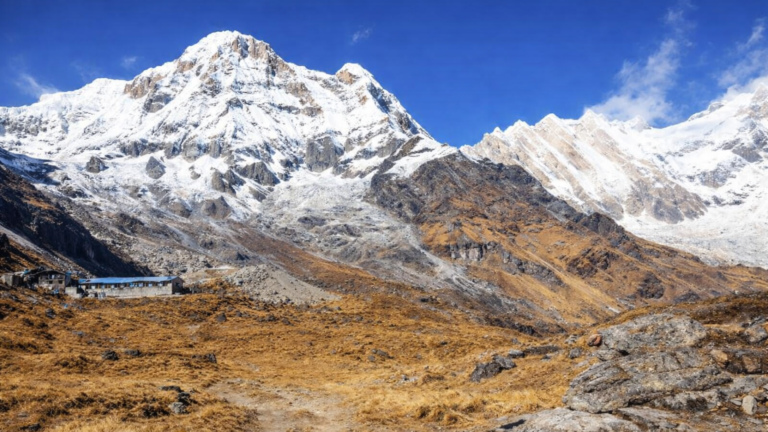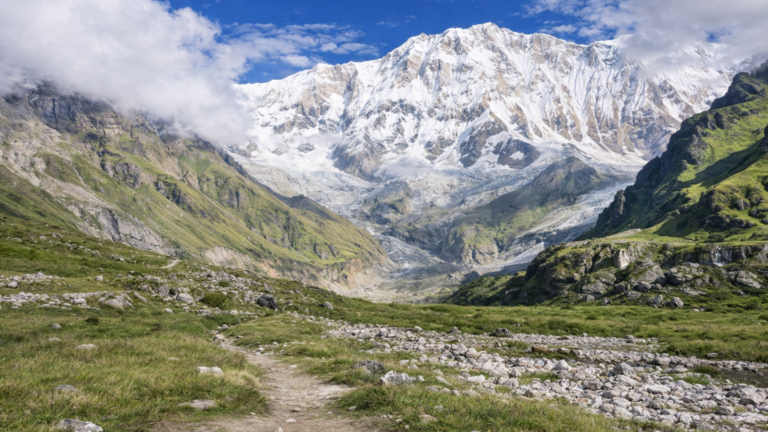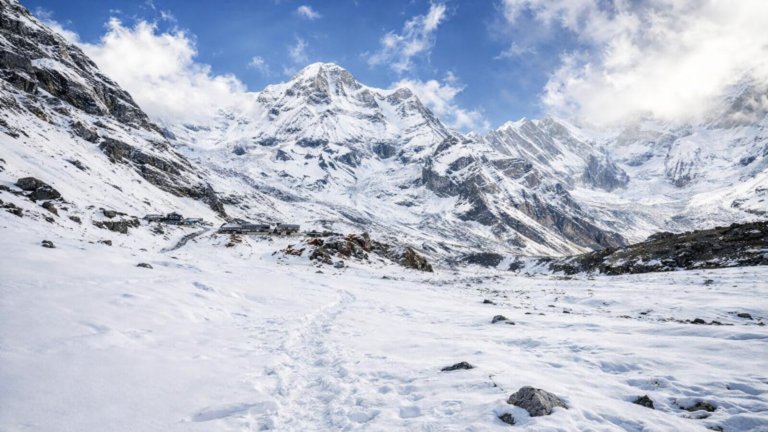
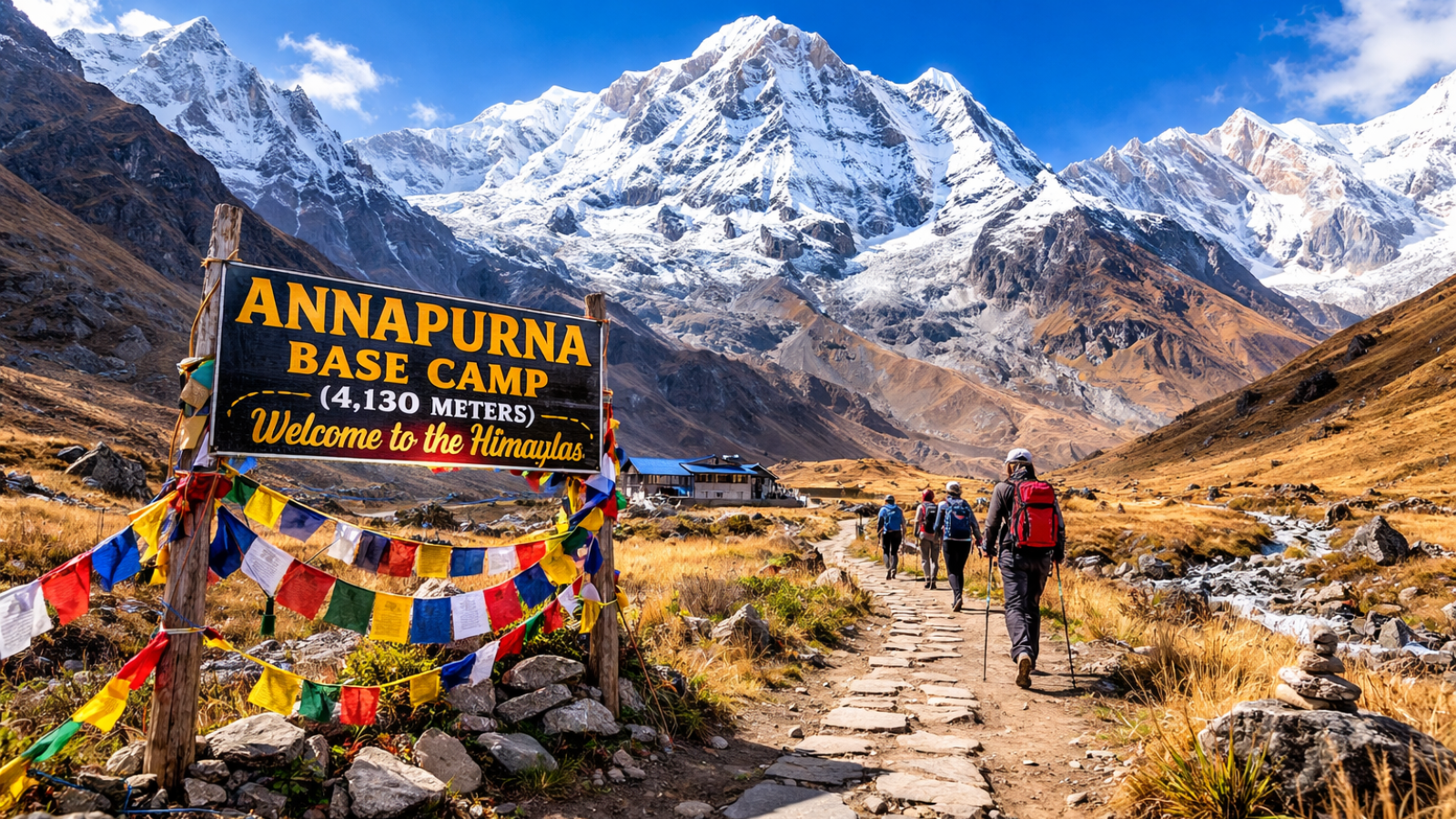

Annapurna Base Camp (ABC) Trek itinerary planning means mapping a safe, efficient walk from Pokhara’s trailheads (usually Nayapul or a jeep drop near Jhinu/Siwai) into the Annapurna Sanctuary, sleeping in teahouses as you climb to ABC at 4,130 m (13,550 ft) via key stops like Chhomrong, Bamboo, Deurali, and Machhapuchchhre Base Camp (MBC). The classic 7-day ABC itinerary is the most popular “fast-but-realistic” option because it reaches base camp without technical terrain, yet still demands smart pacing on steep stair sections and thin-air days above 3,000 m.
This guide lays out a day-by-day 7-day plan with walking hours, distances, and sleep altitudes, then helps you choose a safer upgrade (8–10 days) or a compressed option (5–6 days) based on fitness, acclimatization comfort, and seasonal conditions. Expect clear route choices (Direct ABC vs Poon Hill add-on vs jeep-access starts), timing rules for autumn/spring/winter/monsoon, and practical logistics, ACAP/TIMS, transport, teahouse booking pressure in October, typical costs, and a packing system that prevents the most common first-timer mistakes.
Annapurna Base Camp Trek Itinerary (7 Days): The Classic Day-by-Day Plan
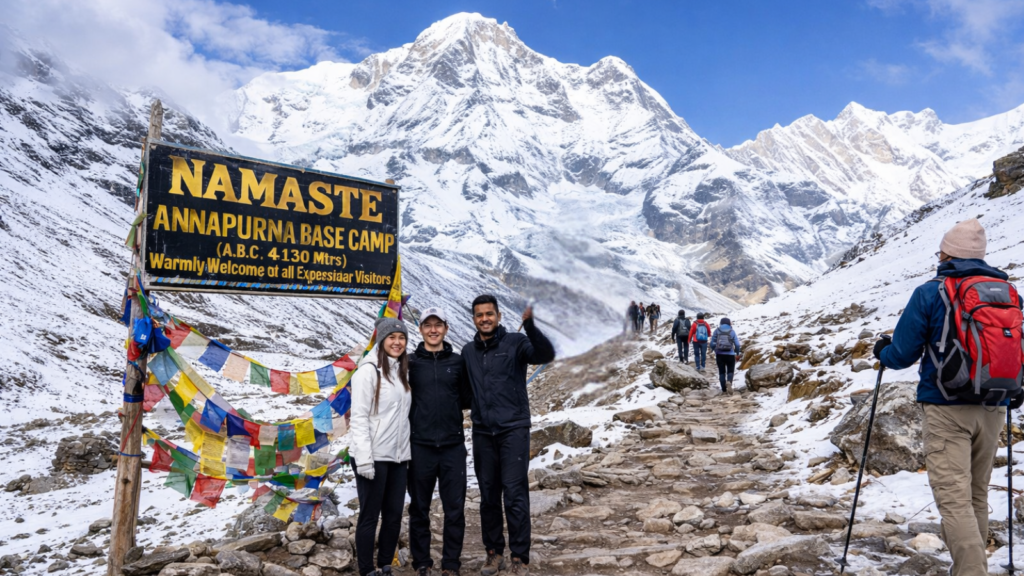
The classic 7-day ABC itinerary is the simplest for most trekkers because it balances progress with recovery while keeping the route straightforward. Expect a steady climb through villages and forest to Chhomrong and Bamboo, then a higher alpine corridor to Deurali, MBC, and ABC. The best version includes smart endpoints and a descent plan that protects your knees and preserves energy for the final day out.
ABC Itinerary at a Glance
| Day | Route | Approx. Distance | Walking Hours | Sleep Altitude |
| 1 | Pokhara → Nayapul → Tikhedhunga | 13 km (8 miles) | 5 to 6 hrs | 1,540 m (5,052 ft) |
| 2 | Tikhedhunga → Ghorepani → Chhomrong | 16 km (9.9 miles) | 7 to 8 hrs | 2,170 m (7,119 ft) |
| 3 | Chhomrong → Bamboo | 10 km (6.2 miles) | 4 to 5 hrs | 2,310 m (7,579 ft) |
| 4 | Bamboo → Deurali | 9 km (5.6 miles) | 5 to 6 hrs | 3,230 m (10,597 ft) |
| 5 | Deurali → Machhapuchchhre Base Camp (MBC) → ABC | 11 km (6.8 miles) | 6 to 7 hrs | 4,130 m (13,550 ft) |
| 6 | ABC → Bamboo (descent) | 16 km (9.9 miles) | 6 to 7 hrs | 2,310 m (7,579 ft) |
| 7 | Bamboo → Jhinu Danda → Nayapul → Pokhara | 18 km (11.2 miles) | 6 to 7 hrs | Return to city |
Start: Nayapul (after a 1.5-hour drive from Pokhara)
Finish: Nayapul or Jhinu Danda
Highest Point: 4,130 m (13,550 ft) at ABC
Highest Sleep: 4,130 m (13,550 ft)
Day 1–2 Route Plan: Pokhara → Trailhead Options → Chhomrong Region
The most important decision on Day 1 is your trailhead choice. Most trekkers start from Nayapul (reached by jeep from Pokhara in 1.5 hours). A second option is driving directly to Siwai or Jhinu Danda by jeep, which cuts 3 hours to 4 hours of walking on Day 1, useful in a 7-day plan but not ideal for building trail legs gradually.
The classic start from Nayapul → Birethanti → Tikhedhunga covers gentle riverside terrain. It eases your body into altitude and rhythm. Starting from a jeep-drop point higher up saves time but removes the warm-up benefit that the lower trail provides.
On Day 2, the route climbs hard, from Tikhedhunga through Ulleri (3,000 stone steps, not an exaggeration) up to Ghorepani or directly toward Chhomrong. Most 7-day itineraries push through to Chhomrong in one long day, which involves a descent from Ghorepani and a fresh climb. The total elevation gain sits around 1,600 m (5,249 ft) across both days, so pace yourself on the Ulleri stairs. Many first-timers burn their legs here and feel it by Day 4.
Day 3–4 Route Plan: Chhomrong → Bamboo/Dovan → Deurali
Day 3 is deceptively demanding. The descent from Chhomrong to the Chhomrong Khola river crossing is steep on stone steps, around 700 steps down, followed immediately by a steep climb back up to Sinuwa. From Sinuwa, the trail eases into forest as it drops toward Bamboo (2,310 m / 7,579 ft), which is the most popular overnight stop.
Dovan (2,600 m / 8,530 ft) is the next teahouse stop, roughly 1.5 hours beyond Bamboo. In a 7-day plan, stopping at Bamboo is smarter. It keeps Day 4 manageable, a steady 5 to 6 hour climb through Himalaya Hotel (2,920 m / 9,580 ft) and Dovan up to Deurali (3,230 m / 10,597 ft).
The place where most trekkers rush is here, specifically between Bamboo and Deurali. The trail enters the Modi Khola gorge, which is narrow, often cloud-filled, and susceptible to rockfall. Moving at a controlled pace here is not just about fitness, it is about awareness of the environment. Porters on this trail move fast. Stay left on narrow sections and give way confidently.
Day 5–7 Route Plan: Deurali → MBC → ABC and Best Return Strategy
Day 5 is the summit day of the trek, and the altitude crosses into serious territory. The climb from Deurali to Machhapuchchhre Base Camp (MBC) at 3,700 m (12,139 ft) takes roughly 2 hours. MBC sits at the base of the “fishtail” peak and gives the first full view of the Annapurna Sanctuary. Most trekkers stop briefly here and push straight to ABC.
The final 4 km (2.5 miles) from MBC to ABC gains 430 m (1,411 ft). The terrain is rocky, often snow-covered from October onward, and mentally harder than the numbers suggest because altitude fatigue compounds leg fatigue. Arriving at the amphitheater, surrounded by Annapurna I (8,091 m / 26,545 ft), Annapurna South, Hiunchuli, and Gangapurna, rewards every hard step.
For the return strategy, 2 options exist for the descent. The direct return via the ascent route takes 2 days back to Nayapul. The Jhinu Danda option adds a hot spring stop near Chhomrong, one of the most underrated rewards on the trail. Jhinu hot springs (natural thermal pools at roughly 1,780 m / 5,840 ft) soothe destroyed leg muscles and are reachable on Day 6 before the final drive to Pokhara on Day 7. For a 7-day plan, the Jhinu exit is the superior choice.
Choose the Best ABC Itinerary Length (5–12 Days)
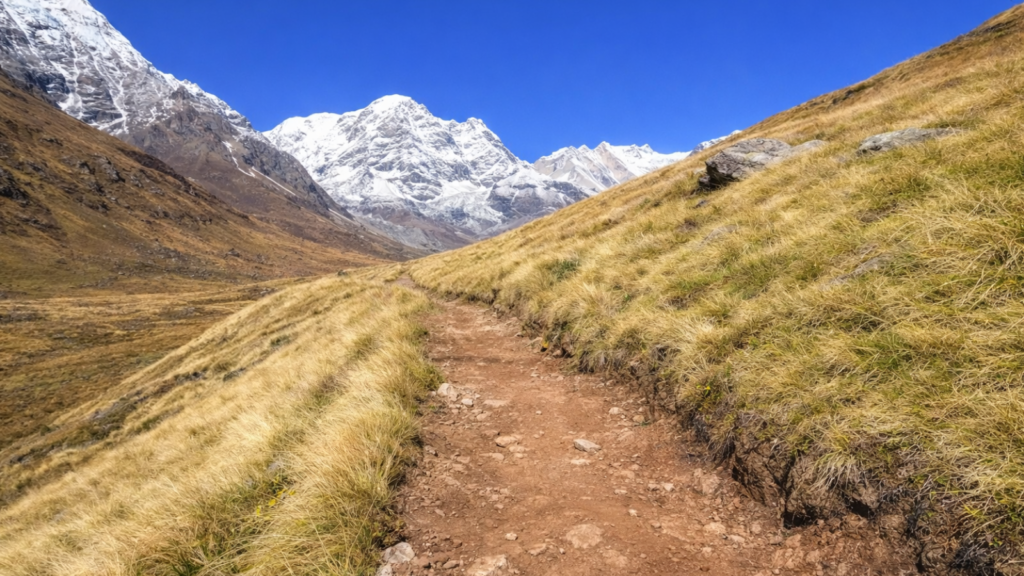
Your “best” itinerary length depends less on fitness and more on pacing, altitude comfort, and whether you want buffer days for weather and fatigue. A 5–6 day ABC can work, but it compresses long climbs and descents and leaves little room for slow acclimatization or trail delays. Most beginners do best with 7–10 days, while intermediates often choose 6–8 days if they already hike regularly.
5–6 Day “Short ABC” Itinerary: Who It Is For, Who Should Avoid It, and Why It Feels Harder
The 5-day to 6-day ABC itinerary is the most physically demanding version of this trek. It requires 8 to 10 hours of walking per day on Days 2 to 4, with no margin for altitude headaches, bad weather, or slow teahouse mornings.
It fits trekkers who have recent high-altitude experience (above 3,500 m / 11,483 ft in the past 6 months), train consistently, and are comfortable with back-to-back long days. It does not fit first-time trekkers at altitude, anyone with a history of Acute Mountain Sickness (AMS), or trekkers carrying their own packs without porter support.
The reason it feels harder is not just the distance. Daily altitude gain in a 5-day plan regularly exceeds 900 m (2,953 ft), which is the upper threshold that mountain medicine guidelines recommend for safe acclimatization above 3,000 m (9,843 ft). The body simply does not have time to produce enough red blood cells to compensate.
7-Day Classic vs 8–10 Day Comfortable
The 7-day plan is the standard, the 8-day to 10-day plan is the smarter one for most people. Adding just 1 extra day (an acclimatization night at Himalaya Hotel or Dovan) reduces AMS risk significantly on the push to ABC. Adding 2 extra days allows for a Poon Hill sunrise detour at the start, which many trekkers consider a highlight equal to ABC itself.
The 8-day to 10-day window is the sweet spot for first-time Nepal trekkers. Daily walking hours drop to 4 to 6 hours. Overnight stops are planned at logical altitude jumps. The body adjusts, the scenery unfolds more slowly, and enjoyment increases proportionally.
10–12 Day Relaxed Itinerary: Best for Buffers, Photos, Recovery, and a Smoother Descent
The 10-day to 12-day itinerary is the best choice for photographers, older trekkers, and anyone combining ABC with Poon Hill or Mardi Himal. It builds in 1 to 2 buffer days for weather, essential in spring and monsoon, and allows for a rest day at Chhomrong (2,170 m / 7,119 ft), which is the ideal altitude for acclimatization before entering the gorge.
The descent on a longer plan is also kinder to the knees. Splitting the return over 3 days instead of 2 reduces joint stress by roughly 30% in cumulative downhill load on any given day. For trekkers with prior knee problems, this is not optional, it is the plan to choose.
DIY vs Trekking Agency Itinerary: How Guides and Porters Change Daily Endpoints and Safety Margin
Guides change the daily plan in ways that most DIY trekkers do not anticipate. A good local guide adjusts endpoints based on your pace, weather windows, and teahouse availability, all in real time. They also recognize AMS symptoms before trekkers do, which is a documented safety advantage in remote high-altitude environments.
Porters do more than carry bags. Removing 12 kg to 15 kg (26 to 33 lbs) from your back cuts daily energy expenditure by an estimated 15% to 20%, which directly translates to more energy in reserve for high-altitude days. The efficiency gain is especially significant on Days 4 and 5 of a 7-day plan.
A trekking agency itinerary typically pads 1 extra day compared to DIY plans of the same length, favoring safer altitude gain. This is intentional and worth understanding before you assume the agency plan is “slower.”
Route Disambiguation (Direct ABC vs Poon Hill vs Jeep-Access Starts)
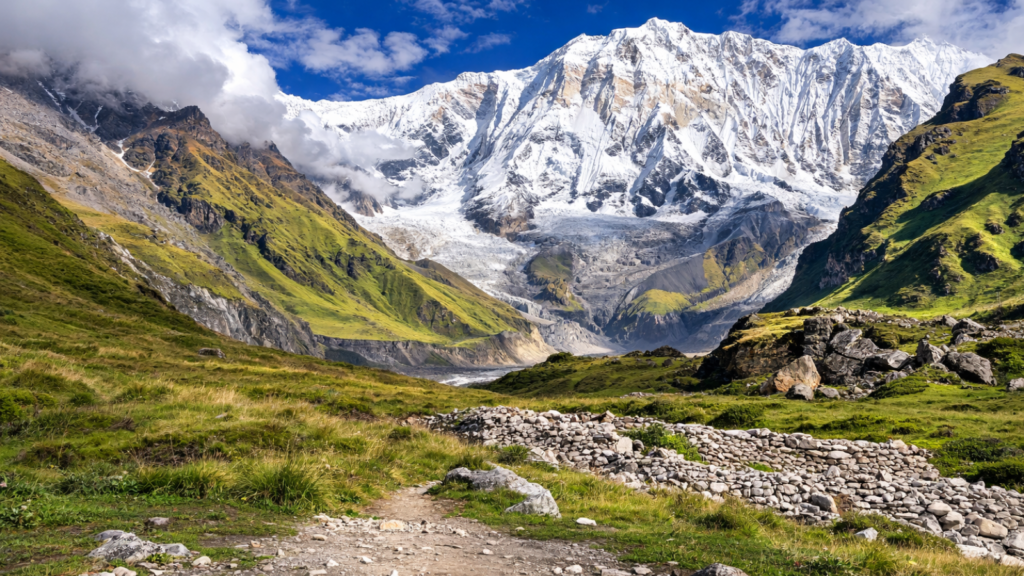
Not all “ABC itineraries” describe the same route, so route disambiguation prevents planning mistakes and mismatched expectations. Direct ABC focuses on the Modi Khola valley approach, while ABC and Poon Hill adds a famous viewpoint and changes early trail days and total time. Jeep-access starts can reduce walking days, but they also remove scenic sections and can increase day-to-day intensity depending on where you begin.
Direct ABC Itinerary (Modi Khola Approach): Who It Fits and What You Will See Most Days
The direct Modi Khola approach is the most efficient route to ABC. It suits trekkers with limited time (7 to 9 days total) who prioritize the Annapurna Sanctuary experience over panoramic ridge views.
The trail stays inside river valleys for most of the route. You walk through rhododendron and bamboo forest, cross multiple suspension bridges, and follow the Modi Khola river upstream into the sanctuary. The views are intimate rather than panoramic, dramatic gorge walls, close-up glacial moraine, and the abrupt opening into the amphitheater at MBC. What you do not get are the wide Himalayan panoramas that Poon Hill or Mardi Himal offer.
ABC and Poon Hill Itinerary: Best Sunrise Add-On and How It Changes the Early Days
Adding Poon Hill to an ABC itinerary requires a minimum of 9 days to 10 days and changes the first 2 days of the classic route significantly. Instead of heading directly toward Chhomrong from Tikhedhunga, you climb to Ghorepani (2,860 m / 9,383 ft) and rise before dawn to reach Poon Hill viewpoint (3,210 m / 10,531 ft) for sunrise.
The sunrise from Poon Hill is one of the 5 most photographed moments in Nepal trekking. The Dhaulagiri (8,167 m / 26,795 ft) massif to the west and Annapurna range to the north emerge from darkness in shades of orange and pink. It is genuinely worth the extra day, and the acclimatization benefit at Ghorepani before entering the gorge is a bonus.
From Ghorepani, the route descends to Tadapani and then tracks toward Chhomrong, rejoining the standard ABC trail. This section passes through dense rhododendron forest, which peaks in late March to mid-April, one of the best single-month windows for this route.
ABC and Mardi Himal Combo: Best “Two Treks in One” Plan and the Extra Days Needed
The Mardi Himal Trek combined with ABC is the best extended plan for intermediate trekkers with 12 to 14 days. Mardi Himal (5,587 m / 18,330 ft) shares the same trailhead area as ABC but takes a ridge route east of the Modi Khola valley, offering unobstructed views of Machhapuchchhre (6,993 m / 22,943 ft) and the Annapurna range.
The standard combination plan does Mardi Himal first (5 to 6 days from Pokhara), descends via Sidhing, picks up the ABC trail at Chhomrong, and completes the standard ABC route. This sequence is elevation-logical, Mardi Himal peaks at a lower altitude than ABC, making the subsequent push to 4,130 m (13,550 ft) feel more manageable for an acclimatized body.
Jeep-Access Start Options: Where People Cut Days, What You Miss, and When It Is Worth It
A jeep from Pokhara reaches Siwai (1,100 m / 3,609 ft) or Jhinu Danda (1,780 m / 5,840 ft), cutting 1 to 2 days from the standard route. It is worth it in specific circumstances, returning from injury, very limited time, or re-treks where the lower trail is already familiar.
What you miss is the gradual altitude warm-up and the Modi Khola lower trail, which includes some of the most culturally interesting villages on the route (Birethanti, Tikhedhunga). Jumping straight to mid-altitude also removes the leg-conditioning benefit of the lower trail, which is noticeable when the real climbing begins at Chhomrong.
Trail Reality: Elevation, Difficulty, and “Hard Parts” by Day
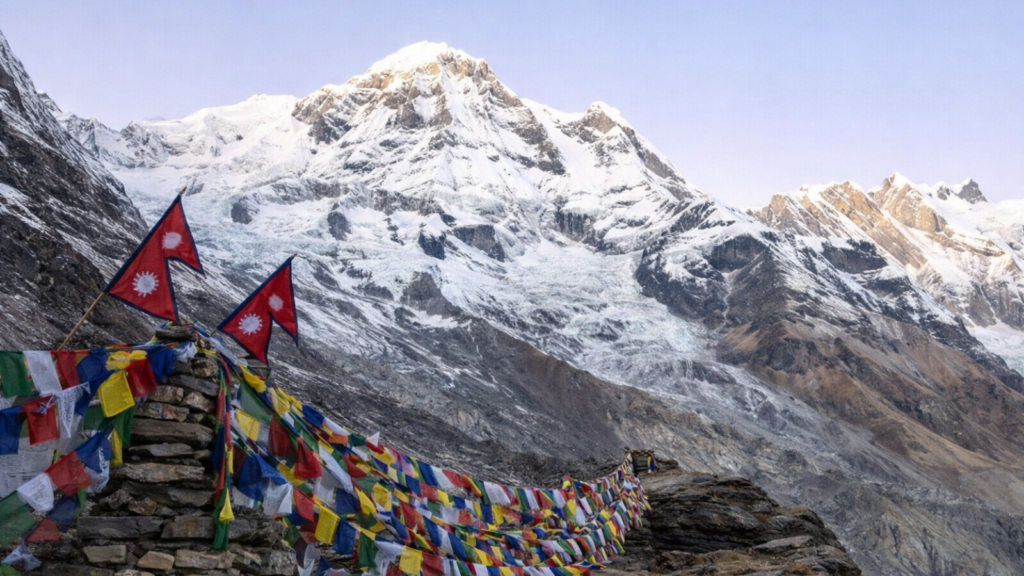
ABC isn’t technical, but it can feel hard because of repeated stair climbs, long downhill stretches, and higher-elevation cold that slows recovery. The toughest days are usually the climb to Chhomrong (and beyond) plus the push to ABC, where pacing and layering matter most. Understanding daily gain/loss and “where it feels steep” helps you choose endpoints that keep you strong instead of exhausted.
Elevation Profile and Daily Gain/Loss
The total elevation gain from Nayapul (1,070 m / 3,510 ft) to ABC (4,130 m / 13,550 ft) is approximately 3,060 m (10,040 ft) across 5 ascent days. That averages 612 m (2,008 ft) of net gain per day, manageable on paper, but the trail profile is not smooth.
Day 2 is the hardest single day for raw elevation. The climb from Tikhedhunga through Ulleri to Ghorepani gains roughly 1,400 m (4,593 ft). Day 5 (Deurali to ABC) is the hardest for altitude, a 900 m (2,953 ft) gain entirely above 3,230 m (10,597 ft), where oxygen density is approximately 65% of sea level.
The highest sleep point is ABC itself at 4,130 m (13,550 ft). Most trekkers sleep there for 1 night. Sleeping above 4,000 m (13,123 ft) is where altitude sickness becomes a real concern, and knowing the descent protocol, descend immediately if symptoms worsen overnight, is non-negotiable.
Difficulty by Day: Stairs, Steep Climbs, Knee-Saving Descent Tactics, and Fatigue Management
The ABC trail is famous for stone staircase sections, not technical climbing. There are no ropes, scrambles, or glacier crossings. The difficulty is cumulative, repeated stair climbing on Days 1 to 2 and the Chhomrong descent-climb cycle on Day 3 accumulate in the legs faster than most trekkers expect.
For the descent, trekking poles are the single most effective knee-protection tool available. Studies on downhill trekking show that poles reduce compressive knee force by 25% on steep descents. Plant the poles ahead of each downhill step and use them to absorb load, not just for balance. The Bamboo-to-Nayapul descent section covers roughly 2,000 m (6,562 ft) of downhill, knees that are unprepared for this will remember it for weeks.
Daily Hiking Hours Reality
Beginner trekkers average 2.5 km to 3 km per hour on this trail. Intermediate trekkers average 3.5 km to 4 km per hour. A section listed as “4 hours” on most itineraries assumes intermediate pace with a daypack. Add 1.5 to 2 hours to each day estimate for beginner-paced trekkers carrying their own bags.
Start each day by 7:00 AM to 7:30 AM. Afternoons in the Himalayas regularly bring clouds into the gorge after 12:00 PM to 1:00 PM, reducing views and occasionally bringing light rain or snow at altitude. Morning walking also means arriving at teahouses with room selection available, critical during peak season (October and November) when ABC fills before 3:00 PM.
Common Itinerary Mistakes: Rushing to ABC, Skipping Buffers, and Choosing the Wrong Endpoints
The 3 most common itinerary mistakes on the ABC Trek are rushing the high-altitude section, ignoring weather buffers, and choosing sleep points based on distance rather than altitude gain.
- Rushing to ABC without a proper acclimatization stop above 3,000 m (9,843 ft) causes the majority of AMS cases on this trail.
- Skipping a buffer day in a 7-day plan means a single weather event, one heavy snowfall or cloud-in day, forces a choice between turning back or pushing recklessly.
- Choosing Dovan over Bamboo as a sleep point on Day 3 gains an extra 290 m (951 ft) of altitude that day, which sounds small but is meaningful when the next day already climbs steeply to Deurali.
Best Time for ABC (Season-by-Season Itinerary Adjustments)
Autumn and spring are the easiest seasons to plan because visibility is often best and teahouse logistics are predictable, though crowds can be heavy. Winter brings colder nights and occasional snow that can force route changes or earlier turnarounds, while monsoon increases rain, leeches, and landslide risk on certain sections. The best itinerary is seasonal: you adjust start times, add buffer days, and use clear decision rules if conditions shift.
Autumn (Sep–Nov): Clearest Skies and Busiest Trails
Autumn is the best season for the ABC Trek in terms of visibility and trail conditions. October is the peak of peak season, skies clear after the monsoon, temperatures are stable, and Annapurna I appears crisp against blue sky from the base camp amphitheater.
The crowd challenge is real. ABC teahouses fill by early afternoon in October. Book 2 days ahead during this month, not 1. The trail between Deurali and ABC sees high foot traffic, which actually increases trail safety through better visibility of the route but reduces the solitude that many trekkers seek. Early starts (6:30 AM) help separate you from the main crowd wave that departs after breakfast.
Spring (Mar–May): Rhododendrons and Haze Patterns
Spring is the second-best window for ABC and the best for lower-trail beauty. Rhododendron forests between Ghorepani and Chhomrong bloom in March to mid-April, creating one of the most visually spectacular sections of any Himalayan trek.
The haze note is important: spring atmospheric haze builds through April and May due to dust and pre-monsoon moisture. Summit views from ABC in late April are noticeably hazier than October. For photographers prioritizing sharp mountain backdrops, aim for March to early April. For rhododendron photographs, mid-March to early April is the window.
Winter (Dec–Feb): Cold Nights and Snow Risk
Winter trekking to ABC is possible but carries meaningful risks that require an adjusted itinerary. Snow regularly covers the MBC-to-ABC section from December onward. At its heaviest, this section becomes impassable without crampons. Teahouses above Deurali sometimes close in January.
The safer winter itinerary includes 1 extra day below Deurali as a weather-read day. The turnaround rule is simple: turn around at MBC if snow depth exceeds 30 cm (12 inches) on the trail beyond. Temperatures at ABC drop to -15°C to -20°C (5°F to -4°F) on clear winter nights. A 4-season sleeping bag rated to -20°C (-4°F) is required, not optional.
Monsoon (Jun–Aug): Rain, Leeches, Landslides, and Safer Routing
The monsoon ABC itinerary requires the highest level of flexibility of any season. Rainfall is daily and often heavy. Leeches are active on the lower trail from Nayapul to Chhomrong, salt and lighter repellents work but require diligence every rest stop. More seriously, landslide risk is elevated from Bamboo onward, where the gorge narrows and debris falls are common.
The monsoon advantage is uncrowded trails, lush green forest, and dramatically lower teahouse prices (30% to 40% reductions in some areas). Build 2 buffer days into any monsoon itinerary, 1 for rain days below Chhomrong and 1 for the high gorge section. Check with local guides about trail closures before entering the Bamboo-Deurali section, as this area is the most vulnerable to seasonal trail damage.
Logistics That Make or Break the Itinerary (Permits, Transport, Teahouses, Cost, Packing)
Even a perfect day-by-day plan fails if transport timing, permits, and teahouse expectations aren’t mapped to your route and season. You’ll want a transport cheat sheet (Kathmandu–Pokhara–trailhead–exit), a simple “status-check” method for permits/rules, and a teahouse strategy that accounts for charging, showers, and meal-driven lodge economics. Your budget and packing become much easier when they’re tied to itinerary length, season, and whether you’re going DIY or with a trekking agency.
Transport Cheat Sheet: Kathmandu ↔ Pokhara ↔ Trailhead ↔ Exit
The 4 transport legs of the ABC Trek each carry hidden time costs that most online itineraries underestimate.
Kathmandu to Pokhara takes 25 minutes to 35 minutes by domestic flight (recommended) or 6 to 7 hours by tourist bus. Flights are frequently delayed in autumn and winter mornings due to mountain fog, add a half-day buffer if your trek must start the next morning. Pokhara to Nayapul trailhead is a 1.5-hour jeep ride (approximately $15 USD to $25 USD shared). On the exit, a jeep from Nayapul or Jhinu Danda back to Pokhara takes 1.5 to 2 hours. If you plan to fly Pokhara to Kathmandu the same day you exit the trail, build in a 4-hour minimum buffer.
Permits and Rules Status Check: ACAP, TIMS, Checkpoints, and Route-Based Requirements
2 permits are required for the ABC Trek: the Annapurna Conservation Area Permit (ACAP) and the Trekkers Information Management System (TIMS) card.
ACAP costs NPR 3,000 (approximately $22 USD) for foreign nationals. TIMS costs NPR 2,000 (approximately $15 USD) for independent trekkers or NPR 1,000 (approximately $7.50 USD) for trekkers with a registered agency. Both are obtainable at the Nepal Tourism Board (NTB) office in Pokhara or at Birethanti checkpoint. Checkpoints along the trail will ask to stamp your TIMS card at multiple points, keep it accessible in your top pocket, not buried in your bag. Trekkers combining with Mardi Himal need to check for any additional route-specific requirements, as the Mardi Himal trail has had seasonal permit changes.
Teahouse Planning by Altitude: Room and Meal Pricing Logic, Showers, Wi-Fi, Bookings
Teahouse pricing on the ABC Trail follows a clear altitude logic, prices increase by roughly 20% to 40% for every major altitude tier crossed.
At Chhomrong (2,170 m / 7,119 ft), a basic twin room costs NPR 300 to NPR 500 (approximately $2.50 to $4 USD) per night, teahouses operate on the expectation that guests eat meals there, where margins are higher. A dal bhat (traditional Nepali lentil rice meal) costs NPR 550 to NPR 750 ($4 to $5.50 USD) at this altitude. At ABC (4,130 m / 13,550 ft), the same dal bhat costs NPR 900 to NPR 1,200 ($7 to $9 USD). Hot showers are available at Chhomrong and Himalaya Hotel, above Deurali, expect bucket showers or cold only. Wi-Fi exists up to Himalaya Hotel but is slow and costs NPR 300 to NPR 500 per hour. Charging devices costs NPR 200 to NPR 500 per session; bring a power bank for the ABC night.
Book ahead for October by contacting teahouses via phone or your trekking agency. The teahouses at Deurali, MBC, and ABC are the most limited in capacity and the ones most likely to fill.
Cost and Packing System: Budget by Itinerary Length and Season Packing List
A realistic total budget for the ABC Trek (excluding international flights) runs from $600 USD to $1,200 USD for a 7-day to 10-day trip, depending on whether you hire a guide, use a porter, and how often you order additional snacks at altitude.
Budget breakdown approximation for a 7-day solo trek:
| Item | Approximate Cost (USD) |
| Pokhara flights (return) | $120 to $180 |
| Permits (ACAP and TIMS) | $37 |
| Teahouse rooms (6 nights) | $25 to $40 |
| Meals and drinks (6 days on trail) | $120 to $180 |
| Guide (7 days) | $150 to $200 |
| Porter (7 days) | $120 to $160 |
| Transport (Pokhara ↔ Nayapul) | $30 to $50 |
| Total estimate | $600 to $850 |
For packing, the rent-vs-bring decision is straightforward: rent trekking poles, down jackets, and sleeping bags in Pokhara (Lakeside area has dozens of reliable rental shops at $2 to $4 USD per item per day) unless you trek regularly. Bring your own boots, rented boots are a leading cause of blisters and ankle issues on the ABC trail. A base layer, waterproof shell jacket, fleece, trekking trousers, gaiters for snow season, and a 40-litre to 50-litre pack complete the non-negotiable kit.
The essential packing list by category:
- Layers: moisture-wicking base layer, insulating mid-layer, waterproof shell
- Footwear: broken-in hiking boots with ankle support, camp sandals
- Health: blister kit, Diamox (acetazolamide) if prescribed, water purification tablets, electrolyte sachets
- Navigation: downloaded offline maps of the Annapurna region (Maps.me or Gaia GPS)
- Documents: passport, ACAP permit, TIMS card, travel insurance documents with rescue coverage
Travel insurance with helicopter evacuation coverage (minimum $100,000 USD cover) is not optional on this trek. Helicopter evacuations from ABC run $3,000 to $5,000 USD and are common enough that every experienced trekker on this trail carries the policy number in their top pocket.
What is the best Annapurna Base Camp trek itinerary for beginners?
The best Annapurna Base Camp itinerary for beginners is a 7–10 day plan that allows gradual altitude gain and built-in rest days. A 9-day route from Pokhara through Ghandruk, Chhomrong, Deurali, and ABC (4,130 m) balances pacing and recovery. Longer itineraries reduce fatigue and lower altitude risk.
Can I do Annapurna Base Camp in 5 or 6 days safely?
You can complete Annapurna Base Camp in 5–6 days, but the schedule requires 6–8 hour hiking days and minimal buffer time. This pace suits trekkers with strong endurance and prior altitude experience. Faster ascents increase fatigue and altitude illness risk above 3,000 m.
How many hours do you hike each day on the ABC trek?
Most trekkers hike 4–7 hours per day on the Annapurna Base Camp trek. Lower sections involve steep stair climbs in humid forest, while higher sections slow pace due to cold and thinner air above 3,000 m. Plan an additional 1 hour daily for breaks and meals.
What is the hardest day on the Annapurna Base Camp trek?
The hardest day on the Annapurna Base Camp trek is often the climb to Chhomrong or the ascent from Deurali to ABC (4,130 m). Steep stone steps, early cold starts, and altitude fatigue above 3,500 m increase difficulty. Rapid descents also strain knees.
Is Annapurna Base Camp harder than Everest Base Camp?
The main difference between Annapurna Base Camp and Everest Base Camp is elevation versus steepness. Everest Base Camp reaches 5,364 m and demands longer altitude adjustment. Annapurna Base Camp reaches 4,130 m but includes repeated steep stair climbs and rapid elevation gain.
Do I need a guide for the Annapurna Base Camp trek?
You do not legally require a guide for most standard Annapurna Base Camp routes, but regulations can change and checkpoints verify permits. Beginners benefit from guides for logistics, pacing, and safety. Guided treks simplify transport, accommodation, and conservation permit handling.
What permits are needed for the ABC trek (ACAP, TIMS)?
The Annapurna Base Camp trek requires an ACAP (Annapurna Conservation Area Permit). Many trekkers also register under TIMS depending on current regulations and entry points. Check permit status before departure and carry printed copies with passport details for checkpoints.
Where does the ABC trek usually start and end?
The Annapurna Base Camp trek usually starts in Pokhara and connects to trailheads such as Nayapul, Ghandruk, or Jhinu. The trek ends at a roadhead before returning to Pokhara by jeep or bus. Some routes form a loop and include Jhinu hot springs.
How much does the Annapurna Base Camp trek cost?
The Annapurna Base Camp trek costs USD $25–$40 per day for food and teahouse lodging on a DIY plan. Guided packages range from USD $600–$1,200 for 7–10 days depending on season and services. Higher elevations increase prices due to transport difficulty.
What should I pack for the ABC trek?
Pack layered clothing for temperatures from 5°C to 20°C, waterproof rain gear, broken-in hiking boots, and a -5°C rated sleeping bag for higher lodges. Carry a 30–40 liter daypack and limit base weight to 8–10 kg to reduce fatigue on stair sections.