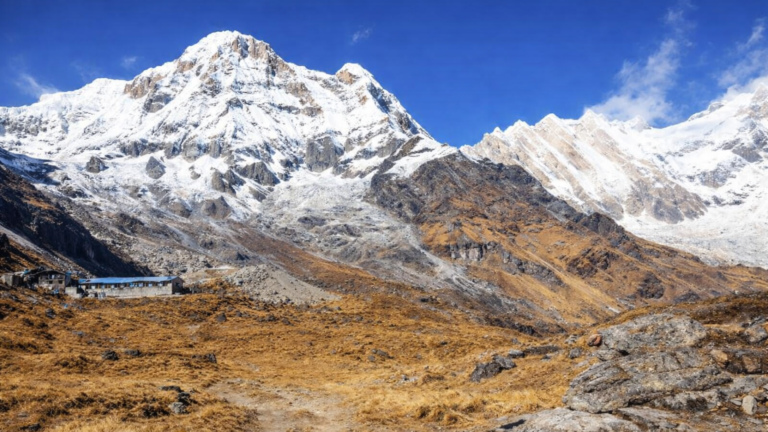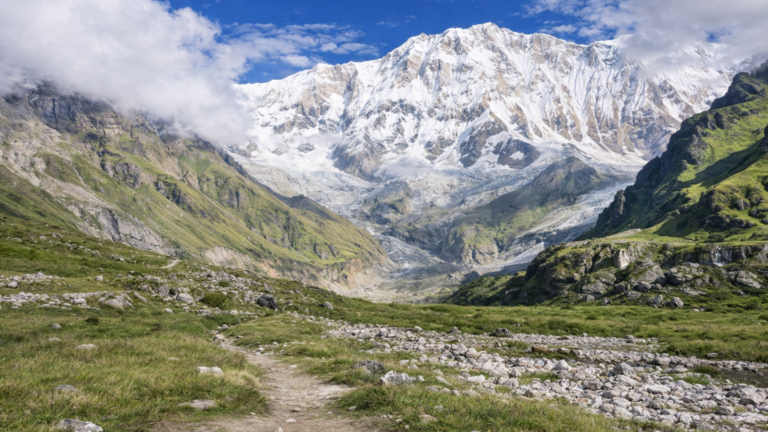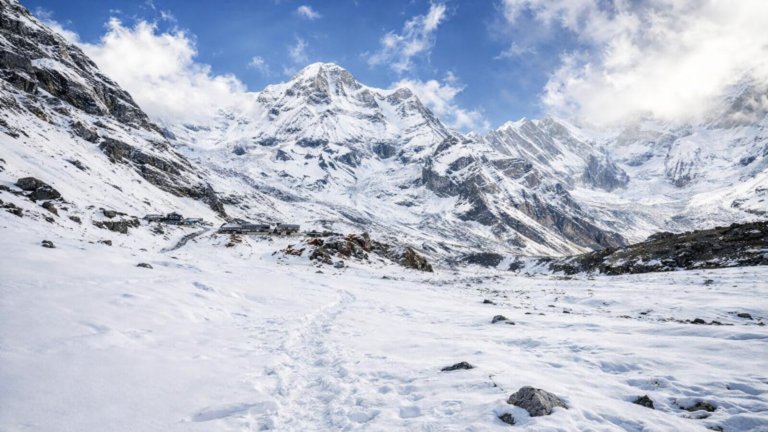
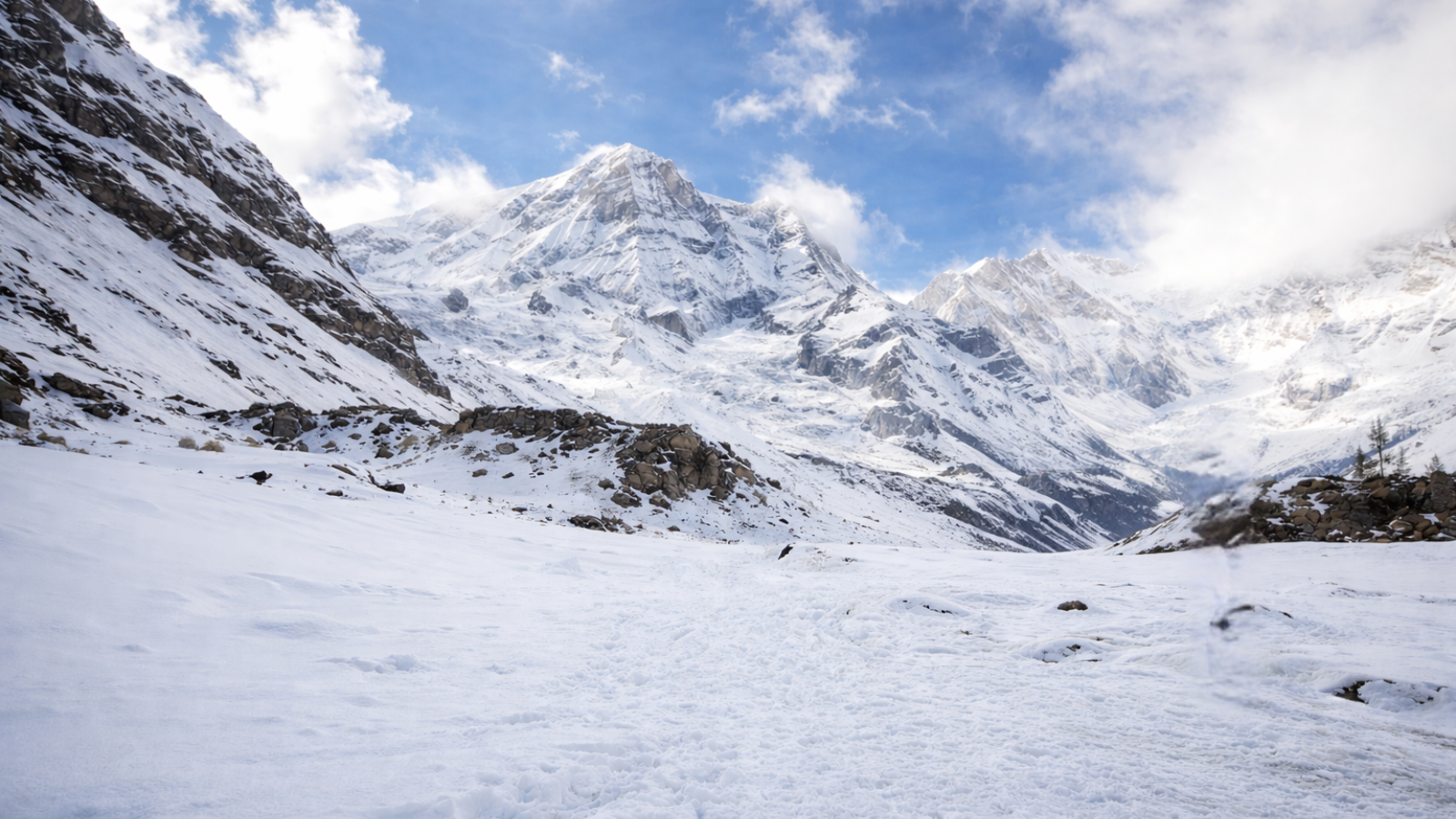

Annapurna Base Camp (ABC) Trek is a teahouse trek in Nepal’s Annapurna Sanctuary that climbs from warm river valleys to high alpine terrain at 4,130 m (13,550 ft), where weather shifts fast and morning visibility can decide your entire view day. Choosing the best time to trek ABC is mainly a trade-off between clear skies, trail safety, night temperatures, and teahouse crowd pressure, not just “dry vs rainy.”
Autumn (late September–November) is the most reliable window for crisp mountain panoramas and stable trails, while spring (March–May) adds warmer days and rhododendron blooms with more afternoon cloud build-up later in the season. Shoulder weeks (early March, late November, early December, and late September) often deliver the best balance of fewer people and acceptable conditions, while monsoon (June–August) and deep winter (January–February) raise the odds of low visibility, wet/unstable trails, or snow/ice near Deurali–MBC–ABC. This guide breaks the decision down by best months, goal-based timing (views, warmth, crowds, budget), and a month-by-month cheat sheet so you can pick dates that match your risk tolerance and comfort.
Best Time for Annapurna Base Camp Trek
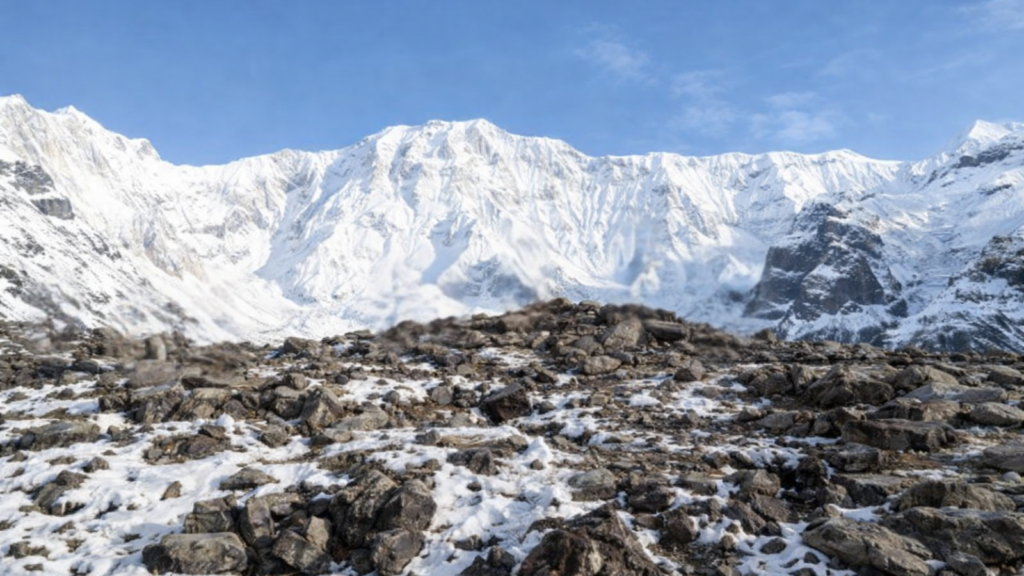
For most people, the best time for the Annapurna Base Camp trek is autumn (late September–November) because skies are typically clearest and the trail is drier and more predictable. Spring (March–May) is the next best option with warmer days and beautiful rhododendron forests, though clouds can build earlier in the afternoon later in the season. If you want fewer crowds without high risk, target shoulder weeks (late September, late November, early December, or late February) and avoid peak monsoon and the coldest winter stretches.
The Best Months for ABC Trek for Most People (The Safest “Default” Window)
October and November are the best months for the Annapurna Base Camp trek for most international trekkers. These 2 months deliver the most consistent combination of clear skies, stable weather, manageable temperatures, and trail safety.
- October brings post-monsoon clarity. The summer rains have washed the atmosphere clean, and visibility at base camp regularly stretches across 6 to 8 peaks simultaneously. Daytime temperatures on the lower trail (Chhomrong to Deurali) stay between 10°C to 18°C (50°F to 64°F). At base camp itself, expect nights of -5°C to -10°C (23°F to 14°F), cold but entirely manageable with the right sleeping bag.
- November tightens the temperature window. Days remain clear but colder. The higher sections, Machhapuchhre Base Camp (MBC) and ABC, begin accumulating frost. Snowfall becomes more likely after mid-November, especially above 3,500 meters (11,483 feet). For intermediate trekkers comfortable with cold nights, late November still delivers outstanding rewards.
What most guides fail to mention: the first 2 weeks of October are statistically the most crowd-friendly period within this window. Dashain festival (usually late September to early October) keeps many local workers at home, which temporarily eases teahouse pressure before the main rush hits.
Second-Best Window (Similar Views, Different Trade-Offs)
March and April form the second-best window for the ABC trek, ideal for trekkers who prefer warmer nights and dramatic rhododendron blooms. These months trade absolute sky clarity for warmth, color, and a more forgiving trekking environment.
March begins cold but opens into ideal conditions by mid-month. April is consistently the warmest trekking month on the ABC route. Daytime highs at lower elevations reach 20°C to 24°C (68°F to 75°F). Cloud build-up typically starts after 1:00 PM to 2:00 PM, which means morning views at base camp are frequently stunning. Photography windows are shorter but highly rewarding.
The trade-off is real. Spring haze from agricultural burning in the Terai and northern India reduces long-distance clarity compared to October. Views are beautiful, not sharp. For wildlife photographers, the rhododendron forests between Chhomrong and Bamboo burst into red, pink, and white blooms from late March through April, a spectacle that autumn simply cannot offer.
Shoulder-Season Sweet Spots (Fewer Crowds Without High Risk)
Early March (1st to 15th) and late November (15th to 30th) are the shoulder-season sweet spots on the ABC trek. These 2-week windows give trekkers reduced crowds, reasonable weather, and strong mountain views.
- Early March rewards patient planners. Teahouses are quieter. Permit queues are shorter. The trail has recovered from winter but spring trekkers have not yet arrived in force. Temperatures at altitude remain cold (expect -8°C to -12°C / 18°F to 10°F at base camp at night), so a quality sleeping bag rated to -15°C (5°F) is non-negotiable.
- Late November works for trekkers who move quickly and dress for winter. The crowds have thinned dramatically. The sky stays crisp. The risk is snow above MBC, which is possible but rarely trail-closing at this stage. Adding microspikes to your kit removes most of the ice-section anxiety.
When Not to Go (If You Want Maximum Safety, Views, and Comfort)
June, July, and August are the months to avoid for trekkers who prioritize safety, clear mountain views, and physical comfort. The full monsoon is active across this 3-month window, bringing heavy daily rainfall, active landslide risk, and near-zero summit visibility.
January and February present a different set of challenges. Heavy snowfall regularly closes the Deurali to MBC section. The risk of trail-cutting avalanches increases significantly above 3,200 meters (10,499 feet). Inexperienced trekkers have turned back, or worse, made dangerous decisions, on icy switchbacks above MBC during this period.
This does not mean these months are impossible. It means they require specific preparation, experience, and a willingness to turn around. More on that in Section 4.
Choose Your Best Time by Goal
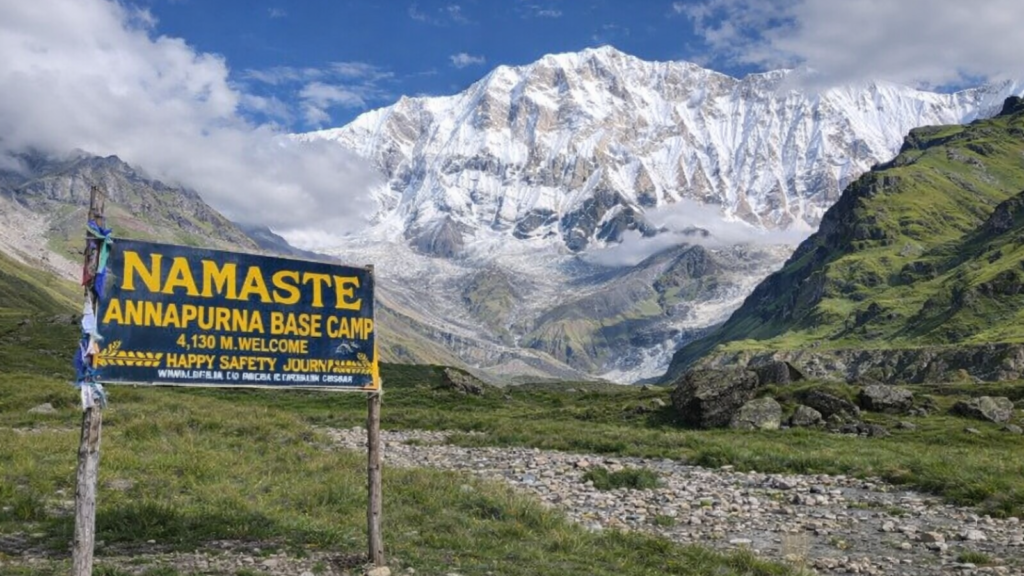
If your priority is mountain views and photography, choose peak autumn weeks or early spring and plan to reach viewpoints early in the day. If you want warmer nights, aim for late spring or early autumn when teahouse nights are less harsh at higher stops. If you’re a beginner, the “best time” is the season that gives you the most stable walking conditions so you can focus on pacing and recovery, not weather problems.
Best Time for Clear Mountain Views and Photography (Visibility Rules That Matter)
The best time for clear mountain views and photography on the ABC trek is October 1st to November 10th. This 40-day window delivers the statistically highest percentage of cloudless mornings at base camp.
The critical insight most photography guides miss: visibility at ABC depends on morning arrival. Trekkers who reach base camp by 8:00 AM to 9:00 AM during October and early November consistently report wide, clear panoramas. Cloud rolls in by 10:30 AM to 11:30 AM even in the best conditions. Scheduling an overnight stay at ABC, rather than a single-day push from MBC, dramatically increases your chances of catching both sunset and sunrise.
April offers a shorter morning window (clear skies from 6:00 AM to 9:00 AM) with richer foreground color from rhododendrons. For landscape photography that includes the mid-trail environment, April is arguably more visually rewarding than October.
Best Time for Warmer Nights and Easier Comfort Trekking
The best time for warmer nights and easier comfort trekking on the ABC trail is April through the first 2 weeks of May. Teahouses are warm. The trail is dry. Altitude-related cold stress at base camp is manageable without expedition-grade gear.
A common beginner mistake is underestimating night-time temperatures at altitude in October. October days feel warm, but base camp nights in mid-October regularly drop to -7°C (19°F). April nights at the same location sit around -2°C to -4°C (28°F to 25°F), a meaningful difference for trekkers who are new to high-altitude sleeping.
Trekkers who struggle with cold or who have not previously slept above 3,500 meters (11,483 feet) gain a real safety and comfort advantage from choosing the spring window.
Best Time to Avoid Crowds (Without Losing the “Good Weather” Advantage)
The best time to avoid crowds on the ABC trek without sacrificing safe, clear-weather trekking is the first 2 weeks of March or the last 2 weeks of November. These windows sit outside the peak booking rush but inside the boundary of acceptable conditions.
Crowd management on this route is not just about comfort. It is a logistics problem. The most congested teahouses, Deurali, MBC, and ABC, have limited beds. During peak October, trekkers who arrive after 3:00 PM frequently find no available rooms. In early March or late November, the same lodges are running at 30% to 50% capacity.
For trekkers with flexible dates, even shifting 1 week earlier or later within the peak window (for example, departing Pokhara on October 3rd instead of October 10th) measurably reduces teahouse pressure at the critical upper-altitude lodges.
Best Time for Budget Travelers (What Actually Gets Cheaper and When)
The best time for budget travelers on the ABC trek is January through February or June through early September. Room rates at teahouses drop by 30% to 50% outside peak season. Food pricing also softens in quieter periods, though the gap is smaller (roughly 10% to 20%).
The real savings for budget trekkers are in Pokhara itself, the gateway city. Hotels, gear rental shops, and transport operators all discount aggressively during the off-peak window. Renting trekking poles, sleeping bags, and down jackets in Pokhara during monsoon season costs significantly less than in October.
The trade-off is real and worth stating plainly. Budget winter trekking demands heavier gear investment. Budget monsoon trekking demands high-quality waterproofing and strong mental flexibility. The financial savings are genuine. The physical and logistical demands are also higher.
ABC Month-by-Month Cheat Sheet
A month-by-month plan helps because ABC conditions shift fast: a “good” September can feel very different from late October, and early March can differ from May. Use the cheat sheet to compare visibility, rain risk, and temperature so you’re not guessing based on broad seasons. This is also where you decide whether you need extra buffer days for weather, especially around monsoon edges and winter cold snaps.
Weather by Month Table: Temperature, Rainfall, Visibility, and Crowd Level (At-a-Glance)
| Month | Avg. Day Temp (Chhomrong) | Avg. Night Temp (ABC) | Rainfall | Visibility | Crowd Level |
| January | 8°C (46°F) | -12°C (10°F) | Low | Moderate | Low |
| February | 10°C (50°F) | -10°C (14°F) | Low | Moderate | Low |
| March | 14°C (57°F) | -8°C (18°F) | Low–Mod | Good | Moderate |
| April | 20°C (68°F) | -3°C (27°F) | Moderate | Good | High |
| May | 22°C (72°F) | 0°C (32°F) | Moderate | Fair | Moderate |
| June | 24°C (75°F) | 5°C (41°F) | Very High | Poor | Very Low |
| July | 23°C (73°F) | 6°C (43°F) | Extreme | Very Poor | Very Low |
| August | 23°C (73°F) | 5°C (41°F) | Extreme | Very Poor | Very Low |
| September | 21°C (70°F) | 2°C (36°F) | High | Fair | Low |
| October | 18°C (64°F) | -5°C (23°F) | Very Low | Excellent | Very High |
| November | 14°C (57°F) | -8°C (18°F) | Very Low | Excellent | High |
| December | 10°C (50°F) | -12°C (10°F) | Low | Good | Low |
March–May: Spring Month-by-Month Differences (Blooms, Warmth, Cloud Build-Up)
- March opens with cold mornings and fast-improving conditions by mid-month. The rhododendron forests between Jhinu Danda and Bamboo begin blooming by the 3rd week of March, starting at lower elevations and progressing upward. Morning views are crisp. Afternoon cloud builds from 1:00 PM onward.
- April is the warmest, most colorful month on the trail. The rhododendron bloom peaks between 2,000 meters (6,562 feet) and 3,200 meters (10,499 feet). Afternoon cloud arrives earlier, sometimes by noon at higher elevations, so reaching MBC or ABC before mid-morning is critical for views. Trekker volume is high but manageable compared to October.
- May shifts the risk profile. The pre-monsoon period brings increasing afternoon thunderstorms, particularly in the upper sanctuary. Mornings remain clear. By mid-May, heat and humidity at lower trail sections make the ascent from Chomrong through Sinuwa more physically demanding. Leeches appear in the lower jungle sections from early May onward.
June–August: Monsoon Month-by-Month Reality (Rain, Leeches, Landslide Risk)
- June marks the beginning of the South Asian monsoon. Rainfall arrives daily, typically from mid-morning. The trail from Bamboo to Deurali becomes saturated. Leech density peaks in the forest sections. Mountain views above Deurali are largely obscured by cloud for 80% to 90% of days.
- July is the heaviest rainfall month. Landslide risk on the section between Jhinu Danda and Chhomrong, and particularly on the unstable slopes above Deurali, is at its annual peak. Teahouses remain open, but trail closures occur without warning. Trekking insurance with helicopter evacuation coverage is not optional during this month.
- August begins the slow transition toward post-monsoon. Rainfall intensity decreases slightly by the final week of August. Experienced trekkers who go in late August (23rd to 31st) occasionally catch partially clear mornings at base camp, but this is unpredictable and not a reliable planning assumption.
September–February: Autumn-to-Winter Month-by-Month Differences (Clarity, Cold, Snow Chance)
- September is a transitional month. The first 2 weeks carry residual monsoon rain and poor visibility. The final 2 weeks of September mark a sharp improvement. Many experienced trekkers target the September 20th to 30th window as an underrated entry point, good views, very few crowds, and recovering trails.
- October delivers the most consistently excellent conditions of the year. Details covered in Section 1.1 above.
- November maintains excellent clarity through mid-month, then transitions to winter conditions. Snow above 3,500 meters (11,483 feet) is possible from November 15th onward. The trail from Deurali to MBC and MBC to ABC begins to accumulate ice in the mornings.
- December brings reliable snow at and above MBC. The base camp approach trail is frequently icy. Trekker numbers drop sharply. The reward is genuine solitude and striking winter scenery, but the risk profile demands serious preparation.
- January and February are the coldest months. Base camp nighttime temperatures regularly fall to -15°C (5°F) or below. The risk of trail-blocking snowfall is highest. The trail remains technically possible for prepared, experienced trekkers, but beginners have no business being above Deurali in these months without a guide, layered insulation, and emergency protocols.
Seasons Explained on the ABC Route (What You Will Feel on Trail)
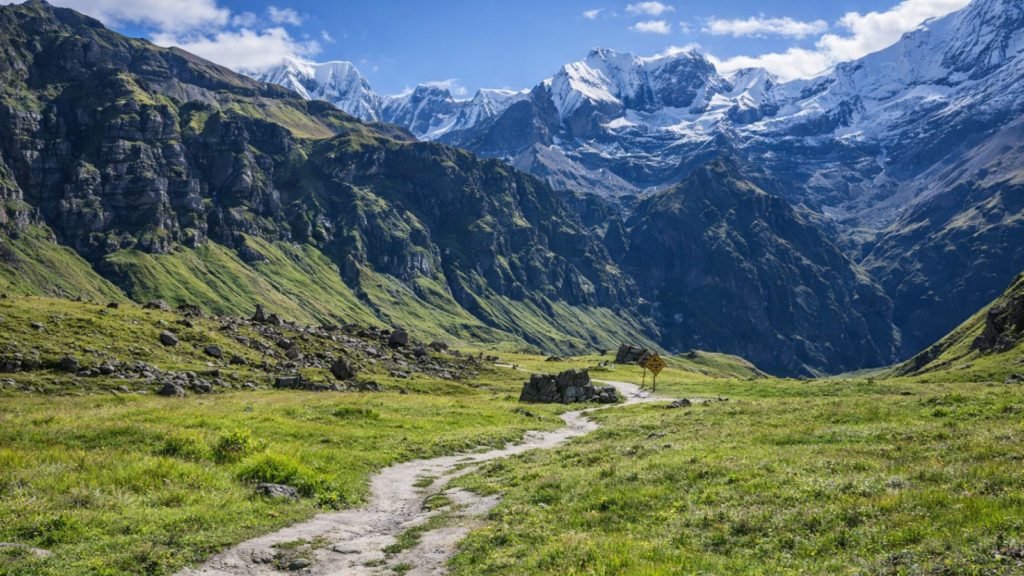
ABC isn’t just “warm or cold”, it changes by altitude, so you can hike in a t-shirt at lower villages and still face freezing mornings near MBC/ABC. Autumn usually feels crisp and stable, spring feels warmer and greener, winter brings the highest chance of snow/ice near Deurali–MBC–ABC, and monsoon brings wet trails and lower visibility. Understanding the season “feel” helps you choose the right start time, daily schedule, and gear system.
1. Spring (March–May): Trail Comfort, Rhododendrons, and When Views Are Best
The spring trekking experience on the ABC route is defined by sensory richness. The lower jungle sections (Jhinu Danda to Bamboo) are lush, green, and alive with birdlife. The rhododendron forests are the most visually dramatic natural feature on this trail, and they only exist in full glory during this window.
Trail surfaces are firm and dry in March and early April. The stone-stepped sections between Chhomrong and Sinuwa, relentlessly steep at 3,000-plus steps, feel significantly easier in 15°C (59°F) daytime warmth than in cold autumn air.
The key viewing strategy in spring: plan your ABC arrival for before 8:30 AM. Spending 2 nights at MBC (rather than the standard 1) gives you a higher probability of at least 1 perfect morning at base camp. Cloud consistently builds from the south-west by late morning, so the window is real but narrow.
2. Autumn (Sept–Nov): Clearest Skies, Busiest Trails, and How to Plan Around Crowds
Autumn on the ABC trek is the most commercially active season in the Annapurna Conservation Area. The trail carries the highest daily trekker volume of the year from early October through early November.
The practical reality: teahouses between Deurali and ABC operate at or above capacity every night from October 5th to November 5th. Trekkers who set out late from lower lodges, arriving at MBC or ABC after 4:00 PM, frequently face the humiliating reality of sleeping in the dining room on a bench. This is not an exaggeration. It is a documented and common occurrence during peak weeks.
The crowd management strategy that actually works: start trekking from Jhinu Danda or Chomrong by 6:30 AM to 7:00 AM. Arrive at each accommodation point by 1:00 PM to 2:00 PM maximum. At MBC and ABC specifically, prioritize bed securing over sightseeing on arrival day. Pre-book via phone (most MBC and ABC teahouses have Nepali mobile numbers that lodge owners in Pokhara happily provide).
3. Winter (Dec–Feb): Snowline and Icy Sections Risk Map (Deurali–MBC–ABC) and Traction Tips
The most dangerous sections of the ABC trail in winter form a clear geographic pattern. The 3 highest-risk segments are the traverse from Deurali to MBC (3,700 m / 12,139 ft), the MBC to ABC approach (the final 2 km / 1.2 miles on open slopes), and any north-facing gully sections above MBC that channel wind-loaded snow.
Ice accumulates overnight on the stone steps and trail edges at these elevations. Morning departures before ice softens (before 9:00 AM) carry the highest slip risk. The single most effective mitigation is a pair of microspikes, lightweight, packable traction devices that attach to standard trekking boots and reduce slip risk on compacted snow and ice by approximately 80%.
Gaiters prevent snow from packing into boots. A trekking pole in each hand (not optional on icy traverses) provides the balance margin that separates a clean crossing from a fall.
The reward for winter trekking is the complete transformation of the sanctuary landscape. Snow-covered rhododendron branches. Pristine, untouched trail sections. Empty teahouses where owners become genuine hosts rather than overworked servers. Several trekkers describe winter ABC as a more intimate, spiritually resonant experience than the crowded autumn version. That experience is real, but it demands preparation that most beginners are not yet ready for.
4. Monsoon (Jun–Aug): “If You Still Go” Safety Plan (Timing, Flexibility, Gear, Route Decisions)
Some trekkers go in monsoon. Budget constraints, inflexible work schedules, or a genuine love of green landscapes drive this decision. The following is a practical safety framework, not a recommendation to go, but a guide for those who do.
- Timing: Start each day’s trekking by 6:00 AM to 6:30 AM. Rain typically arrives by 10:00 AM to 11:00 AM and intensifies through the afternoon. Reaching your lodge before the main rainfall protects both safety and morale.
- Flexibility: Build 2 to 3 extra days into any monsoon itinerary. Trail closures from landslides between Jhinu Danda and the upper sanctuary are common. The trail from Sinuwa to Bamboo crosses several flood-prone seasonal streams. One blocked route section does not end a trek, but it does end a trek for trekkers with no time buffer.
- Gear essentials: Pack rain covers for both the trekking pack and day bag. Use waterproof trekking boots (not trail runners). Gaiters prevent leech entry at lower elevations. A trekking umbrella (widely used by Nepali trekkers) is a genuinely underrated piece of monsoon kit.
- Route decisions: The most critical monsoon call is the Deurali to MBC section. Heavy overnight rainfall destabilizes the gully sections above Deurali. Consult teahouse owners at Deurali on the morning of planned ascent, they monitor trail conditions daily and will tell you plainly if the upper section is unsafe.
Crowds, Logistics, and Real-World Timing (What Trips People Up)
Peak season isn’t only about crowds on the trail, it’s also about teahouse availability, dining-room congestion, and early booking pressure in popular stops. Transport timing can also change by season, especially when road conditions and delays affect your start day. Festival weeks like Dashain and Tihar can add extra travel demand, so planning those dates smartly can reduce stress and costs.
Crowd Hotspots and Teahouse Pressure Points (Where Booking Matters Most)
The 3 highest-pressure accommodation points on the ABC route are Machhapuchhre Base Camp, Annapurna Base Camp itself, and Deurali. These lodges cannot expand their bed capacity. The demand spike during peak October exceeds supply by a significant margin.
The specific problem with MBC: it functions as both an overnight lodge and a daytime rest stop for trekkers continuing to ABC and back. Beds at MBC fill from the bottom up, trekkers ascending from Deurali arrive first and take available beds, leaving late-arriving groups with dining-room floor space.
The practical solution is the same regardless of season. Carry the mobile number of your target teahouse and call ahead from Deurali or Bamboo. Most teahouse owners in the upper sanctuary actively take reservations via phone. The Annapurna Conservation Area Project (ACAP) also maintains an updated lodge contact list at the Chomrong check post.
Cost and Availability by Season (Rooms, Food Pricing, Hot Showers, Wi-Fi/Charging)
Room pricing on the ABC route operates on a semi-formal seasonal structure. During peak season (October to November, April), standard rooms at upper teahouses cost 500 NPR to 800 NPR (approximately $4 to $6 USD) per night. Off-season rates drop to 200 NPR to 400 NPR ($1.50 to $3 USD). In many off-season teahouses, the room charge is waived entirely when trekkers commit to eating meals at the same lodge.
Hot shower availability is seasonal and elevation-dependent. Solar-heated showers function well from March through October at lodges below 3,000 meters (9,843 feet). Above Deurali, expect cold-water showers year-round (some teahouses have gas-heated systems, but these are not universal). Wi-Fi and device charging are available at most lodges up to and including MBC during peak season. In winter, solar charging at upper lodges becomes unreliable due to reduced sunlight hours.
Food pricing follows a clear pattern. A standard dal bhat (the ubiquitous rice and lentil meal) costs 450 NPR to 600 NPR ($3.50 to $4.50 USD) at lower lodges and up to 900 NPR to 1,200 NPR ($7 to $9 USD) at MBC and ABC during peak season. Price elevation is a reflection of supply chain difficulty, not profit-taking, all supplies above Bamboo are carried by porter.
Transport Reliability by Season (Road Conditions, Delays, Best Start-Day Strategy)
The standard ABC trek begins at Nayapul or Ghandruk, reached by road from Pokhara. The Pokhara to Nayapul route (approximately 42 km / 26 miles) uses a tarmac road that is generally reliable year-round. The Pokhara to Ghandruk jeep route is partially unpaved and subject to washout during heavy monsoon rainfall, road closures on this route occur several times per monsoon season.
The less-discussed issue is transport timing. Tourist buses from Pokhara to Nayapul depart from around 7:30 AM to 8:30 AM. Shared jeeps leave on a full-load basis, meaning a 7:00 AM arrival at the jeep station does not guarantee a 7:00 AM departure. Private jeeps solve this problem for groups of 3 or more trekkers and are cost-effective when the cost is split.
The best start-day strategy for peak-season trekkers: aim to reach the trailhead by 9:00 AM to 9:30 AM at the latest. This puts the first day’s destination (typically Tikhedhunga or Ulleri) within comfortable reach before afternoon cloud and trail congestion build.
Festival Weeks (Dashain/Tihar): How They Affect Crowds, Transport, and Bookings
Dashain and Tihar are the 2 major Hindu festivals in Nepal. Dashain falls in October (date varies by lunar calendar), and Tihar follows approximately 2 weeks later. These festivals create a specific and predictable disruption pattern that most trekking guides do not address adequately.
During Dashain, Nepali workers, including many teahouse staff, porters, and guide assistants, travel home to their families. Teahouse staffing drops noticeably in the 3 to 5 days around the Dashain peak (Vijaya Dashami). Some lodges close temporarily. Porter availability in Pokhara drops and daily rates increase by 20% to 40% during this period.
Buses and shared transport from Pokhara fill weeks in advance around both festivals. Trekkers who plan to start their trek within 3 to 5 days of Dashain or Tihar dates face real transport availability challenges. Booking transport out of Pokhara 10 to 14 days in advance eliminates this risk entirely.
The positive counterpart: trekker volume on trail is noticeably lower during the first 5 to 7 days of Dashain (before the main international trekking rush arrives). This brief pre-festival window is one of the genuinely underutilized crowd-avoidance opportunities on the ABC calendar.
Permits, Rules, and Safety Execution
Most ABC trips require the right permits, and many trekkers get confused about what’s needed and where to arrange it. A safety-first plan also means matching your season to an itinerary length that includes buffer days for weather, fatigue, and altitude adjustment. If you want the smoothest experience, treat permits, packing, and turnaround rules as part of choosing the best time, not afterthoughts.
Permits Checklist: ACAP Basics and Where/When to Arrange It on a Real Itinerary
The Annapurna Conservation Area Project (ACAP) permit is the primary permit required for the ABC trek. The 2 permits required for this trek are firstly, the ACAP entry permit; secondly, the Trekkers Information Management System (TIMS) card.
ACAP permits are issued at the Nepal Tourism Board (NTB) offices in Kathmandu (Bhrikutimandap) and Pokhara (Damside). The Pokhara office is the standard starting point for most ABC trekkers. The permit fee for foreigners is NPR 3,000 (approximately $22 USD) as of the most recent published rate, verify current pricing at the NTB website before departure as fees are subject to annual revision.
The practical permit timeline: arrive in Pokhara at least 1 full day before your planned trek start. The NTB office in Pokhara opens at 9:00 AM to 5:00 PM on Sunday through Friday (closed Saturdays and public holidays). Permit processing takes 20 to 40 minutes. Bring 2 passport-size photos and a photocopy of your passport bio page, the office has a photo service on-site but it adds time and cost.
TIMS / Guide Requirement Confusion: What Travelers Should Know Before Arriving
The guide requirement on the ABC trek changed in 2023, and much of the information currently circulating online is outdated. As of the most recently confirmed regulation, solo trekking without a licensed guide in the Annapurna Conservation Area is restricted for foreign nationals trekking certain designated routes.
The current practical situation: the Nepal Tourism Board and ACAP have periodically revised and enforced guide requirements, and the status of mandatory guide rules for independent ABC trekkers changes based on regulatory updates. Confirm the current requirement directly with the NTB Pokhara office or the official Nepal Tourism Board website (ntb.gov.np) within 4 to 6 weeks of your planned departure. Do not rely on blog posts (including this one) as the sole source of current permit and guide regulation status, as enforcement conditions evolve faster than published content updates.
The TIMS card is issued at the same NTB office and takes the same documentation. Guided trekkers obtain a Green TIMS card through their agency. Independent trekkers obtain a Blue TIMS card directly from the NTB. The cost is NPR 2,000 for independent trekkers and NPR 1,000 for guided groups.
Itinerary Length by Season (When to Add Buffer Days, Especially for Beginners)
The standard ABC itinerary runs 7 to 9 days from Nayapul. For beginner trekkers, a 9 to 11 day itinerary with 1 acclimatization rest day at Chhomrong and 1 buffer day built into the lower trail is strongly recommended.
Season-specific additions worth planning for:
- Spring (March–May): Add 1 extra day at Bamboo or Deurali to allow for afternoon photography and trail flexibility if cloud disrupts your MBC or ABC timing.
- Monsoon (June–August): Add 2 to 3 extra days minimum. Landslide-related closures and trail re-routing can add 4 to 8 hours to a single day’s itinerary.
- Autumn (October–November): The standard itinerary works, but add 1 extra day at MBC if photography is a primary goal. The crowd-related risk of arriving at MBC or ABC too late to secure a bed makes a slower ascent pace strategically sensible.
- Winter (December–February): Add 2 extra days and plan a clear snow-condition checkpoint at Deurali before committing to the upper sanctuary ascent.
Packing by Season and Risk Rules (Layers, Rain Protection, Microspikes, Turnaround Triggers)
The ABC packing list varies significantly by season. The universal foundation (applicable in all seasons) consists of 3 core moisture-wicking base layers, 1 insulating mid-layer (fleece or down), 1 waterproof hardshell jacket, waterproof trekking trousers, and a sleeping bag rated to at least -10°C (14°F).
- Spring additions: Gaiters for leech defense in lower sections from late April. Sun protection (SPF 50 minimum) is critical above 3,000 meters (9,843 feet). Light gloves for early-morning departures.
- Autumn additions: Microspikes for the Deurali–MBC–ABC section from mid-November. A down jacket rated to -20°C (-4°F) for base camp nights from late October onward. Hand warmers for photography sessions at altitude.
- Winter additions: Microspikes are non-negotiable. Balaclava and wind-proof outer gloves. Chemical hand warmers in quantity. Insulated trekking boots, standard trekking shoes are insufficient below -10°C (14°F).
- Monsoon additions: A high-quality 20L dry bag liner for the trekking pack. Waterproof boot covers. An umbrella with a UV-resistant canopy (dual-purpose for rain and high-altitude sun).
The universal turnaround triggers that every trekker must internalize before setting out:
Active snow falling above MBC with no break in the forecast. Icy trail surface with no traction device available. Teahouse owner at Deurali advising against ascent due to trail conditions. Any trekker in the group showing symptoms of Acute Mountain Sickness (AMS), headache, nausea, disorientation, or difficulty walking a straight line. AMS symptoms at altitude are a complete stop signal. Descending immediately is the correct and only acceptable response. Altitude-related emergencies on the ABC route are preventable. The critical variable is the willingness to turn around.
What is the best month for the Annapurna Base Camp trek?
October is the best month for the Annapurna Base Camp trek because the skies are clear, the rainfall is low, and the mountain visibility is high. Late September and November offer similar conditions with fewer crowds. April is also strong for warmer temperatures and blooming rhododendrons, but cloud build-up increases later in the day.
Is Annapurna Base Camp better in spring or autumn?
Autumn is better than spring for Annapurna Base Camp because skies are clearer and mountain views remain consistent throughout the day. Spring offers warmer daytime temperatures and blooming rhododendrons, but afternoon cloud build-up reduces visibility. Choose autumn for photography and stable weather, or spring for warmth and fewer peak-season crowds.
Can beginners do ABC in winter?
Beginners can do the Annapurna Base Camp trek in winter, but conditions are harsher due to sub-zero nighttime temperatures and possible snow above 3,000 meters. Trails can become icy, and some teahouse services may be limited. First-time trekkers benefit more from early autumn or spring for safer and more predictable conditions.
Is monsoon season a bad time for ABC trek?
Monsoon season is the most difficult time for the Annapurna Base Camp trek because heavy rainfall reduces mountain visibility and makes trails muddy and slippery. Landslide risk increases, especially between June and early September. Trekkers who prioritize clear views should avoid monsoon and choose autumn for stable weather.
When is the clearest view time of day on the ABC trek?
Mornings provide the clearest views on the Annapurna Base Camp trek because clouds typically build after midday. Visibility is highest between 6:00 am and 10:00 am, especially in spring and warmer months. Start early and reach major viewpoints before noon to capture the most consistent mountain scenery.
How crowded is Annapurna Base Camp in October?
Annapurna Base Camp is very crowded in October because it is peak trekking season with stable weather and clear skies. Popular villages like Chhomrong and areas near Machapuchare Base Camp fill quickly. Teahouses often reach capacity by late afternoon, so start early and secure rooms before 3:00 pm.
What is the warmest time to do the ABC trek?
Late spring, especially May, is the warmest time to do the Annapurna Base Camp trek. Daytime temperatures at lower elevations often reach 15–25°C, while nights at higher villages remain near 0°C. Early autumn is also warm with clearer skies. Choose May for warmth or October for the best warm-and-clear balance.
Do I need to book teahouses in advance in peak season?
Book teahouses in advance during peak Annapurna Base Camp season, especially in October and April, because popular villages can sell out by late afternoon. Groups benefit most from advance reservations. Independent trekkers can secure rooms by arriving before 3:00 pm, but booking ahead reduces stress and guarantees private rooms.
What permits do I need for Annapurna Base Camp trek?
Most trekkers need the Annapurna Conservation Area Permit (ACAP) for the Annapurna Base Camp trek. Authorities may also require additional documentation depending on current regulations and route choice. Permit policies can change, so verify requirements within 30 days of travel or confirm through a licensed trekking agency.
How many days are best for ABC depending on season?
Seven to ten days is best for the Annapurna Base Camp trek in stable seasons like autumn and spring. Add one to two buffer days in winter or monsoon due to slower conditions and weather delays. Beginners benefit from longer itineraries to avoid forced 8–10 hour trekking days at high elevation.