
Annapurna Base Camp Trek permits are the two documents that legally let you enter the Annapurna Conservation Area and get registered for safety tracking on the Annapurna Base Camp (ABC) route. Every standard itinerary needs an ACAP (Annapurna Conservation Area Permit) and a TIMS card (Trekkers’ Information Management System), and they’re issued separately, even when you apply in the same city. Most trekkers spend roughly USD 30–60 total depending on nationality (SAARC discounts are huge), whether you trek independently or with an agency (TIMS price changes), and whether you use the online ACAP gateway (small extra fee). Getting both permits before your first checkpoint is the difference between starting your trek smoothly and losing hours at Birethanti/Nayapul due to missing paperwork or name/date mismatches.
This guide breaks down exactly what to bring (passport originals, photos, cash, forms), where to get permits in Pokhara vs Kathmandu, and what changes if you book through a trekking agency. It also covers the real-world issues beginners miss: how checkpoints record your TIMS and passport details, why wet or lost permits cause avoidable stress, and which route add-ons do or don’t change requirements (Poon Hill, Khopra, Tilicho vs restricted zones like Nar Phu or Upper Mustang). Finally, you’ll get a clear compliance section on “extra permissions” that trekking permits don’t cover, including drone use, filming approvals, and research activities, so you don’t risk confiscation, delays, or expensive last-minute fixes.
ABC Trek Permits
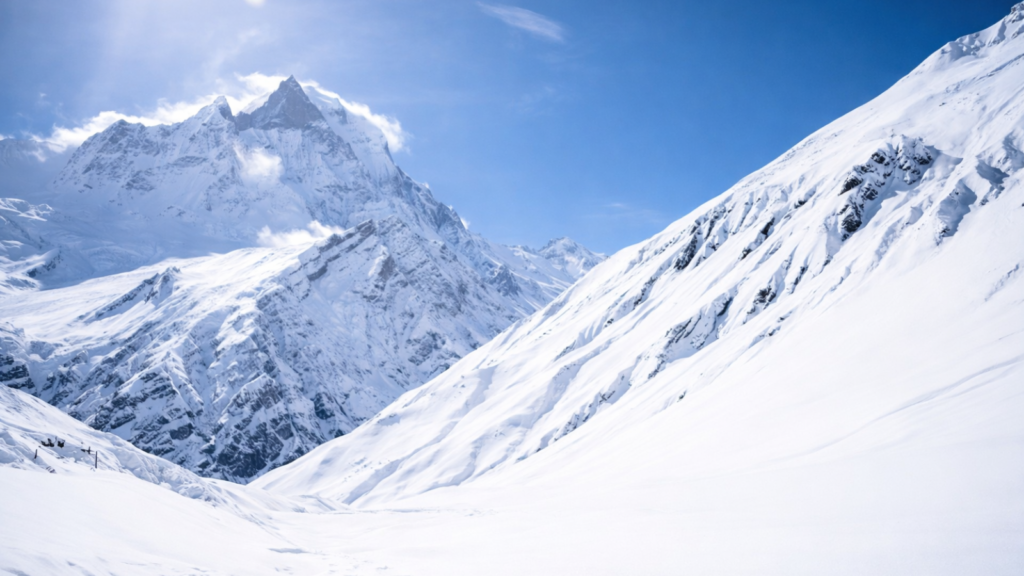
You need 2 core permits to trek to Annapurna Base Camp (ABC). The Annapurna Conservation Area Permit (ACAP) covers your entry into the protected zone. The Trekkers’ Information Management System (TIMS) card registers your identity and emergency contact information with Nepal’s trekking authorities.
Most trekkers spend between USD 40 to USD 60 on both permits combined, depending on nationality, season, and whether they apply through an agency or independently.
Permits Checklist for Annapurna Base Camp (Most Itineraries)
Here is the complete permits checklist for the standard ABC route:
- ACAP (Annapurna Conservation Area Permit): mandatory for all trekkers
- TIMS Card (Trekkers’ Information Management System): mandatory for independent trekkers; often handled by registered agencies
- Passport (original): required at every checkpoint
- 2 passport-sized photos: required at permit offices for both documents
- Completed application form: available at the Nepal Tourism Board (NTB) and Trekking Agencies Association of Nepal (TAAN) offices
What most beginners overlook: the ACAP and TIMS are separate documents issued by separate offices. You need both in hand before your first checkpoint. Getting one without the other is one of the most common mistakes on the Annapurna Circuit approach.
Permit Table
| Permit | Cost (NPR) | Cost (USD Approx.) | Where to Get | Documents Needed |
| ACAP | NPR 3,000 | ~USD 22 to 23 | NTB office (Kathmandu or Pokhara) | Passport, 1 photo, cash |
| TIMS | NPR 2,000 (independent) | ~USD 15 | TAAN or NTB office | Passport, 1 photo, cash |
| TIMS (agency) | NPR 1,000 | ~USD 8 | Registered trekking agency | Passport copy |
SAARC (South Asian Association for Regional Cooperation) nationals pay reduced fees. Children under 10 years of age are exempt from ACAP fees on most itineraries.
Annapurna Base Camp trek requires 2 permits, an ACAP and a TIMS card. The total cost is approximately USD 30 to 40 for non-SAARC nationals. Trekkers obtain both permits at the Nepal Tourism Board office in Kathmandu or Pokhara, with a passport and 2 passport-sized photos.
Guided vs Independent: What Changes for Paperwork and Checkpoints
The fundamental difference between guided and independent trekking on the ABC route is who handles the paperwork and who carries it.
Independent trekkers obtain both the ACAP and TIMS personally. They carry originals at all times, present them at each checkpoint, and manage any discrepancies on the spot.
Agency-booked trekkers typically have the TIMS card processed by the registered agency. The ACAP, however, is almost always obtained individually or in-office by the guide. Confirm this with your agency in writing before departure. Do not assume your agency has processed everything.
At checkpoints, officers record your TIMS number, passport number, nationality, and route. Agency trekkers frequently experience smoother checkpoint interactions because guides speak Nepali and understand checkpoint protocols. Independent trekkers moving through remote checkpoints sometimes face longer waits or additional verification steps.
What to Carry on Trail (Printouts, Passport, Photos, Backups)
Carry the following every day on the trail:
- Original ACAP permit (laminated or kept in a waterproof sleeve)
- Original TIMS card
- Original passport (not a copy, officers at checkpoints require originals)
- 2 to 3 spare passport-sized photos (carried loose, not folded)
- Digital backup of all documents stored offline on your phone
- Emergency contact number for the nearest NTB regional office
Trekkers regularly underestimate Nepal’s mountain weather. Permits soaked in rain at a riverside checkpoint create real problems. A simple waterproof document pouch costs under USD 3 in Pokhara and prevents a genuinely stressful situation.
Permit Breakdown by Route
For standard ABC routes, the permit “set” is straightforward, but route variations are where people get surprised (extra valleys, alternate entries, or extensions). If you add restricted areas like Nar Phu Valley or Upper Mustang, you move into different permit categories that usually require handling through registered channels, so it’s best to decide your exact route before issuing paperwork. Also plan ahead for “non-trekking” extras (like filming or drones), because they can trigger separate approvals even when your trekking permits are fine.
The Core Permits explained
The ACAP is a permit issued by the National Trust for Nature Conservation (NTNC). It covers entry and movement within the Annapurna Conservation Area, which spans over 7,629 square kilometers (2,945 square miles) of protected land. Every trekker entering this zone pays this fee regardless of route, group size, or trek duration.
The TIMS card is a safety and registration system managed jointly by the Nepal Tourism Board (NTB) and the Trekking Agencies Association of Nepal (TAAN). It records your identity, emergency contact, planned route, and expected return date. The TIMS card primarily serves rescue and emergency response coordination rather than conservation.
Understanding this distinction matters: the ACAP funds habitat protection and conservation programs. The TIMS card funds trekker safety infrastructure. Both serve legitimate purposes. Neither is optional.
ABC Route Variations That Change Requirements (Entry Points and Add-On Side Hikes)
The standard ABC itinerary starts in Nayapul or Siwai and follows the Modi Khola valley. This route requires only the 2 core permits described above.
Route variations that change your requirements:
- Annapurna Circuit extension to Thorong La: Adds significant distance but uses the same ACAP coverage. No additional permit is needed.
- Poon Hill addition (Ghorepani): Covered under the standard ACAP. No additional permit needed.
- Khopra Danda (Khopra Ridge) extension: Covered under the standard ACAP.
- Nar Phu Valley addition: Requires a separate Restricted Area Permit (RAP), a mandatory registered guide, and advance government approval. This is a completely separate permit category.
- Tilicho Lake extension: Covered under the standard ACAP, but the trailhead checkpoint records your specific detour.
The most important rule: your ACAP covers the Annapurna Conservation Area boundary. Any trek crossing into a restricted zone outside this boundary requires advance clearance.
Restricted Area Warning: ABC vs Nar Phu Valley and Upper Mustang
The Annapurna Base Camp route is not a restricted area. This is a point of genuine confusion among trekkers who read about restricted permits in the context of “Annapurna trekking.”
Upper Mustang and Nar Phu Valley are restricted areas that share a broader regional geography with the Annapurna range but require entirely different permits. The Upper Mustang Restricted Area Permit costs USD 500 per person for the first 10 days. The Nar Phu Valley Restricted Area Permit costs USD 90 per person per week.
The ABC route does not require either of these permits. Trekkers who read mixed sources and believe they need a restricted area permit for ABC are misinformed. The standard ACAP plus TIMS is sufficient for all standard ABC itineraries.
Extra Permissions People Miss (Filming, Drones, Special Activities)
Commercial photography and filmmaking inside the Annapurna Conservation Area requires prior approval from the NTNC. Personal photography is unrestricted.
Drone operation inside protected conservation areas in Nepal requires authorization from the Civil Aviation Authority of Nepal (CAAN) and, separately, from the NTNC for operations inside the ACAP boundary. Most trekkers who bring drones without authorization have their equipment confiscated at park entry checkpoints.
Research and scientific activities require separate permits obtained through Nepal’s Department of National Parks and Wildlife Conservation (DNPWC) and relevant government ministries.
Helicopter landing approvals for private charters inside the conservation area require coordination with the NTNC and the relevant regional administrative office.
These additional permissions represent the category of mistakes that cost trekkers the most time and money. Address them before you leave Kathmandu or Pokhara.
What are the Costs, Eligibility, and Validity?
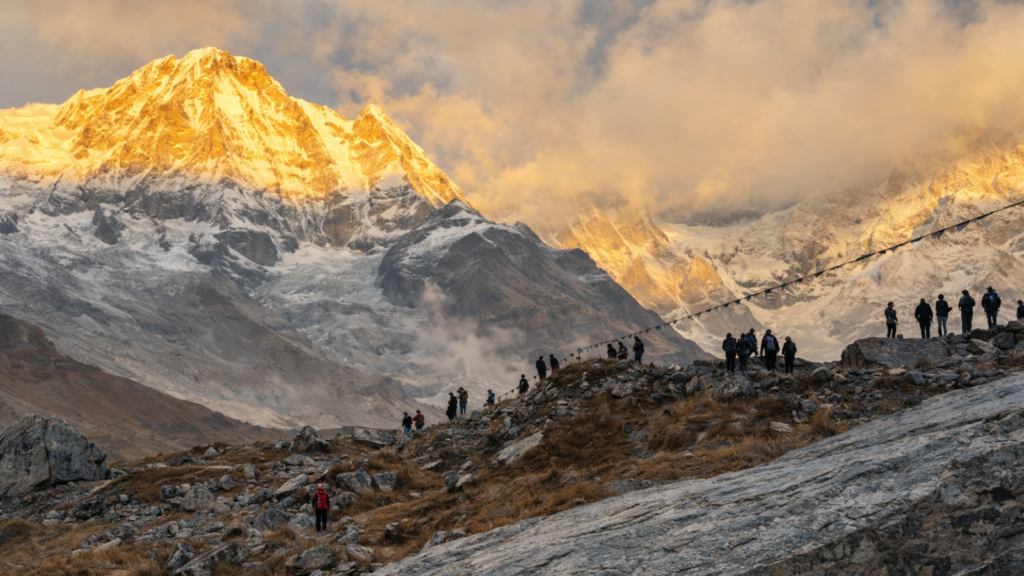
Cost-wise, the biggest “must-know” facts are: ACAP is NPR 3,000 for foreigners, NPR 1,000 for SAARC, children under 10 don’t need ACAP, and online payment adds a 2.9% gateway fee. Avoid last-minute issuance at check-posts because the official ePermit terms warn that double fees can be charged for permits issued there. For TIMS, fees depend on category (commonly cited as FIT vs group and different SAARC pricing), so your content should state the typical bands clearly and advise readers to confirm at issuance time or via their agency.
Typical Permit Fees in NPR and Easy USD Estimate (What Affects Price)
Here is the current fee structure as of 2026:
| Permit | Non-SAARC (NPR) | Non-SAARC (USD) | SAARC (NPR) | SAARC (USD) |
| ACAP | 3,000 | ~22 to 23 | 200 | ~1.5 |
| TIMS (independent) | 2,000 | ~15 | 600 | ~4.5 |
| TIMS (agency) | 1,000 | ~7.5 | 300 | ~2.3 |
What affects price:
Firstly, nationality is the primary determinant, SAARC nationals pay dramatically less. Secondly, guided or unguided status changes the TIMS fee, not the ACAP fee. Thirdly, payment method matters because the online gateway charges processing fees that the in-person cash payment does not.
The fees above reflect the official government tariff. Independent currency fluctuations affect the USD equivalent but not the NPR base price.
Children and SAARC Rules (Who Gets Discounts or Exemptions)
Children under 10 years of age are exempt from the ACAP fee. This exemption applies regardless of nationality. Children aged 10 years and above pay the standard fee for their nationality category.
SAARC nationals (citizens of India, Pakistan, Bangladesh, Sri Lanka, Bhutan, Maldives, and Afghanistan) pay approximately 90% less than non-SAARC nationals for both permits. This discount is significant and changes the total cost from approximately USD 37 to approximately USD 6 to 7 for the ACAP and TIMS combined.
SAARC nationals present a valid national identity document or passport at the permit office. A voter ID card works for Indian nationals.
Validity and Itinerary Changes (Adding Days, Reroutes, Re-Entry)
The ACAP does not have a fixed daily validity limit. It covers your trekking period for a standard itinerary without re-purchase requirements. A standard ABC trek runs 7 to 14 days. Trekkers completing the standard route stay well within the implied validity window.
The TIMS card specifies your planned entry and exit dates when you apply. Extending your trek does not automatically invalidate your TIMS, but the mismatch between your stated dates and your actual return creates complications at checkpoints.
Practical advice: add 2 to 3 buffer days to your stated return date on your TIMS application. This costs nothing and prevents checkpoint officers from questioning extended itineraries.
Re-entering the ACAP zone after exiting requires a new ACAP purchase. This situation arises most commonly among trekkers combining the ABC route with a Pokhara rest day and a return for a side trail.
“Can I Reuse My Permit?” (What’s Safe to Assume vs What to Confirm)
No. Permits are issued per trip, per trekker, per entry. The ACAP and TIMS are non-transferable and non-reusable.
What is safe to assume: a valid ACAP from a recent Annapurna Circuit trek does not cover a new ABC trek starting even a week later. Each entry into the conservation area requires a fresh permit.
What to confirm directly with the NTB or NTNC: the specific validity window for your planned itinerary, particularly for unusual or extended routes. Policies on extended itineraries and re-entry fees have changed in past years, and the most current guidance comes from the issuing offices, not third-party travel blogs.
How to Get ABC Permits Step-by-Step (Online and In-Person)
If you want the smoothest process, start with the official online route: National Trust for Nature Conservation ePermit for ACAP, then print the result and pack it with your passport copy. If you do it in person, most guides send trekkers to the main permit counters in Kathmandu or Pokhara, typically open Sun–Fri around 10–5 (hours can vary, so don’t arrive at closing time). Bring passport details, photos if requested, your route dates, and keep your spelling consistent, small errors (name/order/date) create big delays later at checkpoints.
Online Options: How the National Trust for Nature Conservation ePermit Process Works (and When to Avoid It)
The NTNC operates an ePermit portal for ACAP applications at ePermit.ntnc.org.np. The process works as follows:
- Register an account with your email address and passport details
- Select the Annapurna Conservation Area as your entry zone
- Upload a passport-sized photo (JPG, under 200KB)
- Enter your planned entry date, exit date, and entry point
- Complete payment via international debit or credit card
- Download and print the ePermit confirmation
The ePermit is useful for trekkers arriving directly in Pokhara who want to minimize time at permit offices. It works reliably during peak season (March to May, September to November).
Avoid it when: you are uncertain about your exact entry date, you have a complex itinerary involving multiple entry points, or your card does not support international online transactions. In these cases, in-person processing at Pokhara takes under 30 minutes and eliminates all technical risk.
The TIMS card does not currently have a functional online application system accepted at all checkpoints. Obtain it in person.
Hidden Costs and Penalties: Payment Gateway Fees and “Double Fee at Checkpoint” Risk
The online ACAP payment gateway charges a transaction fee of approximately 3% to 5% on international cards. This adds roughly USD 1 to 1.50 to your total. It is minor but worth knowing.
The “double fee at checkpoint” risk is more significant. Trekkers who obtain permits after crossing the first checkpoint, either through oversight or misinformation, face a surcharge at the checkpoint itself. This surcharge is not a fine in the legal sense, but checkpoint officers in some locations have historically requested the full permit fee again from trekkers who cannot produce valid documentation.
The safest approach: obtain both permits before your first day on the trail, not at the trailhead. Nayapul has a checkpoint immediately at the start of the trek. Trekkers who arrive without permits face immediate delays before their first step on the trail.
In-Person Permits in Kathmandu vs Pokhara (Which Is Easier for Trekkers)
Pokhara is consistently easier for trekkers starting the ABC route. Here is why:
The Nepal Tourism Board (NTB) regional office in Lakeside, Pokhara, is the primary issuing point for both ACAP and TIMS. It is a 10-minute walk from most trekking accommodations in the area. Queue times during off-peak hours run 15 to 30 minutes. Staff at the Pokhara office are accustomed to international trekkers and process applications efficiently.
The Kathmandu NTB office at Bhrikutimandap handles high volumes of permits for multiple trekking zones simultaneously. The process works reliably but queue times are longer, especially during peak season mornings (8:00 AM to 11:00 AM).
Choose Kathmandu only if you have a confirmed layover day and want to complete permits before flying to Pokhara. Choose Pokhara if you fly directly or arrive by road and plan to begin trekking within 1 to 2 days.
Office Timing and What to Bring (Photos, Forms, Payment Methods, Queue Strategy)
NTB Pokhara (Lakeside) Office Hours:
- Sunday to Friday: 9:00 AM to 5:00 PM
- Saturday and public holidays: closed
Arrive by 9:15 AM to 9:30 AM to avoid the mid-morning peak queue. The office fills rapidly from 10:00 AM onward during peak trekking season.
Bring the following:
- Original passport (kept with you at all times, do not leave it at your hotel)
- 2 passport-sized photos (3.5cm × 4.5cm, white background, recent)
- Cash in Nepali Rupees (NPR), most permit offices do not accept foreign currency or cards for in-person transactions
- Completed application form (available free at the office or downloadable from the NTB website)
Queue strategy: the ACAP and TIMS are processed at different counters within the same office on most days. Complete the ACAP application first, then move to the TIMS counter. This reduces total processing time to approximately 20 to 40 minutes.
TIMS and Guide Rule
The reason “ABC permits” content is messy online is that the Nepal Tourism Board states (Revised TIMS Provision effective March 31, 2023) that on specified protected-area routes trekkers must be accompanied by a licensed trekking guide and carry a trekking agency issued TIMS. At the same time, many trekkers report uneven real-world enforcement, which is exactly why your article should separate official rule vs field reality without guessing.
As an agency, the safest guidance is: plan your permit pathway assuming the official rule applies, because the downside of being stopped is bigger than the downside of being prepared.
Official Policy (What It Says and What It Applies To)
Nepal officially introduced a mandatory guide requirement for solo trekkers on certain routes as part of broader trekking regulations. As of 2023, the Government of Nepal announced provisions requiring solo foreign trekkers to trek with a government-licensed guide on designated trails.
The TIMS card policy specifies: independent trekkers pay NPR 2,000; agency-affiliated trekkers (those booked through registered agencies with licensed guides) pay NPR 1,000.
The Annapurna Base Camp route is a well-developed, heavily trafficked trail with established teahouses and clear signage. It falls into a different enforcement category than remote wilderness routes.
On-the-Ground Enforcement: What Trekkers Actually Experience (and Why It Varies)
The ground reality as of 2026 is that independent trekking on the ABC route remains widely practiced and operationally feasible. Checkpoint officers record permit details and pass trekkers through without mandatory guide verification on the standard ABC route in the vast majority of documented trekker experiences.
Enforcement varies based on 3 factors: firstly, the specific entry point and checkpoint station; secondly, the time of year and current government enforcement priorities; thirdly, whether a specific incident or policy update has recently increased scrutiny in the region.
The only reliable way to confirm current enforcement status before your departure is to contact the NTB directly or consult a recently returned trekker (within the past 4 to 6 weeks). Information older than one season is unreliable on enforcement questions.
If You Book With an Agency: What TAAN or Agency Typically Handles vs What You Must Provide
A registered trekking agency affiliated with the Trekking Agencies Association of Nepal (TAAN) typically handles the following:
- TIMS card application and payment (at the agency rate of NPR 1,000)
- Guide and porter licensing documentation
- Emergency contact registration in the TIMS system
- Itinerary submission to the relevant authorities
What you must provide to your agency:
- Passport copy (photo page)
- 2 passport-sized photos
- Completed emergency contact form (your agency provides the template)
- Confirmation of your planned entry date
What you remain responsible for regardless of agency booking:
- Obtaining your own ACAP (most agencies do not handle this; confirm explicitly)
- Carrying original identification at all times on the trail
The most common mistake among first-time agency trekkers: assuming the agency has handled everything and arriving at the first checkpoint without an ACAP.
Common TIMS/Registration Errors (Name Mismatch, Route Category, Missing Fields)
The 4 most common TIMS errors that cause checkpoint delays:
Name mismatch: The name on the TIMS card does not exactly match the passport. Middle names, name order differences, and transcription errors are the most frequent causes. Verify character-by-character before leaving the permit office.
Wrong route category: The TIMS card records your specific trekking route. Selecting “Annapurna Circuit” when trekking “Annapurna Base Camp” creates confusion at checkpoints, as these are categorized separately. Use the exact route name as specified on the official form.
Missing emergency contact: The TIMS form requires a contact person not traveling with you. Leaving this blank or using a fellow trekker’s name invalidates the primary purpose of the card and sometimes triggers officer questions at checkpoints.
Incorrect entry point: The entry point on your TIMS must match the checkpoint where you first register. Trekkers starting from Siwai who listed Nayapul as their entry point encounter discrepancies at the first station.
Checkpoints, Compliance, and Troubleshooting
Expect permits to be checked more than once, and write your troubleshooting section so beginners know what happens in real life: missing permits can mean delays, being sent back, or paying extra depending on where you are and how issuance is handled. If a permit is lost, the practical move is to act immediately, contact your agency (if you used one) and then the nearest check-post for the fastest “what can be accepted” guidance.
Finally, include a clear compliance note: drones are prohibited unless prior approval is granted, so people should not assume trekking permits cover drone use.
Where Permits Are Checked on Typical ABC Approaches
On the standard Nayapul approach, permits are checked at 4 primary locations:
- Birethanti checkpoint (immediate after Nayapul bridge): The first major checkpoint. Officers record your passport number, ACAP number, TIMS number, nationality, and destination. This checkpoint is the most thorough.
- Chomrong checkpoint: A mid-route checkpoint that verifies your identity against Birethanti records. Officers are primarily checking for undocumented trekkers.
- Deurali or approach to Machhapuchhre Base Camp (MBC): A secondary checkpoint closer to the high camp zone.
- Annapurna Base Camp area: An informal register point at some teahouses.
Officers at all checkpoints record entries in physical logbooks. Your details travel ahead of you via informal radio or phone communication between checkpoint officers during busy season.
What Happens If You’re Missing a Permit (Delay, Double Fees, Reroute/Return Scenarios)
Delay: The most common outcome. Officers hold trekkers at the checkpoint while they attempt to contact a superior or the nearest permit office. Delays of 30 minutes to 3 hours are documented.
Double fees: Some checkpoint officers request payment for a permit on-site at double the standard rate. This practice is not officially sanctioned but occurs. The payment covers the officer arranging a temporary permit certificate. Keep your official receipt.
Return: Trekkers without any documentation face the possibility of being turned back to Pokhara to obtain proper permits. This is rare but documented, particularly at the Birethanti checkpoint during enforcement periods.
The safest recovery step: carry cash in NPR sufficient to cover permit fees (at least NPR 6,000) even if you already hold valid permits. This is not to encourage checkpoint payments but to handle genuine documentation errors without being stranded.
Lost Permit on the Trail: Step-by-Step Recovery Plan
Losing your permit on the trail requires a clear sequence of actions:
- Report the loss at the nearest checkpoint immediately. Officers log your TIMS and ACAP numbers at each station. A checkpoint officer can verify your permit history against their logbook records.
- Contact the NTB Pokhara office by phone (available at most teahouses with phone signal). Provide your TIMS number, passport number, and entry date. The office records confirm your valid permit status.
- Return to Pokhara for replacement only if required. Most experienced checkpoint officers accept a phone confirmation or a written statement combined with passport verification as sufficient evidence.
- Use your digital backup (photos of your permits stored offline on your phone) as supporting evidence at checkpoints. This does not replace the original but significantly accelerates the verification process.
- File a written declaration at the next checkpoint you encounter. This creates a paper record of the incident and protects you at subsequent checkpoints.
The digital backup is the single most valuable preparation step. Store it in your phone gallery and in an email draft accessible offline.
Drone/Filming Compliance: What’s Usually Prohibited, What Needs Prior Approval, and Safer Alternatives
What is prohibited without prior approval:
- Commercial drone operation of any kind inside the ACAP boundary
- Aerial photography for media, advertising, documentary, or commercial tourism purposes
- Drone operation above 400 feet (120 meters) in altitude in restricted airspace zones near active helipads and military installations
What requires prior approval:
- Personal drone use inside the ACAP (approval from the NTNC, CAAN authorization, and a liability insurance document are the standard requirements)
- Filming for documentary or educational purposes (approval from the Film Development Board of Nepal plus NTNC clearance)
- Research aerial surveys (approval from the relevant ministry and DNPWC)
Processing time for drone and commercial filming approvals typically runs 2 to 4 weeks. Apply before departure from your home country.
Safer alternatives for content creators:
- Use a GoPro or action camera mounted on trekking poles or a chest harness
- Hire a local ground photographer with experience on the ABC route
- Film from designated high points such as Poon Hill, where ground-level panoramic footage is unrestricted and frequently more compelling than aerial footage
The NTNC confiscates drones operated without authorization at park entry checkpoints. The confiscation process involves a written report and retrieval from the relevant administrative office in Pokhara, a process that consumes 1 to 3 days of your trek window.
Final Checklist Before You Leave for the Trail
Print this list and check each item the night before your trek begins:
- ACAP permit (original, in waterproof sleeve)
- TIMS card (original, in waterproof sleeve)
- Passport (original)
- 2 spare passport-sized photos
- Digital backup of all permits and passport (offline on phone)
- NPR 6,000 in cash as emergency permit coverage
- NTB Pokhara office phone number saved
- Drone authorization letter (if applicable)
- Filming permit (if applicable)
- Emergency contact registered on TIMS
The Annapurna Base Camp trek is one of the most rewarding trails in the world. The permit process is the least complicated part of the journey. Complete it correctly, carry what matters, and your first checkpoint becomes a 3-minute formality rather than a 3-hour problem.
What permits do I need for the ABC trek?
You need an ACAP permit for the Annapurna Base Camp (ABC) trek. Most trekkers also require a TIMS card if trekking through an agency or on regulated routes. Restricted-area extensions require additional permits. Finalize your route before issuing permits and carry printed copies to avoid delays at check-posts.
Is TIMS required for ABC right now?
TIMS is officially required for ABC when trekking on specified routes with a licensed guide and agency-issued registration under rules effective March 31, 2023. Field enforcement can vary, but the lowest-risk approach is to follow the official requirement. Plan under the assumption that checkpoints will enforce current regulations.
Can I trek ABC without a guide?
Official guidance links many protected-area routes, including ABC, to a licensed guide requirement tied to agency-issued TIMS. Enforcement can vary in practice, but checkpoints may apply the rule. Plan your trek assuming guide rules will be enforced to reduce risk and avoid delays.
How much does ACAP cost?
ACAP costs NPR 3,000 for foreign nationals and NPR 1,000 for SAARC nationals. Online payments add a 2.9% gateway charge. Children under 10 years old do not require ACAP. Issuing permits at check-posts can result in double fees, so secure permits in advance.
How much does a TIMS card cost?
TIMS card fees vary based on FIT versus group registration and SAARC versus non-SAARC nationality. TAAN publishes updated rates, and policy changes can adjust pricing. Confirm the exact TIMS cost at issuance or through your trekking agency, as agencies often include the fee in their package.
Where should I get the permits before the trek?
Obtain ABC permits at a major city permit office or through the official online system before traveling to the trailhead. Arrive early to avoid queues. Use consistent passport details and accurate trek dates. Print permits and store them in a waterproof pouch.
Can I apply for ACAP online?
Apply for ACAP online through the official ePermit platform. Online payments include a 2.9% gateway charge. Print the permit after payment and carry a backup copy. Complete the process at least 24 to 48 hours before departure to prevent last-minute payment or printing issues.
What happens if I start trekking without permits?
Starting the ABC trek without permits can result in delays at check-posts and mandatory on-site issuance at double fees. Officials can require you to obtain proper permits before continuing. Secure permits in advance and carry printed copies to avoid time loss and penalties.
Do children need permits for ABC?
Children under 10 years old do not require an ACAP permit for the ABC trek. Other permits or documentation can still apply depending on registration status and current rules. Align the child’s passport details with the group’s paperwork to prevent issues at checkposts.
Are drones allowed on the ABC trek?
Drones are prohibited on the ABC trek unless you obtain prior approval from the concerned authorities. Trekking permits do not grant automatic drone permission. Secure written authorization before departure and carry proof during the trek. Without approval, use handheld photography only.